Loading subject page…


49,100 views

Video Summary: What are Photosystems
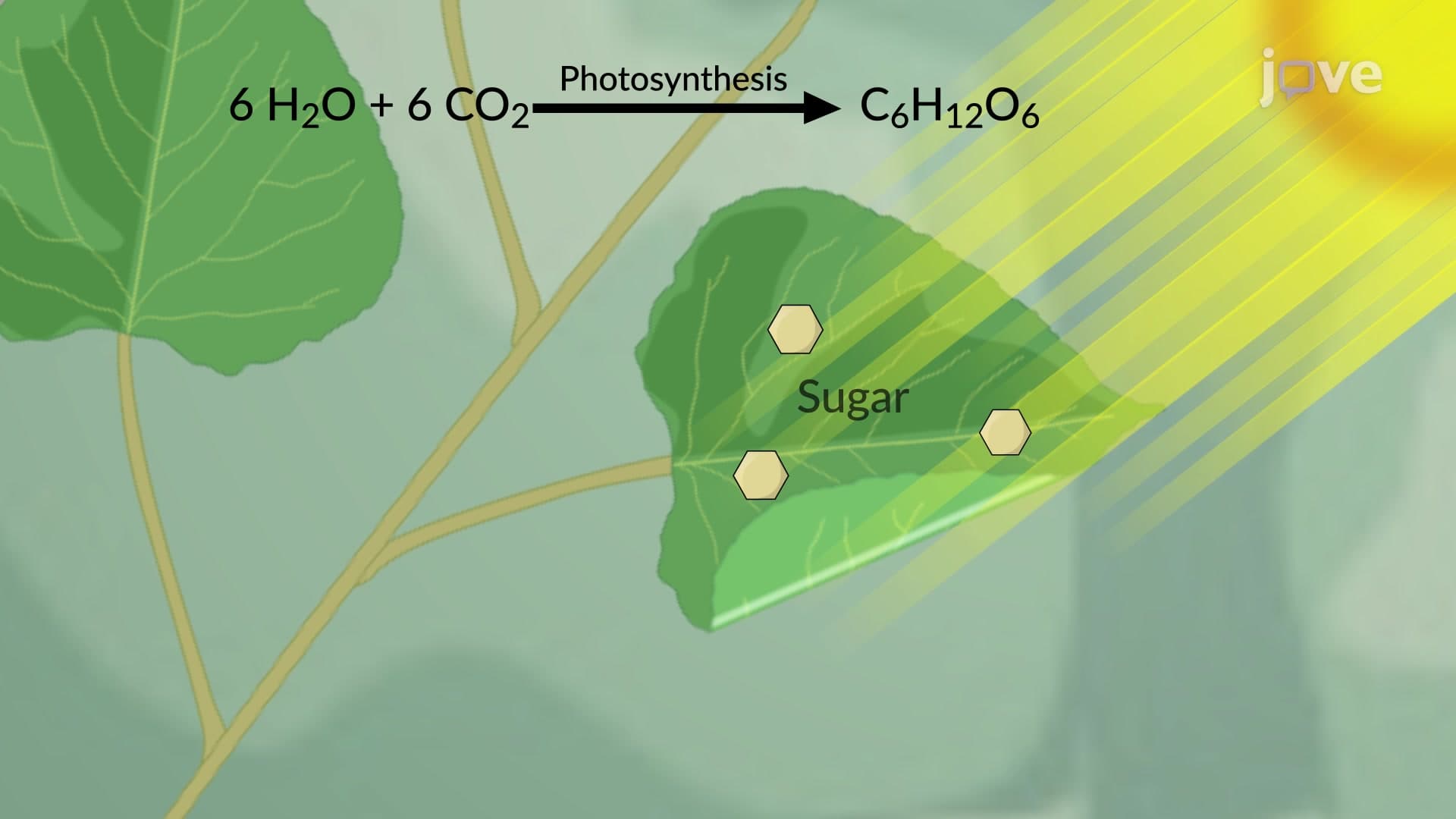
Did you know that a single leaf contains billions of molecular machines capable of converting sunlight into the chemical energy that powers nearly all life on Earth? Photosystems are these remarkable pigment-protein complexes embedded in chloroplast membranes, functioning like solar panels in plants from California's redwood forests to Florida's everglades. These specialized structures, categorized as photosystem I and photosystem II, work together to capture light energy and transform it into the chemical bonds that fuel cellular processes. Watch the full video on JoVE Coach to master this concept with expert-led visuals and step-by-step explanations.
Photosystems represent one of biology's most sophisticated energy conversion mechanisms, functioning as highly organized molecular assemblies that capture and process solar radiation. These complex structures serve as the primary interface between the physical energy of sunlight and the chemical energy that drives virtually all biological processes on Earth. From the towering sequoias of California's national parks to the corn fields of Iowa, photosystems enable plants to harness approximately 1% of available solar energy-a seemingly small percentage that nevertheless supports the entire food web.
The two types of photosystems-photosystem I (PSI) and photosystem II (PSII)-work in tandem but possess distinct structural and functional characteristics. PSI, with its characteristic P700 reaction center, specializes in reducing NADP+ to NADPH, while PSII, featuring the P680 reaction center, initiates the entire photosynthetic process by splitting water molecules. This division of labor reflects millions of years of evolutionary optimization, creating a system more efficient than any human-engineered solar technology currently available.
The spatial organization within chloroplasts further demonstrates this specialization. PSI complexes concentrate in unstacked stromal lamellae regions, allowing optimal access to the stroma where carbon fixation occurs. Meanwhile, PSII complexes cluster in the stacked granal lamellae, creating an environment conducive to oxygen evolution and initial electron transport processes.
Each photosystem contains approximately 200 chlorophyll molecules and 50 carotenoid pigments arranged in two distinct functional domains. The antenna complex acts like a sophisticated light-collecting array, similar to the parabolic mirrors used in solar thermal plants across Nevada's Mojave Desert. These pigments absorb photons across different wavelengths and efficiently funnel this energy toward the reaction center through a process called resonance energy transfer.
The reaction center represents the true "business end" of each photosystem, where light energy undergoes conversion to chemical energy through electron transport processes. Only specific chlorophyll molecules in this region can actually convert absorbed light energy into chemical potential energy, while the hundreds of antenna pigments serve purely as energy collectors and concentrators.
Understanding photosystems proves essential for success in multiple academic contexts. AP Biology exams frequently test photosystem knowledge through questions comparing PSI and PSII functions or analyzing experimental data about light-dependent reactions. Pre-medical students encounter these concepts again in MCAT biochemistry sections, where photosystem electron transport chains appear alongside similar processes in cellular respiration. College-level botany and biochemistry courses delve deeper into photosystem crystallography and molecular mechanisms, knowledge that becomes crucial for students pursuing careers in agricultural science, environmental biology, or renewable energy research.
Related Micro-courses