Loading subject page…


49,100 views

Video Summary: What Is the Calvin Benson Cycle
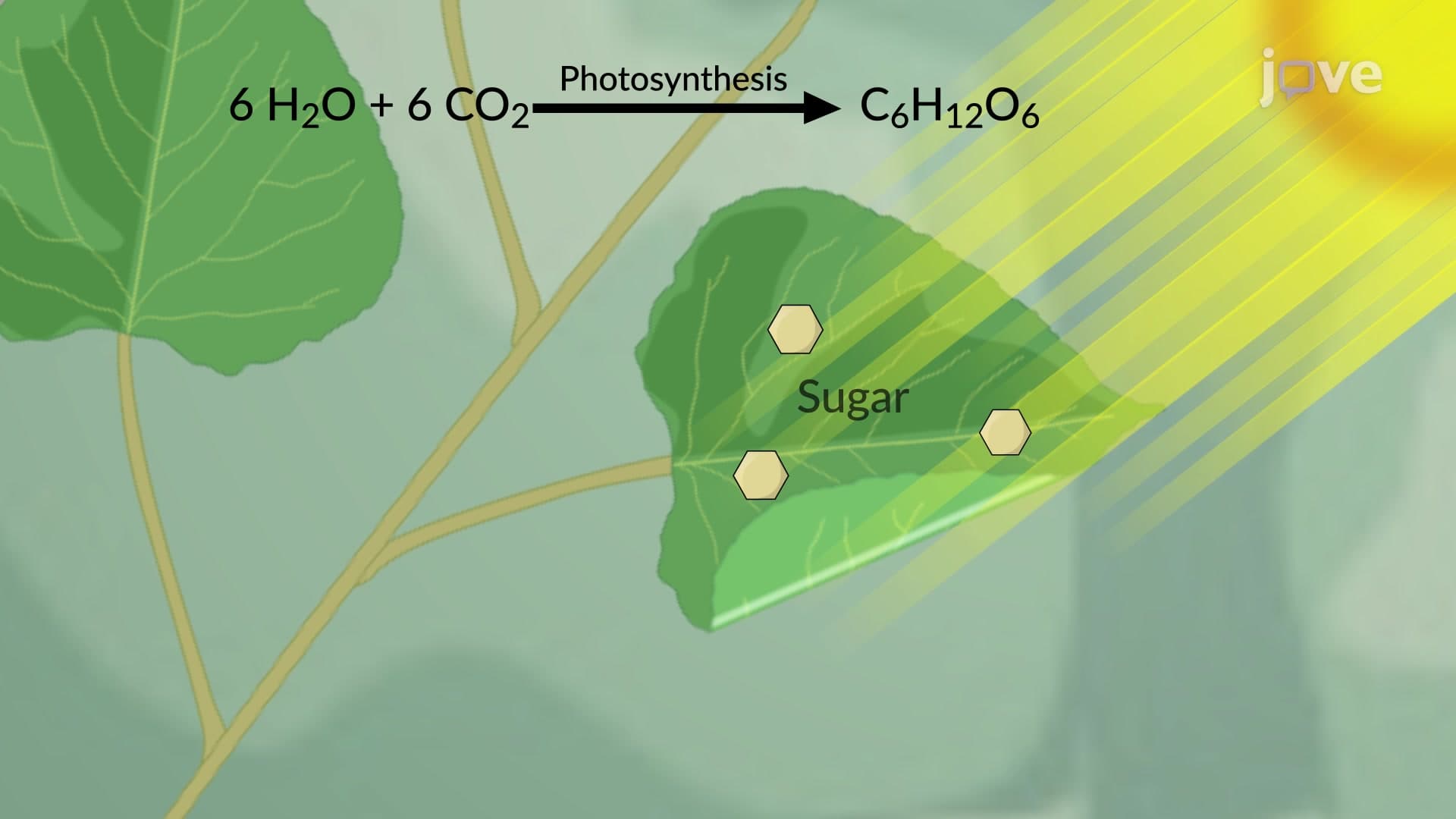
Did you know that every oxygen molecule you breathe was produced by a plant using the Calvin Benson cycle? This biochemical process is how plants convert atmospheric carbon dioxide into the sugars that fuel all life on Earth, from California redwoods to Florida orange trees. The Calvin Benson cycle represents the second phase of photosynthesis, where plants harness ATP and NADPH to build essential organic molecules through three distinct stages: carbon fixation, reduction, and regeneration. Watch the full video on JoVE Coach to master this concept with expert-led visuals and step-by-step explanations.
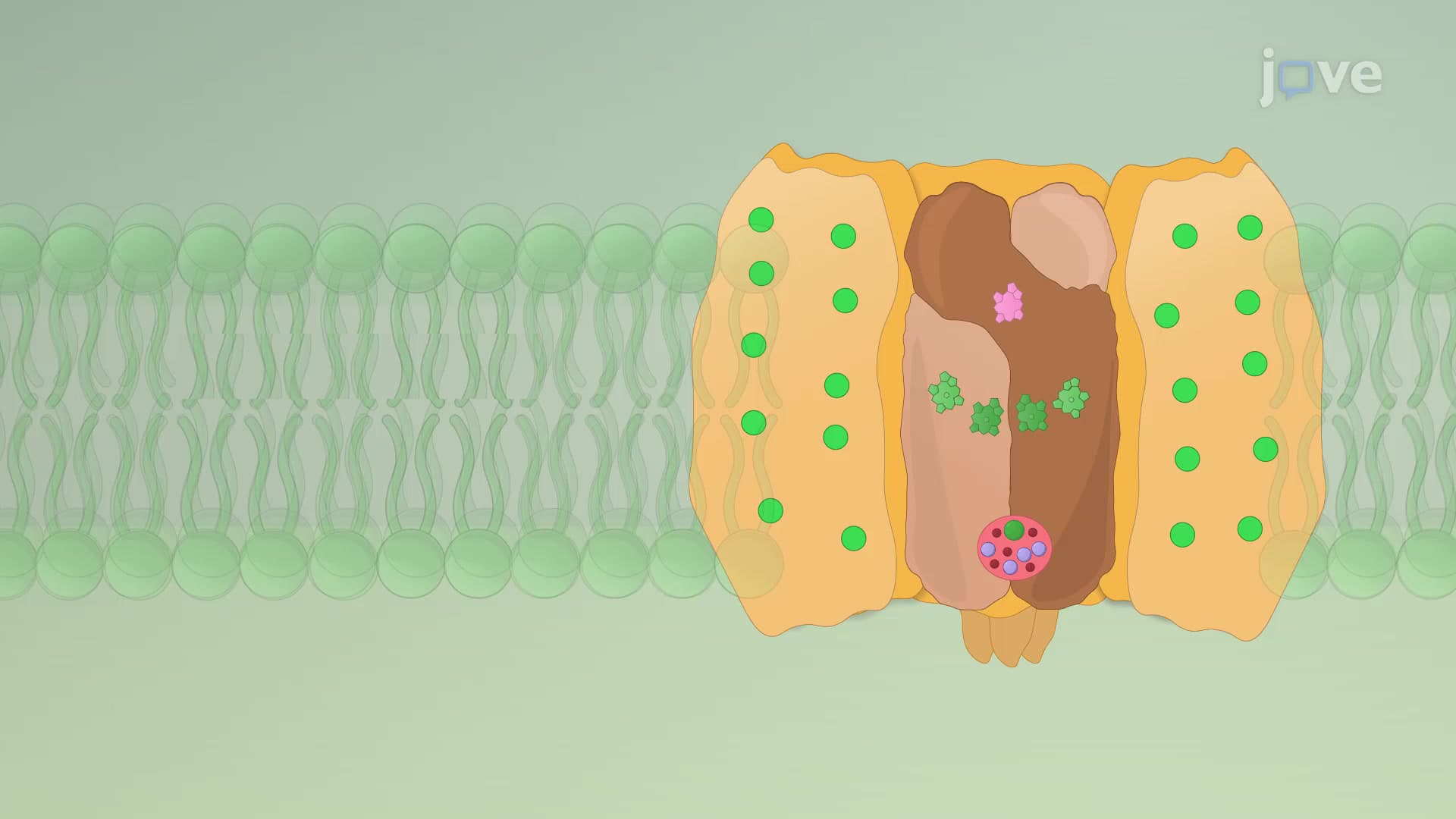
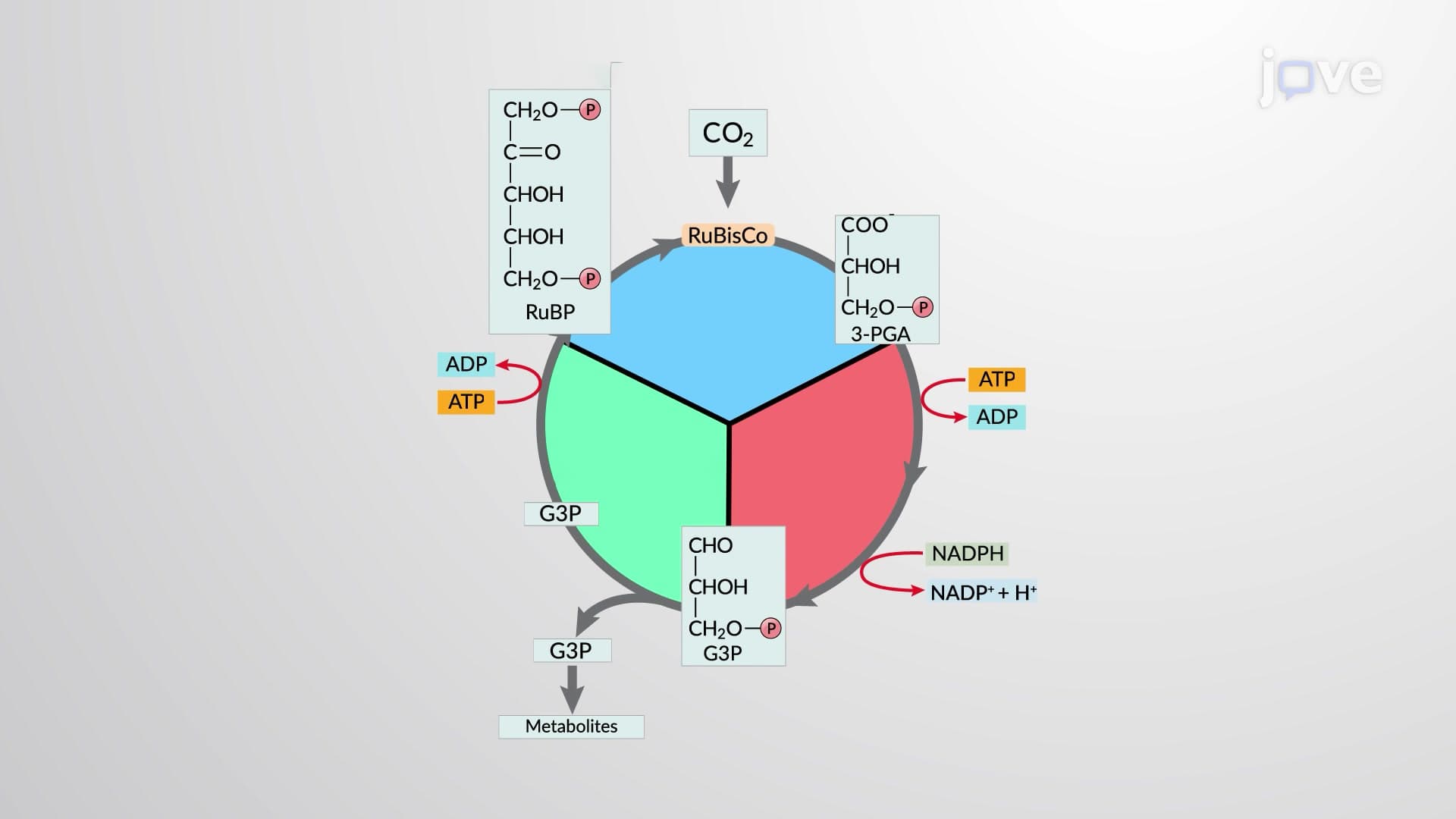
The Calvin Benson cycle serves as nature's carbon dioxide processing factory, operating in the stroma of chloroplasts where plants perform the remarkable feat of converting atmospheric CO2 into life-sustaining organic molecules. Named after American biochemists Melvin Calvin and Andrew Benson, who elucidated this pathway using radioactive carbon-14 tracers in the 1940s and 1950s, this cycle represents one of biology's most fundamental processes. Unlike the light-dependent reactions that occur in thylakoid membranes, the Calvin Benson cycle operates independently of direct sunlight, though it depends entirely on the ATP and NADPH generated during the light reactions.
The carbon fixation stage begins with RuBisCO (ribulose-1,5-bisphosphate carboxylase/oxygenase), Earth's most abundant protein and arguably its most important enzyme. RuBisCO catalyzes the addition of atmospheric CO2 to ribulose-1,5-bisphosphate (RuBP), a five-carbon sugar, creating an unstable six-carbon intermediate that immediately splits into two molecules of 3-phosphoglycerate (3-PGA). This reaction is critical because it represents the moment when inorganic carbon becomes incorporated into organic molecules-the foundation of all carbon-based life. Students preparing for the AP Biology exam or MCAT should recognize that RuBisCO's dual function (it can also catalyze photorespiration with oxygen) makes it a frequent topic in questions about plant metabolism efficiency.
During the reduction stage, each 3-PGA molecule undergoes two sequential reactions that require significant energy investment. First, 3-phosphoglycerate kinase adds a phosphate group from ATP to 3-PGA, forming 1,3-bisphosphoglycerate. Then, glyceraldehyde-3-phosphate dehydrogenase uses NADPH to reduce this molecule, producing glyceraldehyde-3-phosphate (G3P). This stage consumes 12 ATP and 12 NADPH molecules for every six CO2 molecules fixed, representing the primary energy cost of carbon fixation. College biochemistry students should note that this reduction reaction is essentially the reverse of a glycolysis step, highlighting the interconnected nature of metabolic pathways.
The regeneration stage ensures the Calvin Benson cycle's continuity by reforming RuBP from G3P molecules. Five of every six G3P molecules produced must remain in the cycle, undergoing a complex series of rearrangement reactions that consume an additional 6 ATP molecules. Only one G3P molecule per cycle can exit to contribute to glucose synthesis, starch formation, or other biosynthetic pathways. This 5:1 ratio explains why plants must invest substantial energy-18 total ATP and 12 NADPH molecules-to produce just one glucose molecule, making photosynthesis remarkably energy-intensive despite its efficiency at capturing solar energy.
Related Micro-courses