Loading video…


 8 Concepts
 40.5K views

Video Summary: What Is Osteoclasts in Bone Remodeling
Did you know your bones completely rebuild themselves every 10 years? Osteoclasts in bone remodeling serve as your body's demolition crew, breaking down old bone tissue so new, stronger bone can form. Think of them like construction workers renovating the Golden Gate Bridge-they carefully remove worn sections while preserving the bridge's structural integrity. What is osteoclasts in bone remodeling becomes clear when you understand these specialized cells orchestrate the continuous renewal that keeps your skeleton strong throughout life. Watch the full video on JoVE Coach to master this concept with expert-led visuals and step-by-step explanations.
Osteoclasts in bone remodeling represent one of nature's most sophisticated cellular recycling systems. These remarkable multinucleated cells function as your skeleton's renovation specialists, precisely removing old or damaged bone tissue to make way for fresh, structurally sound bone matrix. Unlike static building materials, your bones undergo continuous renewal-a process essential for maintaining strength, repairing microscopic damage, and regulating calcium homeostasis.
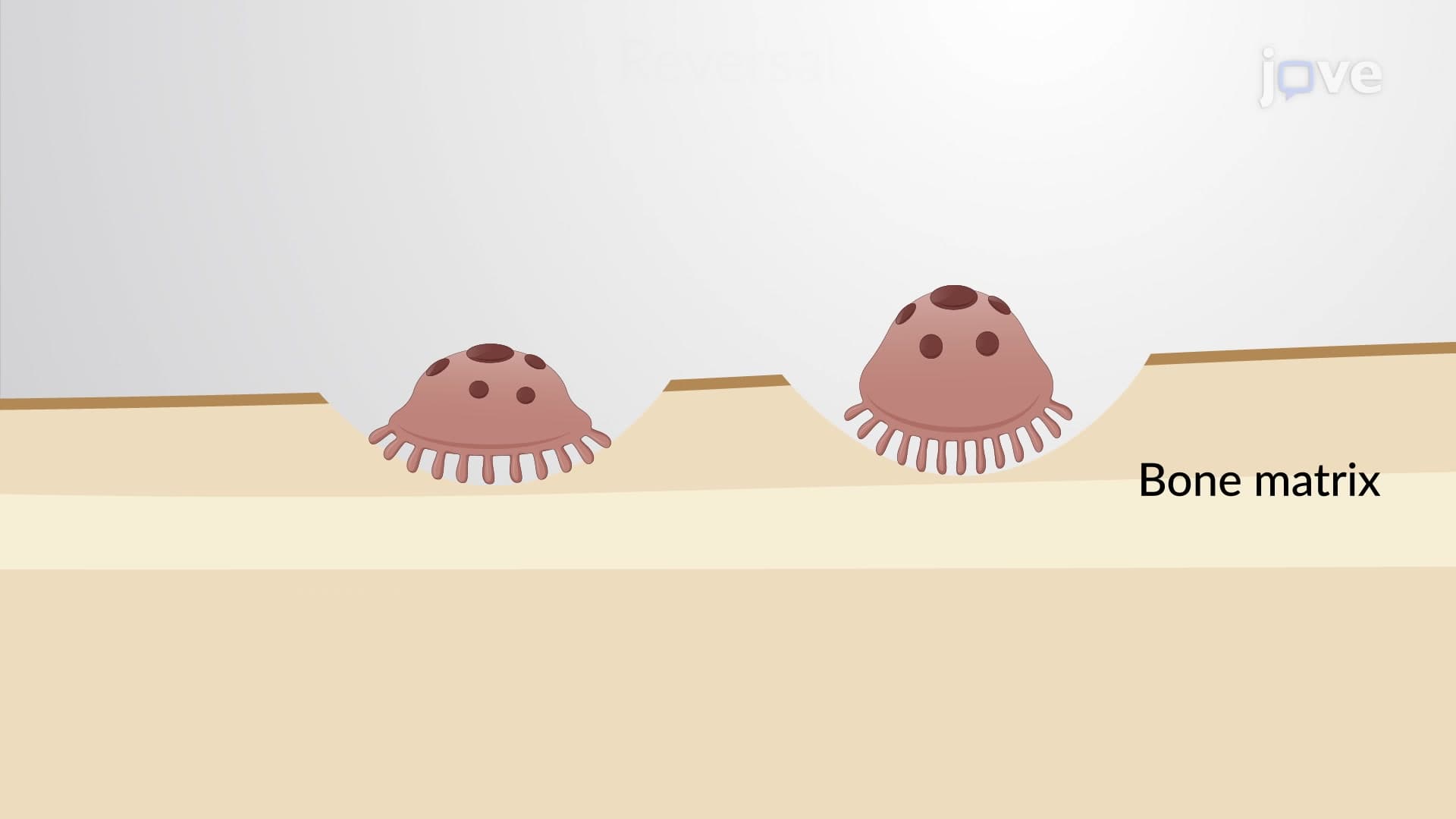
The osteoclasts in bone remodeling definition encompasses their role as highly specialized cells derived from hematopoietic stem cells. These cells fuse together to form large, multinucleated structures uniquely equipped for bone destruction. Their finger-like projections, called ruffled borders, contain numerous vesicles that secrete powerful enzymes including tartrate-resistant acid phosphatase (TRAP) and cathepsin K. These enzymes dissolve both the organic collagen matrix and inorganic mineral components of bone.
When osteocytes-the bone's mechanosensitive cells embedded within the matrix-detect mechanical stress or microdamage, they release signaling molecules that recruit osteoclasts to specific sites. This targeted response ensures bone remodeling occurs precisely where needed, similar to how road crews focus repairs on damaged highway sections rather than resurfacing entire interstate systems.
During the resorption phase, activated osteoclasts attach to the bone surface and create a sealed compartment called a resorption bay or Howship's lacuna. Within this acidic microenvironment (pH ~4.5), the enzymes efficiently break down bone components, releasing calcium phosphate crystals and collagen fragments into the bloodstream. This process directly contributes to calcium homeostasis-when blood calcium levels drop, parathyroid hormone stimulates increased osteoclast activity to mobilize skeletal calcium stores.
Understanding what is osteoclasts in bone remodeling in detail proves crucial for students preparing for advanced coursework and professional exams. On the MCAT, questions frequently test knowledge of bone remodeling cycles and calcium regulation. AP Biology exams often include scenarios requiring students to predict outcomes when osteoclast function becomes disrupted.
In clinical contexts, osteoclast dysfunction underlies numerous skeletal disorders. Excessive osteoclast activity contributes to osteoporosis, affecting over 54 million Americans, while insufficient activity can lead to osteopetrosis. Pharmaceutical interventions like bisphosphonates (alendronate, risedronate) specifically target osteoclasts to reduce bone loss in postmenopausal women.
The controlled apoptosis of osteoclasts during the reversal phase represents another critical concept. This programmed cell death prevents excessive bone destruction and signals the transition to bone formation. Mononuclear phagocytes then clear cellular debris and prepare the resorption site for osteoblast colonization, demonstrating the precise coordination required for successful bone remodeling.
Related Micro-courses