Loading video…


 13 Concepts
 18.9K views

Video Summary: Fluid Pressure Over Curved Plate Explained
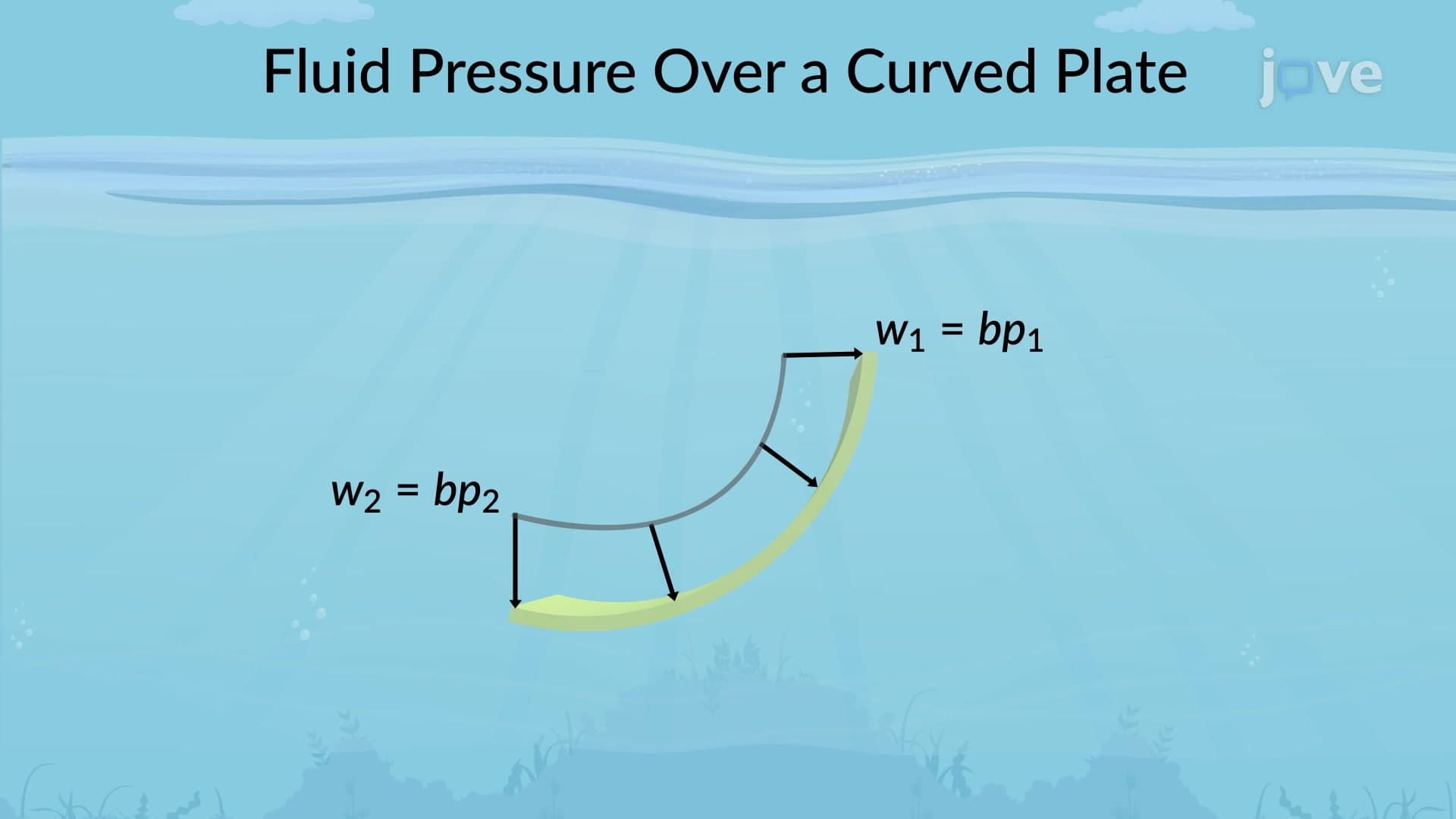
Ever wonder why submarine hulls are curved rather than flat? Fluid pressure over curved plate mechanics reveal that water exerts complex, variable forces that change both magnitude and direction across curved surfaces. Unlike flat surfaces where pressure acts uniformly, curved plates like those used in dam construction face constantly shifting pressure distributions. Engineers at the Hoover Dam must account for these intricate force patterns when designing spillway gates and curved retaining walls. Watch the full video on JoVE Coach to master this concept with expert-led visuals and step-by-step explanations.
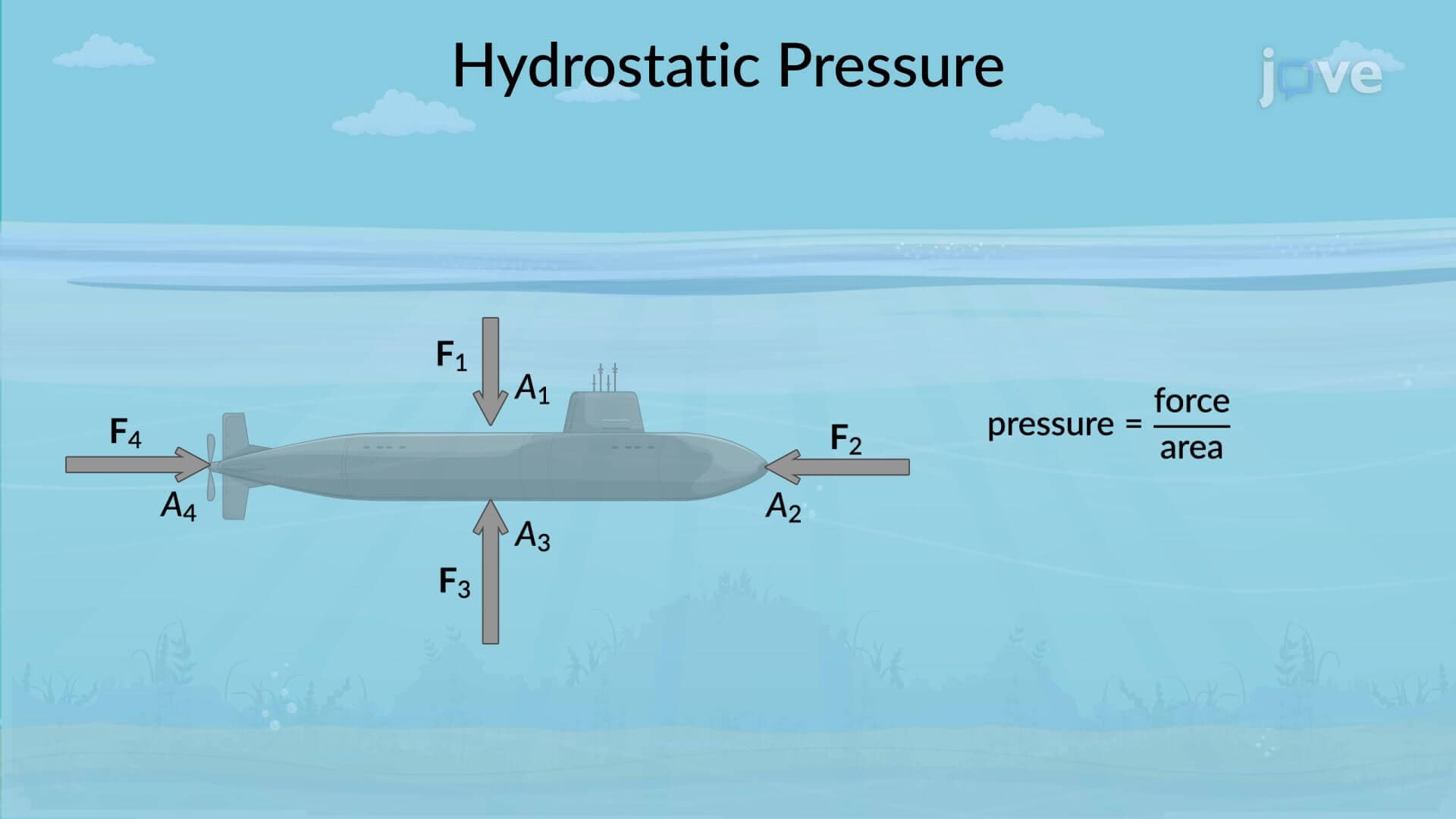
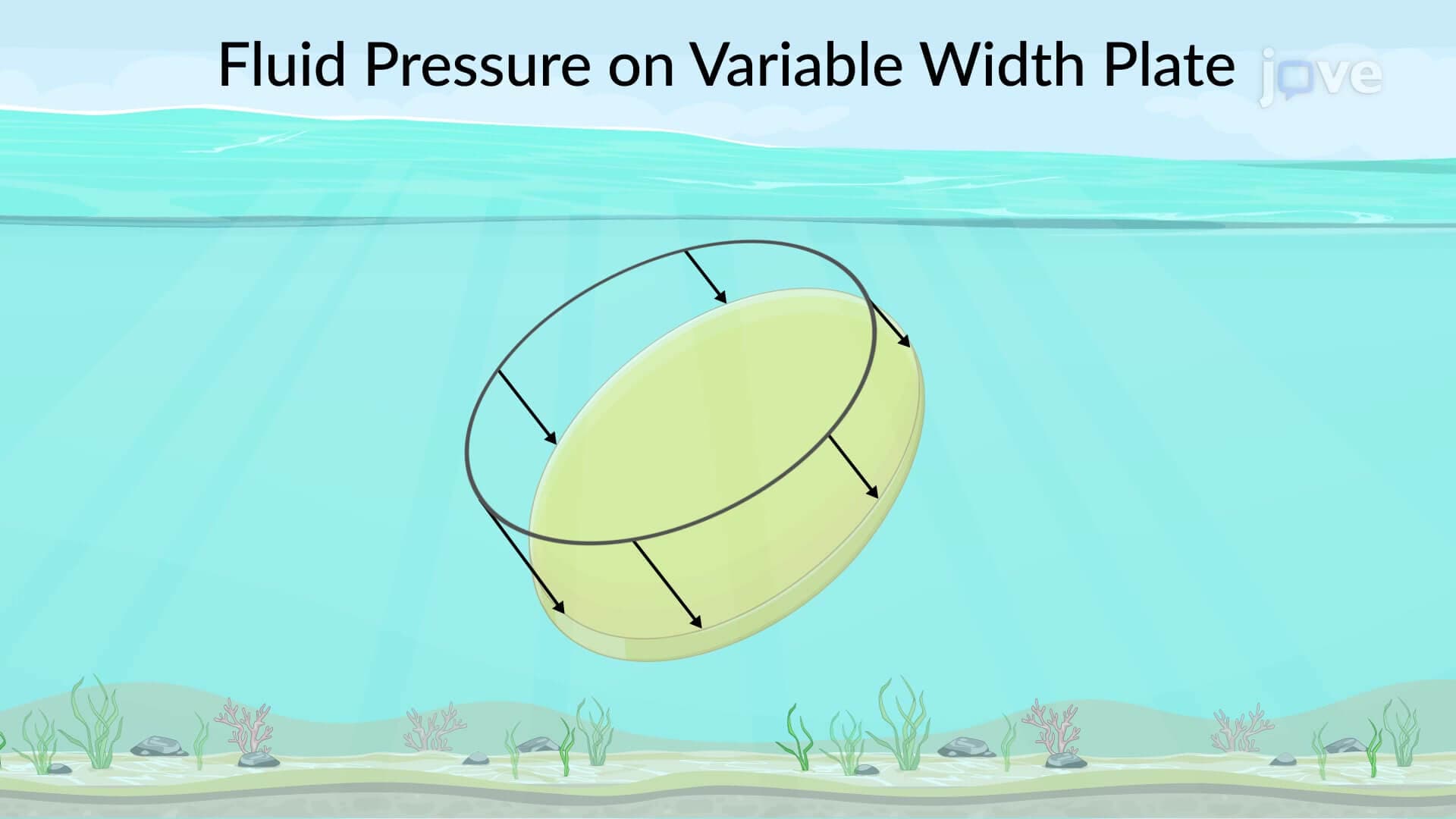
Fluid pressure over curved plate analysis represents one of the most challenging aspects of fluid statics, requiring engineers to account for continuously varying pressure directions. Unlike flat surfaces where hydrostatic pressure acts perpendicular to a single plane, curved plates experience normal forces that change direction at every point along the surface.
This complexity becomes critical in real-world applications. The curved spillway gates at Glen Canyon Dam in Arizona exemplify this principle-engineers must calculate forces that vary both in magnitude and direction across the curved surface to ensure structural integrity under massive water loads.
The key breakthrough in curved plate analysis involves representing the complex pressure distribution as equivalent two-dimensional loading. This method transforms the curved surface problem into manageable components by creating an imaginary rectangular "pressure block" that encompasses the curved plate.
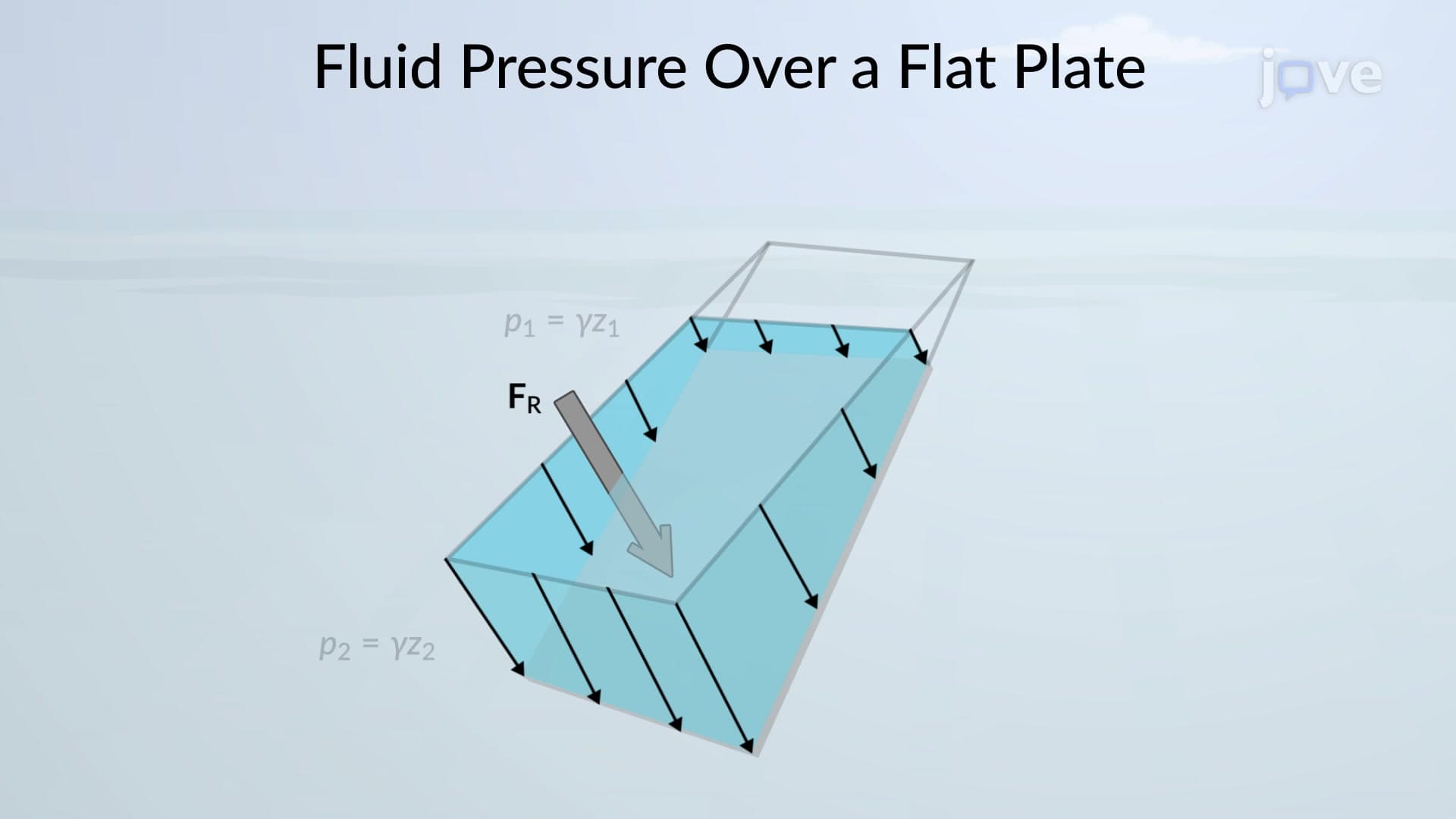
Within this pressure block, three distinct forces emerge. First, the weight of water contained within the block acts vertically downward through the block's centroid. Second, pressure distributions along the vertical sides create trapezoidal loading patterns. Third, horizontal pressure distributions generate rectangular loading patterns with constant magnitude.
Each force component requires specific centroid calculations. The trapezoidal pressure distribution along vertical surfaces has its centroid located at one-third the height from the larger base-a principle students encounter in AP Physics and college-level statics courses. Rectangular pressure distributions have centroids at their geometric centers.
The water weight component presents unique challenges since its centroid depends on the irregular shape of the pressure block. Engineers use integration techniques or break complex shapes into simpler geometric components to locate this centroid accurately.
The final step involves vector addition of all three force components to find the resultant force magnitude and direction. However, determining where this resultant force acts on the curved plate requires applying the principle of moments about a reference point.
This process, fundamental to statics problems on the Fundamentals of Engineering (FE) exam, ensures that the resultant force creates the same rotational effect as the original distributed loading. Students studying for mechanical engineering licensure exams frequently encounter variations of this problem in dam analysis and pressure vessel design contexts.
Related Micro-courses