Loading subject page…


18,855 views

Video Summary: What Is Centroid Body Problem Solving
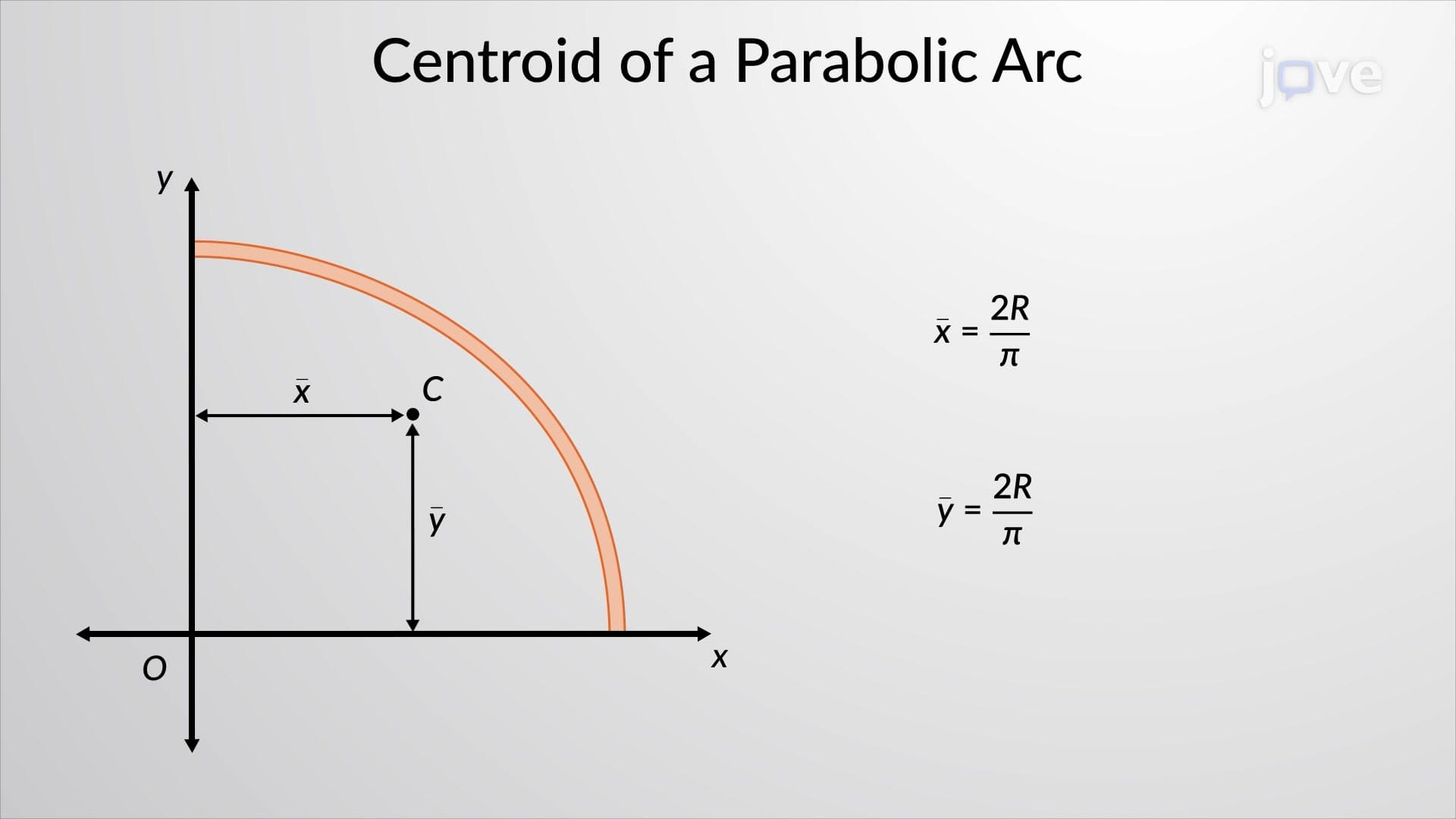
Ever wondered how engineers design the perfect roller coaster loop or calculate where to place support beams on a bridge? Centroid body problem solving is the mathematical technique that answers these critical questions by finding the geometric center of complex shapes. Using a quarter-circle wire as an example, this approach employs polar coordinates and integration to determine precise center points-essential for structural engineering projects like San Francisco's Golden Gate Bridge. Watch the full video on JoVE Coach to master this concept with expert-led visuals and step-by-step explanations.
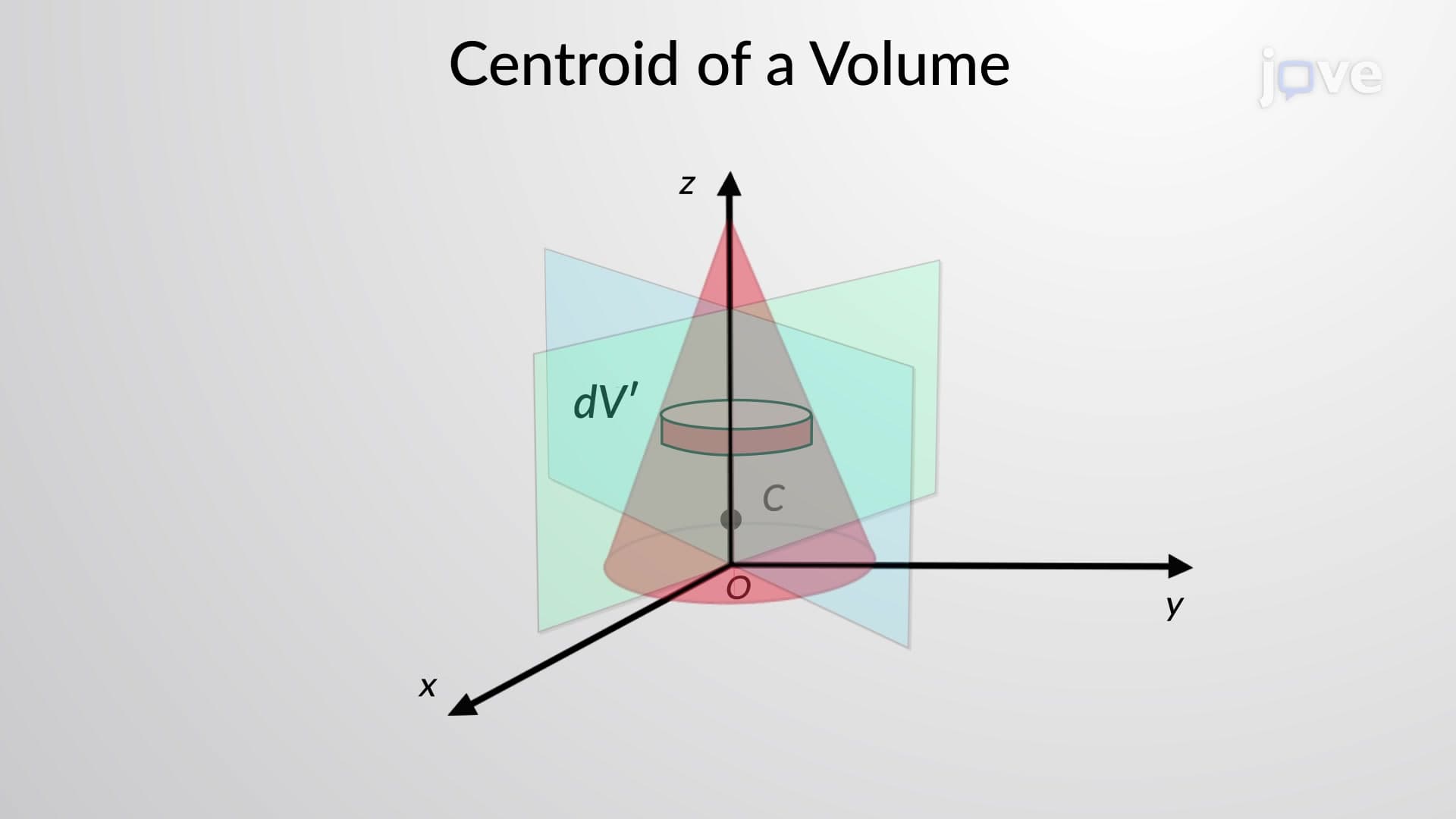
Centroid body problem solving represents a cornerstone concept in engineering mechanics and physics, focusing on determining the geometric center of mass for various shapes and objects. This mathematical approach becomes essential when dealing with irregular geometries where simple formulas don't apply. The technique involves breaking down complex shapes into infinitesimally small elements, calculating each element's contribution, and then integrating to find the overall center point.
When working with curved objects like arcs, circles, or rotating machinery components, polar coordinates provide superior mathematical efficiency compared to Cartesian systems. In the quarter-circle wire example, each differential element spans an angle dθ with length r×dθ, where r represents the radius. This approach appears frequently in mechanical engineering courses at universities like MIT and Stanford, particularly when students analyze rotating shafts, gear systems, or architectural arches.
The integration process for centroid calculations requires careful attention to boundary conditions and symmetry. For a quarter-circle arc extending from 0 to π/2 radians, the x and y coordinates of the centroid become equal due to the shape's inherent symmetry about the 45-degree line. This principle extends to numerous real-world applications, from designing aircraft wing cross-sections at Boeing to calculating load distributions in building frameworks used by construction companies across California and Texas.
Centroid body problem solving frequently appears on Advanced Placement (AP) Physics C: Mechanics exams and college-level statics courses. Students encounter these problems when analyzing composite beams in civil engineering programs, determining center-of-mass locations for spacecraft design at NASA, or calculating stability points for automotive suspensions at Ford and General Motors. The mathematical techniques also prove valuable for MCAT physics sections, where understanding center-of-mass concepts helps explain biological locomotion and balance mechanisms in human anatomy.
Related Micro-courses