Loading video…


 13 Concepts
 18.9K views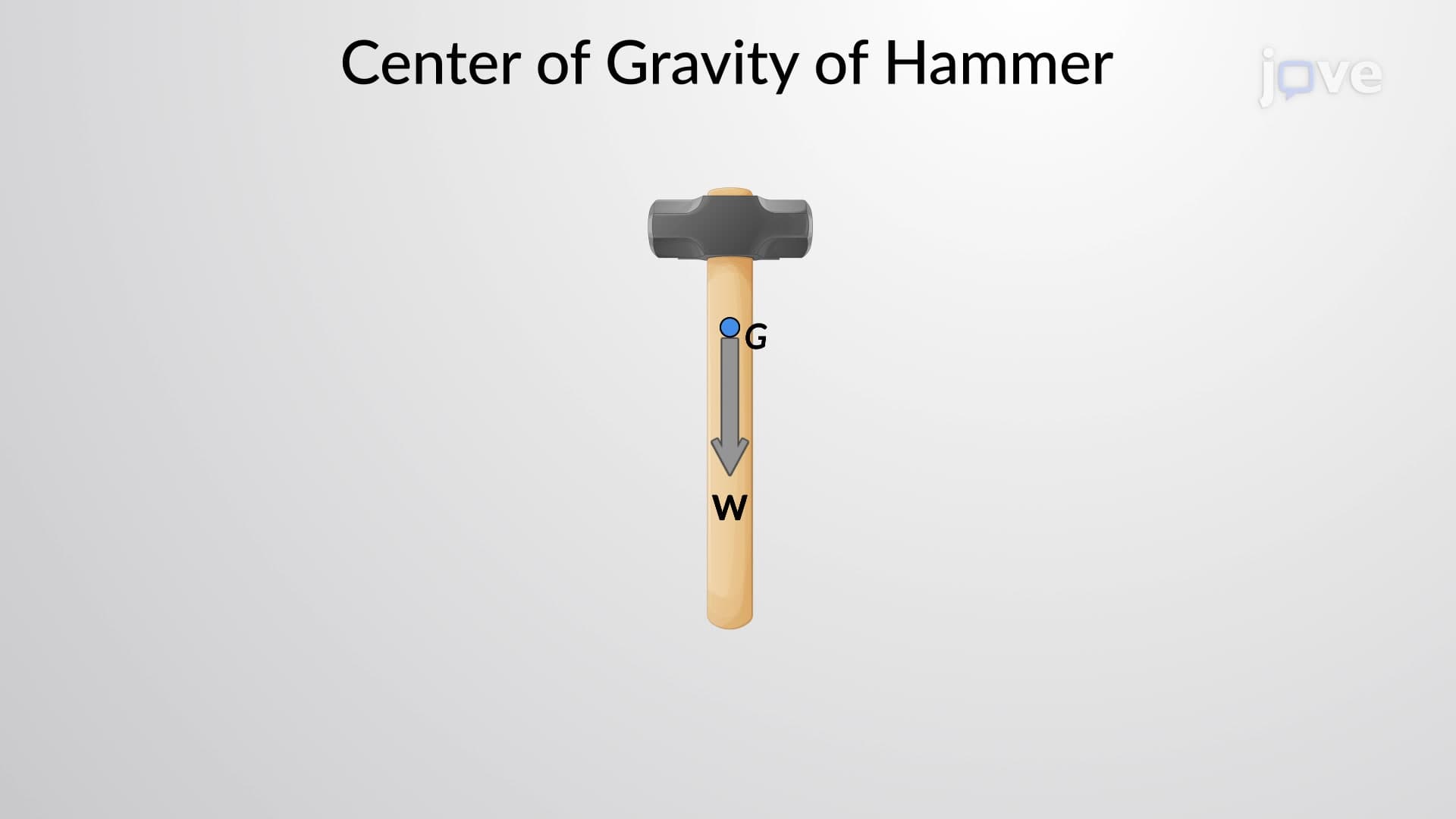

Video Summary: What Is Composite Bodies
Ever wonder why a baseball bat feels different when you grip it at various points, or why a construction crane can lift massive loads without toppling? Composite bodies are combinations of simpler shapes that form complex objects, like the hammer used by carpenters across America. Understanding what is composite bodies involves analyzing how individual parts contribute to the overall center of gravity and performance characteristics. Watch the full video on JoVE Coach to master this concept with expert-led visuals and step-by-step explanations.
Composite bodies represent one of the most practical concepts in physics and engineering, appearing everywhere from the smartphones in students' pockets to the skyscrapers defining American city skylines. Unlike simple geometric shapes such as rectangles or circles, composite bodies definition encompasses any object formed by combining multiple simpler shapes into a single, functional unit. This composite bodies concept bridges theoretical physics with real-world applications that students encounter daily.
The composite bodies study guide approach centers on understanding that each component contributes to the overall system based on its weight and position. When analyzing what is composite bodies in detail, engineers use the principle of weighted averages to determine the center of gravity. For a composite body consisting of multiple parts, the center of gravity coordinates are calculated using: x_cg = (W1×x1 + W2×x2 + W3×x3) / (W1 + W2 + W3), where W represents weight and x represents position coordinates.
This mathematical foundation appears frequently on AP Physics exams and college-level statics courses across universities like MIT, Stanford, and the University of California system. Students preparing for the MCAT will encounter similar principles when studying biomechanical systems and structural analysis.
Understanding composite bodies extends far beyond textbook problems into practical American industries. Consider a Louisville Slugger baseball bat, its composite design balances the heavy barrel with the lighter handle to optimize swing speed and control. Similarly, construction workers using DeWalt hammers rely on composite body principles: a head-heavy design maximizes impact force for driving nails, while a more balanced distribution improves precision control for detailed carpentry work.
The aerospace industry exemplifies composite bodies overview applications, where Boeing and Lockheed Martin engineers must carefully analyze how fuel distribution, passenger seating, and cargo placement affect aircraft stability and performance. Even everyday objects like kitchen knives from Chicago Cutlery demonstrate these principles, the blade's weight distribution relative to the handle determines cutting efficiency and user comfort.
Advanced composite bodies basics involve understanding how varying material densities affect center of gravity calculations. When materials have uniform density, the center of gravity coincides with the geometric centroid, simplifying calculations. However, real-world composite bodies often feature multiple materials with different densities, requiring more sophisticated analysis techniques that students will encounter in advanced physics courses and professional engineering programs.
Related Micro-courses