Loading subject page…

4,623 views

Video Summary: Urine Studies Ii Urine Culture Explained
Did you know that nearly 8 million Americans visit their doctor annually for urinary tract infections, yet many receive ineffective antibiotics due to bacterial resistance? Urine studies II urine culture represents the gold standard diagnostic test that identifies specific UTI-causing bacteria and determines which antibiotics will actually work against them. For instance, when a University of California student develops recurrent UTIs, this precise testing method reveals whether common E. coli strains are resistant to standard treatments like trimethoprim-sulfamethoxazole, guiding targeted therapy. Watch the full video on JoVE Coach to master this concept with expert-led visuals and step-by-step explanations.
Urine studies II urine culture serves as the definitive diagnostic tool for urinary tract infections, going far beyond simple urinalysis to provide specific bacterial identification and antibiotic guidance. This sophisticated laboratory technique has revolutionized UTI management since its development, particularly crucial given that UTIs affect over 150 million people worldwide annually, with women experiencing a 50% lifetime risk.
The clinical significance becomes apparent when considering that empirical antibiotic therapy fails in approximately 20-30% of UTI cases due to increasing bacterial resistance. Students preparing for the MCAT or AP Biology exams should understand that this test bridges microbiology theory with practical clinical application, demonstrating how laboratory science directly impacts patient care.
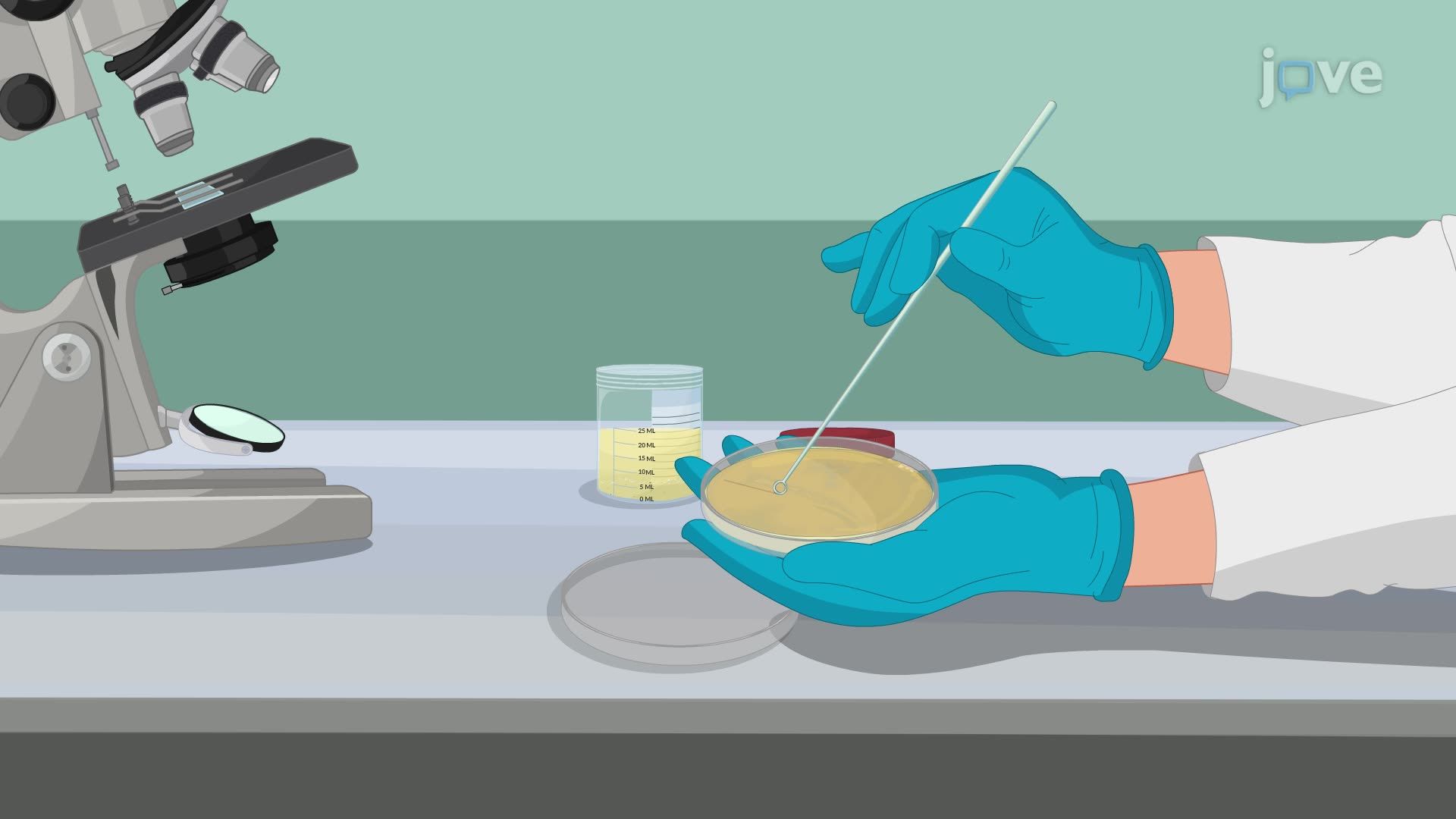
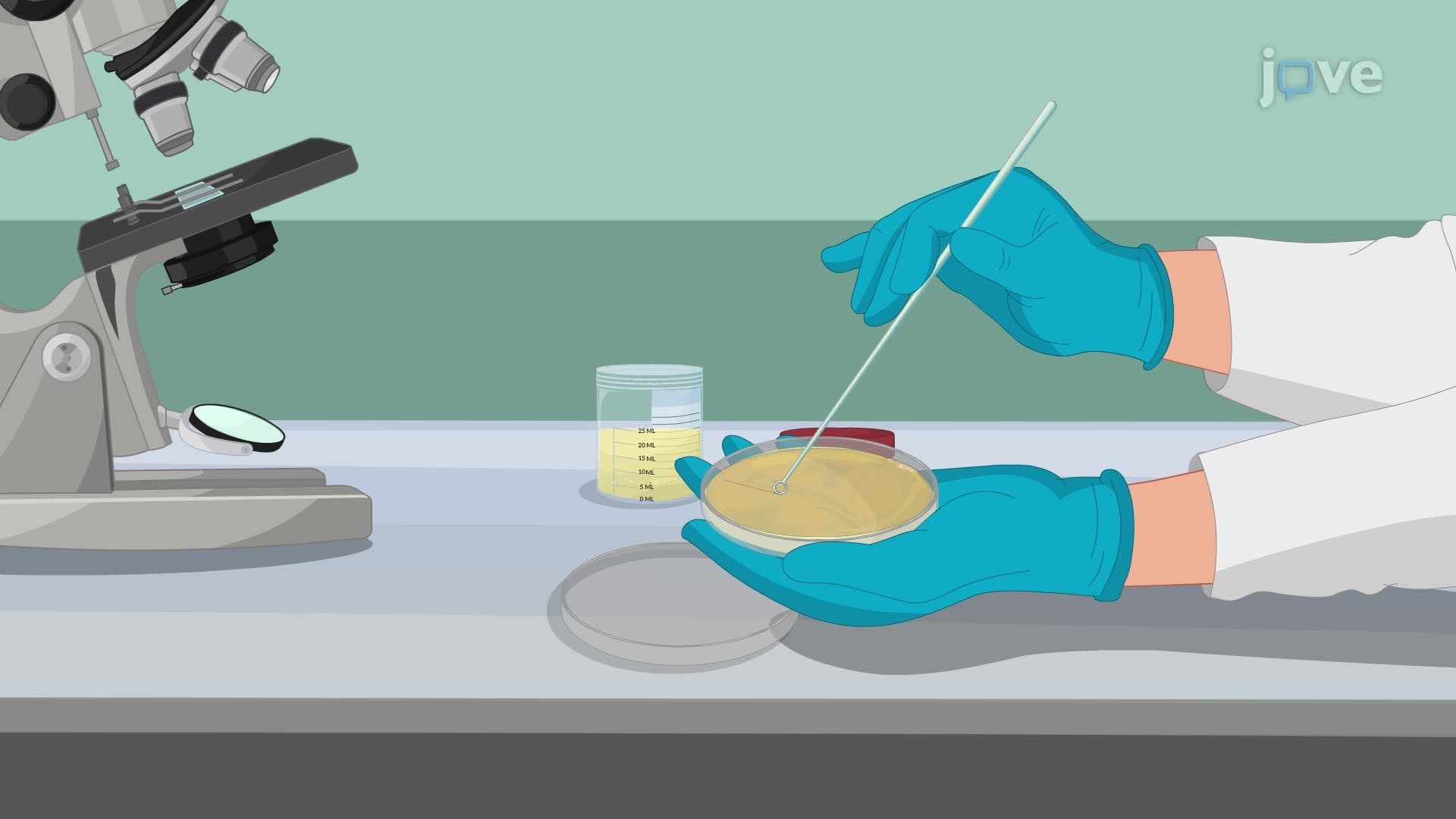
The culture process begins with optimal growth conditions that mimic the human body's environment. Laboratories maintain precise temperatures of 35-37°C (95-98.6°F), matching normal body temperature to encourage bacterial proliferation. Common UTI pathogens each exhibit distinct growth characteristics: E. coli, responsible for 80-85% of uncomplicated UTIs, produces characteristic green metallic sheen on EMB (Eosin Methylene Blue) agar, while Proteus species create a distinctive "fishy" odor and swarming growth pattern.
For college-level microbiology courses, students learn that different media types selectively encourage specific bacterial growth. MacConkey agar differentiates lactose-fermenting organisms, while blood agar reveals hemolytic properties. These distinctions prove essential when identifying mixed bacterial populations or distinguishing pathogenic organisms from normal urogenital flora.
The Kirby-Bauer disc diffusion method represents the gold standard for antibiotic sensitivity testing taught in undergraduate laboratory courses. After bacterial lawn preparation, antibiotic-impregnated discs create concentration gradients as drugs diffuse through the agar. The resulting zones of inhibition correlate with minimum inhibitory concentrations (MICs), determining whether bacteria are susceptible, intermediate, or resistant to specific antibiotics.
Clinical Laboratory Improvement Amendments (CLIA) regulations govern quality control standards for these tests across US healthcare facilities. Students studying for NCLEX or HESI A2 exams should recognize that proper interpretation prevents treatment failures and reduces healthcare costs. For example, identifying methicillin-resistant Staphylococcus aureus (MRSA) in complicated UTIs requires alternative antibiotics like vancomycin or linezolid, significantly impacting treatment protocols.
Modern healthcare increasingly relies on rapid diagnostic techniques, with some facilities implementing automated systems that provide results within 6-8 hours rather than traditional 24-48 hour timeframes. This acceleration proves critical in emergency departments where delayed appropriate therapy can lead to urosepsis, particularly dangerous for elderly patients or those with diabetes.
Students entering healthcare professions should understand that urine culture results guide antimicrobial stewardship programs, helping combat the growing threat of antibiotic resistance. The Centers for Disease Control and Prevention (CDC) estimates that 30% of antibiotics prescribed in outpatient settings are unnecessary, making precise diagnostic testing increasingly valuable for both individual patient outcomes and public health initiatives.
Related Micro-courses