Loading video…


 8 Concepts
 201.3K views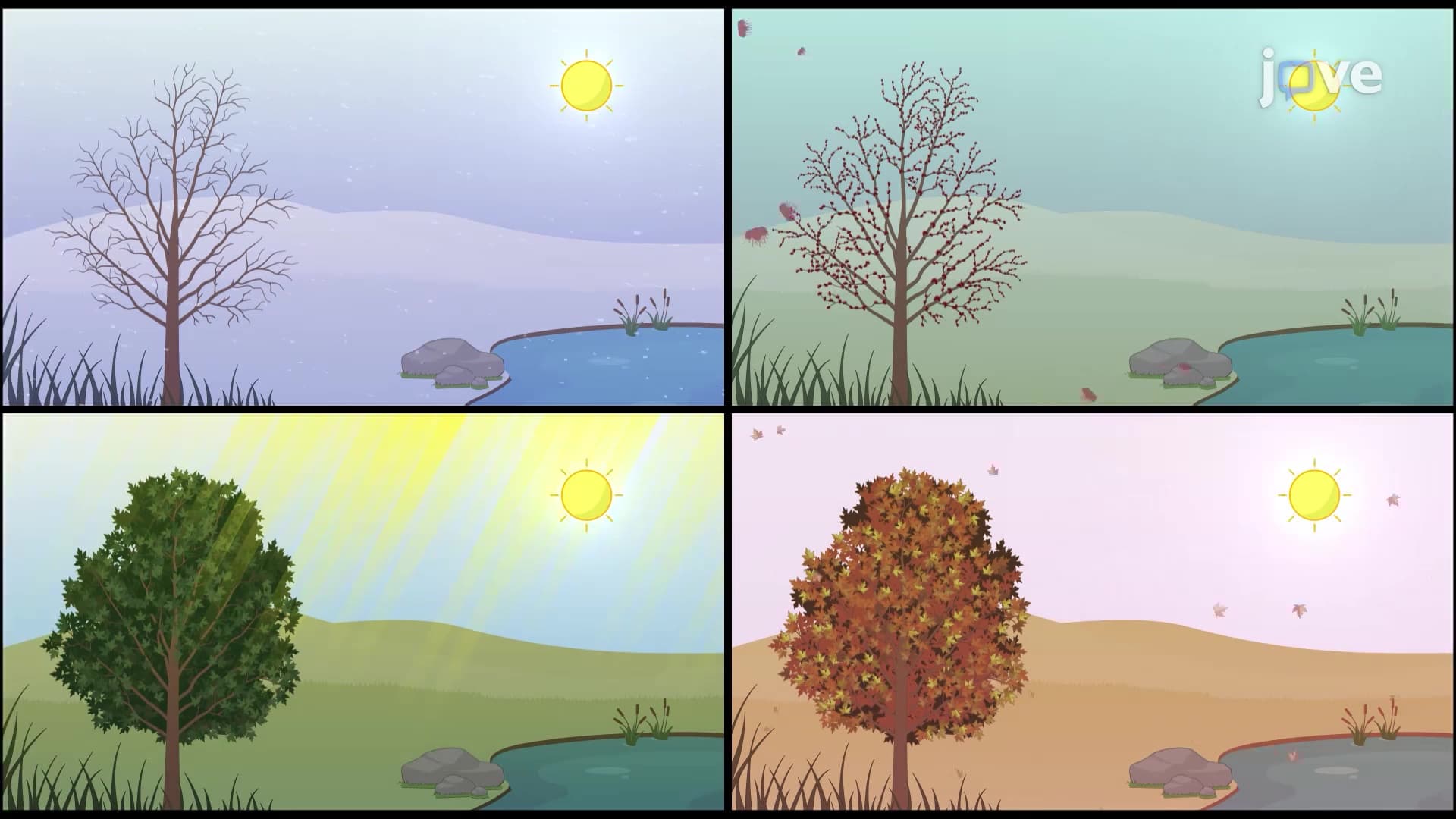

Video Summary: Biological Clocks and Seasonal Responses Explained
Ever wondered how maple trees in Vermont know exactly when to burst into fall colors? Biological clocks seasonal responses enable plants to perfectly time their life cycles with changing seasons through sophisticated internal timekeeping mechanisms. Cherry blossoms in Washington D.C. bloom precisely each spring because their phytochrome systems measure daylight duration to trigger flowering. Understanding Biological Clocks And Seasonal Responses Explained reveals how plants use light-sensitive receptors and circadian rhythms to synchronize with environmental changes. Watch the full video on JoVE Coach to master this concept with expert-led visuals and step-by-step explanations.
Plants demonstrate remarkable precision in timing their life events with seasonal changes. Biological clocks seasonal responses represent sophisticated molecular mechanisms that enable organisms to anticipate and respond to predictable environmental cycles. These internal timekeeping systems operate on multiple temporal scales, from daily circadian rhythms to annual seasonal cycles, ensuring plants maximize their reproductive success and survival.
At the heart of plant seasonal responses lies the phytochrome system, comprising specialized light-sensitive proteins that function as biological photoreceptors. These molecules exist in two interconvertible forms: the inactive Pr (red-absorbing) form and the active Pfr (far-red absorbing) form. During daylight hours, abundant red light converts Pr to the biologically active Pfr form, which can then migrate to the nucleus and regulate gene expression patterns critical for seasonal responses.
The genius of this system lies in its temporal measurement capabilities. As night falls, Pfr slowly reverts to Pr or undergoes enzymatic degradation. The duration of darkness determines how much Pfr remains by dawn, longer winter nights result in complete Pfr depletion, while shorter spring nights preserve substantial Pfr levels. This Pr:Pfr ratio serves as a molecular calendar, informing plants about seasonal progression.
Biological clocks and seasonal responses study guide concepts frequently appear on AP Biology exams, particularly regarding photoperiodism, biological responses to day length. Plants exhibit distinct photoperiodic categories: long-day plants (like spinach and wheat) require extended daylight periods to flower, while short-day plants (such as chrysanthemums and soybeans) flower when days shorten. Day-neutral plants flower regardless of photoperiod length.
Understanding these mechanisms proves crucial for agricultural applications across the United States. Farmers in northern states like Minnesota must select crop varieties adapted to their region's photoperiod patterns, while greenhouse operators manipulate lighting to control flowering timing for commercial flower production.
The interaction between circadian clocks and seasonal responses creates a sophisticated temporal control system. Internal biological clocks maintain approximately 24-hour rhythms even in constant conditions, but environmental light cues fine-tune these rhythms daily. This circadian-photoperiod integration ensures plants respond appropriately to genuine seasonal changes while ignoring temporary weather fluctuations.
Modern research reveals these principles extend beyond plants to human biology, making biological clocks seasonal definition concepts relevant for pre-med students preparing for the MCAT. Seasonal Affective Disorder and jet lag represent human manifestations of disrupted circadian-photoperiod relationships.
Related Micro-courses