Loading subject page…


201,300 views

Video Summary: Responses to Gravity and Touch Explained
Ever wonder how a vine wrapping around your garden trellis knows exactly where to grow? Responses to gravity and touch are fundamental plant behaviors that help organisms navigate their environment through specialized cellular mechanisms. Consider how California redwood roots grow deep into the earth while their shoots reach toward the sky-this demonstrates gravitropism in action. Plants also exhibit thigmotropism, where climbing species like Virginia creeper adjust their growth in response to physical contact. These responses to gravity and touch explained reveal how plants survive and thrive in complex environments. Watch the full video on JoVE Coach to master this concept with expert-led visuals and step-by-step explanations.
Plant movement responses represent sophisticated biological systems that allow organisms to optimize their position relative to environmental stimuli. These tropisms-directional growth responses-enable plants to maximize resource acquisition while minimizing energy expenditure. For students preparing for AP Biology or college botany courses, understanding these mechanisms provides insight into how plants survive without nervous systems.
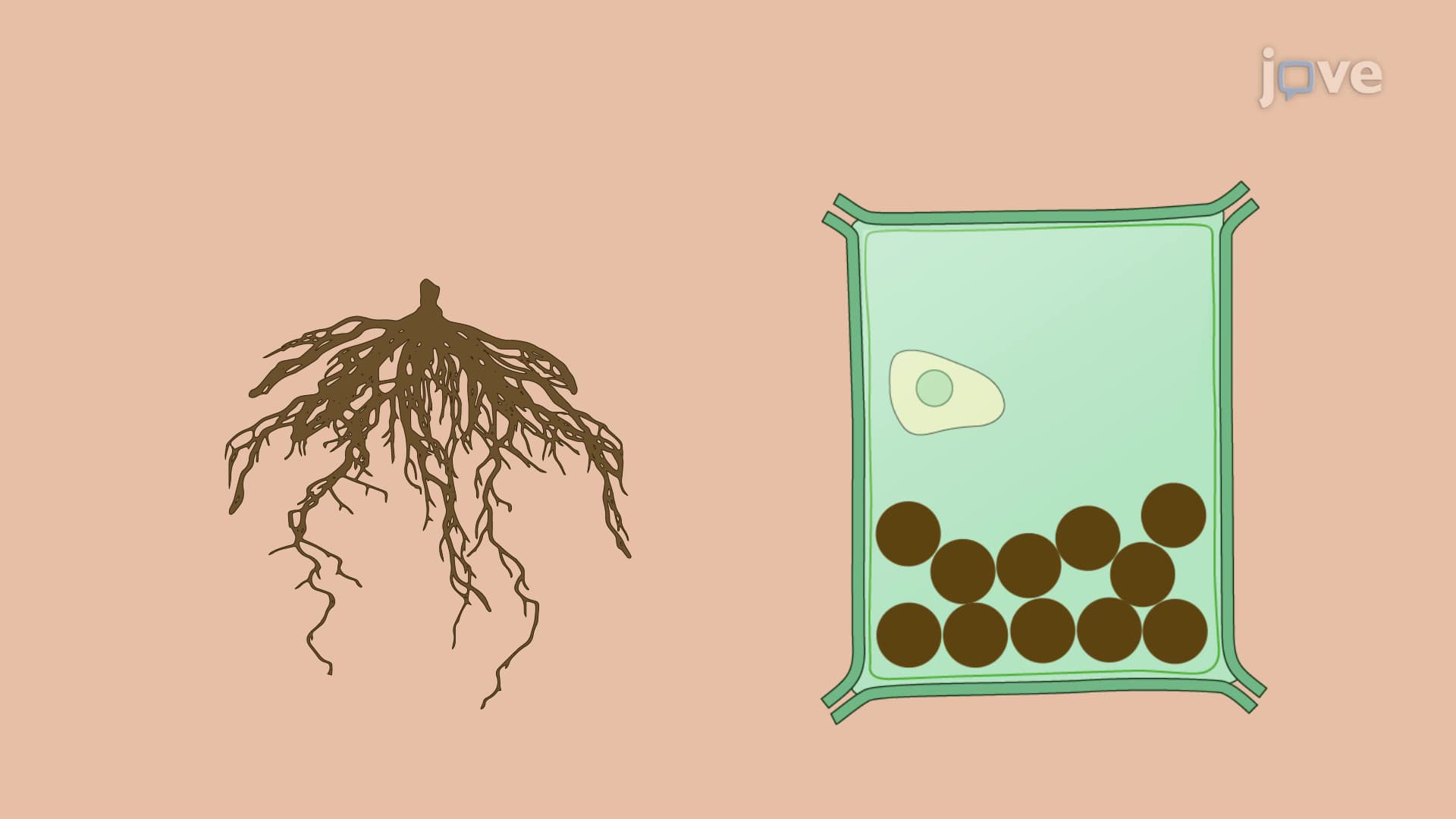
Gravitropism relies on specialized cellular machinery within root cap cells called statocytes. These gravity-sensing cells contain dense, starch-filled organelles known as amyloplasts or statoliths. When gravity acts on these dense structures, they settle toward the bottom of cells, creating an internal "compass" that indicates gravitational direction.
The cellular response involves asymmetrical hormone distribution, particularly auxin, which regulates cell elongation patterns. In roots experiencing positive gravitropism, cells on the upper side elongate more rapidly than those below, causing downward curvature. Shoots demonstrate the opposite pattern through negative gravitropism, with lower cells elongating more to bend upward. This differential growth mechanism appears frequently on MCAT biology sections and college physiology exams.
Touch responses in plants involve mechanosensitive cellular processes that detect physical contact. When climbing plants like grape vines or morning glory encounter support structures, specialized tendrils exhibit rapid coiling responses. The touch stimulus triggers differential cell behavior-contact-side cells contract while opposite-side cells elongate, creating the characteristic spiral growth pattern.
Root systems demonstrate negative thigmotropism by growing away from obstacles, following paths of least soil resistance. This behavior proves especially important for agricultural crops in rocky or compacted soils. Students studying plant physiology should note how these responses optimize nutrient and water uptake efficiency.
These concepts frequently appear in standardized testing scenarios. AP Biology students encounter questions about hormone gradients in gravitropic responses, while college botany courses explore the evolutionary advantages of different tropism types. Understanding cellular mechanisms helps students tackle both multiple-choice questions and free-response essays about plant adaptation strategies.
In agricultural applications, knowledge of plant tropisms guides crop management decisions, from vineyard trellising systems to root vegetable cultivation techniques. These real-world connections make abstract cellular concepts more memorable for exam preparation.
Related Micro-courses