Loading subject page…


201,300 views

Video Summary: What are Plant Hormones
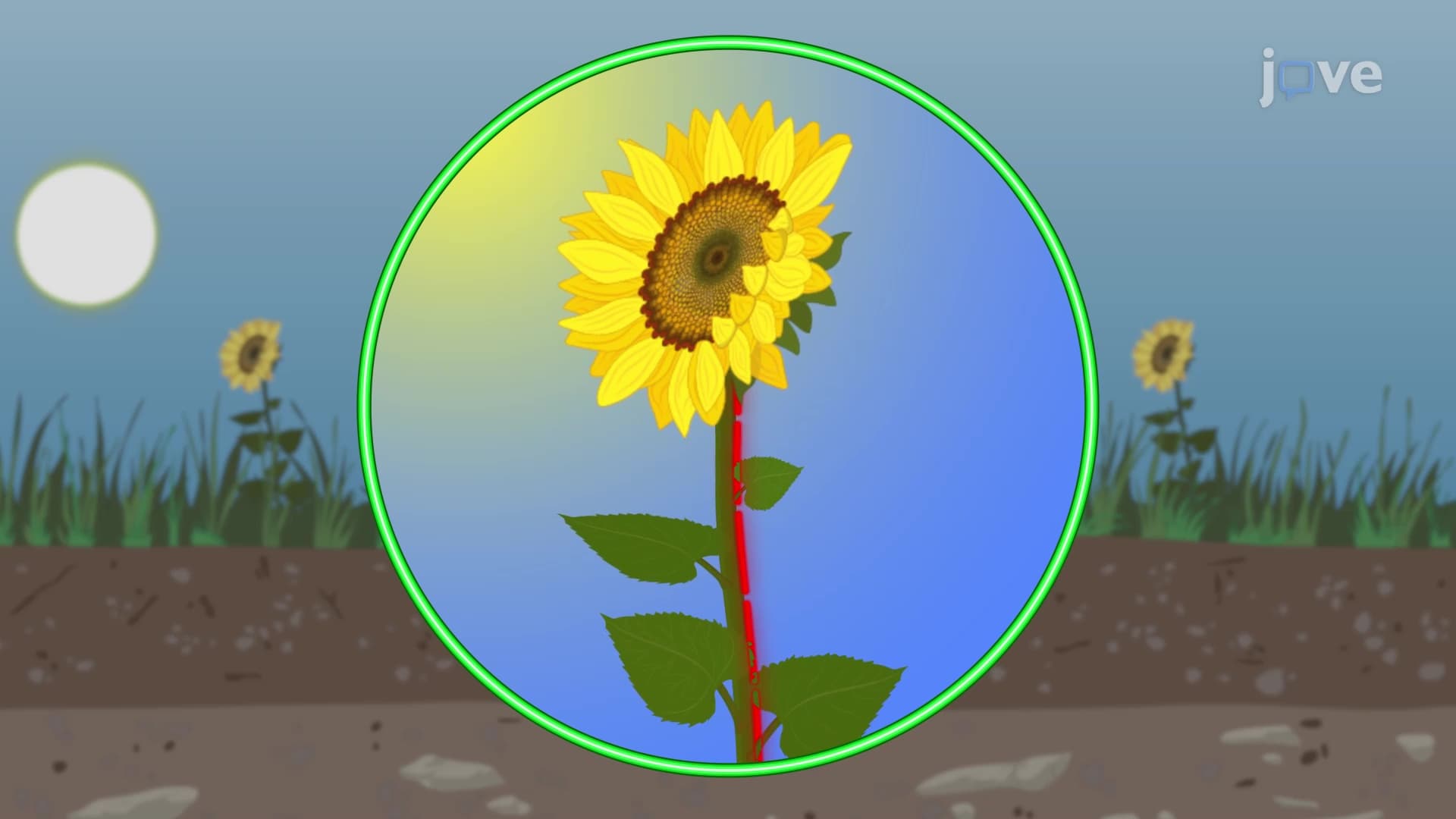
Ever wonder why California sunflowers perfectly track the sun across the sky throughout the day? Plant hormones are the chemical messengers that orchestrate this remarkable behavior and countless other plant responses. These signaling molecules, produced in tiny amounts, control everything from stem growth to fruit ripening in crops across American farms. Understanding what are plant hormones reveals the sophisticated communication system that allows plants to respond to their environment and coordinate complex developmental processes. Watch the full video on JoVE Coach to master this concept with expert-led visuals and step-by-step explanations.
Plant hormones, also known as phytohormones, represent one of biology's most elegant communication systems. Unlike animal hormones that travel through circulatory systems, plant hormones move through vascular tissues and cell-to-cell transport to coordinate responses across entire organisms. These chemical messengers are produced in extremely small concentrations-often measured in parts per million-yet they trigger dramatic physiological changes that determine plant survival and success.
The discovery of plant hormones revolutionized our understanding of plant behavior. Charles Darwin's early observations of phototropism in grass seedlings laid the groundwork for identifying auxin, the first plant hormone discovered. Today, we recognize that plants use these chemical signals to integrate environmental information and coordinate complex developmental programs, from seed germination to senescence.
Auxins, primarily indole-3-acetic acid (IAA), serve as master regulators of plant growth patterns. These hormones accumulate on the shaded side of stems during phototropism, causing differential cell elongation that bends plants toward light sources. This mechanism explains why corn plants in Midwest fields uniformly lean toward maximum sunlight exposure.
In root development, auxins promote cell division in the apical meristem and regulate lateral root formation. Commercial nurseries exploit this property by treating plant cuttings with synthetic auxins like NAA (naphthaleneacetic acid) to accelerate root development in propagation programs. This application is crucial for producing millions of ornamental plants sold in American garden centers annually.
Cytokinins work synergistically with auxins to control plant architecture through their primary role in promoting cell division. The auxin-to-cytokinin ratio determines whether plant tissues develop into roots (high auxin) or shoots (high cytokinin), a principle used in tissue culture laboratories to regenerate complete plants from single cells.
Ethylene, unique as a gaseous hormone, regulates senescence processes including leaf drop and fruit ripening. American fruit distributors utilize ethylene's ripening effects by shipping green bananas and tomatoes, then exposing them to ethylene gas in ripening rooms to achieve optimal color and texture for retail sale. This controlled ripening system allows fresh produce to reach consumers across vast distances while maintaining quality.
Understanding plant hormones is essential for success in AP Biology, college botany courses, and MCAT preparation, where students encounter detailed questions about hormone mechanisms and agricultural applications.
Related Micro-courses