Loading subject page…


14,314 views

Video Summary: Circadian Rhythms and Gene Regulation Explained
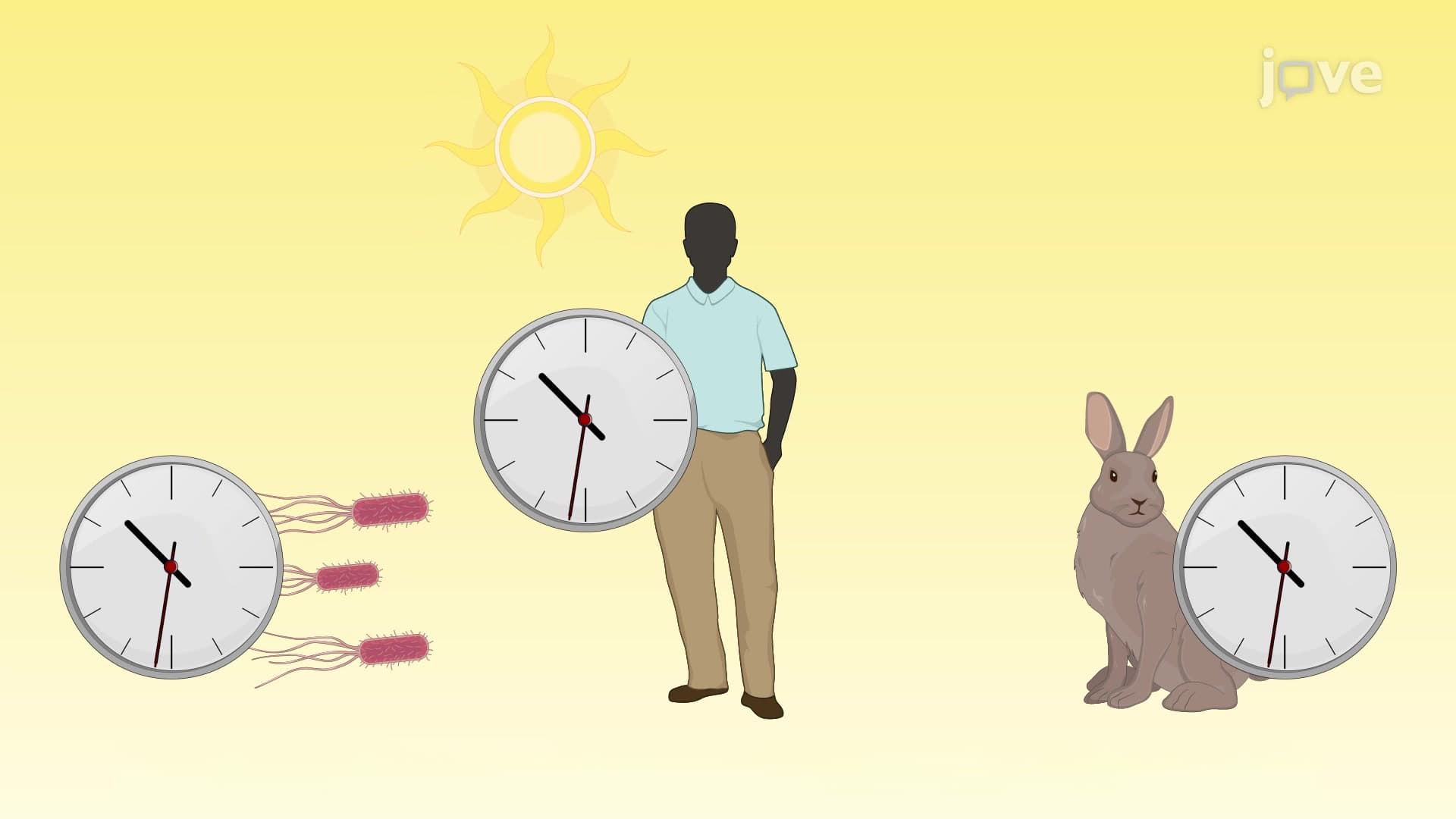
Ever wonder why you naturally feel sleepy around 10 PM or wake up at sunrise even without an alarm? Circadian rhythms and gene regulation control these precise 24-hour biological cycles through molecular clocks in your cells. Shift workers at major US hospitals like Mayo Clinic often struggle with disrupted sleep patterns because their internal clocks conflict with work schedules. Watch the full video on JoVE Coach to master this concept with expert-led visuals and step-by-step explanations.
Circadian Rhythms And Gene Regulation represents one of biology's most elegant timing systems, operating like a molecular Swiss watch in nearly every cell of your body. These approximately 24-hour cycles evolved to anticipate daily environmental changes, giving organisms survival advantages by coordinating physiology with predictable day-night patterns. The term "circadian" comes from Latin meaning "about a day," reflecting these rhythms' remarkable precision.
At the cellular level, circadian timing depends on interlocked transcriptional-translational feedback loops involving four core genes: CLOCK, BMAL1, PERIOD (PER), and CRYPTOCHROME (CRY). This molecular machinery functions like a genetic pendulum, with protein levels rising and falling in precise 24-hour patterns.
The circadian molecular clock operates through an elegant negative feedback system. CLOCK and BMAL1 proteins form heterodimeric complexes that bind to E-box sequences in gene promoters, activating transcription of PER and CRY genes during the day. As PER and CRY protein levels accumulate over several hours, they undergo post-translational modifications including phosphorylation by kinases like CKI epsilon, which affects their stability and nuclear localization.
Eventually, PER-CRY complexes translocate to the nucleus and inhibit CLOCK-BMAL1 transcriptional activity, effectively shutting down their own gene expression. As PER and CRY proteins degrade overnight, CLOCK-BMAL1 activity rebounds, restarting the cycle. This creates the fundamental ~24-hour oscillation that drives circadian rhythms.
Light serves as the primary zeitgeber (time-giver) that synchronizes internal clocks with the external environment. Specialized retinal ganglion cells detect light and send signals to the brain's master pacemaker in the suprachiasmatic nucleus (SCN), which then coordinates peripheral clocks throughout the body.
Circadian disruption, common among night-shift workers at facilities like Johns Hopkins Hospital or Boeing manufacturing plants, increases risks for metabolic syndrome, cardiovascular disease, and certain cancers. This knowledge has practical applications in chronotherapy-timing medical treatments to circadian phases for maximum efficacy and minimum side effects.
For AP Biology and college-level cell biology courses, circadian regulation exemplifies how gene expression responds to environmental signals. MCAT questions often test understanding of feedback loops and their disruption. Students should recognize how circadian biology connects molecular mechanisms to organism-level physiology, demonstrating systems biology principles crucial for pre-med and life science majors.
Related Micro-courses