Loading subject page…


235,304 views

Video Summary: What are Cooperative Allosteric Transitions
Why does your blood carry oxygen so efficiently from your lungs to your muscles during exercise? The answer lies in cooperative allosteric transitions, a fascinating molecular mechanism where proteins change their shape and binding behavior in response to environmental cues. Hemoglobin, the oxygen-carrying protein in red blood cells, exemplifies this process by becoming increasingly eager to bind oxygen once the first oxygen molecule attaches. This cooperative behavior enables precise control of biological processes, from enzyme regulation in metabolic pathways to drug responses in pharmaceutical treatments. Watch the full video on JoVE Coach to master this concept with expert-led visuals and step-by-step explanations.
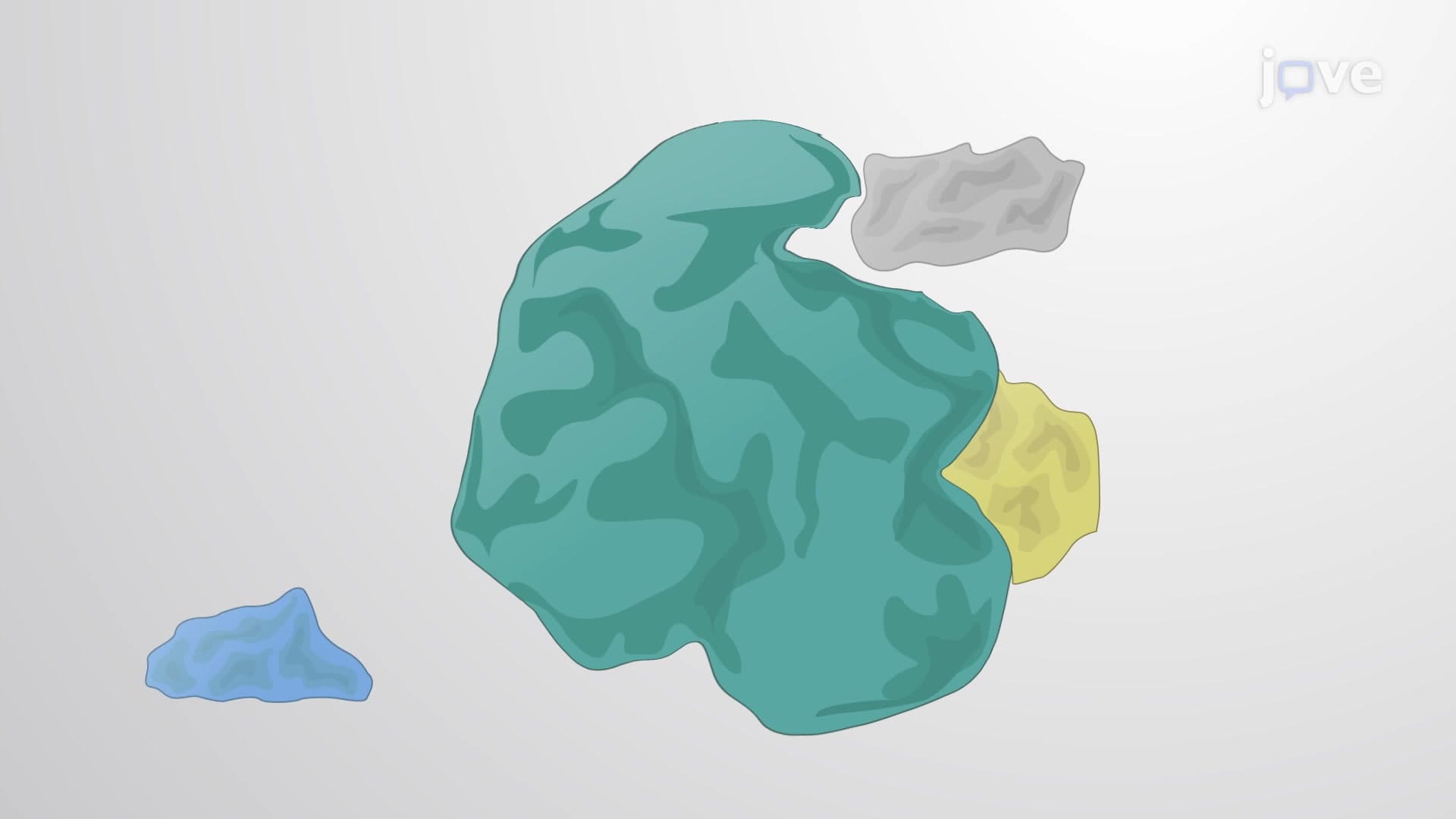
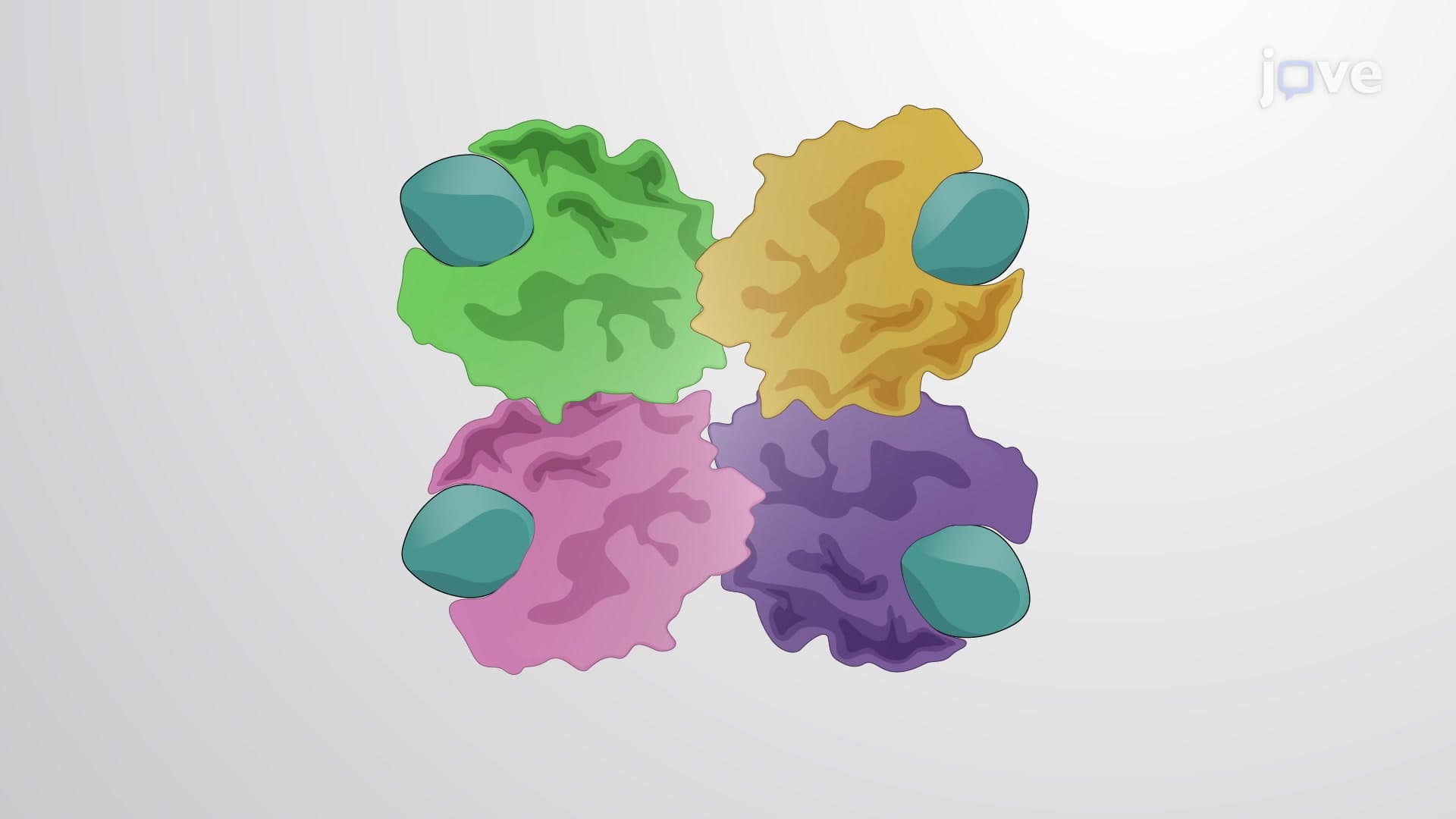
Cooperative allosteric transitions represent one of biology's most elegant regulatory mechanisms, allowing proteins to act as molecular switches that amplify small changes in ligand concentration into dramatic functional responses. Unlike simple binding events, these transitions involve communication between multiple binding sites on a protein, where occupancy at one site influences the affinity at distant sites through conformational changes.
Two primary models explain how cooperative allosteric transitions occur. The Monod-Wyman-Changeux (MWC) model proposes that proteins exist in equilibrium between two distinct conformational states: a tense (T) state with low ligand affinity and a relaxed (R) state with high affinity. Ligand binding shifts this equilibrium toward the R state, simultaneously increasing affinity at all remaining sites. Alternatively, the Koshland-Némethy-Filmer (KNF) model suggests that ligand binding induces sequential conformational changes that propagate through the protein structure, gradually increasing affinity at neighboring sites.
The degree of cooperativity is measured using Hill coefficients (nH), derived from Hill plots that graph log[ligand bound/(ligand unbound)] versus log[ligand concentration]. A Hill coefficient of 1.0 indicates no cooperativity, while values greater than 1.0 demonstrate positive cooperativity. Hemoglobin exhibits a Hill coefficient of approximately 2.8, reflecting strong positive cooperativity that enables the sigmoid oxygen-binding curve essential for efficient oxygen transport.
Cooperative allosteric transitions appear throughout human physiology, from hemoglobin's oxygen transport to glycogen phosphorylase regulation in muscle contraction. In clinical settings, understanding these mechanisms helps explain conditions like sickle cell anemia, where altered hemoglobin cooperativity affects oxygen delivery. Pharmaceutical companies increasingly target allosteric sites for drug development, as these locations often provide more selective therapeutic interventions than active sites.
Students preparing for AP Biology, MCAT, or college biochemistry courses should focus on graphical analysis of binding curves, mathematical relationships in Hill equations, and real-world examples like carbon monoxide poisoning, which disrupts hemoglobin cooperativity. Practice problems often involve interpreting Hill plots, calculating binding constants, and predicting how allosteric effectors influence protein function in metabolic pathways.
Related Micro-courses