Loading subject page…


235,304 views

Video Summary: What are Ribozymes
Did you know that RNA molecules can act as scissors, cutting other RNA with surgical precision? Ribozymes are revolutionary RNA molecules that catalyze biochemical reactions, overturning the dogma that only proteins could function as enzymes. The FDA has approved ribozyme-based therapies for treating diseases like hepatitis B, showcasing their therapeutic potential. These catalytic RNAs earned Thomas Cech and Sidney Altman the 1989 Nobel Prize in Chemistry for discovering that RNA can be both information carrier and catalyst. Watch the full video on JoVE Coach to master this concept with expert-led visuals and step-by-step explanations.
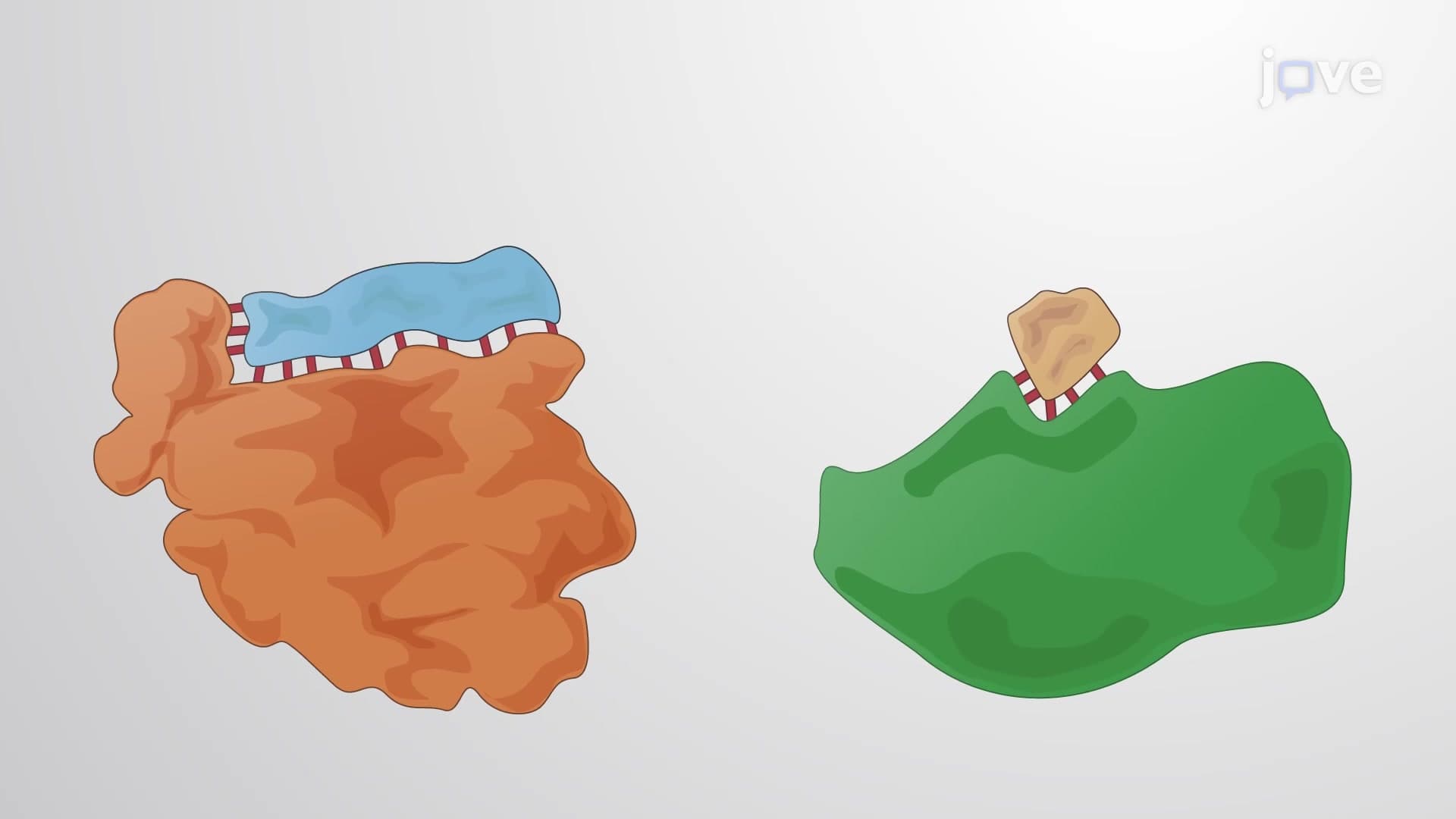
Ribozymes represent one of molecular biology's most groundbreaking discoveries. These RNA molecules possess the remarkable ability to catalyze specific biochemical reactions, fundamentally altering our understanding of cellular catalysis. Unlike traditional enzymes made of proteins, ribozymes demonstrate that nucleic acids can fold into complex three-dimensional structures capable of accelerating chemical reactions.
The catalytic power of ribozymes stems from their ability to fold into intricate secondary and tertiary structures. These structures create active sites where specific chemical bonds can be formed or broken. Ribozymes employ several catalytic mechanisms, including acid-base catalysis, where specific nucleotides act as proton donors or acceptors, and metal ion catalysis, where magnesium or other metal ions facilitate bond formation or cleavage.
The hammerhead ribozyme, one of the smallest known ribozymes, exemplifies these principles. Its characteristic structure resembles a hammerhead shark when viewed in cross-section, with conserved nucleotides forming the catalytic core. This ribozyme cleaves RNA substrates through a transesterification reaction, producing products with 2',3'-cyclic phosphate and 5'-hydroxyl termini.
Ribozymes play crucial roles in fundamental cellular processes. Self-splicing introns, discovered in the ciliated protozoan *Tetrahymena thermophila*, can remove themselves from pre-mRNA without requiring protein cofactors. RNase P, another well-studied ribozyme, processes transfer RNA precursors by cleaving the 5' leader sequence. These discoveries revealed that RNA processing could occur through intrinsic RNA catalysis rather than solely through protein enzymes.
The ribosome itself contains ribozyme activity within its peptidyl transferase center, where peptide bond formation occurs during protein synthesis. This finding suggests that the most fundamental process of protein synthesis relies on RNA catalysis, supporting the evolutionary significance of ribozymes.
Modern medicine has begun harnessing ribozymes for therapeutic purposes. Researchers at institutions like Johns Hopkins University and the University of California system have developed ribozyme-based treatments for viral infections, cancer, and genetic disorders. These therapeutic ribozymes can be designed to cleave specific disease-related mRNA sequences, effectively silencing harmful genes.
For students preparing for the MCAT or AP Biology exams, understanding ribozymes is essential for grasping concepts of enzyme kinetics, molecular evolution, and gene regulation. College-level biochemistry courses frequently examine ribozyme mechanisms as examples of non-protein catalysis.
Related Micro-courses