Loading subject page…


145,115 views


Video Summary: What Is the Supercomplexes
Ever wonder how your muscles generate energy during a marathon? The supercomplexes are sophisticated protein assemblies in mitochondria that supercharge cellular energy production by clustering electron transport chain components together. In cardiac muscle cells of athletes, these molecular machines work overtime to meet extreme energy demands during events like the Boston Marathon. These assemblies dramatically improve efficiency by reducing the distance electrons must travel between complexes, while also protecting cells from harmful reactive oxygen species. Watch the full video on JoVE Coach to master this concept with expert-led visuals and step-by-step explanations.
The supercomplexes represent an evolutionary advancement in cellular energy production, transforming how we understand mitochondrial function. Unlike the traditional model where electron transport chain complexes (I, II, III, and IV) operate as separate entities, supercomplexes organize these components into highly efficient assemblies that dramatically enhance ATP synthesis.
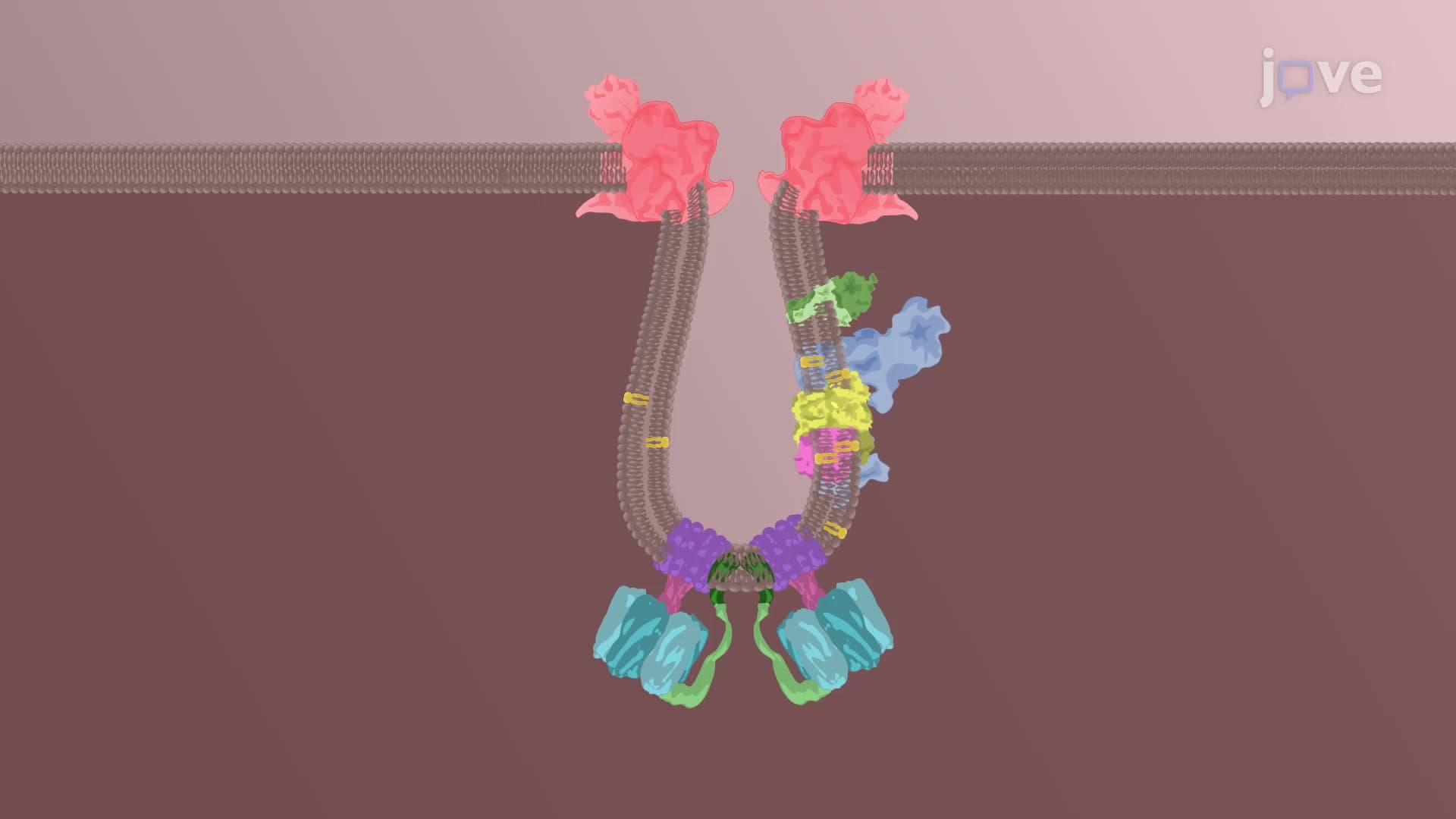
Cardiolipin, a unique four-chain phospholipid found exclusively in mitochondrial membranes, serves as the architectural foundation for supercomplex formation. This specialized lipid acts as molecular scaffolding, strategically positioning complexes I, III, and IV into stable assemblies called respirasomes. The most common configuration, the I₁III₂IV₁ supercomplex, contains one copy of complex I, two copies of complex III, and one copy of complex IV.
Research at institutions like Harvard Medical School and Johns Hopkins University has revealed that supercomplex assembly is dynamic and responds to cellular energy demands. During periods of high metabolic activity, cells can rapidly reorganize their electron transport machinery into these efficient supercomplexes.
The proximity advantage in supercomplexes cannot be overstated. By reducing inter-complex distances from hundreds of nanometers to just 10-20 nanometers, electron transfer rates increase exponentially. Mobile carriers like cytochrome c and coenzyme Q can shuttle electrons between complexes up to 10 times faster than in discrete arrangements.
This efficiency boost proves crucial in high-energy tissues. Cardiac myocytes in athletes, for example, maintain extensive supercomplex networks to support sustained performance. Similarly, neurons rely heavily on supercomplex organization to meet their constant energy demands, which explains why mitochondrial dysfunction often manifests first in neurological symptoms.
Supercomplex dysfunction underlies numerous metabolic disorders studied extensively at medical centers like the Mayo Clinic and Cleveland Clinic. Barth syndrome, caused by cardiolipin deficiency, exemplifies how disrupted supercomplex assembly leads to severe cardiomyopathy and muscle weakness. Understanding these connections helps medical students preparing for the MCAT and USMLE recognize the clinical significance of mitochondrial organization.
For AP Biology students, supercomplex concepts frequently appear in cellular respiration questions, particularly those examining factors affecting ATP yield and metabolic efficiency.
Related Micro-courses