Loading subject page…


58,702 views
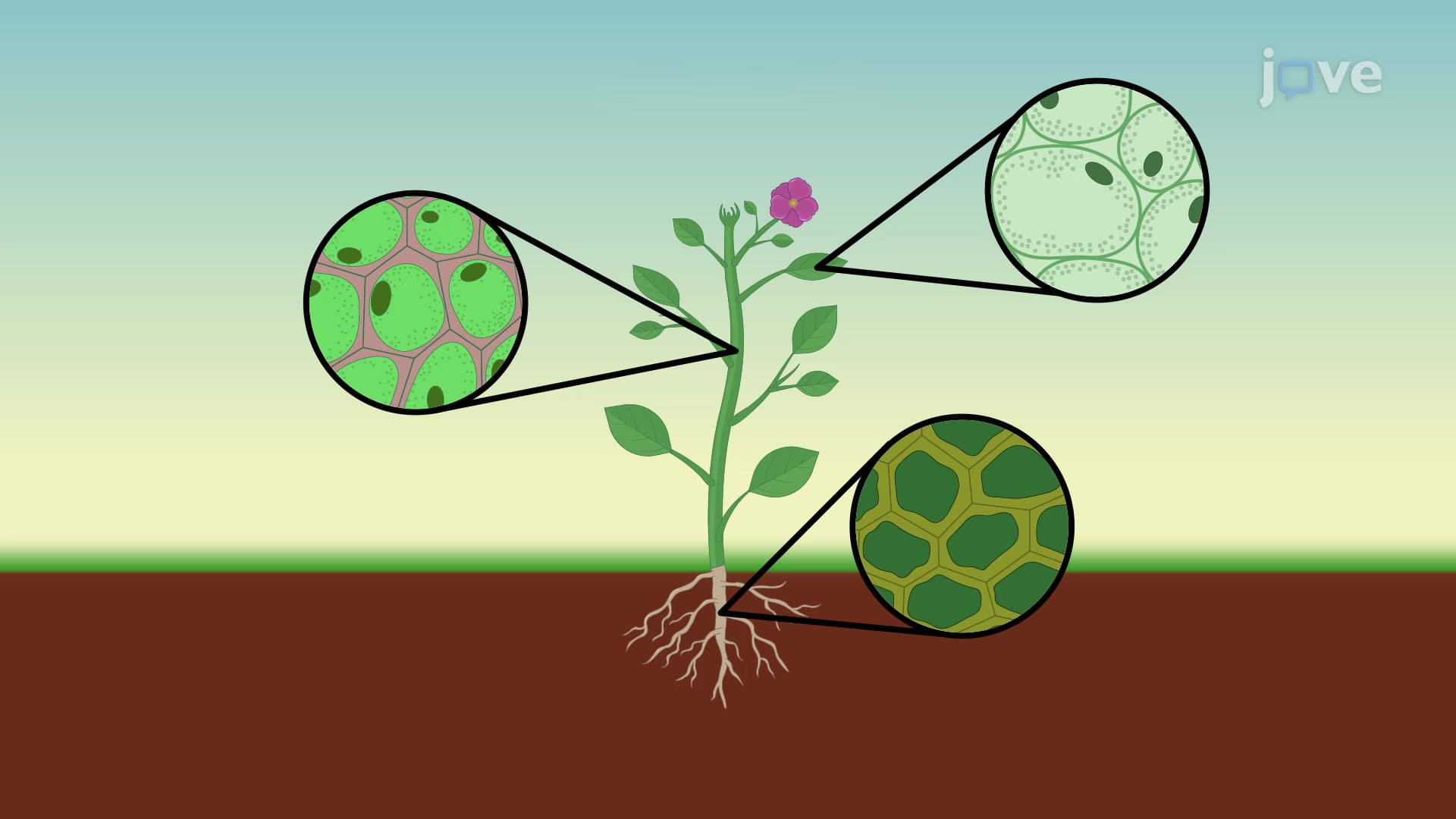

Video Summary: What are Plant Tissues
Ever wonder how a massive California redwood can transport water 300 feet from its roots to its topmost leaves? Plant tissues work as specialized systems that make this incredible feat possible every day. Understanding what plant tissues are reveals the remarkable organization that allows plants to survive, grow, and thrive in diverse environments from desert cacti to rainforest giants. These fundamental building blocks of plant anatomy demonstrate nature's engineering at its finest. Watch the full video on JoVE Coach to master this concept with expert-led visuals and step-by-step explanations.
Plant tissues represent organized groups of cells that work together to perform specific functions essential for plant survival. Unlike animal tissues, plant tissues must balance growth, structural support, and resource transport while remaining stationary. This unique challenge has led to highly specialized tissue systems that demonstrate remarkable efficiency in American agricultural crops like corn, soybeans, and wheat.
All plant tissues originate from meristematic tissue, composed of actively dividing cells found in root tips, shoot tips, and cambium layers. These embryonic-like cells maintain the ability to differentiate throughout a plant's lifetime, enabling continuous growth. In commercially important trees like Douglas fir in Oregon's forests, meristematic activity in the cambium produces new wood annually, creating the growth rings that foresters use to determine tree age and health.
The dermal tissue system serves as the plant's first line of defense against environmental stresses. The waxy cuticle prevents water loss-critical for survival in arid regions like Arizona's Sonoran Desert. Specialized structures called stomata, controlled by guard cells, regulate gas exchange necessary for photosynthesis while minimizing water loss. This balance proves essential for crops during hot Midwest summers when farmers monitor plant stress levels.
Vascular tissues create an efficient transport network comparable to human circulatory systems. Xylem tissue, composed of dead, hollow cells, transports water and dissolved minerals from roots upward through the plant. Phloem tissue, containing living cells, distributes sugars produced during photosynthesis from leaves to growing regions and storage organs. This system enables massive sequoia trees in California's national parks to move resources across hundreds of vertical feet.
Ground tissue encompasses the space between dermal and vascular tissues, performing diverse functions through specialized cell types. Parenchyma cells conduct photosynthesis and storage, collenchyma provides flexible support for growing regions, and sclerenchyma offers rigid structural support. These tissues work together in crops like cotton, where fiber quality depends on proper sclerenchyma development.
Understanding plant tissue organization proves essential for success in AP Biology, college botany courses, and pre-medical studies. Students preparing for the MCAT encounter plant tissue questions in biological sciences sections, making this foundational knowledge crucial for medical school admission.
Related Micro-courses