Loading subject page…


16,241 views


Video Summary: Moments of Inertia Problem Solving Explained
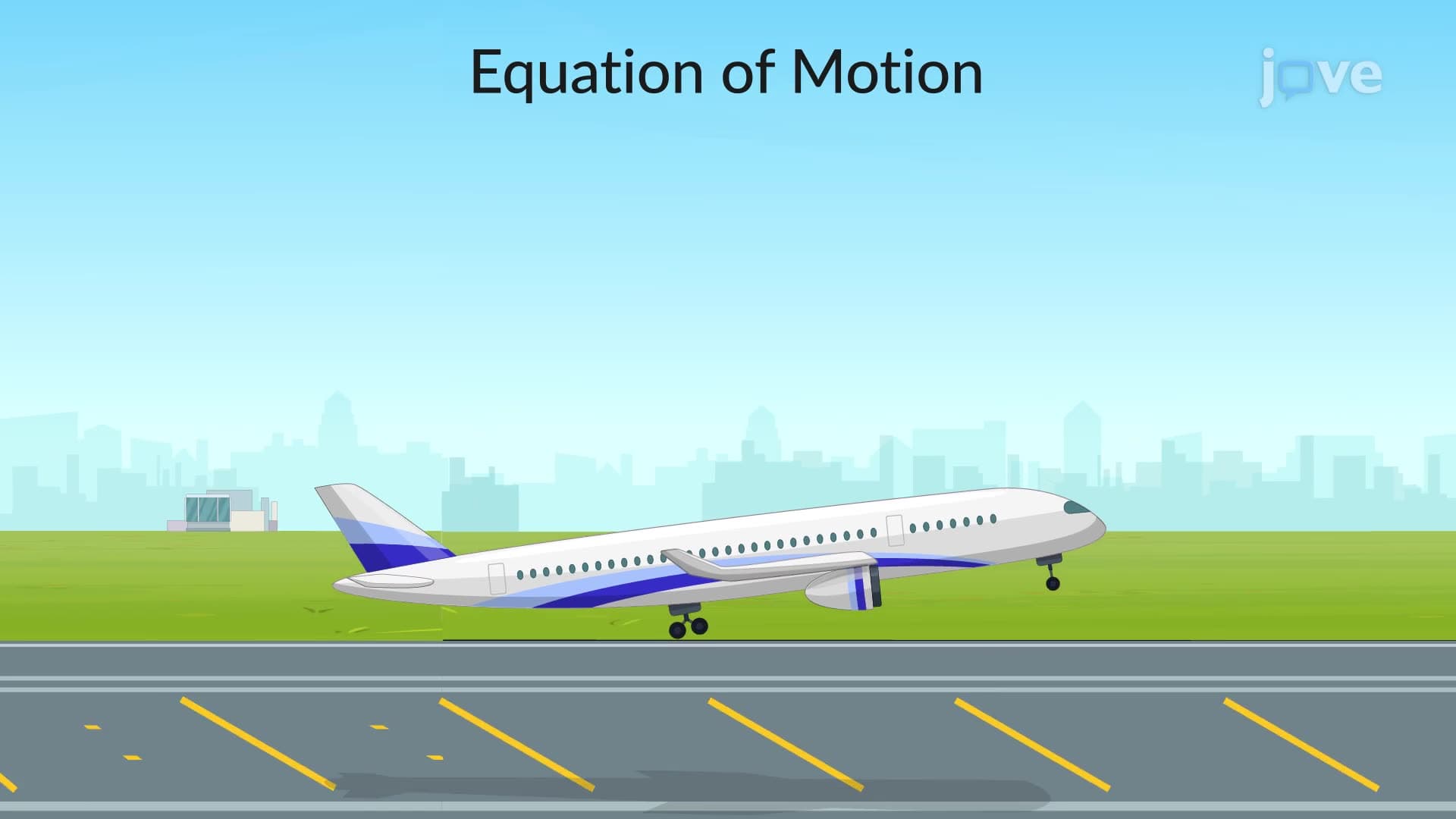
Ever wonder why aircraft wings are designed with specific shapes to maintain stability during flight? Moments of inertia problem solving reveals the physics behind these engineering marvels, particularly when analyzing triangular wing components found in Boeing 737s and Cessna aircraft. This fundamental concept helps determine how mass distribution affects rotational motion around different axes. Using differential calculus and the parallel axis theorem, engineers calculate precise moment of inertia values for complex geometries like triangular plates. Watch the full video on JoVE Coach to master this concept with expert-led visuals and step-by-step explanations.
Moments of inertia problem solving represents a critical skill in mechanical engineering and physics, particularly when dealing with complex geometries like triangular components. Unlike simple rectangular shapes, triangular geometries require sophisticated mathematical approaches involving differential calculus and geometric principles. The moment of inertia quantifies how mass distributes around a rotational axis, directly impacting an object's resistance to angular acceleration.
The centroid of a triangle always lies at one-third the height from its base-a fundamental property that simplifies many engineering calculations. This geometric relationship proves essential when applying the parallel axis theorem, which relates moments of inertia about different axes. For triangular aircraft wing components, engineers must accurately locate this centroidal axis to predict flight dynamics and structural response under various loading conditions.
The differential approach involves dividing the triangle into infinitesimally thin strips parallel to the reference axis. Each strip contributes a differential moment of inertia equal to the product of its area and the square of its distance from the axis. The strip's length varies linearly with height due to similar triangle relationships, creating a variable upper limit for integration. This mathematical framework appears frequently on AP Physics exams and college-level statics courses.
The parallel axis theorem states that the moment of inertia about any axis equals the centroidal moment of inertia plus the product of total area and the squared distance between axes. For triangular geometries, this relationship allows engineers to calculate moments about practical reference points, such as mounting locations or load attachment points. Boeing engineers routinely apply this theorem when designing wing structures for commercial aircraft like the 787 Dreamliner.
Students preparing for the MCAT or engineering fundamentals exams should master this theorem's application, as it frequently appears in mechanics problems involving composite shapes and structural analysis scenarios.
Related Micro-courses