13 Concepts
10 Concepts
17 Concepts
6 Concepts
20 Concepts
9 Concepts
17 Concepts
14 Concepts
19 Concepts
13 Concepts
12 Concepts
12 Concepts
4 Concepts
5 Concepts
12 Concepts
13 Concepts
10 Concepts
8 Concepts
20 Concepts
12 Concepts
18 Concepts
4 Concepts
6 Concepts
10 Concepts
4 Concepts
9 Concepts
7 Concepts
8 Concepts
Force and acceleration relationships in particle dynamics form the foundation of engineering mechanics and physics applications. This comprehensive course explores Newton's laws through rectangular, cylindrical, and normal-tangential coordinate systems, examining real-world scenarios from automotive engineering to aerospace dynamics. Students will master equation of motion applications, center of mass analysis, and central force systems using JoVE Coach's structured approach to particle kinetics problem-solving.
1. Rectangular Coordinate System Applications - Students master force and acceleration analysis using Cartesian coordinates, essential for projectile motion and linear dynamics problems. Applications include analyzing forces on vehicles during acceleration, calculating spacecraft trajectory corrections, and determining structural loads in building design. This coordinate system provides the foundation for understanding how forces decompose into perpendicular components, enabling precise analysis of complex motion scenarios commonly encountered in automotive crash testing and robotic system design.
2. Cylindrical Coordinate Analysis - This advanced coordinate system becomes crucial when analyzing rotating machinery, turbine blade dynamics, and circular motion applications. Students learn how radial, azimuthal, and axial components describe particle motion in systems like centrifugal pumps, helicopter rotors, and planetary gear systems. The mathematical framework includes understanding how angular velocity and acceleration relate to linear motion components, essential for designing efficient rotating equipment in aerospace and mechanical engineering applications.
3. Normal and Tangential Component Method - Curvilinear motion analysis using normal-tangential coordinates proves essential for understanding vehicle dynamics on curved roads, roller coaster design, and aircraft maneuvering. Students explore how tangential acceleration affects speed changes while normal acceleration governs directional changes. Real applications include calculating banking angles for NASCAR tracks, designing safe highway curves, and analyzing forces on passengers during theme park rides, emphasizing the practical importance of centripetal force calculations.
4. Center of Mass Dynamics - Multi-particle system analysis becomes critical for understanding collision mechanics, rocket propulsion, and structural stability. Students learn how internal forces cancel while external forces determine center of mass acceleration, applicable to analyzing car crash dynamics, spacecraft staging sequences, and building earthquake response. This concept bridges individual particle mechanics to rigid body dynamics, essential for advanced engineering coursework and understanding complex mechanical systems like robotic manipulators and automated manufacturing equipment.
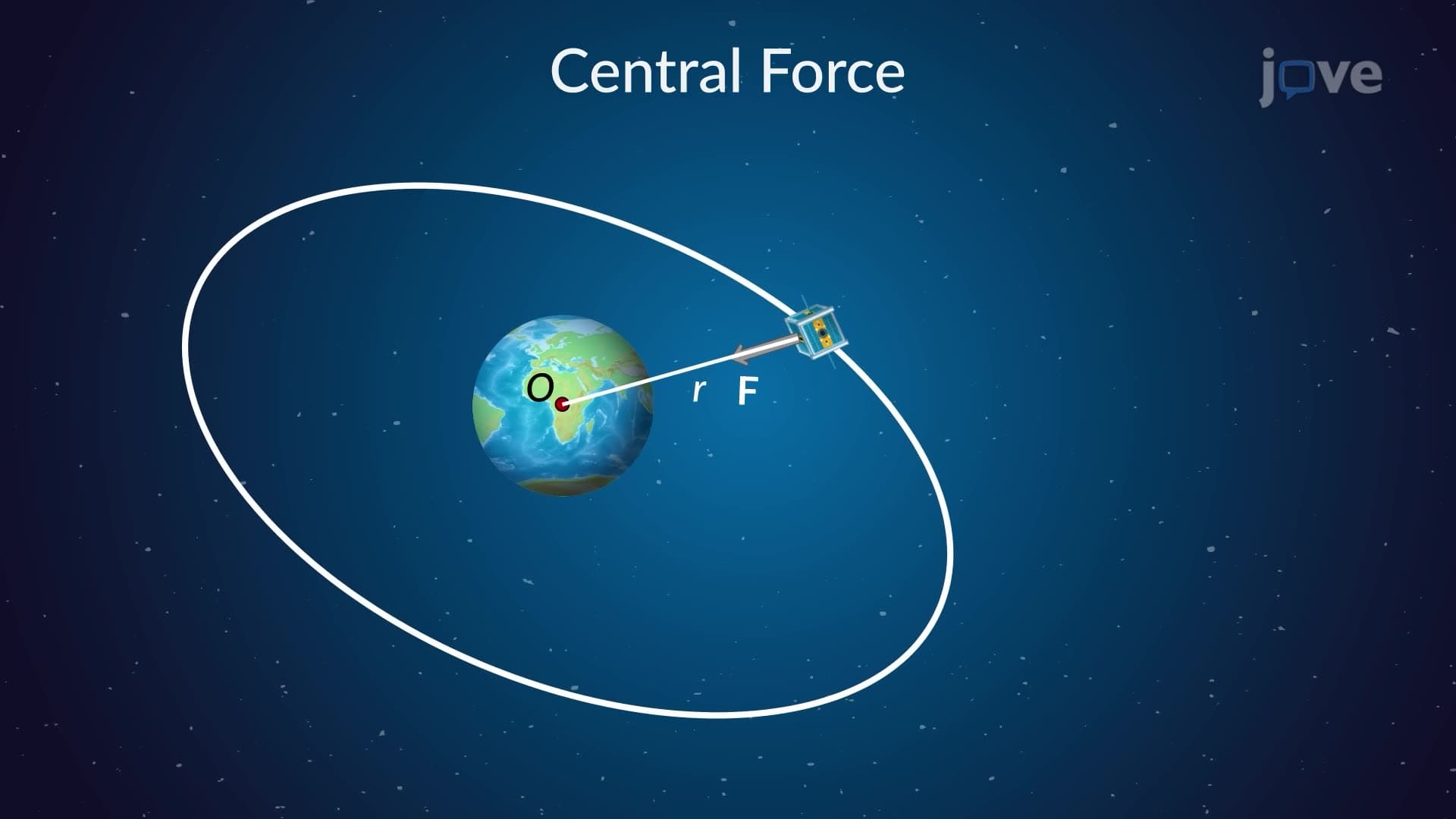
5. Central Force Motion Analysis - Gravitational and orbital mechanics applications demonstrate conservation principles in satellite motion, planetary dynamics, and space mission planning. Students explore how areal velocity remains constant under central force conditions, fundamental to understanding Kepler's laws and spacecraft trajectory optimization. Applications include GPS satellite orbit calculations, interplanetary mission design, and understanding how gravitational assist maneuvers work in space exploration, connecting theoretical physics to cutting-edge aerospace engineering challenges.