Loading video…


 5 Concepts
 2.6K views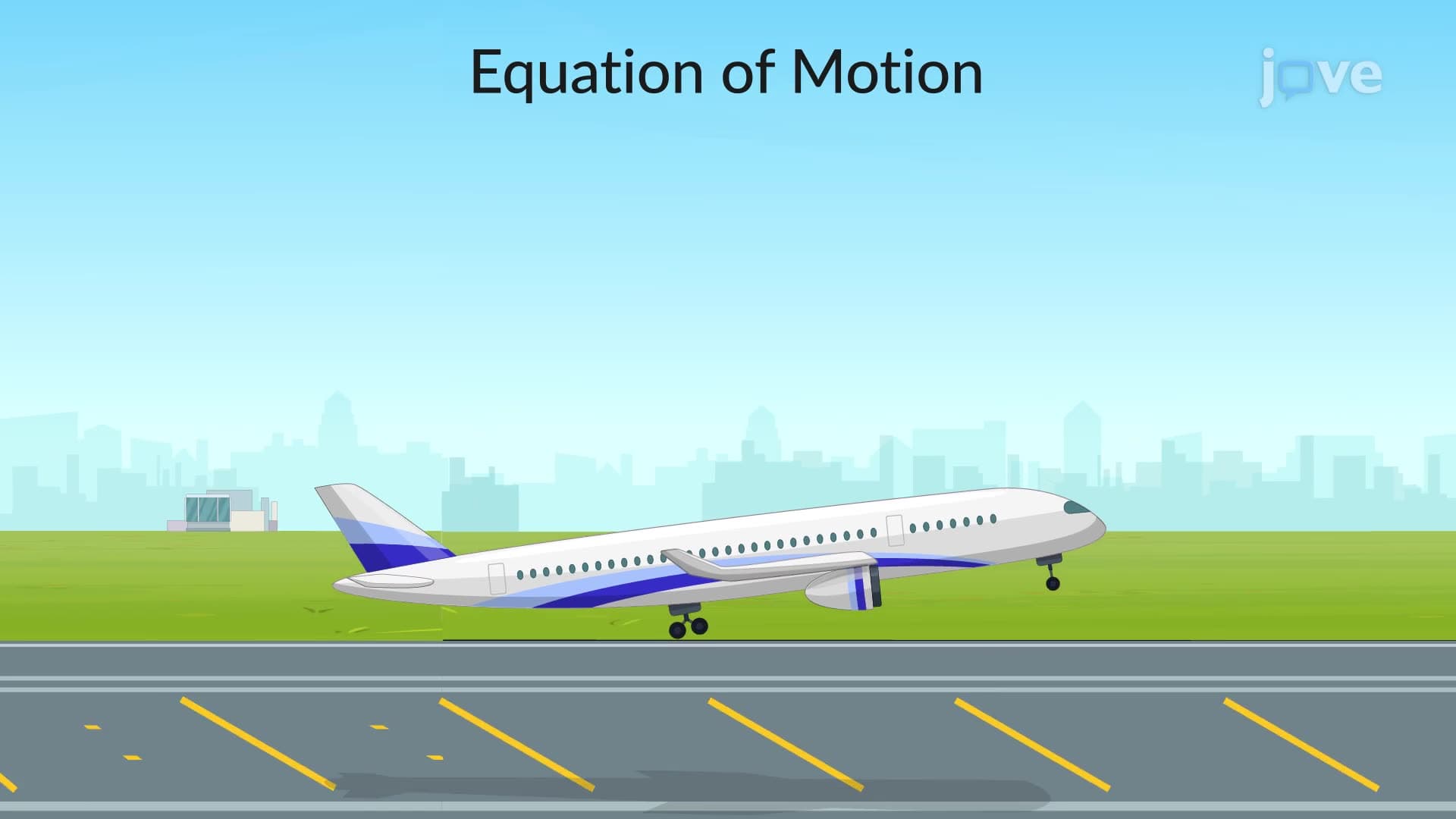

Video Summary: Equations of Motion Rectangular Coordinates Tutorial
Did you know that NASA engineers use equations of motion rectangular coordinates to calculate the precise trajectory of rockets like the Falcon Heavy during launch? These fundamental physics equations break down complex motion into simple x, y, and z components, making it easier to analyze how objects move through space. Whether you're studying a baseball's path at Fenway Park or a satellite's orbit, this Equations of Motion Rectangular Coordinates Tutorial provides the essential framework for understanding motion analysis. Watch the full video on JoVE Coach to master this concept with expert-led visuals and step-by-step explanations.
The equations of motion rectangular coordinates form the cornerstone of classical mechanics, providing a systematic approach to analyzing how objects move through space. Unlike complex curved motion that requires advanced mathematical tools, rectangular coordinates break motion into three perpendicular directions-typically labeled x, y, and z-making even the most complicated trajectories manageable for high school and college students.
At its core, this approach applies Newton's second law (F = ma) independently along each coordinate axis. The beauty lies in the principle of superposition: forces and accelerations in one direction don't directly affect motion in perpendicular directions. For example, when analyzing a projectile launched from Cape Canaveral, the horizontal velocity component remains constant (ignoring air resistance), while gravity only affects the vertical component.
The mathematical expressions are elegantly simple:
Engineers at companies like Boeing use these equations daily when designing aircraft control systems. Consider an airplane experiencing turbulence: pilots need to understand how control surface adjustments affect motion in each direction independently. The rectangular coordinate approach allows engineers to design autopilot systems that can correct pitch (y-axis rotation), yaw (z-axis rotation), and roll (x-axis rotation) separately.
Students preparing for AP Physics exams frequently encounter problems involving projectile motion, where rectangular coordinates excel. A football kicked from the 50-yard line at MetLife Stadium follows a parabolic path that becomes straightforward to analyze when broken into horizontal and vertical components.
Success with rectangular coordinate problems requires a systematic approach. First, establish a clear coordinate system with clearly defined positive directions. Next, identify all forces acting on the object and resolve them into components. Finally, apply Newton's second law along each axis independently. This methodology proves invaluable for SAT Subject Tests, college physics courses, and engineering entrance exams like the FE exam.
The transition from one-dimensional motion problems in introductory physics to multi-dimensional analysis often challenges students. However, rectangular coordinates provide a logical bridge, allowing students to apply familiar concepts in new contexts while building confidence for more advanced topics like rotational dynamics and orbital mechanics.
Related Micro-courses