13 Concepts
10 Concepts
17 Concepts
6 Concepts
20 Concepts
9 Concepts
17 Concepts
14 Concepts
19 Concepts
13 Concepts
12 Concepts
12 Concepts
4 Concepts
5 Concepts
12 Concepts
13 Concepts
10 Concepts
8 Concepts
20 Concepts
12 Concepts
18 Concepts
4 Concepts
6 Concepts
10 Concepts
4 Concepts
9 Concepts
7 Concepts
8 Concepts
The impulse momentum principle forms the foundation of particle dynamics, connecting force, time, and velocity changes in mechanical systems. This comprehensive course explores linear and angular impulse-momentum relationships through real-world applications like vehicle collisions, sports impacts, and aerospace engineering. Master these concepts with JoVE Coach's interactive problem-solving approach essential for engineering mechanics success.
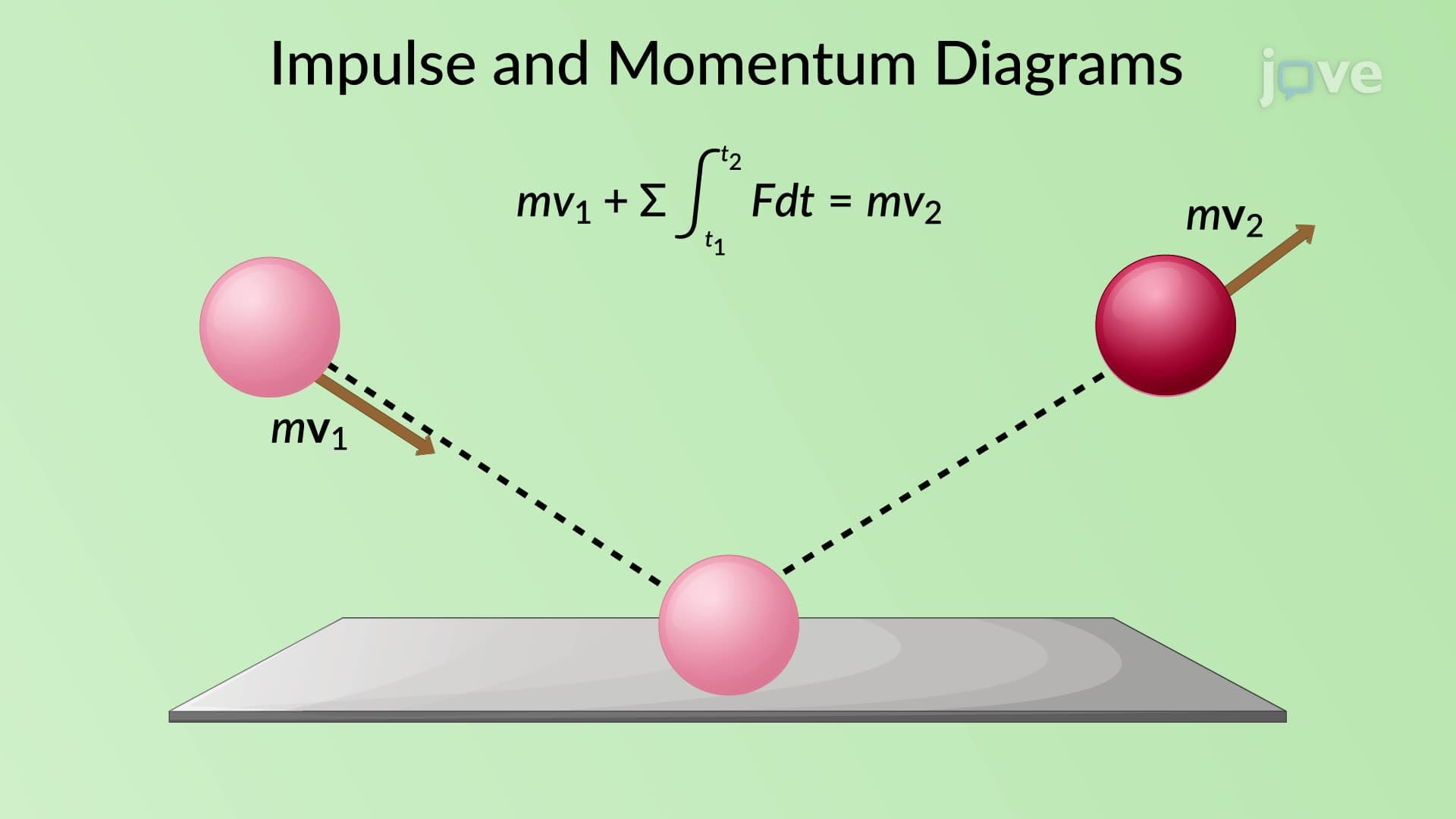
1. Linear Impulse and Momentum Fundamentals: The impulse momentum principle states that a particle's momentum change equals the total impulse applied during a specific time interval. Linear momentum, defined as mass times velocity, represents a vector quantity sharing velocity's direction. When analyzing car crashes, engineers apply this principle to calculate impact forces and design safer vehicles. The mathematical relationship integrates Newton's second law over time, yielding the fundamental equation linking initial momentum, applied impulses, and final momentum for comprehensive accident reconstruction and safety system design.
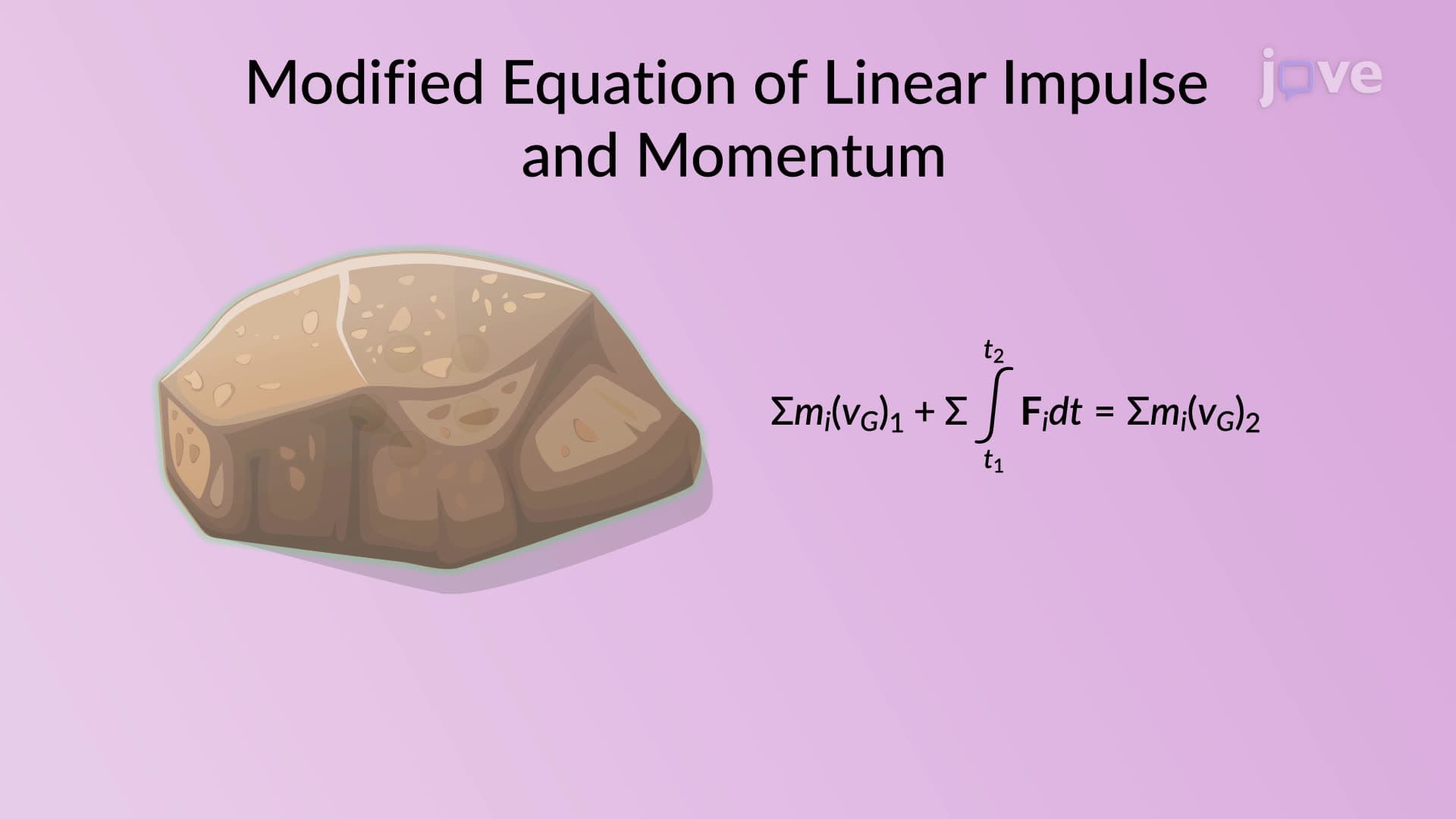
2. Conservation of Linear Momentum in Particle Systems: When external impulses sum to zero, momentum conservation governs particle system behavior. This principle proves essential in analyzing billiard ball collisions, where the cue ball transfers momentum to stationary balls while total system momentum remains constant. NASA engineers utilize momentum conservation for spacecraft trajectory calculations during satellite deployment missions. The mathematical formulation extends from single particles to complex systems, enabling predictions of post-collision velocities and system behavior in various mechanical engineering applications.
3. Impact Analysis and Coefficient of Restitution: Impact mechanics characterizes collisions through the coefficient of restitution, ranging from zero (perfectly plastic) to one (perfectly elastic). Basketball players experience this principle when dribbling, as the ball's bounce height depends on the court surface's restitution coefficient. Engineers designing protective equipment use impact analysis to optimize energy absorption during crashes. The deformation and restitution phases determine final velocities, with practical applications in sports equipment design, automotive safety systems, and manufacturing process optimization.
4. Angular Momentum and Rotational Motion: Angular momentum, the rotational equivalent of linear momentum, equals the moment of linear momentum about a specific point. Figure skaters demonstrate angular momentum conservation by pulling arms inward to increase spin rate while maintaining constant angular momentum. The vector quantity follows right-hand rule conventions, with magnitude depending on mass distribution and rotational velocity. Engineering applications include gyroscope design, satellite attitude control, and rotating machinery analysis where understanding angular momentum behavior ensures system stability and performance.
5. Angular Impulse-Momentum Principle Applications: The angular impulse-momentum principle relates applied torques to changes in angular momentum over time, paralleling Newton's second law for rotational motion. Wind turbine designers use this principle to optimize blade design for maximum energy extraction from wind forces. The mathematical formulation integrates moments of forces over time intervals, enabling calculation of final angular velocities from known initial conditions and applied torques. Applications span from simple pendulum motion to complex robotic arm control systems requiring precise rotational positioning.