Loading subject page…

- Medical Surgical Nursing
- Obstructive Pulmonary Diseases
- Chronic Obstructive Pulmonary Disease-I: Introduction
Micro-course: Obstructive Pulmonary Diseases
35,512 views
Learn key concepts and earn your certificate.





Chronic Obstructive Pulmonary Disease-I: Introduction


00:00
01:20
Video Summary: Chronic Obstructive Pulmonary Disease I Introduction Explained
Did you know that COPD affects over 16 million Americans, making it the fourth leading cause of death in the United States? Chronic Obstructive Pulmonary Disease I Introduction reveals how this progressive respiratory illness obstructs airflow by damaging bronchioles, bronchi, blood vessels, and alveoli throughout the lungs. From cigarette smoking to genetic factors like alpha-1 antitrypsin deficiency, multiple risk factors contribute to this debilitating condition that combines emphysema and chronic bronchitis. Watch the full video on JoVE Coach to master this concept with expert-led visuals and step-by-step explanations.
- Understand the fundamental pathophysiology of Chronic Obstructive Pulmonary Disease I Introduction and how it affects respiratory function
- Identify the two main conditions that comprise COPD: emphysema and chronic bronchitis
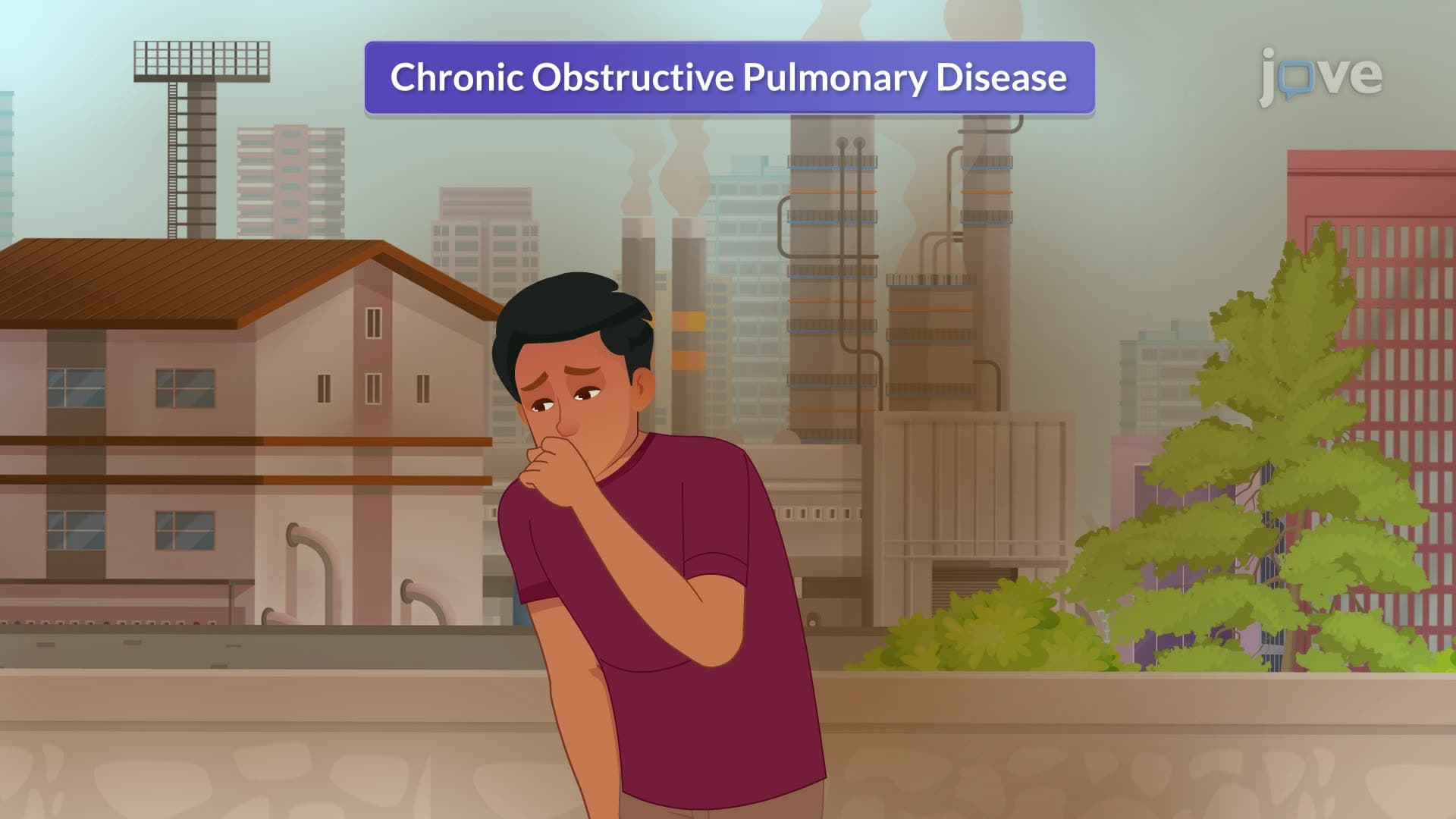
- Analyze environmental risk factors including cigarette smoking, secondhand smoke exposure, occupational hazards, and air pollution
- Recognize host factors such as genetic abnormalities and advancing age that predispose individuals to COPD development
- Evaluate diagnostic criteria using spirometry measurements, specifically the FEV1 to FVC ratio
- Apply knowledge of COPD progression to understand why it's classified as a progressive respiratory illness
- Compare the roles of bronchioles, bronchi, blood vessels, and alveoli in COPD pathogenesis
- Explore the relationship between environmental exposures and genetic susceptibility in disease development
Understanding Chronic Obstructive Pulmonary Disease I Introduction: The Respiratory System Under Attack
Chronic Obstructive Pulmonary Disease (COPD) represents one of the most significant respiratory challenges facing American healthcare today. This progressive condition fundamentally alters the architecture and function of the lungs, creating a cascade of respiratory complications that worsen over time. Unlike acute respiratory infections, COPD develops gradually, often remaining undiagnosed until substantial lung damage has occurred.
The Dual Nature of COPD: Emphysema and Chronic Bronchitis
COPD encompasses two distinct yet interconnected conditions. Emphysema primarily affects the alveoli-the tiny air sacs where gas exchange occurs-causing them to lose their elasticity and ability to recoil during exhalation. This results in air trapping and reduced surface area for oxygen transfer. Chronic bronchitis, conversely, involves inflammation and thickening of the bronchial walls, leading to excessive mucus production and persistent coughing. Many patients develop features of both conditions, creating a complex clinical picture that requires comprehensive management approaches taught in advanced placement biology and pre-medical curricula.
Environmental and Host Risk Factors: A Multifactorial Disease
The development of COPD results from complex interactions between environmental exposures and individual susceptibility factors. Cigarette smoking remains the predominant risk factor, accounting for approximately 85-90% of COPD cases in the United States. However, occupational exposures in industries such as coal mining, construction, and manufacturing also contribute significantly. The Occupational Safety and Health Administration (OSHA) has established strict guidelines for workplace exposure limits to silica, asbestos, and chemical vapors that can trigger COPD development.
Host factors play an equally crucial role. Alpha-1 antitrypsin deficiency, a genetic condition affecting approximately 1 in 2,500 Americans, predisposes individuals to early-onset emphysema. This protein normally protects lung tissue from enzymatic damage, and its deficiency allows unchecked destruction of alveolar walls. Understanding these genetic components proves essential for students preparing for the MCAT, where respiratory physiology questions frequently appear.
Diagnostic Approaches and Clinical Significance
Healthcare providers rely on spirometry testing to diagnose COPD objectively. The key diagnostic criterion involves measuring forced expiratory volume in one second (FEV1) relative to forced vital capacity (FVC). When this ratio falls below 70%, it indicates airflow obstruction consistent with COPD. This diagnostic standard, established by the Global Initiative for Chronic Obstructive Lung Disease (GOLD), provides standardized criteria used across American medical institutions and appears regularly on nursing certification exams like the NCLEX-RN and HESI A2.
Frequently Asked Questions
Chronic Obstructive Pulmonary Disease I Introduction explains a respiratory illness that gradually worsens over time, causing irreversible airflow obstruction. The condition is progressive because lung damage accumulates continuously, with symptoms typically developing after years of exposure to harmful substances. COPD encompasses both emphysema and chronic bronchitis, affecting multiple lung structures including bronchioles, bronchi, blood vessels, and alveoli in ways that cannot be fully reversed.
MCAT questions on COPD typically focus on pathophysiology, gas exchange mechanisms, and spirometry interpretation. Concentrate on understanding the FEV1/FVC ratio, the difference between emphysema and chronic bronchitis, and how smoking damages alveolar walls. Practice analyzing spirometry graphs and connecting molecular-level changes to clinical symptoms for comprehensive preparation.
Yes, COPD frequently appears in respiratory system units of AP Biology and college anatomy courses. Exam questions often test your understanding of gas exchange, the role of surfactant, and how structural changes affect lung function. Focus on the relationship between form and function in respiratory anatomy when studying this topic.
Healthcare workers face increased COPD risk from chemical exposures and secondhand smoke in clinical settings. Nursing students preparing for NCLEX-RN should understand occupational health protections, patient education strategies, and the importance of smoking cessation programs in hospital settings.
The coal mining industry in Appalachian states like West Virginia demonstrates COPD's occupational impact perfectly. Miners develop pneumoconiosis (black lung disease), which often progresses to COPD, affecting entire communities economically and socially while highlighting the importance of workplace safety regulations.
Not at all-COPD concepts build naturally on basic respiratory system knowledge from freshman biology. Start with understanding normal lung function, then explore how smoking and pollutants damage lung tissue. The progressive nature and diagnostic criteria provide excellent examples of how medical science applies biological principles to real-world health challenges.
Create comparison charts distinguishing emphysema from chronic bronchitis, practice interpreting spirometry data, and connect risk factors to pathophysiology mechanisms. Use active recall by explaining COPD development to study partners, and apply concepts to case studies involving different patient populations and exposure histories.
Progress to studying asthma pathophysiology, lung cancer mechanisms, and pulmonary rehabilitation strategies. These topics build on COPD foundations while introducing new concepts like allergic responses, oncology principles, and therapeutic interventions that appear frequently in advanced coursework and professional exams.
Related Micro-courses

7 Concepts

10 Concepts