Loading subject page…

- Medical Surgical Nursing
- Obstructive Pulmonary Diseases
- Chronic Obstructive Pulmonary Disease-III: Symptoms and Complications.
Micro-course: Obstructive Pulmonary Diseases
35,512 views
Learn key concepts and earn your certificate.





Chronic Obstructive Pulmonary Disease-III: Symptoms and Complications.

00:00
01:25
Video Summary: Chronic Obstructive Pulmonary Disease Iii Explained
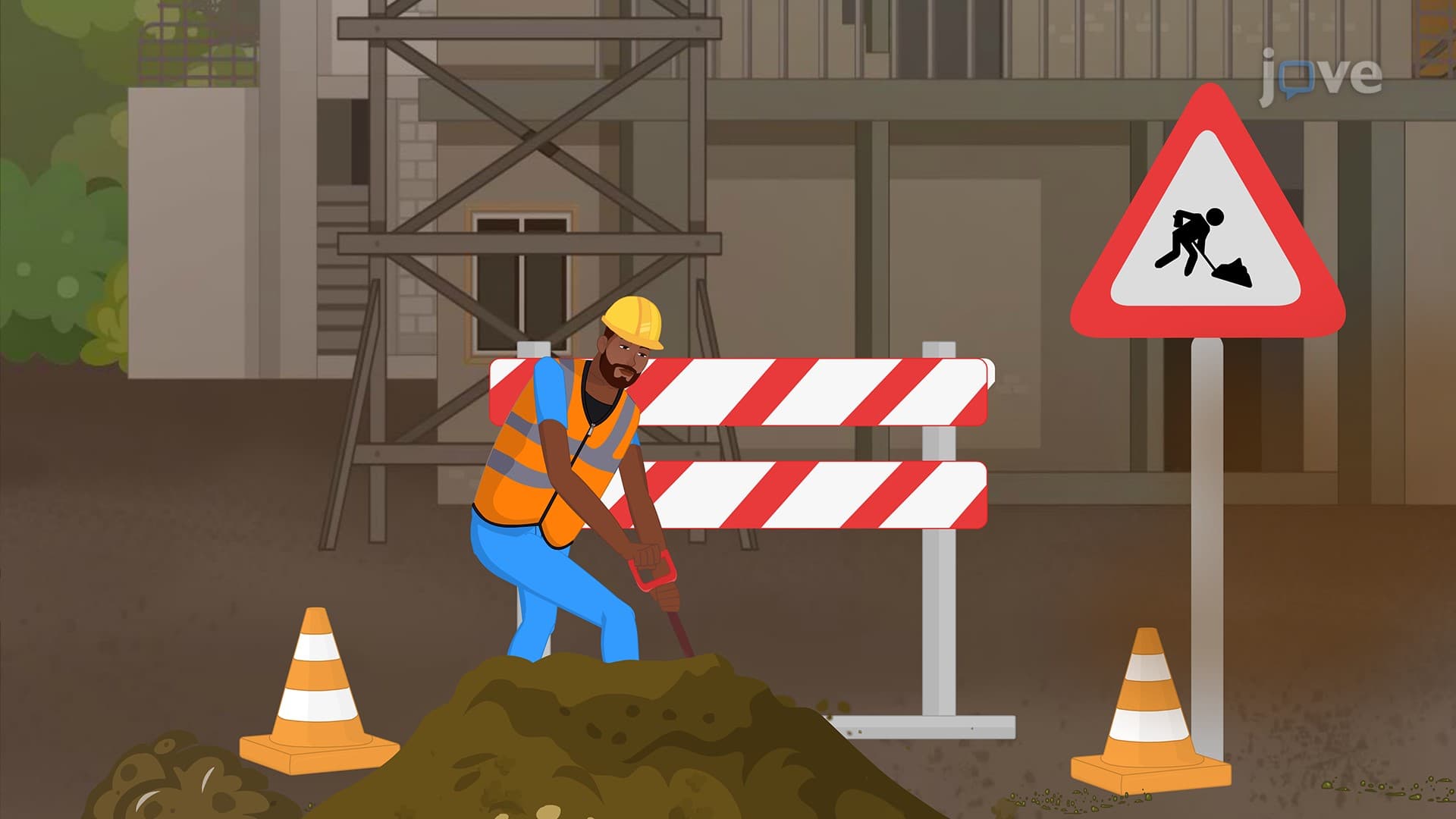
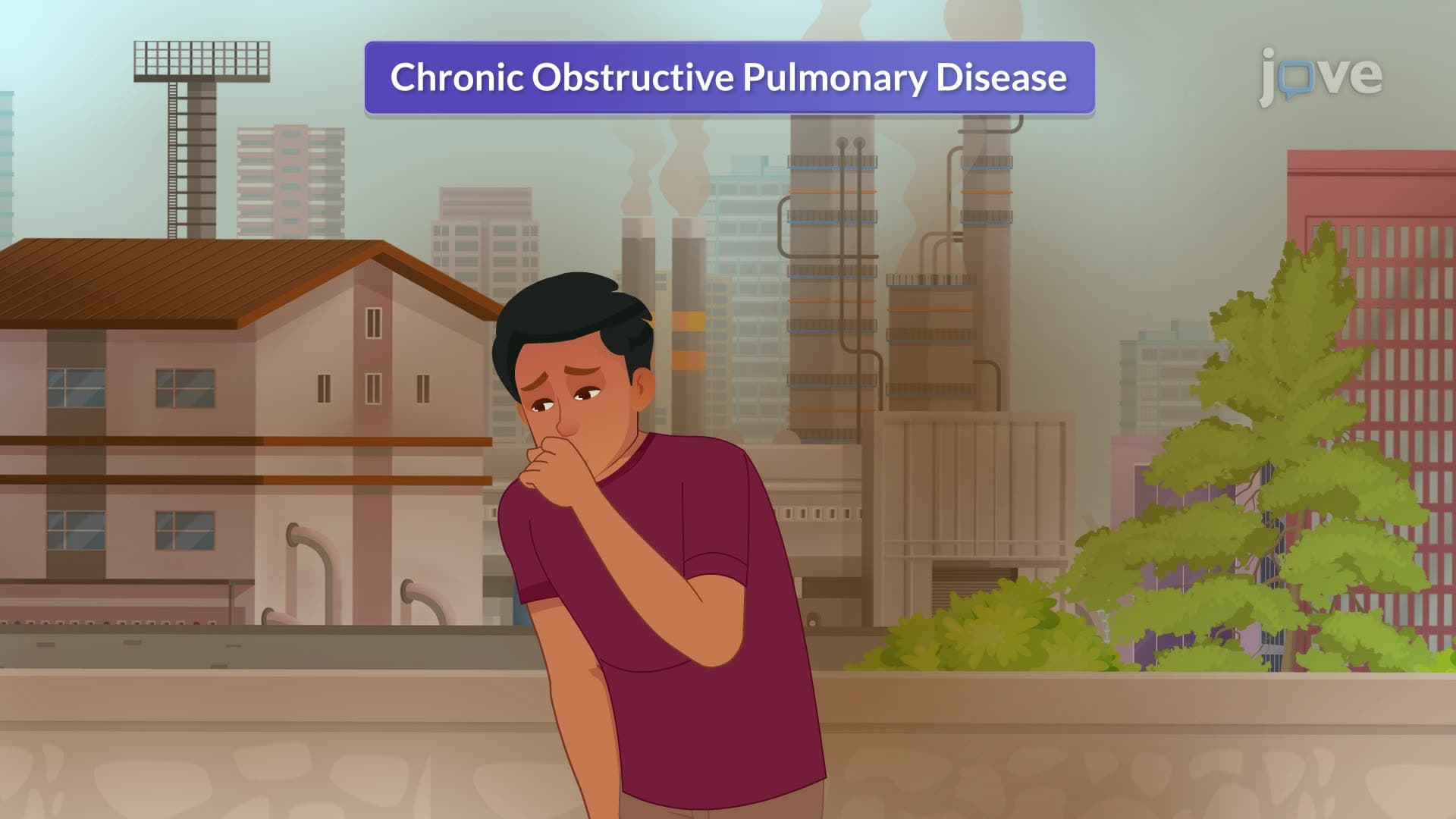
Did you know that over 16 million Americans live with COPD, yet many don't recognize the early warning signs? Chronic Obstructive Pulmonary Disease III encompasses the advanced stages where patients develop characteristic barrel chests and breathing difficulties that occur even at rest. Consider a 65-year-old retired construction worker from Texas who now needs supplemental oxygen for daily activities-this represents the progressive nature of COPD's later stages. Watch the full video on JoVE Coach to master this concept with expert-led visuals and step-by-step explanations.
- Understand the pathophysiology and clinical manifestations of Chronic Obstructive Pulmonary Disease III, including the progression from intermittent to persistent symptoms
- Identify the three cardinal symptoms of COPD: chronic cough, excessive sputum production, and progressive dyspnea
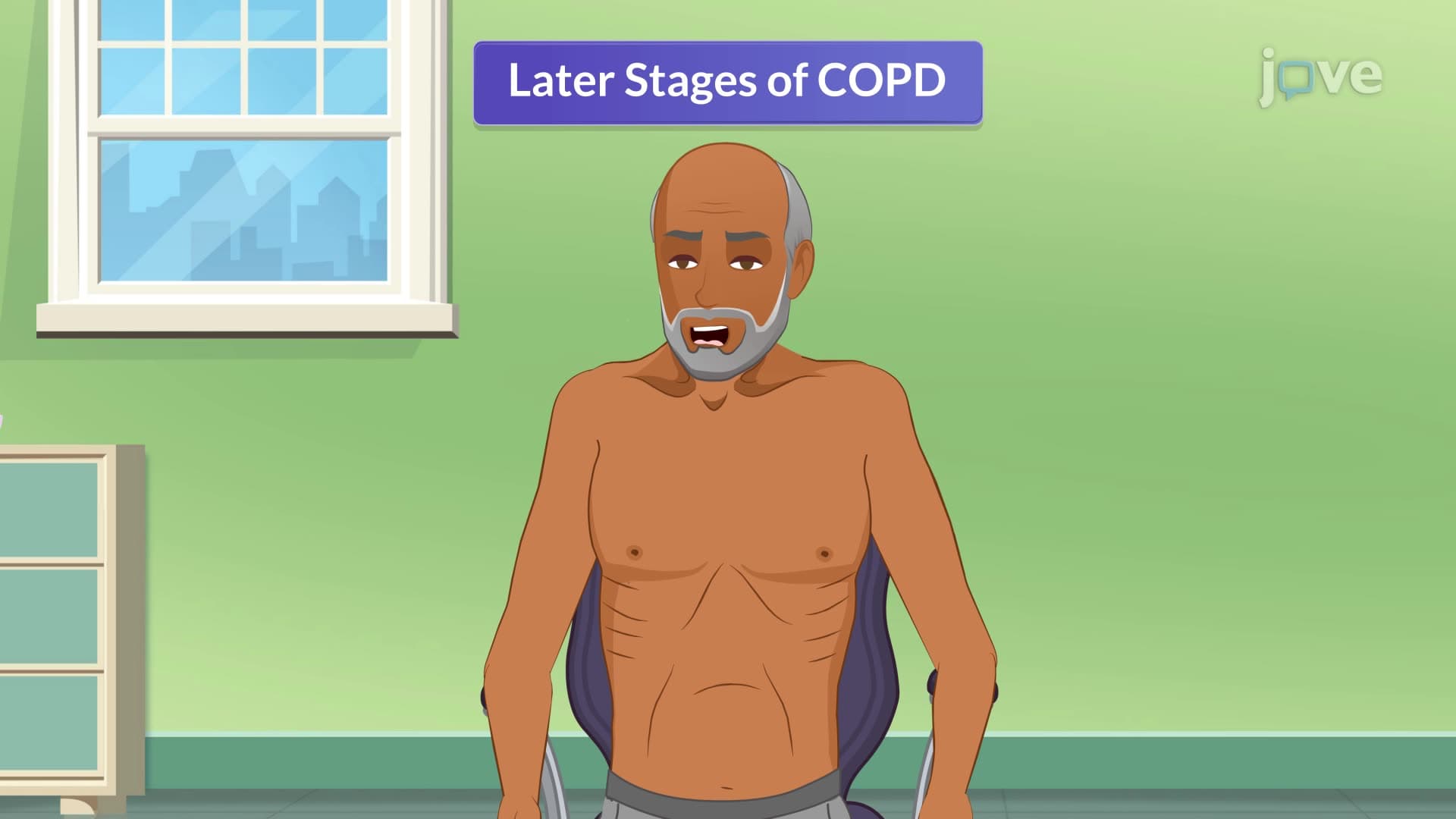
- Analyze the anatomical changes that occur in advanced COPD, particularly the development of barrel chest in emphysema patients
- Recognize the compensatory mechanisms including accessory muscle use and supraclavicular retraction during inspiration
- Evaluate the triggers of COPD exacerbations, including bacterial, viral, and fungal infections
- Apply knowledge of COPD complications such as cor pulmonale, respiratory failure, and musculoskeletal wasting
- Compare early-stage versus late-stage COPD presentations in clinical scenarios
- Explore the relationship between environmental factors and COPD progression in real-world contexts
Understanding Chronic Obstructive Pulmonary Disease III: Advanced Pathophysiology
Chronic Obstructive Pulmonary Disease III represents the most severe manifestations of this progressive respiratory condition, affecting millions of Americans annually. Unlike early-stage COPD, advanced disease fundamentally alters lung architecture and respiratory mechanics, creating a cascade of physiological compensations that define the clinical picture.
Progressive Symptom Evolution and Clinical Manifestations
The hallmark triad of COPD symptoms-chronic cough, sputum production, and dyspnea-undergoes dramatic evolution in advanced disease. What begins as morning cough in construction workers or former smokers transforms into persistent, productive coughing throughout the day. The pathophysiology involves goblet cell hyperplasia in response to chronic inflammation, leading to mucus hypersecretion that characterizes the "blue bloater" phenotype often seen in chronic bronchitis patients.
Dyspnea progression follows a predictable pattern that healthcare providers assess using tools like the Modified Medical Research Council (mMRC) scale. Early-stage patients experience breathlessness only during strenuous activities, but advanced COPD patients struggle with activities of daily living. A retired teacher from Florida might find herself unable to walk from her car to the grocery store entrance without stopping to catch her breath-this functional limitation defines the advanced stage.
Anatomical Adaptations: The Barrel Chest Phenomenon
The characteristic barrel chest deformity in emphysema patients represents a fascinating example of anatomical adaptation to disease. Chronic air trapping and loss of lung elasticity create permanent lung hyperinflation, forcing the thoracic cavity into a state of perpetual inspiration. The anteroposterior diameter increases, ribs become more horizontal, and the diaphragm flattens significantly. This adaptation, while visually distinctive, actually impairs respiratory efficiency by placing respiratory muscles at mechanical disadvantage.
Advanced COPD patients also develop compensatory breathing patterns involving accessory muscles. Sternocleidomastoid, scalene, and intercostal muscles become prominent during inspiration, while patients may adopt the characteristic "tripod position"-leaning forward with hands on knees-to optimize respiratory mechanics. These adaptations frequently appear in MCAT respiratory physiology questions and NCLEX scenarios involving respiratory assessment.
Exacerbations and Systemic Complications
COPD exacerbations represent acute worsening episodes that can be life-threatening. Environmental triggers common in US settings include seasonal allergies, air quality alerts in cities like Los Angeles or Phoenix, and respiratory infections during flu season. These exacerbations can precipitate serious complications including cor pulmonale (right heart failure secondary to pulmonary hypertension), respiratory failure requiring mechanical ventilation, and systemic effects like muscle wasting and metabolic dysfunction.
Understanding these concepts proves essential for students preparing for healthcare careers, as COPD ranks among the leading causes of death in the United States and frequently appears in clinical rotations and standardized examinations.
Frequently Asked Questions
Chronic Obstructive Pulmonary Disease III represents advanced COPD characterized by severe airflow limitation, persistent symptoms even at rest, and anatomical changes like barrel chest deformity. Unlike early stages where symptoms occur only during exertion, advanced COPD causes dyspnea during minimal activity or rest. Patients require supplemental oxygen and experience frequent exacerbations that significantly impact quality of life.
MCAT questions often focus on the pathophysiology of air trapping, ventilation-perfusion mismatches, and compensatory mechanisms in COPD III. Expect scenarios involving arterial blood gas interpretation, respiratory muscle mechanics, and the relationship between emphysema and chronic bronchitis. The exam frequently tests understanding of how barrel chest develops and why accessory muscle use becomes necessary in advanced disease.
NCLEX questions emphasize nursing assessments and interventions for COPD III patients. You'll encounter scenarios about positioning techniques (tripod position), oxygen therapy protocols, and recognizing signs of respiratory distress. Questions often test knowledge of medication administration (bronchodilators, corticosteroids), patient education about exacerbation triggers, and when to contact healthcare providers for worsening symptoms.
In US hospitals, COPD III patients frequently present to emergency departments during exacerbations, especially during winter months or high pollution days in cities like Denver or Houston. These patients typically require immediate interventions including nebulizer treatments, corticosteroids, and sometimes non-invasive positive pressure ventilation. Many patients live in rural areas with limited access to pulmonary rehabilitation programs, making disease management particularly challenging.
Basic understanding of acid-base balance and gas exchange principles suffices for most educational levels. High school students should focus on the mechanical aspects of breathing and symptom recognition, while college students need to understand ventilation-perfusion relationships and compensatory mechanisms. The concept builds naturally from fundamental respiratory physiology without requiring advanced biochemistry knowledge.
Create visual diagrams comparing normal lungs to COPD III lungs, highlighting structural changes like air trapping and barrel chest formation. Practice interpreting clinical scenarios involving symptom progression from early to advanced stages. Use mnemonics for the symptom triad (Cough, Sputum, Dyspnea), and focus on understanding cause-and-effect relationships rather than memorizing isolated facts.
Progress to studying asthma to understand reversible versus irreversible airway obstruction, then explore pulmonary function testing and arterial blood gas interpretation. Investigate pulmonary rehabilitation principles and pharmacological management strategies. Advanced students should examine the relationship between COPD and cardiovascular complications, particularly cor pulmonale and right heart failure mechanisms.
Related Micro-courses
7 Concepts

10 Concepts