Loading subject page…


1,442 views


Video Summary: Producer Surplus for a Firm Explained
Did you know that Apple makes approximately $1,000 in producer surplus on every iPhone sold? Producer surplus for a firm represents the extra profit a company earns beyond their minimum selling price. When Starbucks sells a latte for $5 but would accept $3, that $2 difference is their producer surplus. This economic concept, Producer Surplus For A Firm Explained, shows how businesses capture value in competitive markets by measuring the gap between market prices and their willingness to supply. Watch the full video on JoVE Coach to master this concept with expert-led visuals and step-by-step explanations.
Producer surplus for a firm measures the economic benefit a company receives when the market price exceeds their minimum acceptable selling price. This concept forms a cornerstone of microeconomic theory, particularly relevant for students preparing for AP Economics exams and college-level economics courses. Unlike consumer surplus, which benefits buyers, producer surplus represents the seller's advantage in market transactions.
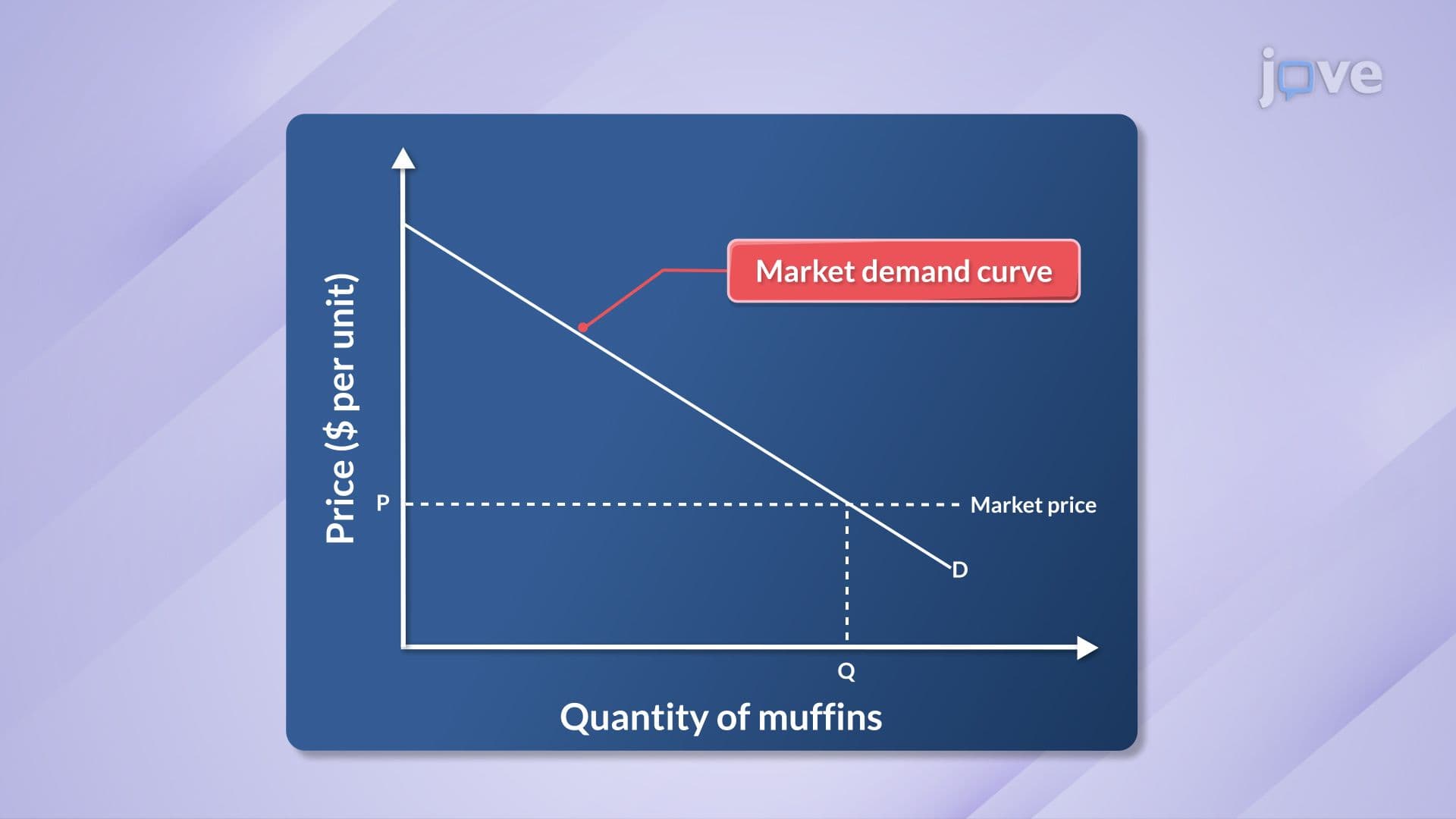
In perfectly competitive markets, firms act as price takers, meaning they accept the prevailing market price. The producer surplus firm definition becomes clearer when we examine the relationship between market price and marginal cost. Consider Tesla's Model 3 production: if the market price is $45,000 and Tesla's marginal cost for the final unit is $35,000, they earn $10,000 in producer surplus on that unit.
The calculation involves summing the differences between market price and marginal cost for each unit produced. For example, if Amazon's fulfillment center can process packages at marginal costs of $2, $3, $4, and $5 respectively, while the market price remains $6 per package, their total producer surplus equals ($6-$2) + ($6-$3) + ($6-$4) + ($6-$5) = $10.
Producer surplus for a firm study guide concepts appear frequently in standardized testing, including SAT Subject Tests and college economics midterms. Understanding this principle helps explain why companies like McDonald's can maintain profitability despite intense competition. When McDonald's sells a Big Mac for $5.50 but could profitably sell it for $4.00, the $1.50 difference represents their producer surplus per unit.
Market conditions significantly impact producer surplus. During the 2020 pandemic, grocery stores experienced increased producer surplus as demand surged while their marginal costs remained relatively stable. Conversely, airlines saw producer surplus shrink as market prices fell below many carriers' marginal costs, forcing some routes to become unprofitable.
Producer surplus overview analysis guides crucial business decisions. Firms maximize producer surplus by producing until marginal cost equals market price. This principle explains why oil companies like ExxonMobil adjust production levels based on crude oil prices. When prices rise above marginal extraction costs, they increase production to capture additional producer surplus.
Related Micro-courses