- Physical Chemistry
- Chemical Kinetics
Micro-courses:12

Chemical Kinetics
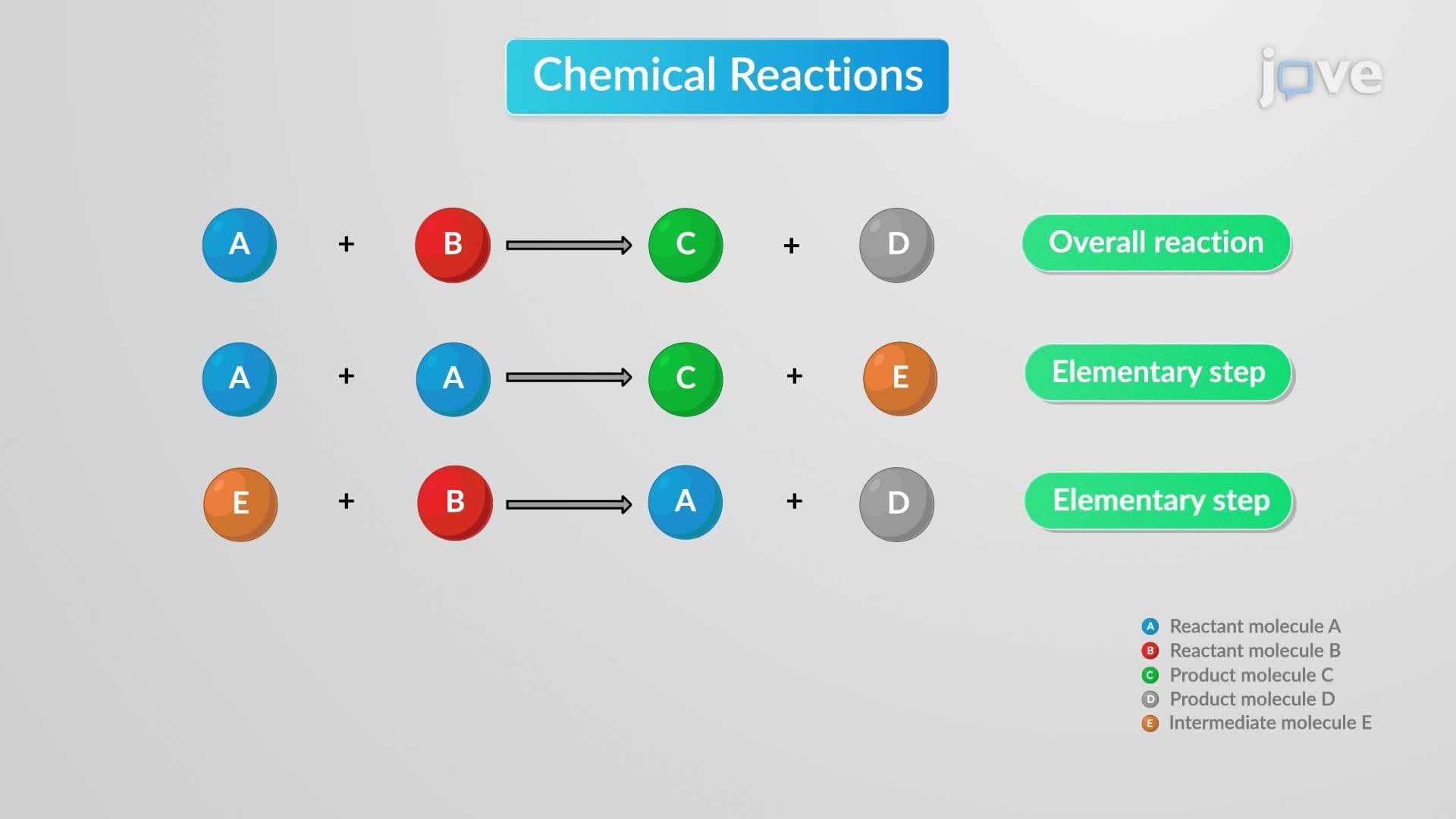
1. Rate Laws and Equilibrium Constants for Elementary Reactions
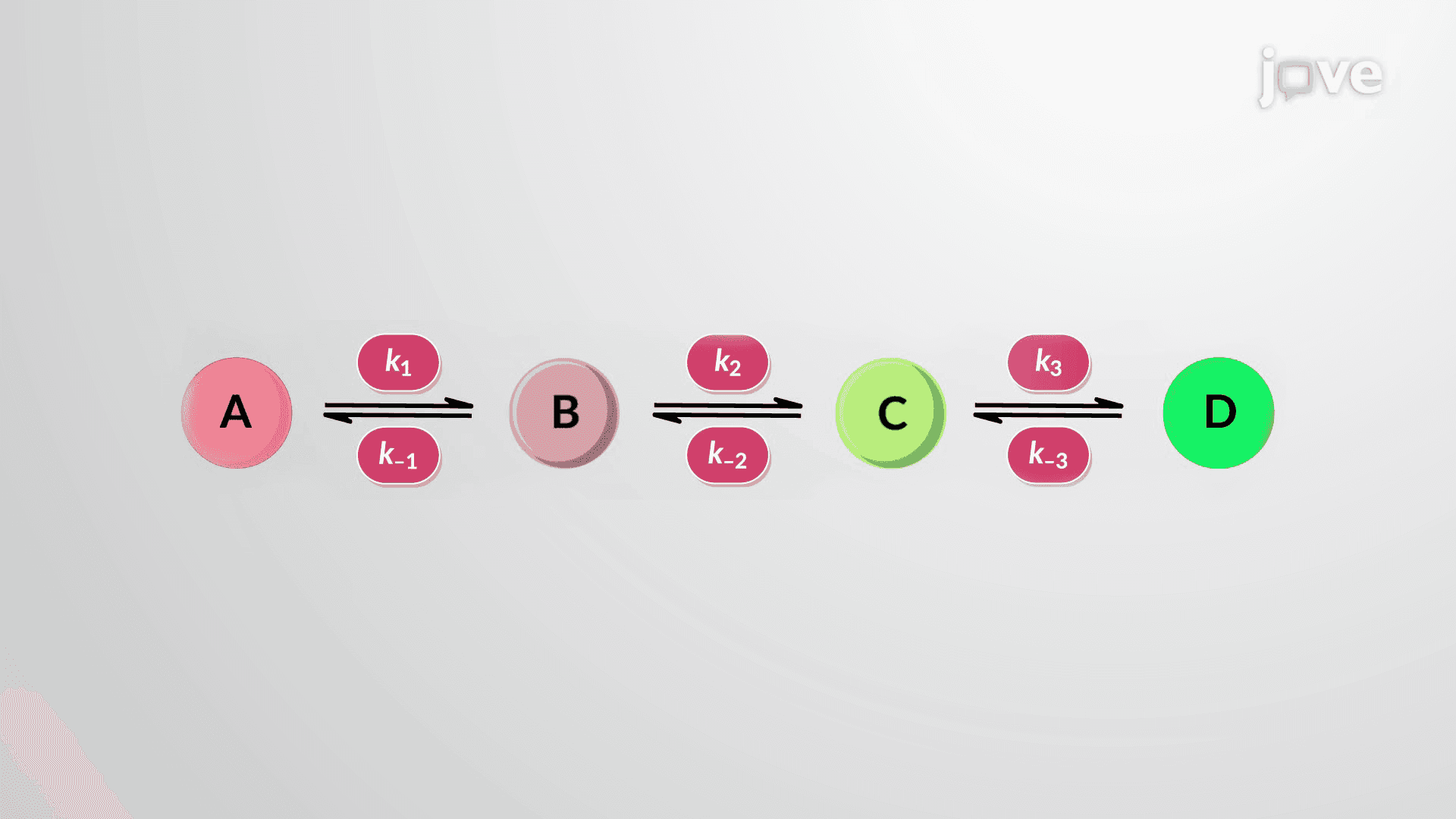
2. Reaction Mechanisms: Rate-limiting Step Approximation
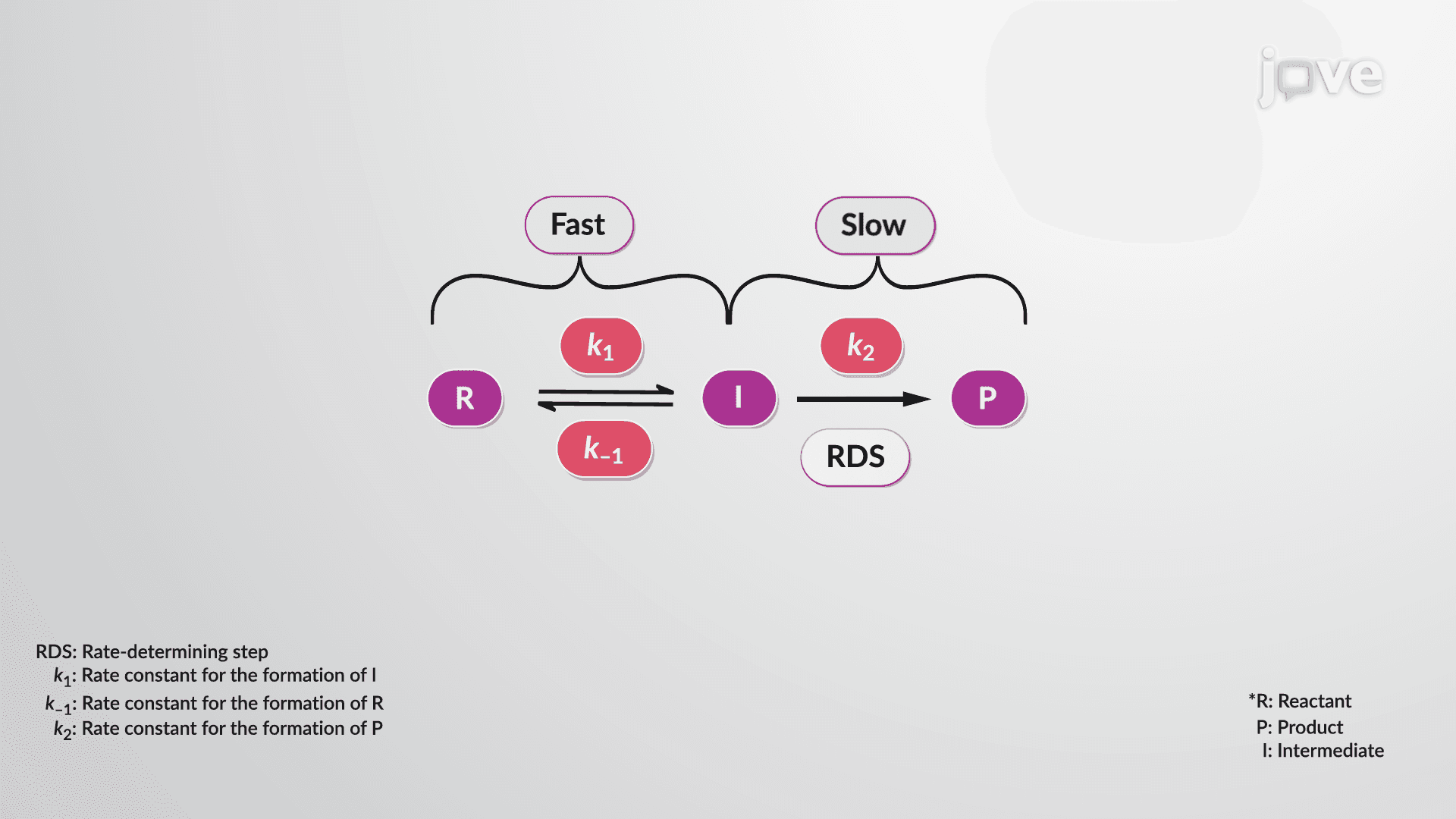
3. Reaction Mechanisms: The Steady-State Approximation
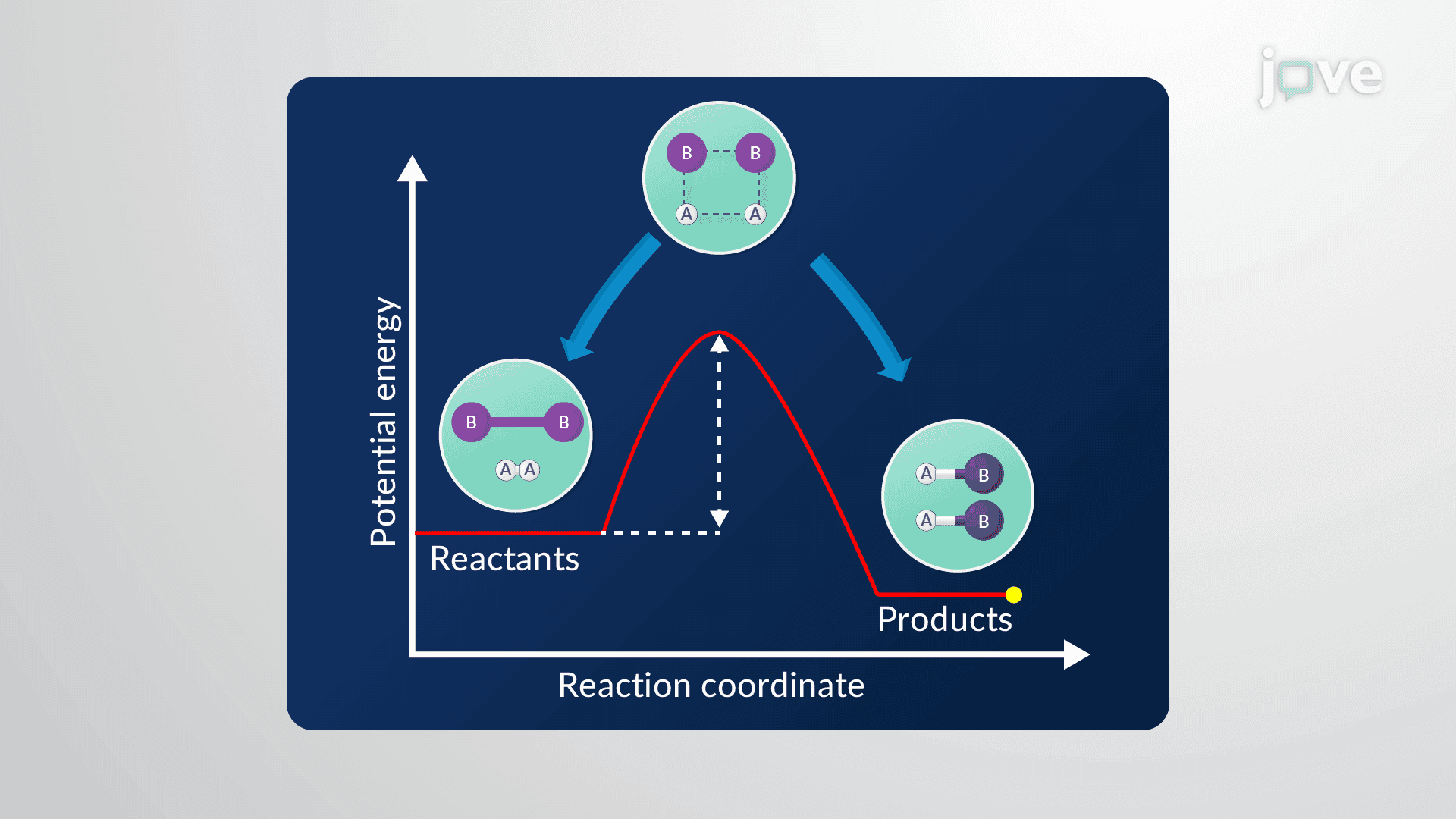
4. Transition State Theory
5. Consecutive Reactions
6. Reversible or Opposing Reactions
7. Chain Reactions
8. Fast Reactions
9. Catalysis
Chemical kinetics explores how fast chemical reactions occur and what controls their rates. This micro-course — developed with JoVE Coach — covers reaction rate laws, mechanisms, transition state theory, catalysis, and specialized techniques for measuring fast reactions. From drug metabolism in the human body to industrial ammonia synthesis, understanding chemical kinetics is essential for solving real-world chemistry problems in the US classroom and beyond.
- Understand how rate laws and equilibrium constants are derived for elementary reactions based on molecularity and stoichiometry
- Identify the rate-determining step in a multi-step reaction mechanism and apply the rate-limiting step approximation to simplify complex rate expressions
- Apply the steady-state approximation to reactions involving short-lived intermediates to derive overall rate laws
- Explore transition state theory and the Eyring equation to explain how activation energy and Gibbs free energy influence reaction rates
- Analyze consecutive and reversible reactions mathematically, predicting how intermediate concentrations change over time
- Understand the mechanism and kinetics of chain reactions, including initiation, propagation, inhibition, and termination steps
- Identify specialized experimental techniques — including stopped-flow, temperature-jump, and flash photolysis — used to measure extremely fast reaction rates
- Explore homogeneous and heterogeneous catalysis and explain how catalysts lower activation energy without being consumed
1. Rate Laws and Equilibrium Constants for Elementary Reactions A rate law expresses how the reaction rate depends on reactant concentrations. For elementary reactions, the rate is proportional to concentrations raised to the power of their stoichiometric coefficients. The proportionality constant, *k*, is temperature-dependent but concentration-independent. For reversible elementary reactions, equilibrium is reached when forward and reverse rates are equal. The equilibrium constant, *K*c, equals the ratio of the forward to reverse rate constants. A large *K*c — as seen in the combustion of methane — indicates strong product favorability, while a small *K*c signals reactant favorability.
2. Reaction Mechanisms and the Rate-Limiting Step Approximation Most chemical reactions proceed through a series of elementary steps rather than one single event. The slowest step controls the overall rate and is called the rate-determining step (RDS). Using the RDS approximation — also called the equilibrium approximation — chemists express the overall rate law in terms of observable reactants, bypassing intermediates. This approach is critical for validating proposed reaction mechanisms in both academic research and industrial process design, such as optimizing reaction conditions in US pharmaceutical manufacturing.
3. The Steady-State Approximation When a reaction produces a short-lived, highly reactive intermediate, its concentration quickly reaches a small, nearly constant value. The steady-state approximation treats this concentration as unchanging over time — meaning its rate of formation equals its rate of consumption. By solving for the intermediate concentration algebraically and substituting it into the rate expression, a clean, experimentally testable rate law emerges. This technique is widely used in enzyme kinetics (Michaelis-Menten model) taught in US biochemistry and MCAT preparation courses.
4. Transition State Theory and the Eyring Equation Transition state theory — also called activated-complex theory — describes the energy barrier reactants must overcome to form products. As reactants collide, potential energy rises to a maximum at the transition state, the highest-energy configuration on the reaction profile. The Eyring equation mathematically links the rate constant to temperature, Boltzmann's constant, Planck's constant, and the Gibbs free energy of activation (ΔG‡). This framework is applied to understand both gas-phase reactions, like ammonia synthesis, and solution-phase reactions, like precipitation in US industrial water treatment processes.
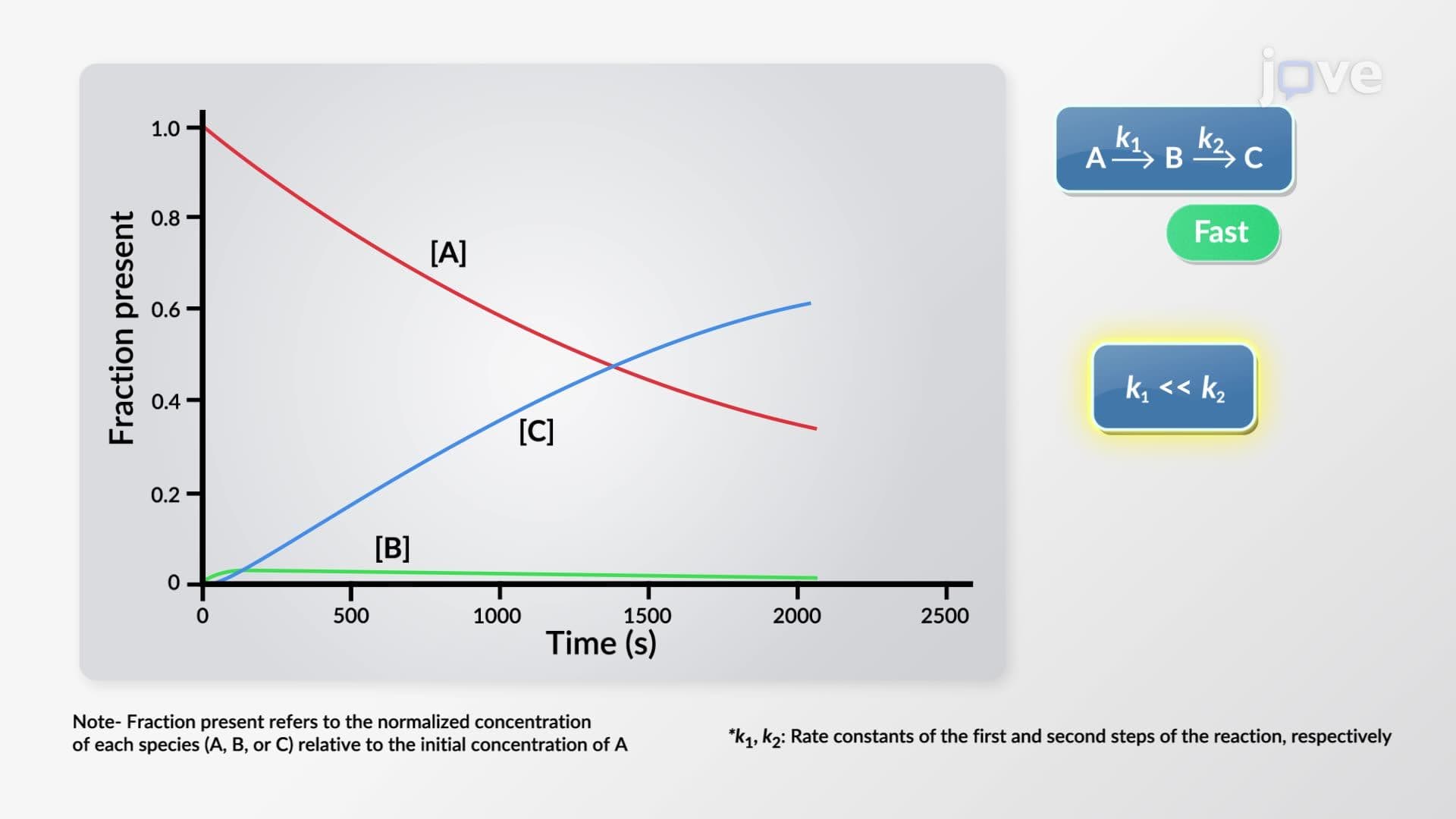
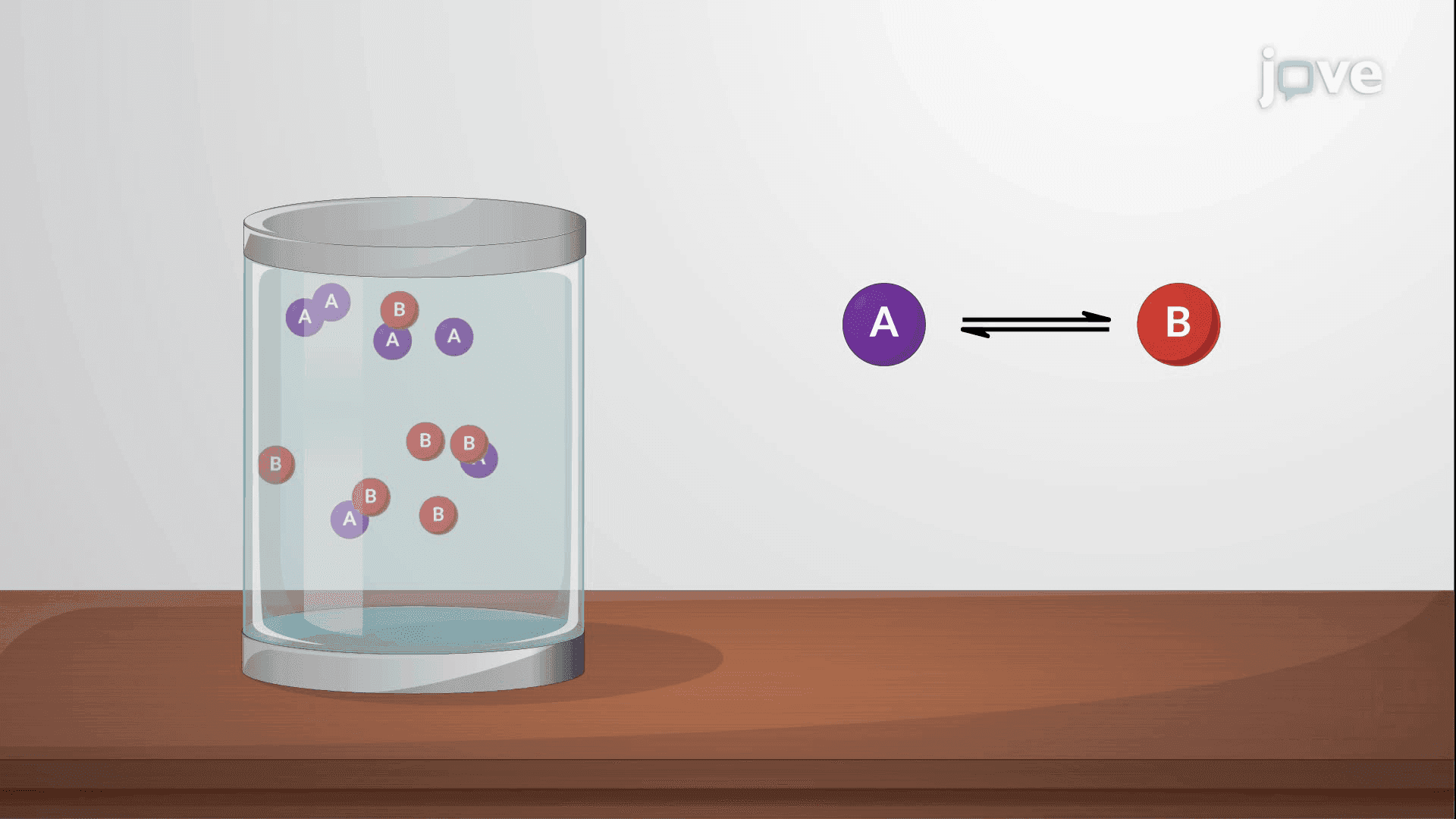
5. Consecutive and Reversible Reactions In consecutive reactions, a reactant transforms into an intermediate product, which then converts to a final product — each step following first-order kinetics. Radioactive decay series, studied extensively in US nuclear medicine, are classic examples. The relative magnitudes of the two rate constants determine whether the intermediate accumulates significantly or remains negligible. In reversible reactions, forward and reverse processes compete simultaneously. The net rate depends on both rate constants, and equilibrium concentrations can be expressed in terms of the equilibrium constant *K*, connecting kinetics directly to thermodynamics.
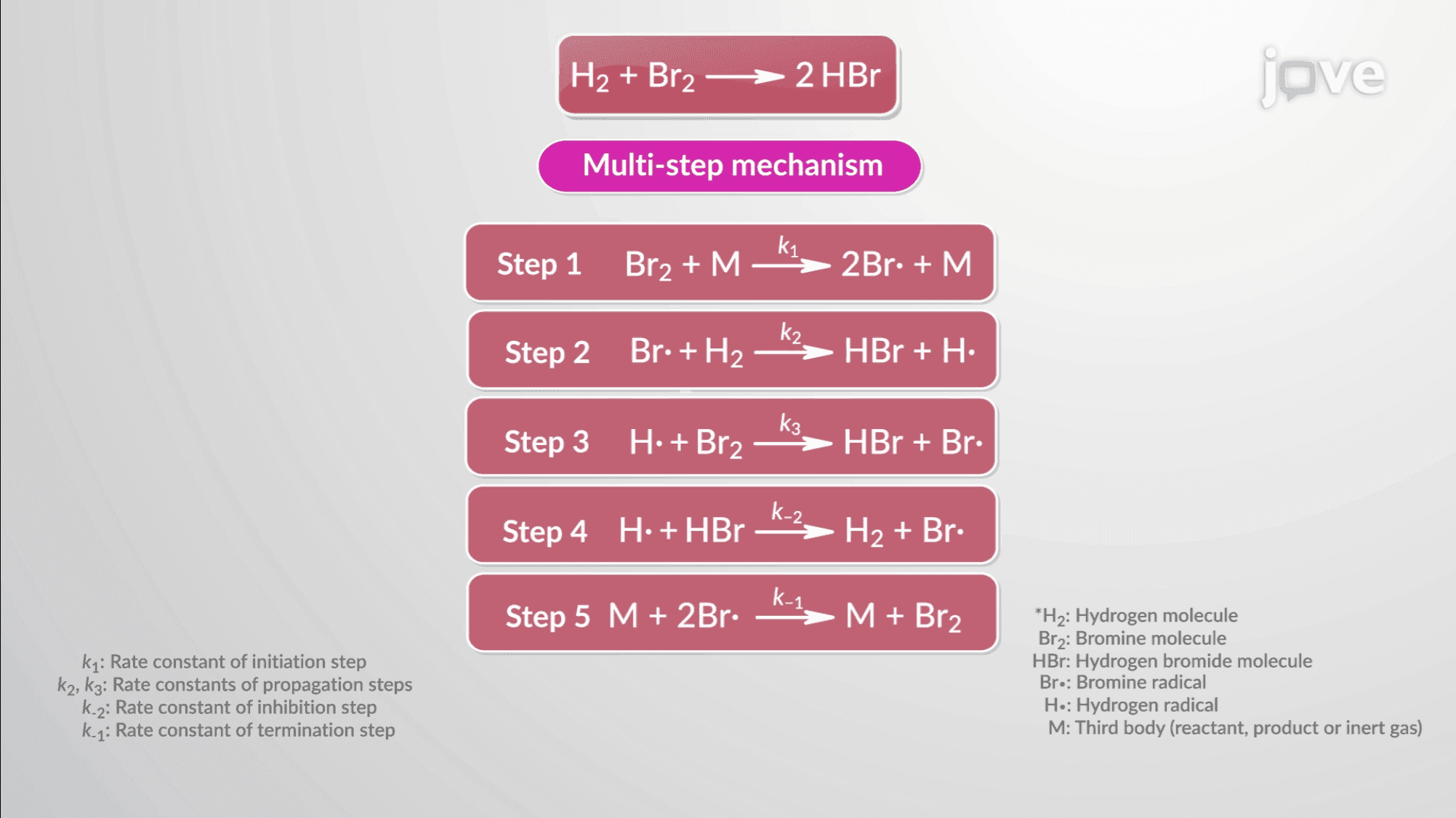
6. Chain Reactions Chain reactions involve the continuous formation and consumption of reactive radical species through four distinct phases: initiation, propagation, inhibition, and termination. The hydrogen-bromine reaction is a textbook example. Radicals are generated initially, then sustain the reaction through propagation cycles. The overall observed rate law, however, depends only on stable measurable species — not the radicals themselves. Chain reaction kinetics are critically relevant to combustion engines, atmospheric chemistry, and the behavior of free radicals in biological systems, all of which appear in AP Chemistry and MCAT content.
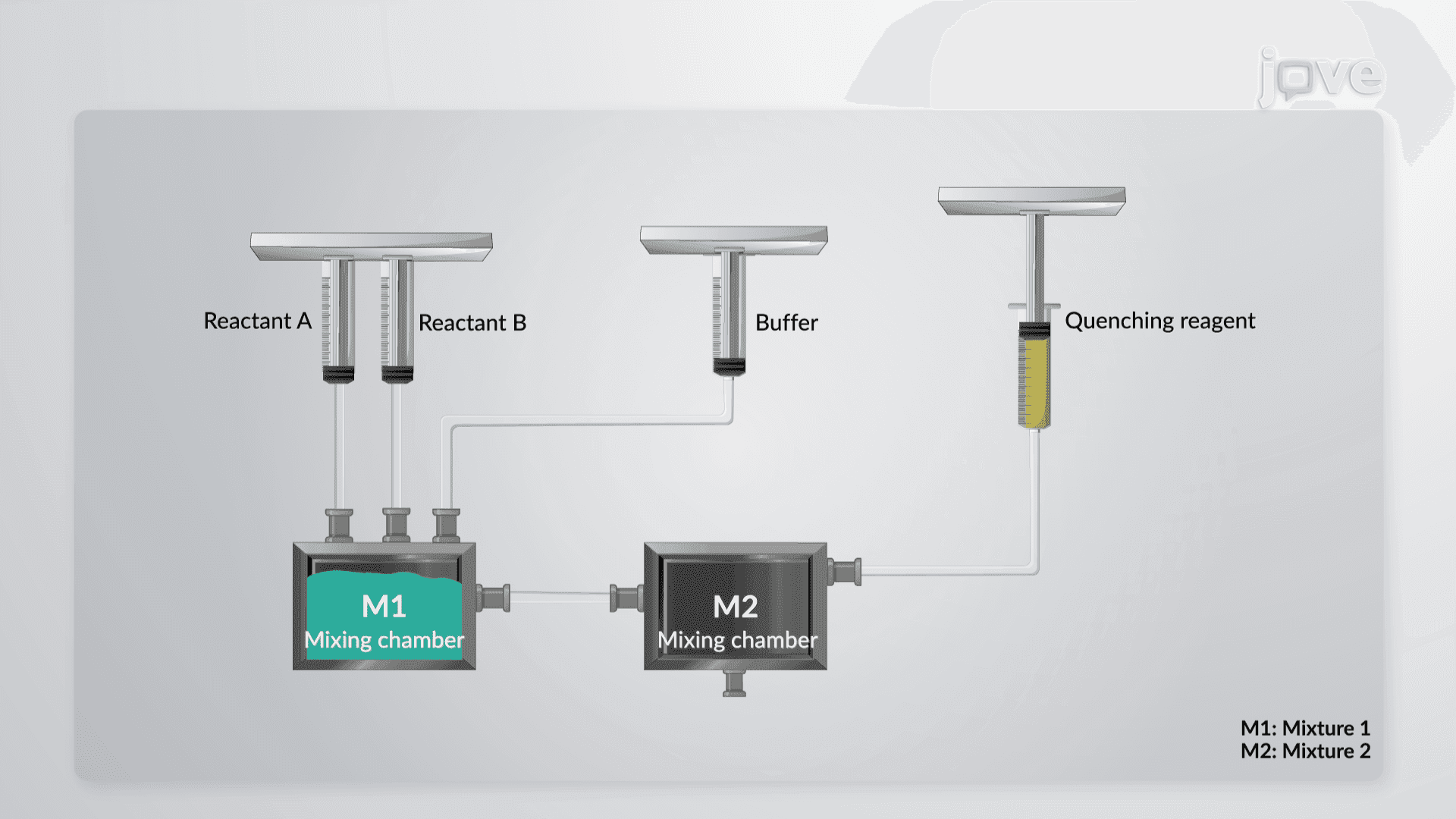
7. Techniques for Studying Fast Reactions Ordinary mixing techniques cannot capture reactions that occur in milliseconds or microseconds. Specialized methods have been developed to overcome this limitation. The continuous-flow method measures concentrations along a reaction tube using light absorption. The stopped-flow technique records concentration changes after abruptly halting reagent flow. Quenching methods freeze or chemically stop a reaction at a defined time point for later analysis. The temperature-jump method rapidly shifts a system out of equilibrium using a high-voltage pulse, while flash photolysis uses intense light pulses to generate and study radicals — a technique important in atmospheric chemistry research at US universities.
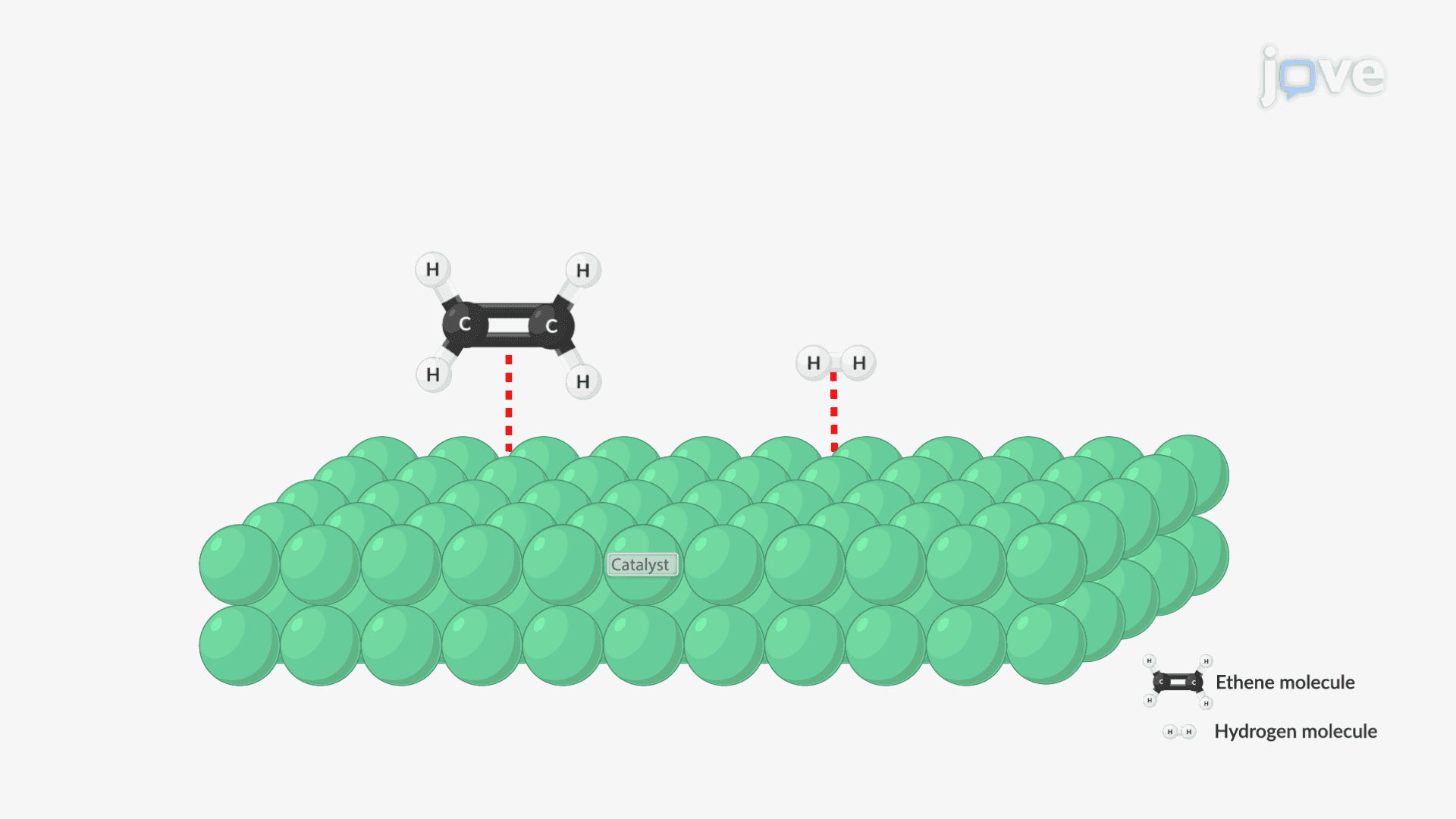
8. Catalysis: Homogeneous and Heterogeneous Catalysts speed up reactions by providing an alternative pathway with a lower activation energy, without being permanently consumed. In homogeneous catalysis, the catalyst and reactants share the same phase — for example, chlorine radicals from chlorofluorocarbons (CFCs) catalyzing ozone depletion in Earth's stratosphere, a phenomenon studied in US environmental policy courses. In heterogeneous catalysis, catalyst and reactants are in different phases — such as gaseous hydrogen and ethene reacting on a solid platinum or nickel surface to produce ethane. This principle underpins catalytic converters in US automobiles and large-scale industrial processes like the Haber process.
Frequently Asked Questions
Molecularity refers to the number of molecules that physically collide and react in a single elementary step — it is always a positive integer (1, 2, or rarely 3) and applies only to elementary reactions. Reaction order, on the other hand, describes how the reaction rate depends on reactant concentrations mathematically, as determined from the rate law. Order is experimentally measured and can be zero, fractional, or a whole number. For overall multi-step reactions, order and molecularity are not the same — only for a single elementary step do they coincide.
Temperature has a major effect on reaction rates because it directly influences the rate constant k. As temperature increases, molecules move faster and collide more frequently with greater energy, increasing the fraction of collisions that exceed the activation energy barrier. This relationship is described quantitatively by the Arrhenius equation: k = Ae^(−Ea/RT), where Ea is the activation energy, R is the gas constant, and T is the absolute temperature. Even a small temperature increase can cause a significant jump in reaction rate — a concept tested on both AP Chemistry and the MCAT.
Fast reactions — those occurring on millisecond or microsecond timescales — require specialized laboratory techniques. In the stopped-flow method, reactants are rapidly mixed and the flow is instantly halted; a detector tracks concentration changes in real time. The temperature-jump technique disturbs an equilibrium by rapidly heating the sample with a high-voltage pulse, then monitors how the system relaxes. Flash photolysis uses short, intense light pulses to create reactive species and track their decay using spectroscopy. These methods are used in US research labs to study enzyme reactions, atmospheric chemistry, and drug-receptor binding kinetics.
Yes — chemical kinetics is a major topic in AP Chemistry (Unit 5: Kinetics). The AP exam tests students on writing and interpreting rate laws, identifying reaction orders from experimental data, understanding the Arrhenius equation, analyzing reaction mechanisms and rate-determining steps, and explaining the role of catalysts. Free-response questions often ask students to derive rate laws from proposed mechanisms or interpret graphs of concentration versus time. Mastery of kinetics is also essential for MCAT test-takers, particularly for understanding enzyme kinetics and biochemical reaction pathways.
One of the most familiar US examples is the catalytic converter in automobiles. Harmful exhaust gases — carbon monoxide, nitrogen oxides, and unburned hydrocarbons — pass over a solid platinum or palladium catalyst. This heterogeneous catalysis dramatically lowers the activation energy needed for these gases to react and convert into less harmful carbon dioxide, nitrogen, and water. The kinetics of these surface reactions determine how efficiently the converter works, especially during cold starts when the catalyst hasn't yet reached optimal operating temperature. Understanding reaction rates directly shapes US automotive emissions standards.
Many students confuse the rate law with the balanced overall equation, incorrectly assuming reaction order always matches stoichiometric coefficients. This is only valid for elementary reactions — not for overall multi-step mechanisms. Another common mistake is misidentifying the rate-determining step or misapplying the steady-state approximation by including stable reactants rather than only intermediates. To avoid these errors, always identify whether you are working with an elementary step or a multi-step mechanism, carefully track which species are intermediates, and practice deriving rate laws from mechanisms step by step using AP Chemistry or MCAT practice problems.
Both methods simplify complex multi-step rate laws, but they use different assumptions. The rate-limiting step (equilibrium) approximation assumes one step is so much slower than all others that it alone controls the overall rate, and earlier steps maintain a rapid equilibrium. The steady-state approximation, in contrast, assumes that the concentration of a reactive intermediate remains essentially constant throughout the reaction — not zero, but unchanging. This is because its rate of formation equals its rate of consumption. The steady-state method is more general and is the foundation for Michaelis-Menten enzyme kinetics covered in US college biochemistry courses.
A catalyst works by providing a different reaction pathway with a lower activation energy (Ea). In the Arrhenius equation — k = Ae^(−Ea/RT) — a lower Ea produces a significantly larger rate constant k, meaning the reaction proceeds much faster at the same temperature. Importantly, a catalyst does not change the overall thermodynamics: the reactants and products remain the same, and ΔG for the reaction is unchanged. Catalysts appear throughout US chemistry curricula, from the enzyme-catalyzed reactions on the MCAT to industrial processes like the Haber-Bosch synthesis of ammonia studied in AP Chemistry and college general chemistry.
This microcourse includes 9 concept videos that walk you through the building blocks of Physical Chemistry. Each video is short, about 1 minute, so you can cover a full topic during a coffee break or between classes. The full sequence starts with Rate Laws and Equilibrium Constants for Elementary Reactions and ends with Catalysis.
The playlist moves from big-picture ideas to the precise vocabulary used in Physical Chemistry. Early videos introduce Rate Laws and Equilibrium Constants for Elementary Reactions, Reaction Mechanisms: Rate-limiting Step Approximation, and Reaction Mechanisms: The Steady-State Approximation. The middle of the series focuses on Consecutive Reactions, Reversible or Opposing Reactions, and Chain Reactions. The final stretch covers Fast Reactions and Catalysis.
The natural next step is The Solid State: Crystals and Surfaces. From there, you can move to Macromolecules and Self Assembly. Once you finish those, the full Physical Chemistry curriculum of 12 microcourses on JoVE Coach opens up, taking you from foundational concepts to advanced systems.
Related Subjects