Loading subject page…


39,014 views

Video Summary: Entropy and the Second Law Explained
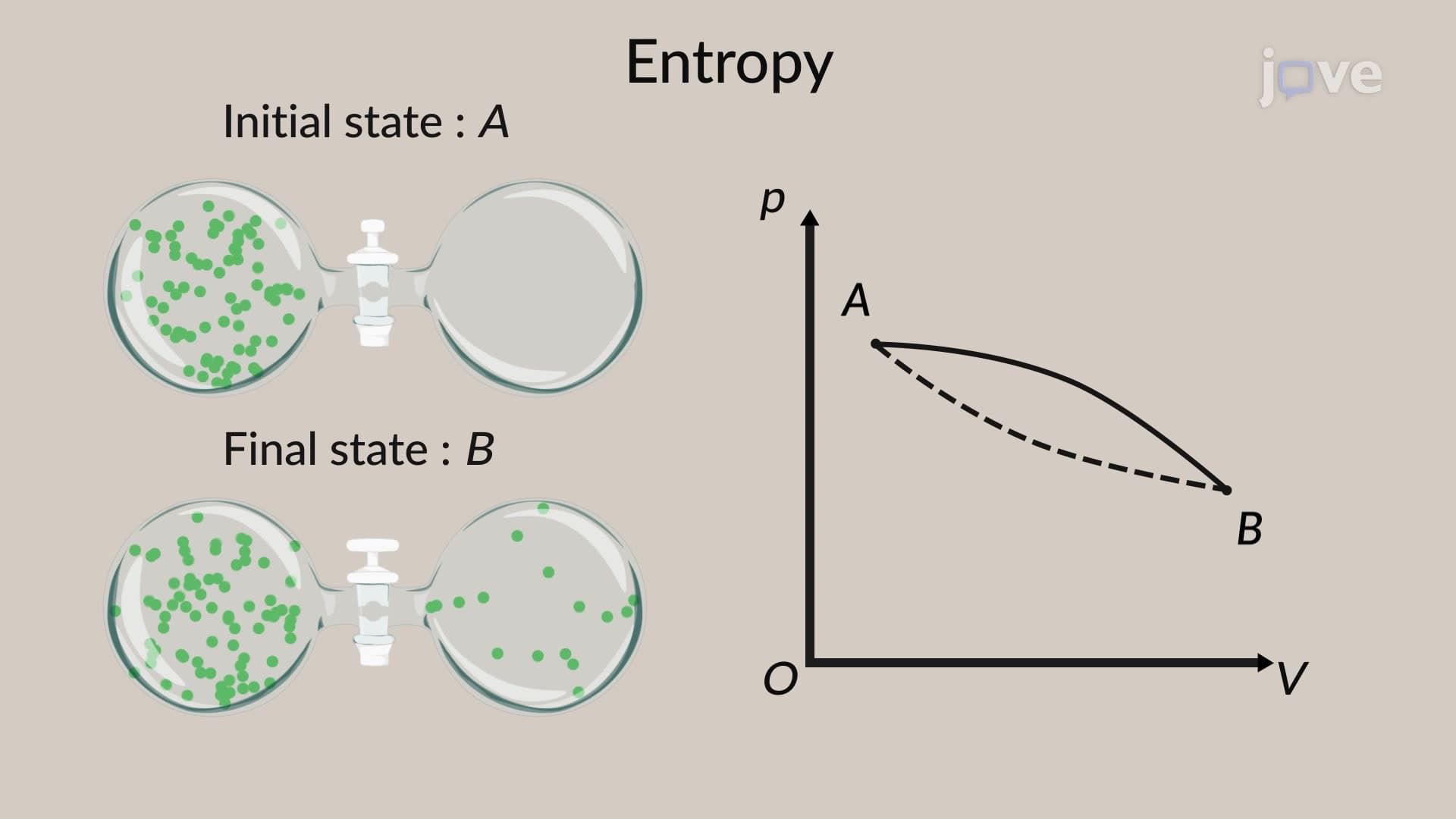
Ever wonder why your messy dorm room never spontaneously cleans itself? Entropy and the second law of thermodynamics explains this universal tendency toward disorder. When a gas undergoes adiabatic free expansion-like air escaping from a punctured tire-the molecules spread out, increasing the system's entropy or disorder. This fundamental principle governs everything from refrigerator efficiency to cellular metabolism in your body. Watch the full video on JoVE Coach to master this concept with expert-led visuals and step-by-step explanations.
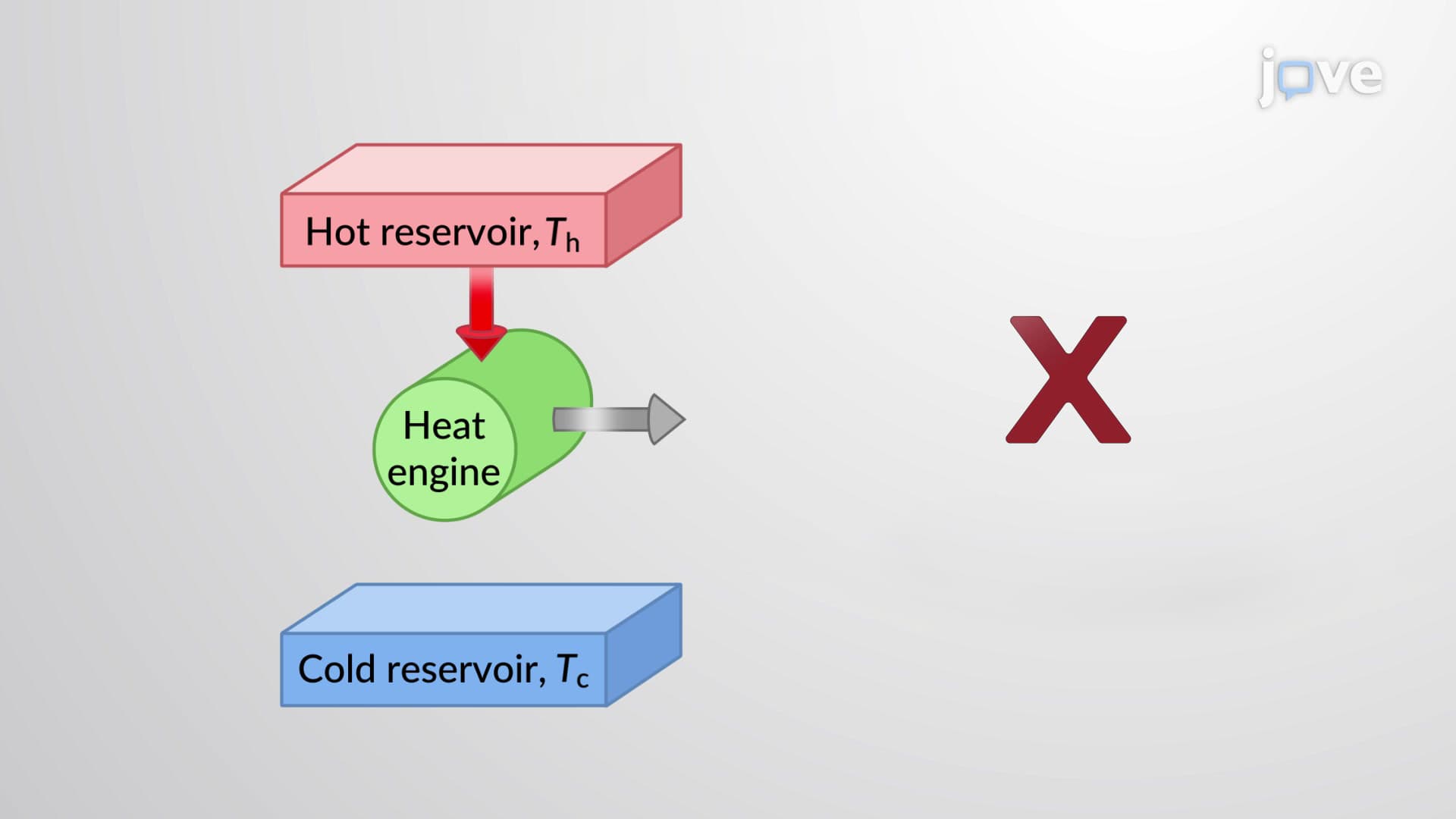
The second law of thermodynamics represents one of nature's most fundamental principles, establishing that entropy-a measure of disorder-always increases in isolated systems. Unlike energy, which is conserved, entropy provides a directional arrow for time, explaining why certain processes occur spontaneously while their reverse does not.
Entropy's power lies in being a state function, meaning its change depends only on initial and final conditions, not the path taken. This property allows scientists to calculate entropy changes for irreversible processes by analyzing equivalent reversible pathways. For example, when calculating entropy change during adiabatic free expansion, we can substitute an isothermal expansion between identical states, simplifying complex calculations that appear on AP Chemistry and college physical chemistry exams.
At the molecular level, entropy reflects the number of possible arrangements (microstates) available to a system. When gas molecules expand into a larger volume-like opening a perfume bottle in a classroom-each molecule has more possible positions and velocities. This increased freedom corresponds to higher entropy and greater disorder. The relationship ΔS = nR ln(V₂/V₁) quantifies this change, where n represents moles, R the gas constant, and V₁/V₂ the volume ratio.
Understanding entropy proves crucial across multiple fields. Automotive engineers optimize engine efficiency by minimizing entropy production during combustion cycles. Environmental scientists use entropy principles to analyze pollution dispersion patterns. In biological systems, cellular respiration increases entropy while coupling to useful work, demonstrating how living organisms temporarily decrease local entropy while increasing overall universal entropy.
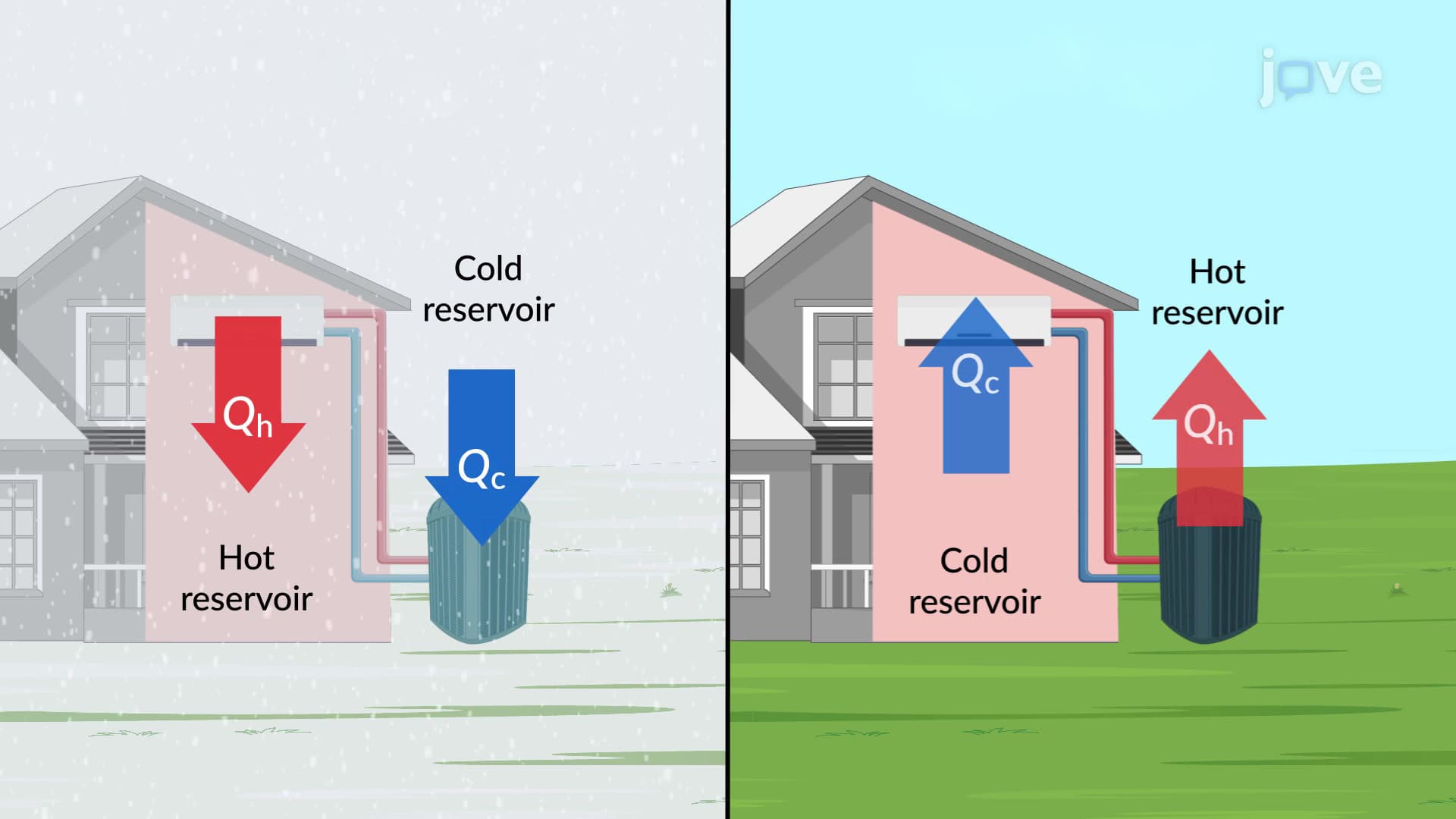
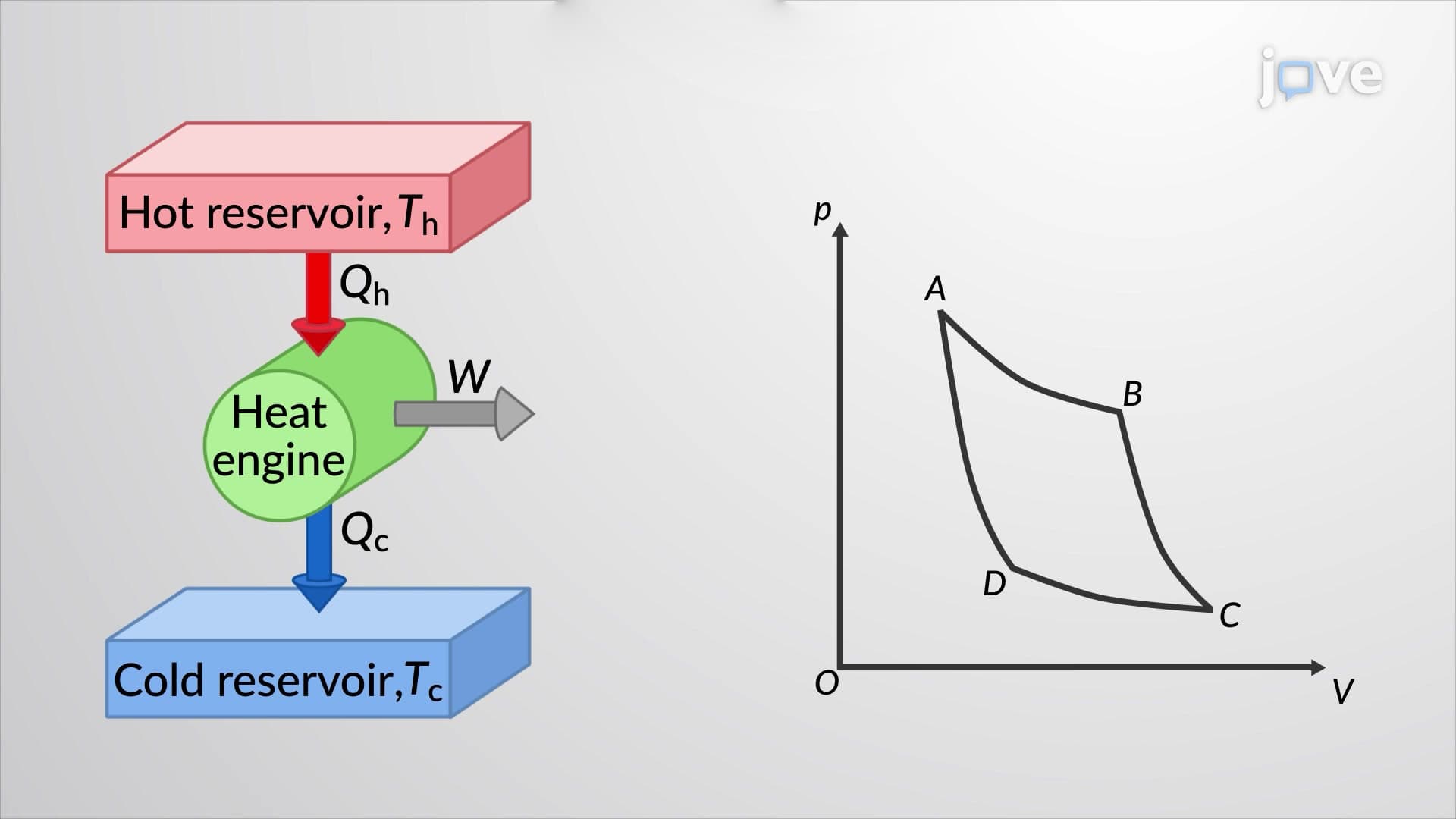
Students preparing for MCAT physics sections frequently encounter entropy problems involving heat engines, refrigerators, and biological processes. Mastering these concepts requires understanding both mathematical relationships and physical intuition about spontaneous change direction.
Related Micro-courses