14 Concepts
15 Concepts
14 Concepts
11 Concepts
16 Concepts
10 Concepts
15 Concepts
12 Concepts
19 Concepts
14 Concepts
14 Concepts
12 Concepts
24 Concepts
22 Concepts
15 Concepts
15 Concepts
17 Concepts
15 Concepts
13 Concepts
19 Concepts
12 Concepts
16 Concepts
13 Concepts
15 Concepts
12 Concepts
13 Concepts
18 Concepts
12 Concepts
22 Concepts
21 Concepts
13 Concepts
13 Concepts
14 Concepts
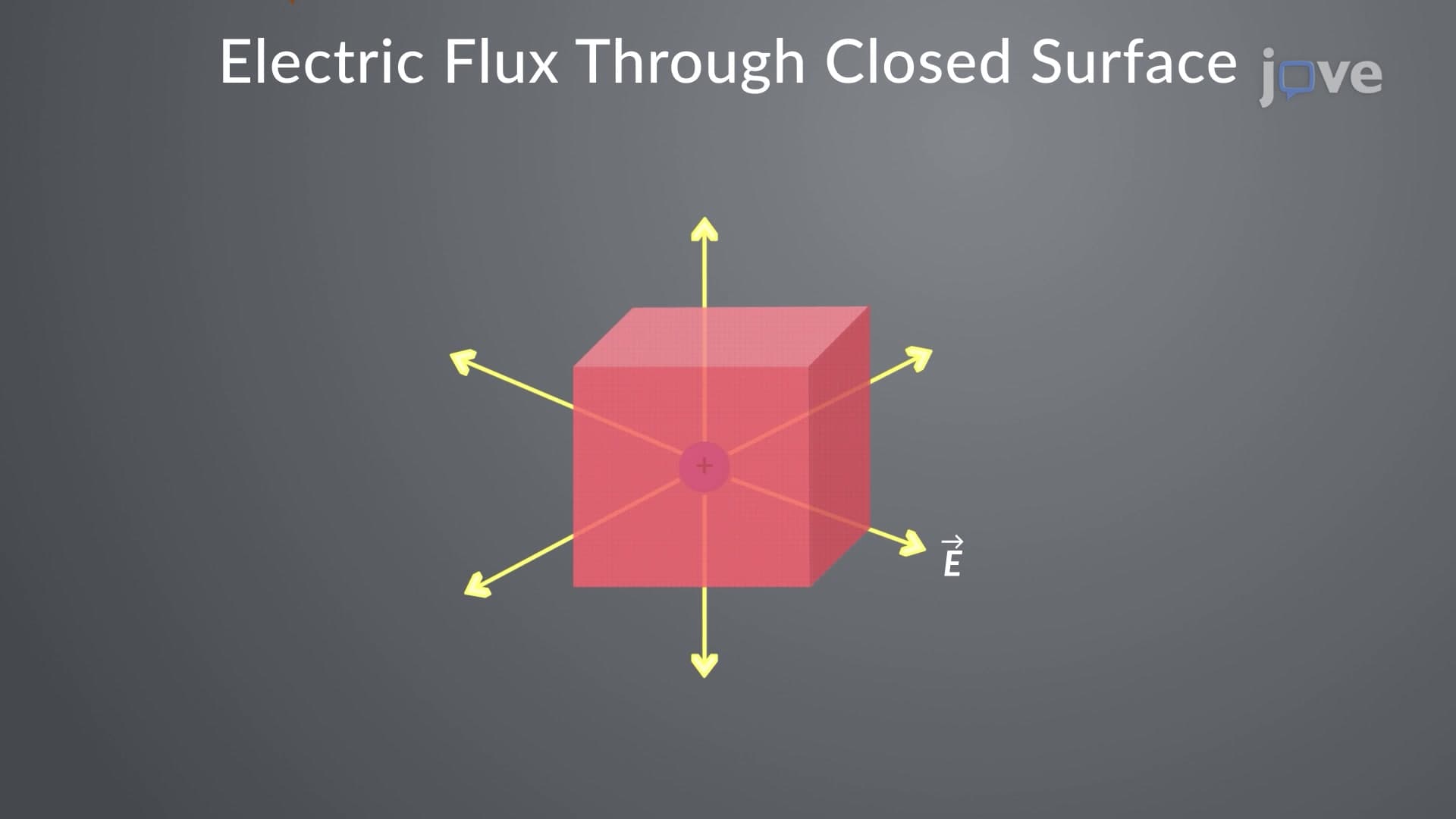
Gauss's law establishes a fundamental relationship between electric flux through closed surfaces and the charge enclosed within them. This powerful principle simplifies electric field calculations for symmetric charge distributions, making complex problems involving spheres, cylinders, and conducting surfaces manageable. Students explore applications from lightning rods on transmission towers to the safety of cars during electrical storms. JoVE Coach guides you through mathematical derivations and real-world examples essential for AP Physics and MCAT preparation.
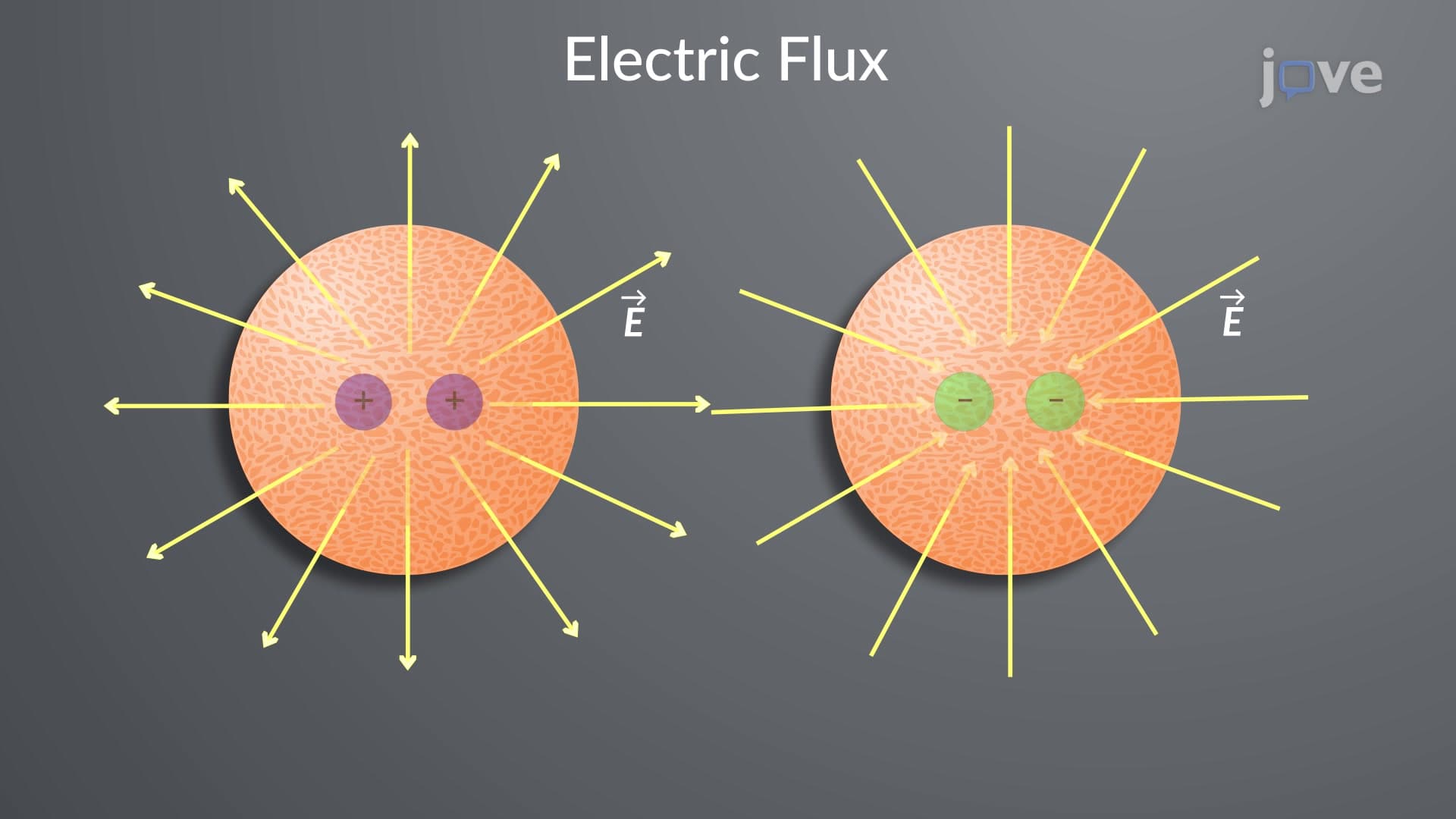
1. Electric Flux and Mathematical Foundations Electric flux quantifies the number of electric field lines passing through a surface, calculated as the dot product of electric field and area vectors. For closed surfaces, area vectors point outward by convention, making flux positive when field lines exit and negative when entering. Understanding vector calculus applications helps solve complex three-dimensional problems. Real examples include analyzing electromagnetic shielding effectiveness in electronic devices and calculating field penetration through building materials. Students master surface integral techniques essential for advanced electromagnetic theory.
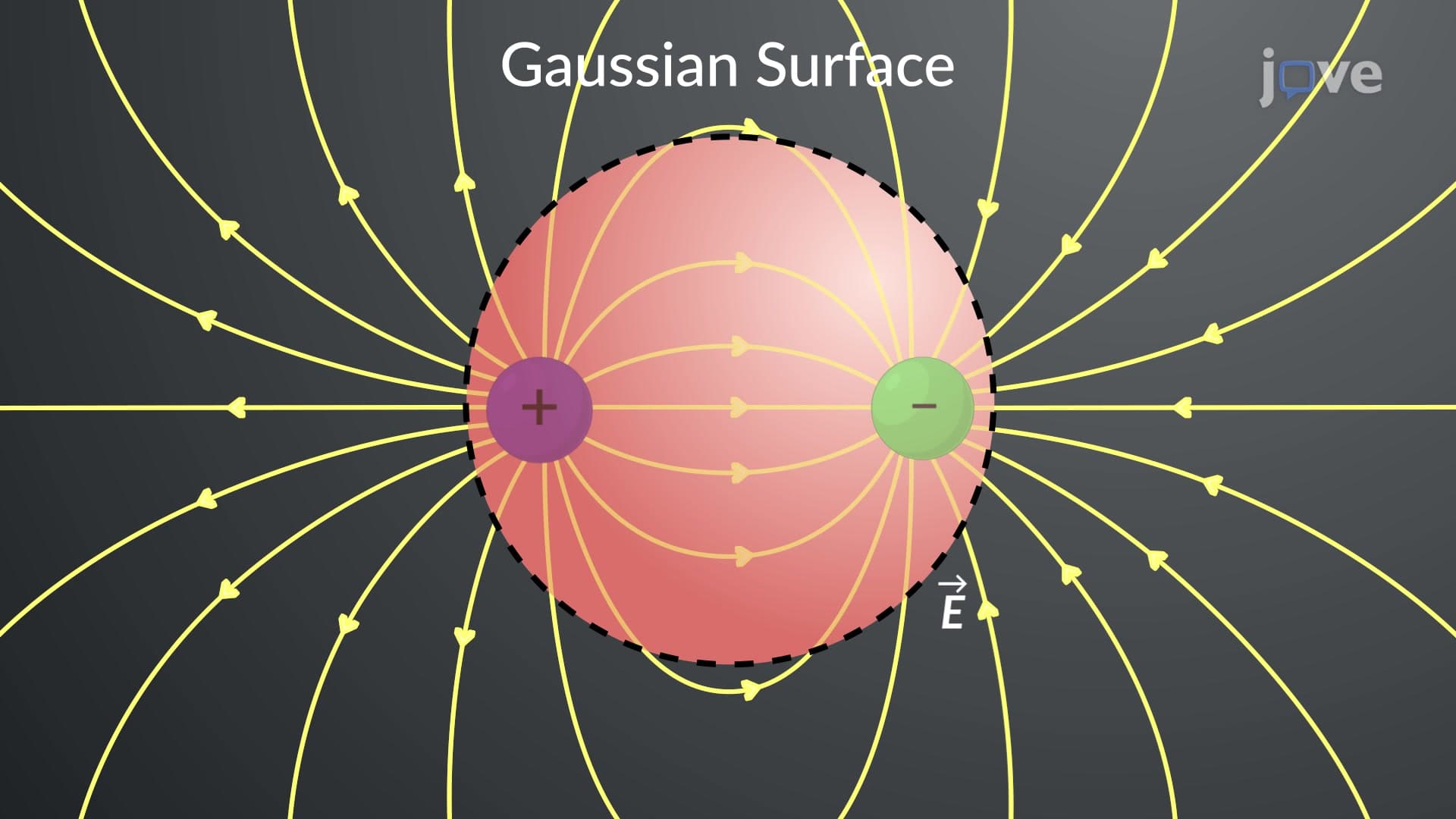
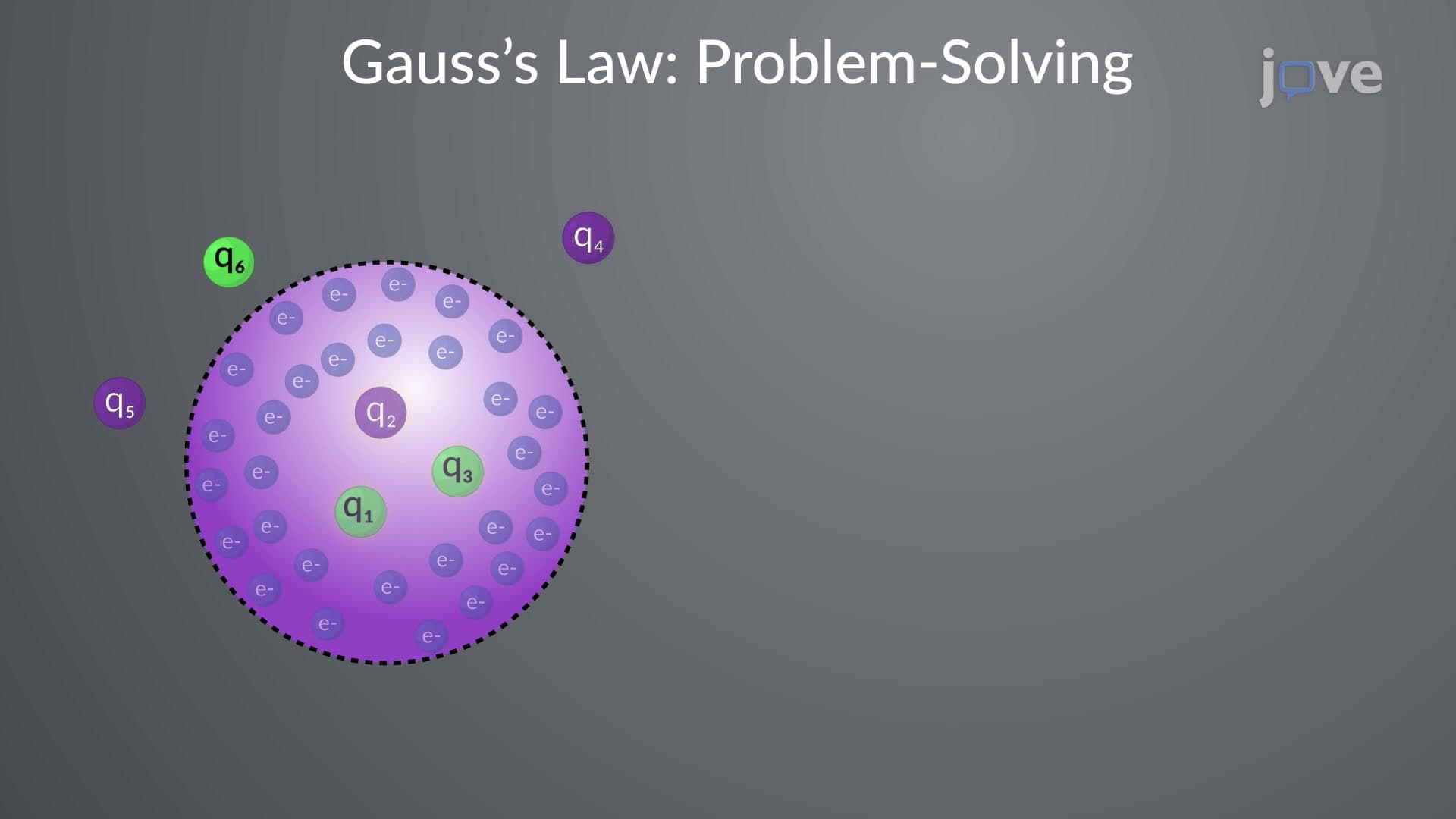
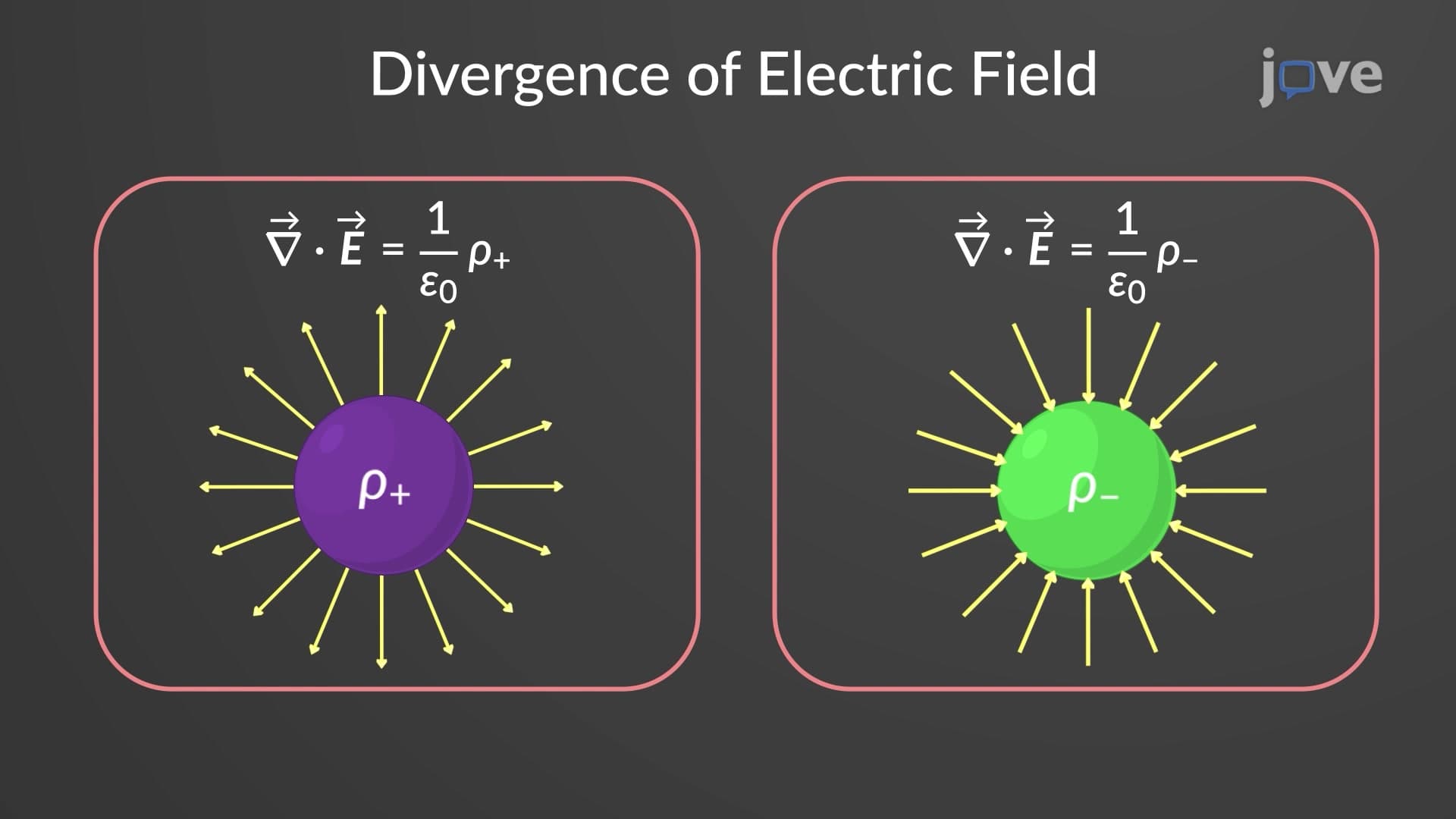
2. Gauss's Law Statement and Applications Gauss's law states that electric flux through any closed surface equals the enclosed charge divided by the permittivity of free space (ε₀ = 8.85 × 10⁻¹² F/m). This relationship, ∮E⃗·dA⃗ = Q_enclosed/ε₀, remains independent of surface shape or size. Applications include analyzing charge distributions in electronic components, understanding electromagnetic compatibility in aerospace systems, and solving problems involving multiple charge configurations. The law provides computational advantages over Coulomb's law for symmetric systems, reducing complex integrations to simple algebraic relationships.
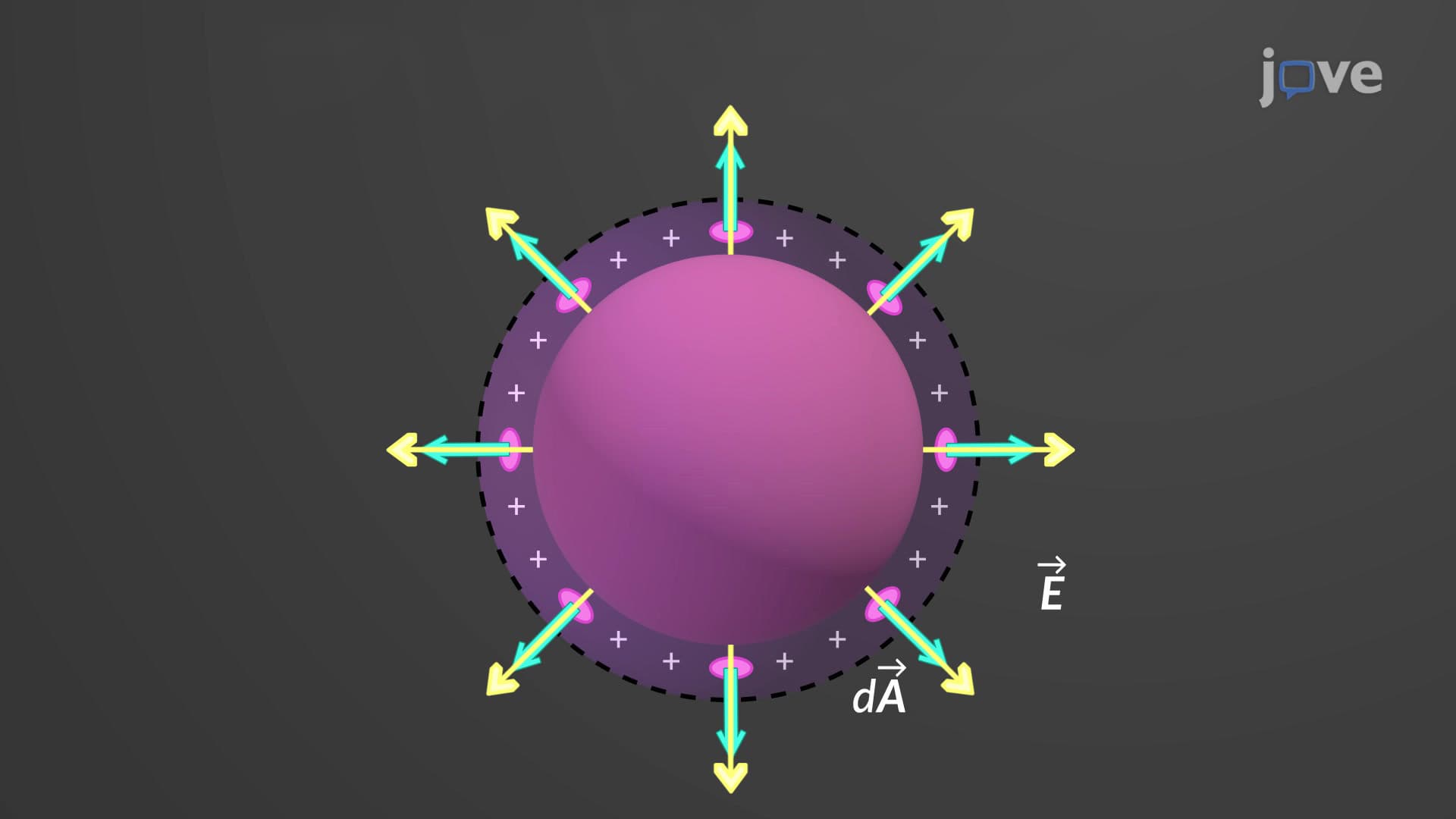
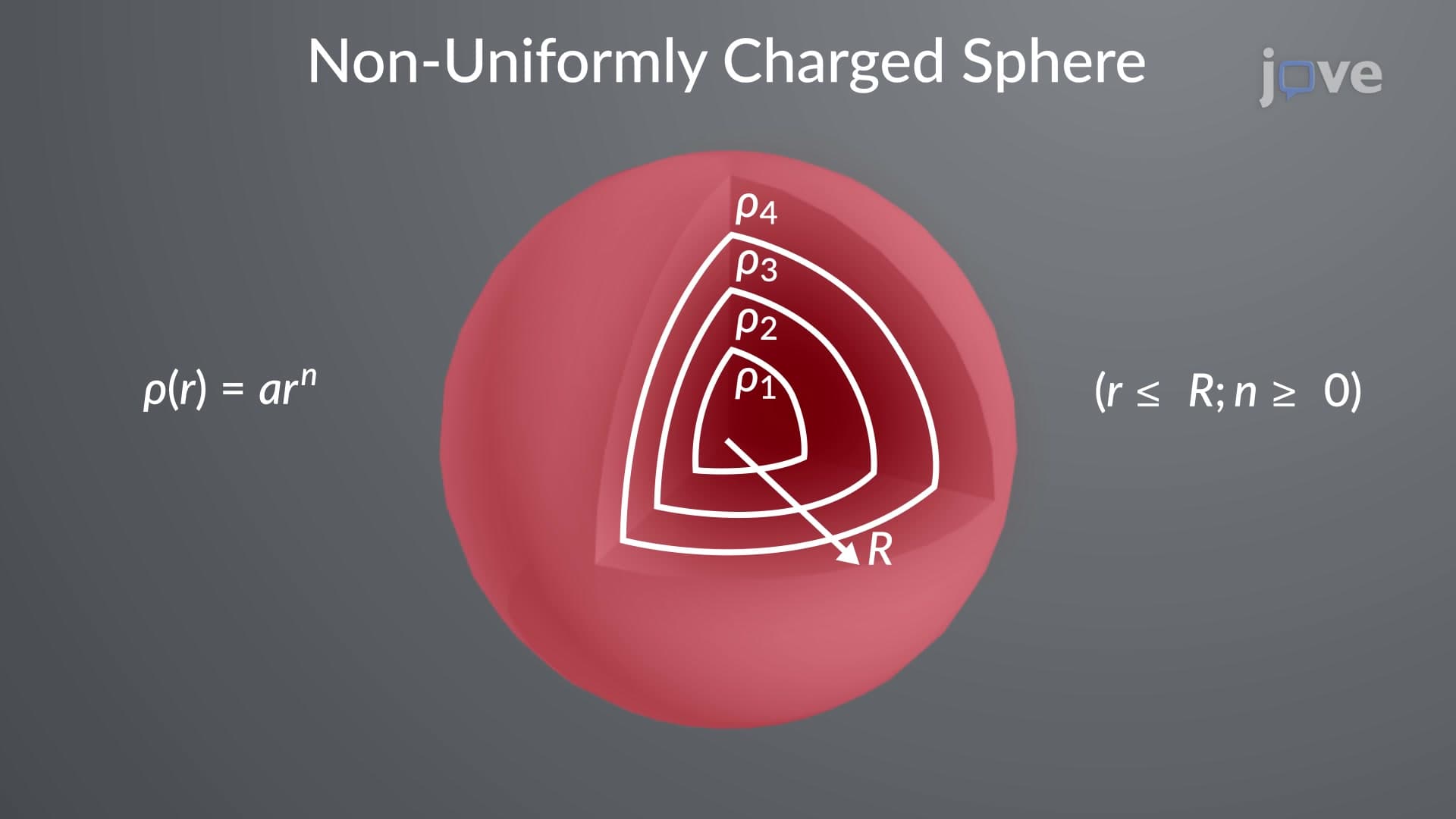
3. Spherical Symmetry and Point Charges Spherically symmetric charge distributions create electric fields with constant magnitude on spherical surfaces centered at the charge. For point charges, the electric field at distance r equals kQ/r², identical to results from direct Coulomb's law application. Extended spherical charge distributions behave as point charges when viewed from outside. Examples include modeling atomic nuclei in physics research, analyzing ionic interactions in biological systems, and calculating fields around spherical conductors in electrical engineering applications.
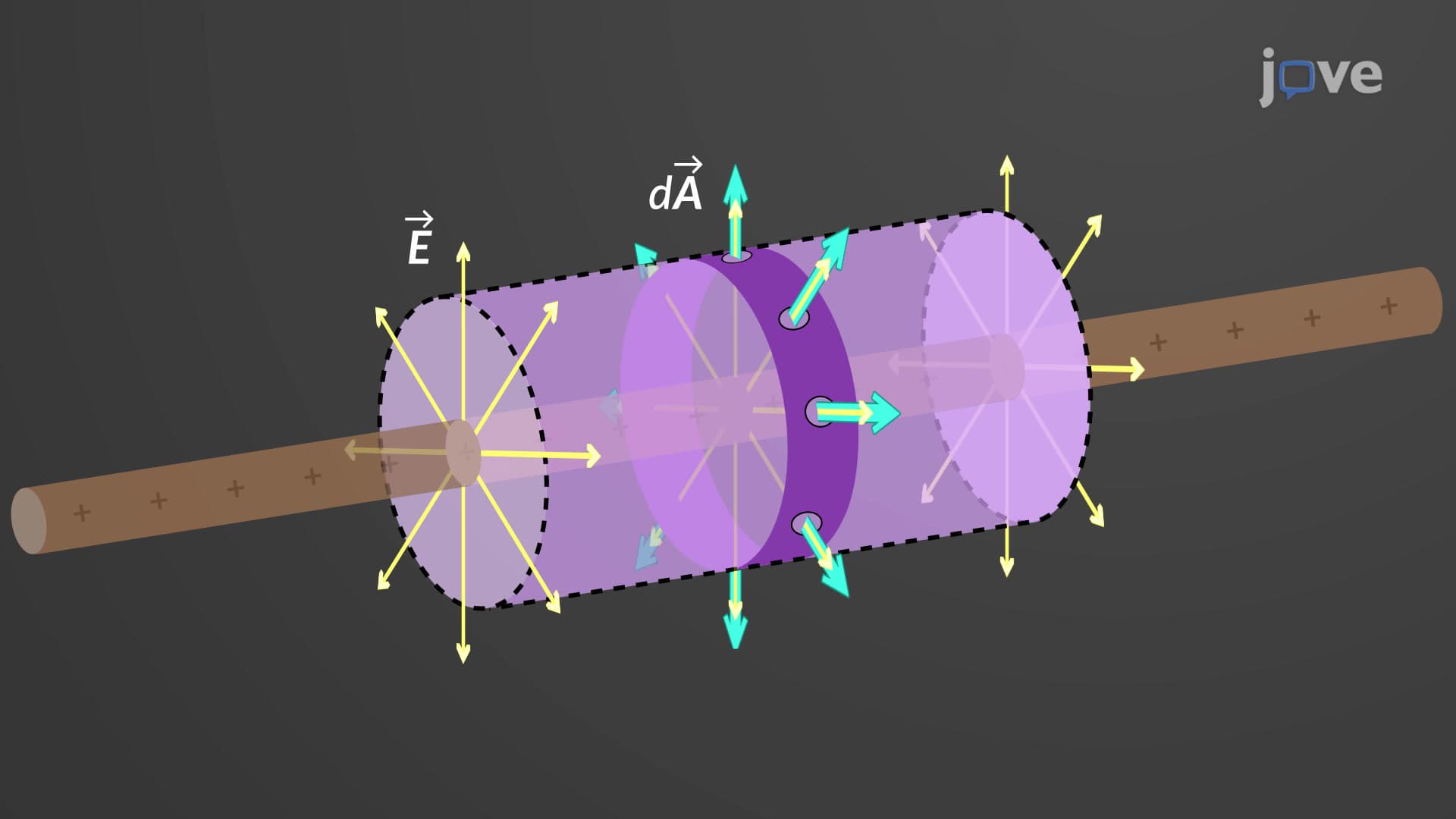
4. Cylindrical Symmetry and Line Charges Infinite line charges and cylindrically symmetric distributions create electric fields varying inversely with radial distance. Using cylindrical Gaussian surfaces, the electric field magnitude equals λ/(2πε₀r), where λ represents linear charge density. Real applications include analyzing fields around power transmission lines, understanding coaxial cable behavior in telecommunications, and modeling charge distributions in linear particle accelerators. Students learn to construct appropriate Gaussian surfaces and apply boundary conditions for finite-length approximations.
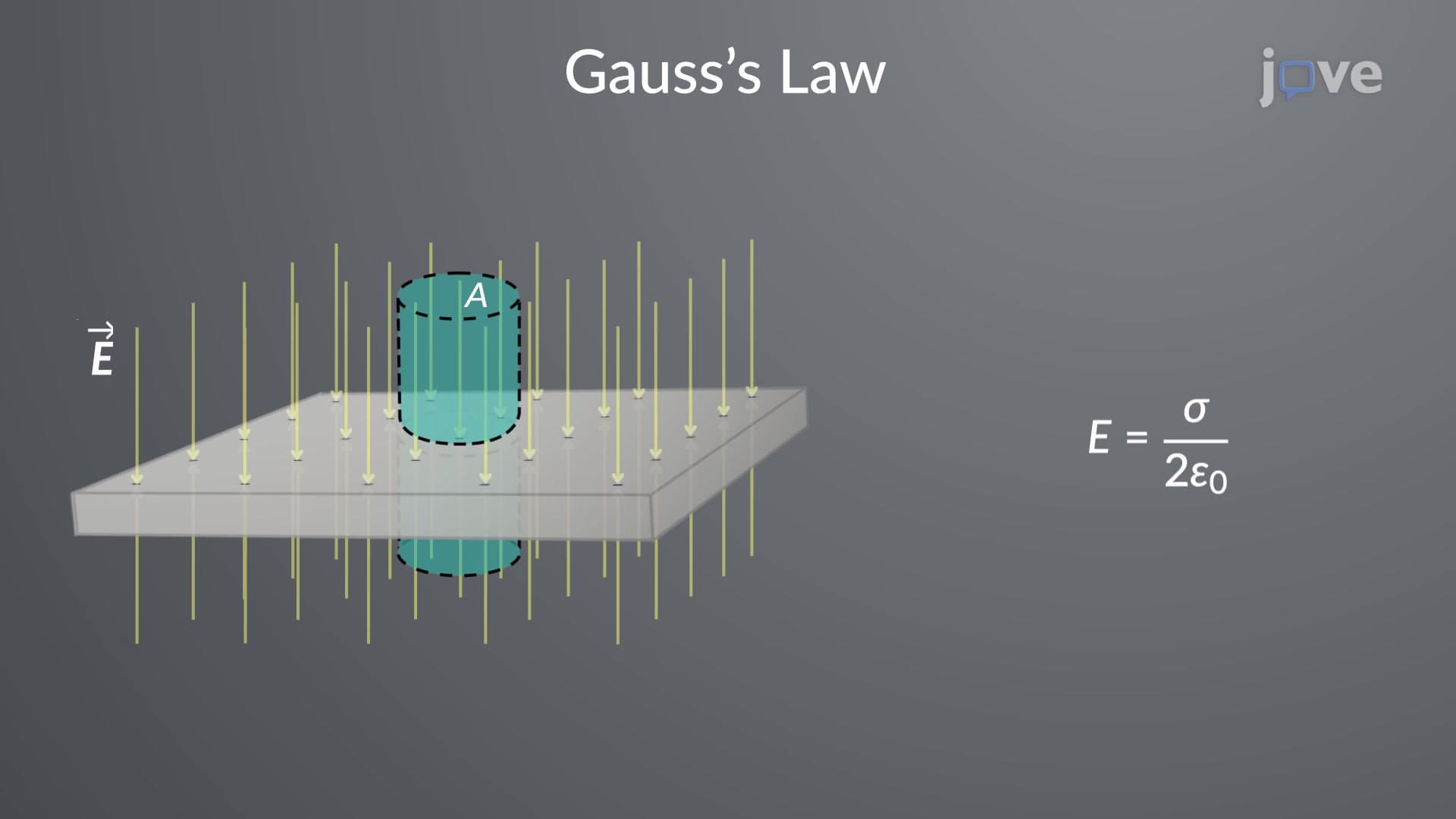
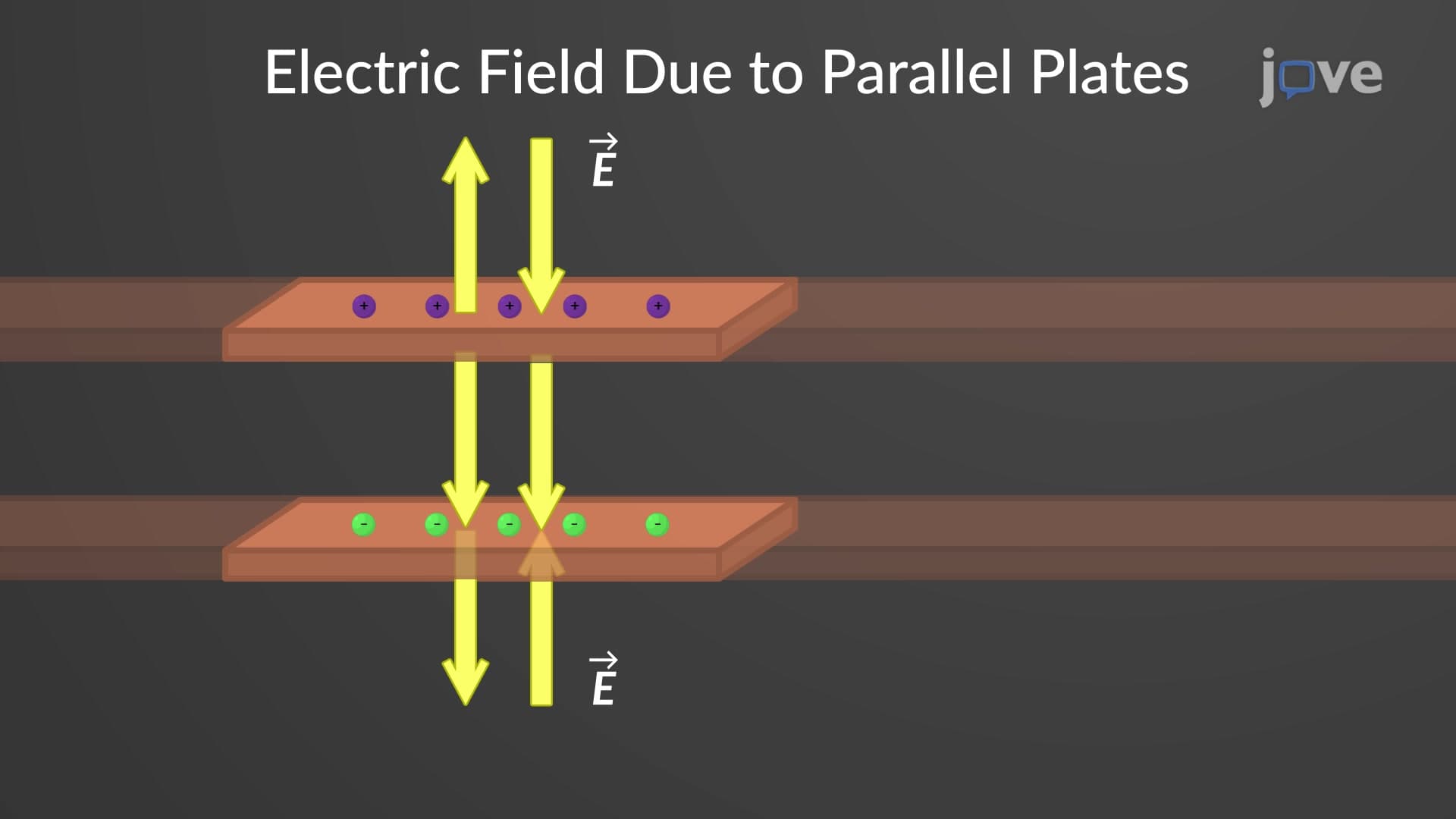
5. Planar Symmetry and Conducting Sheets Infinite conducting sheets with uniform surface charge density σ create constant electric fields E = σ/(2ε₀) on either side. Parallel conducting plates form capacitor configurations with field E = σ/ε₀ between plates and zero field outside. Applications include analyzing parallel plate capacitors in electronic circuits, understanding electric field patterns in semiconductor devices, and modeling electromagnetic interference shielding. Students explore how finite-size effects modify ideal infinite-sheet results in practical engineering applications.
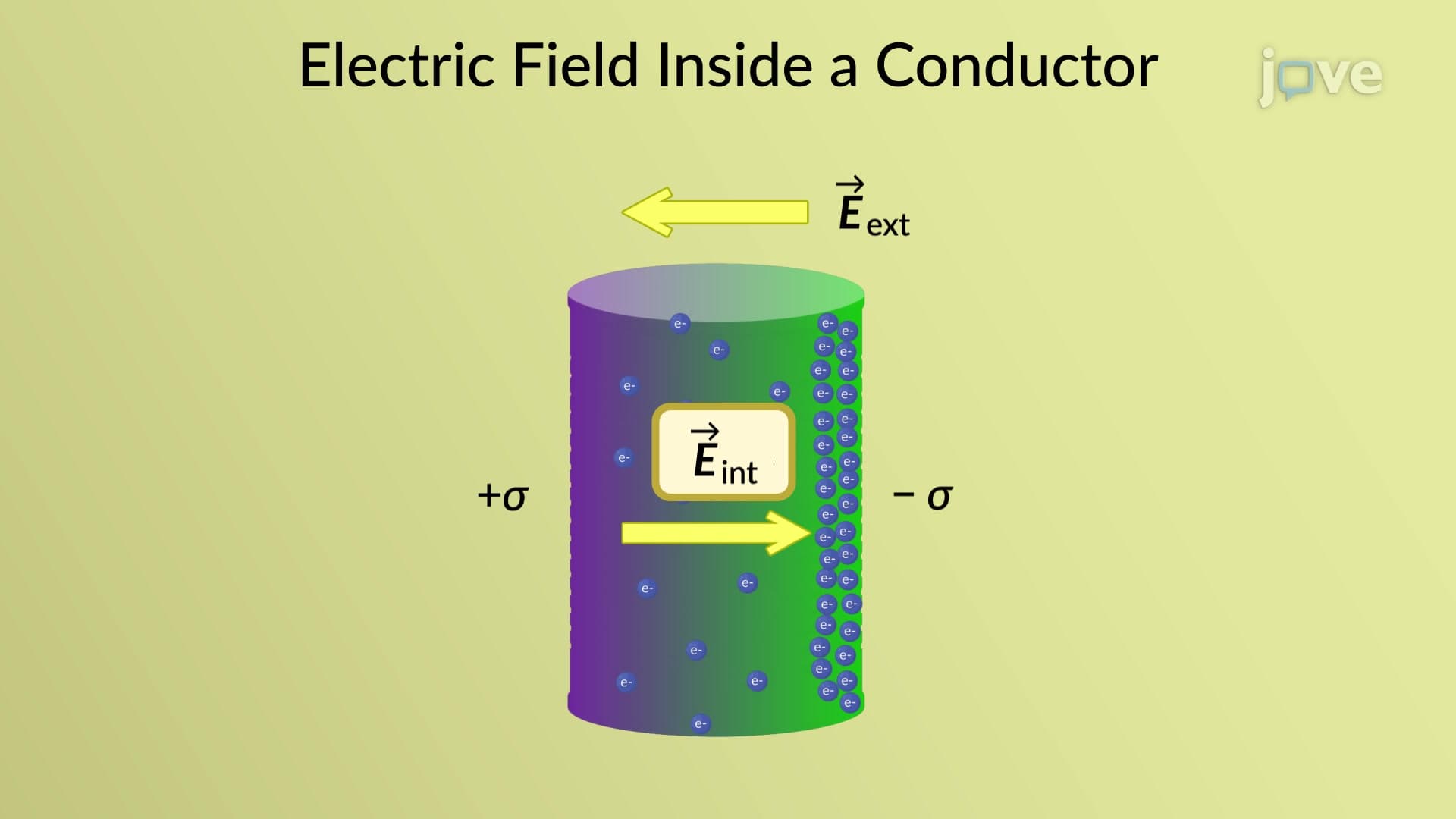
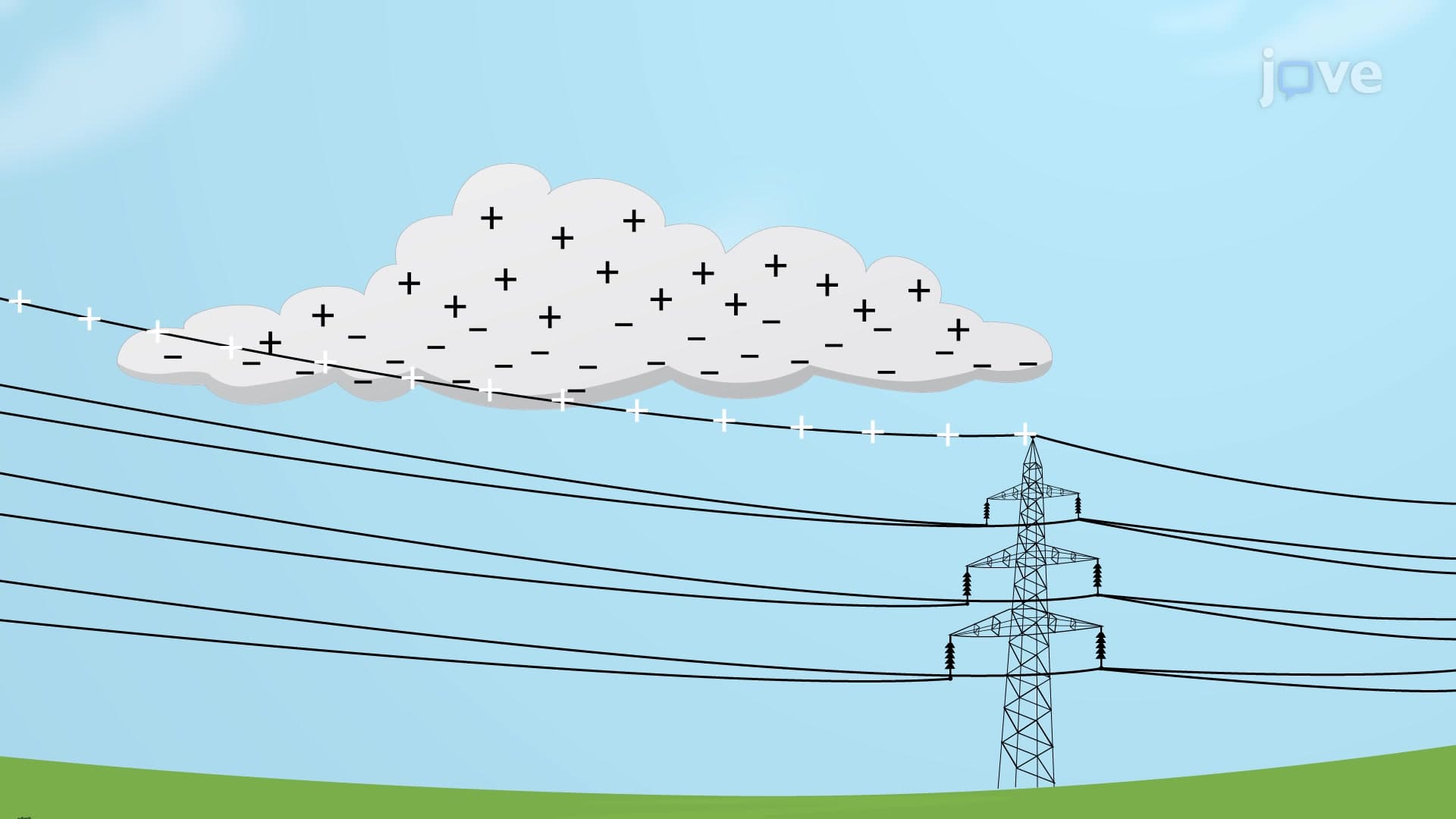
6. Conductors and Electrostatic Equilibrium In electrostatic equilibrium, electric fields inside conductors vanish, forcing all excess charges to reside on surfaces. This principle explains lightning rod effectiveness, Faraday cage protection, and electrostatic shielding in sensitive equipment. Surface electric fields equal σ/ε₀, perpendicular to conductor surfaces. Examples include analyzing charge distribution on aircraft during thunderstorms, understanding electrostatic discharge protection in electronics manufacturing, and explaining the safety of cars during lightning strikes through electromagnetic shielding principles.