Loading video…


 13 Concepts
 75.4K views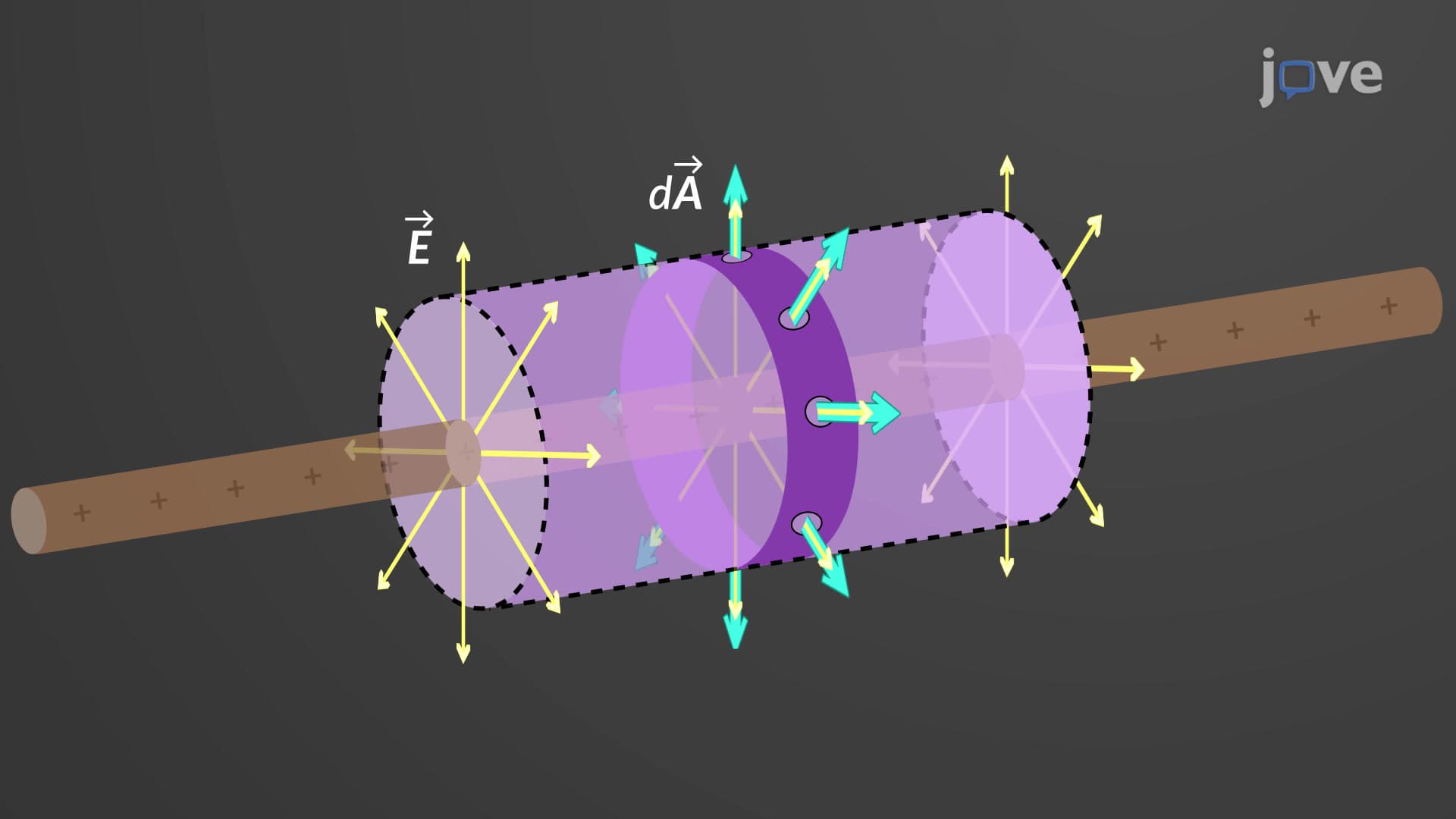

Video Summary: Gausss Law Cylindrical Symmetry Explained
Ever wonder how power lines carrying thousands of volts create uniform electric fields around them? Gauss's law cylindrical symmetry reveals the elegant physics behind infinitely long charged cylinders, from transmission cables to coaxial internet lines throughout American infrastructure. This fundamental concept shows how Gauss's Law Cylindrical Symmetry Explained through careful analysis of charge distributions that remain constant under rotation and along the cylinder's length. Watch the full video on JoVE Coach to master this concept with expert-led visuals and step-by-step explanations.
Gauss's Law Cylindrical Symmetry Explained begins with recognizing that not all cylindrical charge distributions exhibit true symmetry. The key requirement is that charge density remains constant both rotationally (around the cylinder axis) and longitudinally (along the cylinder length). This creates a mathematically elegant situation where the electric field has the same magnitude at all points equidistant from the cylinder axis.
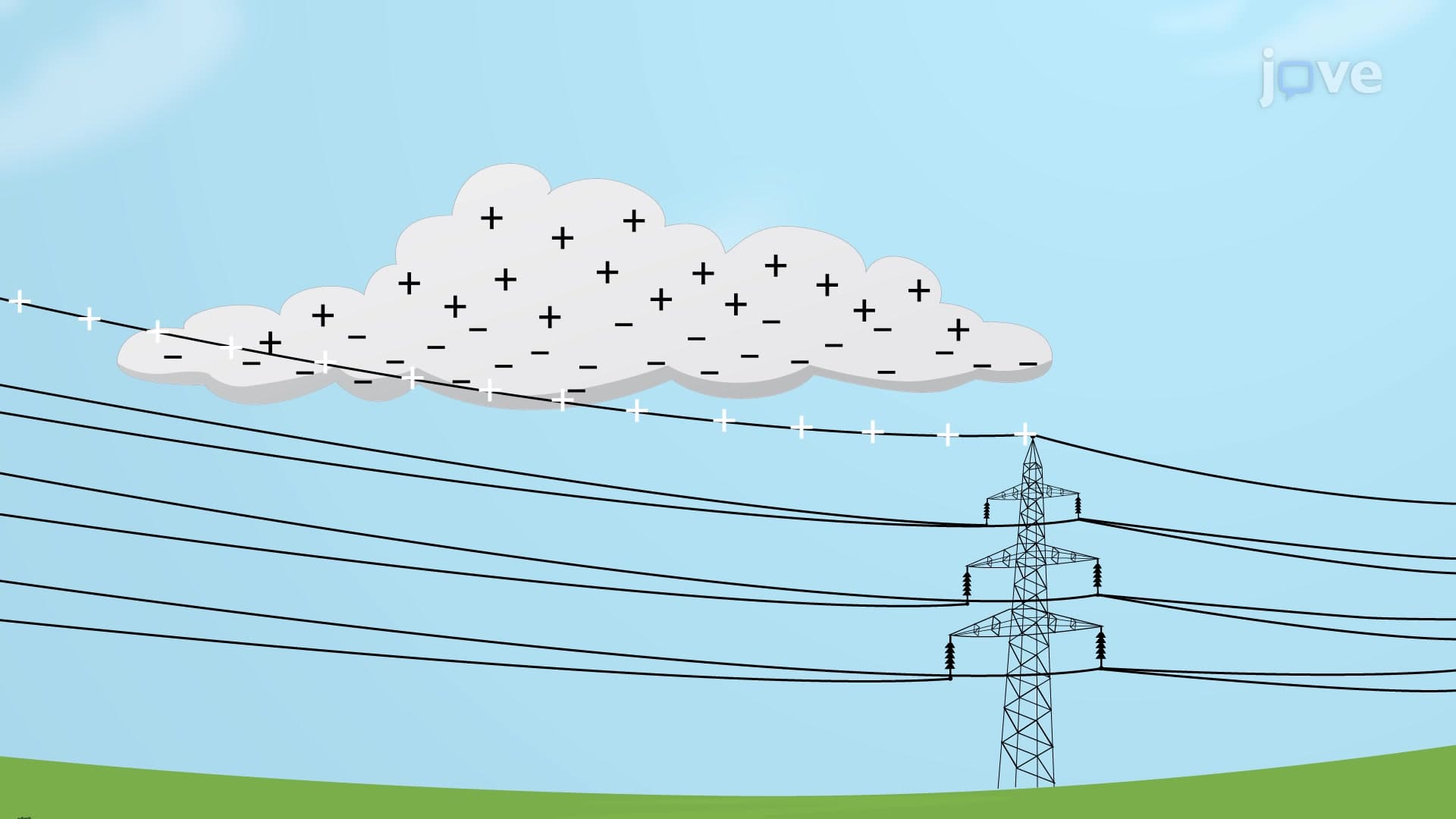
Consider practical examples: a straight section of high-voltage transmission line behaves as an infinitely long charged cylinder when we're analyzing points much closer to the wire than the distance to the nearest tower. Similarly, the inner conductor of coaxial cables used in cable television and internet connections demonstrates cylindrical symmetry.
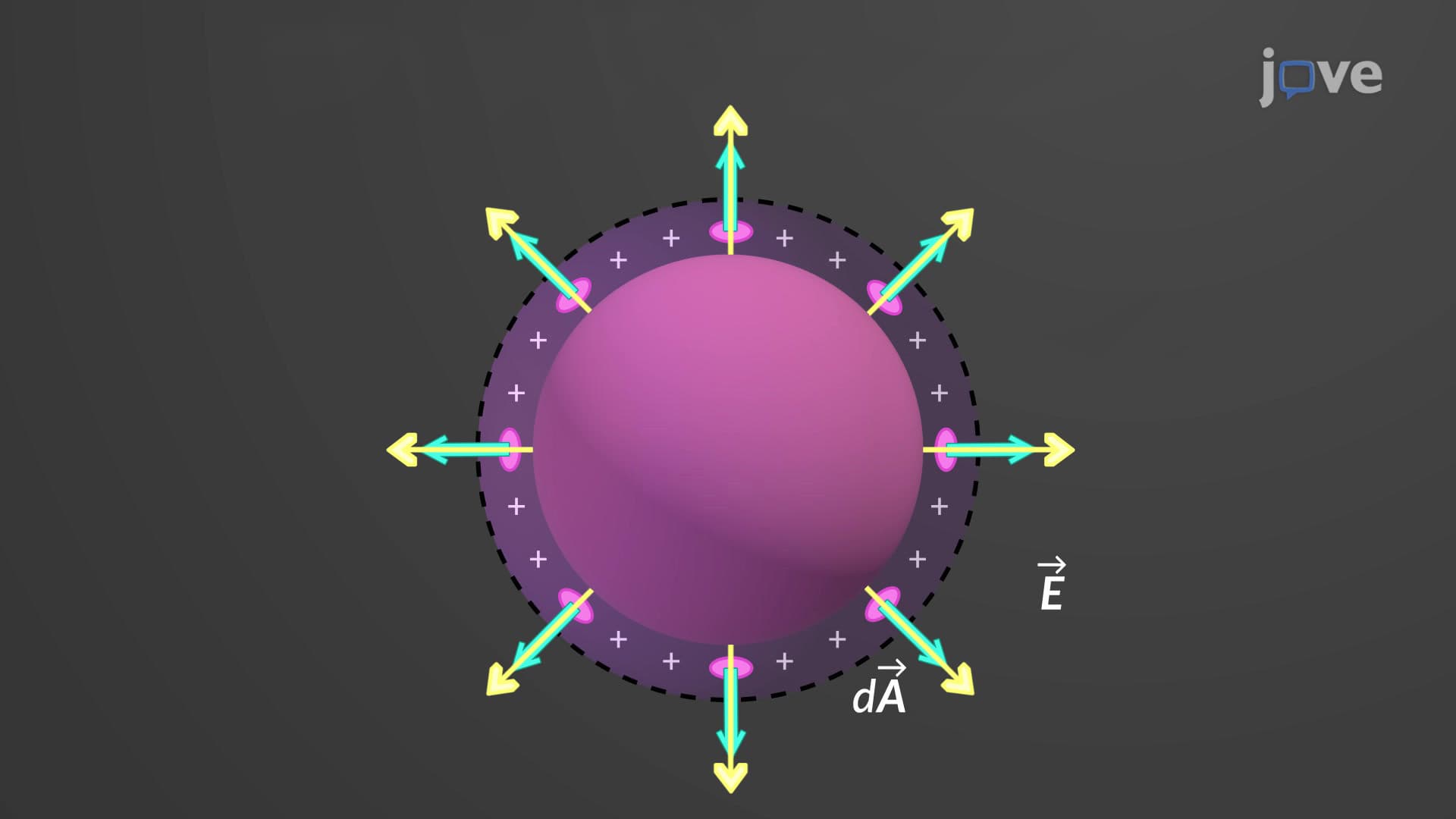
The power of cylindrical symmetry lies in choosing an appropriate Gaussian surface-a mathematical construct that exploits the system's inherent symmetry. For cylindrical problems, we select a cylindrical Gaussian surface coaxial with the charged cylinder. This choice is strategic: the electric field maintains constant magnitude over the curved surface and points radially outward, parallel to the surface's area vector.
The mathematical beauty emerges when calculating flux. Over the curved portion, electric field E and area vector dA are parallel, so their dot product simplifies to E × dA. Since E has constant magnitude over this surface, the flux becomes E × (circumference × length) = E × (2πr × L), where r is the Gaussian surface radius and L is its length.
The flat end caps of our cylindrical Gaussian surface contribute zero flux because the electric field (pointing radially) is perpendicular to these surfaces. This perpendicular orientation means E · dA = 0 for both end caps, dramatically simplifying our calculations.
Applying Gauss's law: total flux equals enclosed charge divided by permittivity (ε₀). For a line charge density λ (charge per unit length), the enclosed charge is λL. Therefore: E × 2πrL = λL/ε₀, yielding E = λ/(2πε₀r). This inverse relationship with distance r appears frequently in AP Physics C exams and college electromagnetism courses.
In practice, this analysis applies to coaxial cables (used in every American home with cable internet), cylindrical capacitors in electronic circuits, and even biological systems like nerve fibers. When solving problems, students should first verify cylindrical symmetry exists, then construct an appropriate Gaussian surface at the desired distance from the cylinder axis.
For standardized tests like the AP Physics C exam or college midterms, remember that cylindrical symmetry problems often appear alongside spherical and planar symmetry questions, testing your ability to choose the correct Gaussian surface geometry.
Related Micro-courses