Loading video…


 13 Concepts
 75.4K views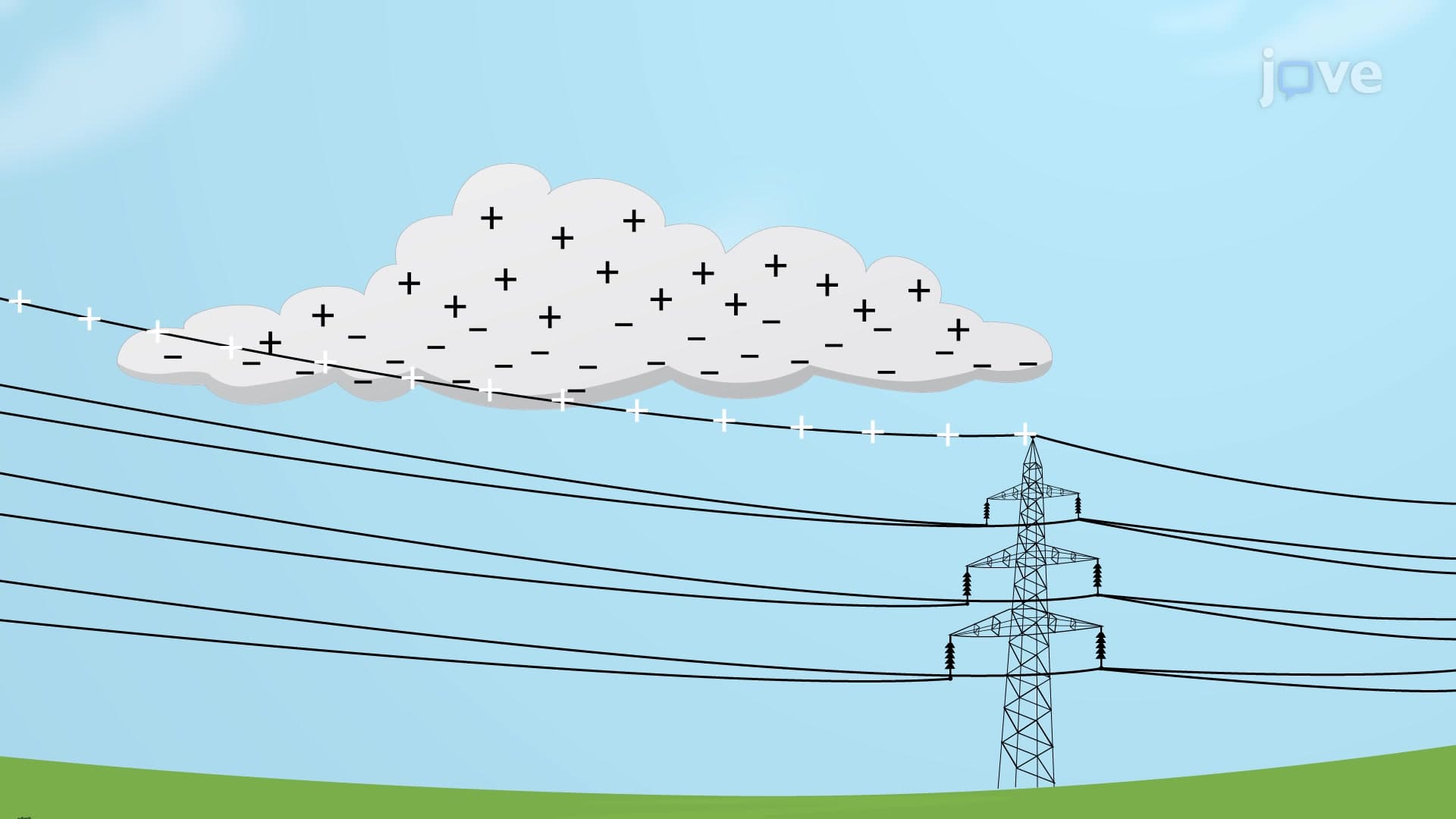

Video Summary: Electric Field at the Surface Conductor Explained
When lightning strikes power lines across the United States, understanding the electric field at the surface conductor becomes crucial for electrical safety. This concept explains why electric fields behave uniquely at conductor surfaces - always pointing perpendicular outward while completely vanishing inside the metal. Using Gauss's Law and the principle of electrostatic equilibrium, we can calculate that the electric field at the surface conductor depends solely on surface charge density, a fundamental relationship that governs everything from transmission towers to smartphone circuits. Watch the full video on JoVE Coach to master this concept with expert-led visuals and step-by-step explanations.
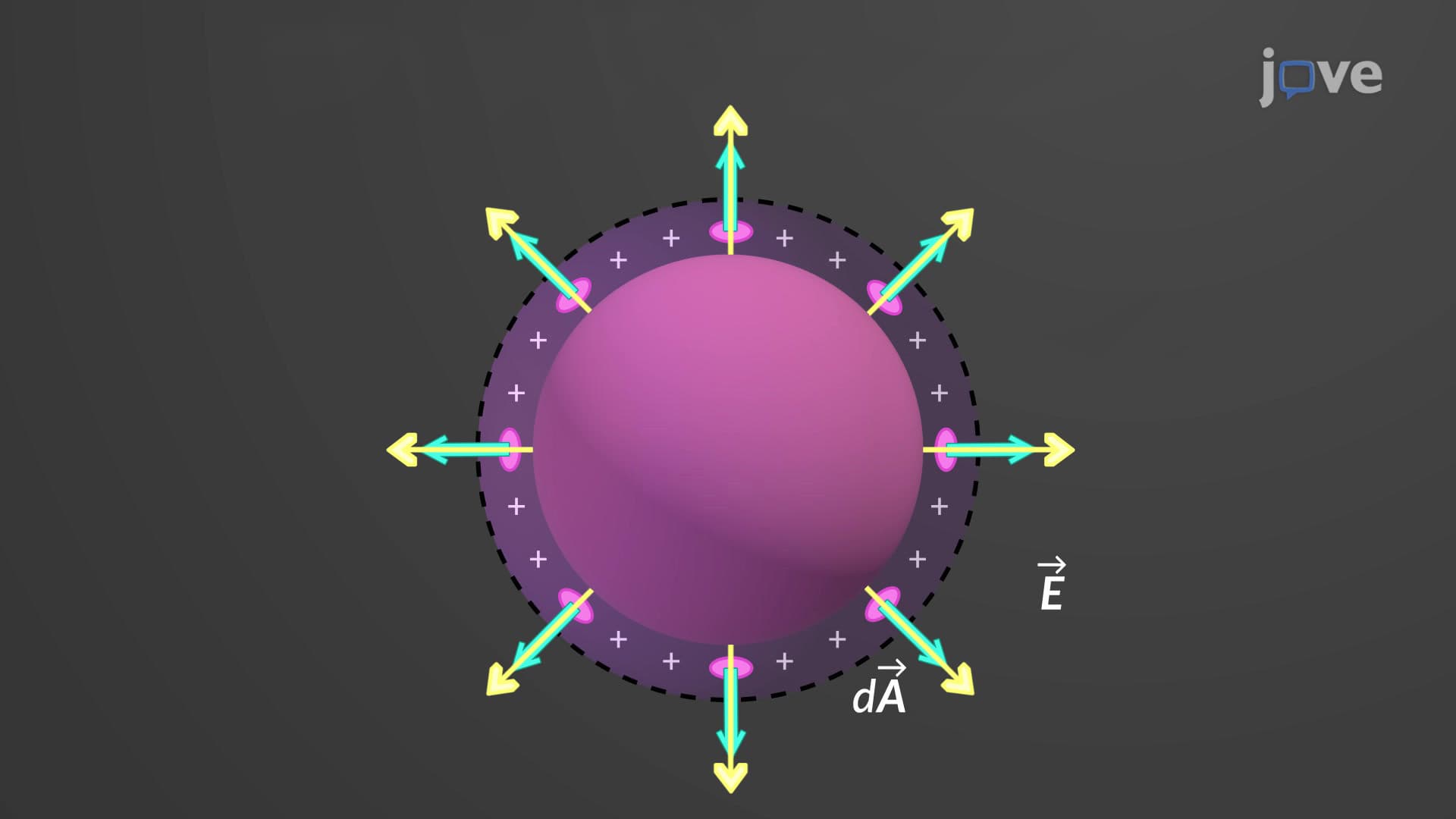
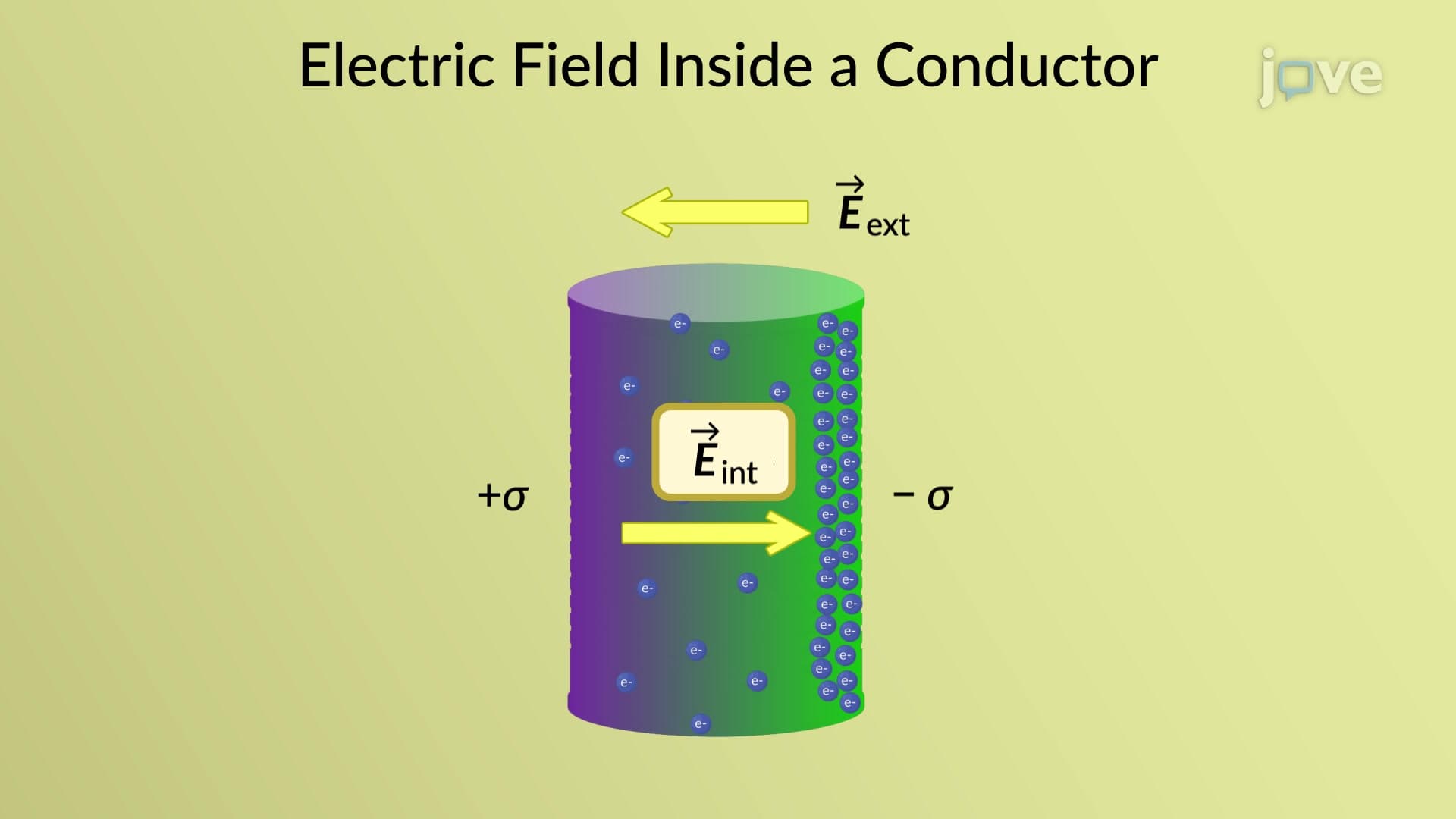
The electric field at the surface conductor represents one of electromagnetism's most elegant principles. When free charges redistribute on a conductor's surface, they create a unique boundary condition where electric fields must point perpendicular to the surface. This phenomenon occurs because conductors contain mobile electrons that rearrange themselves until achieving electrostatic equilibrium.
Inside any conductor under electrostatic conditions, the electric field equals zero. This happens because free electrons move instantly to cancel any internal fields. However, at the conductor's surface, a discontinuity occurs - the field jumps from zero inside to a finite value outside. This surface field always points perpendicular outward, never parallel to the surface, due to the conductor's equipotential nature.
Consider cellular phone towers across America. During thunderstorms, atmospheric electric fields induce charges on these metallic structures. The tower's surface develops a charge distribution that creates strong perpendicular electric fields, which is why lightning rods are positioned at the highest points to safely channel electrical discharge.
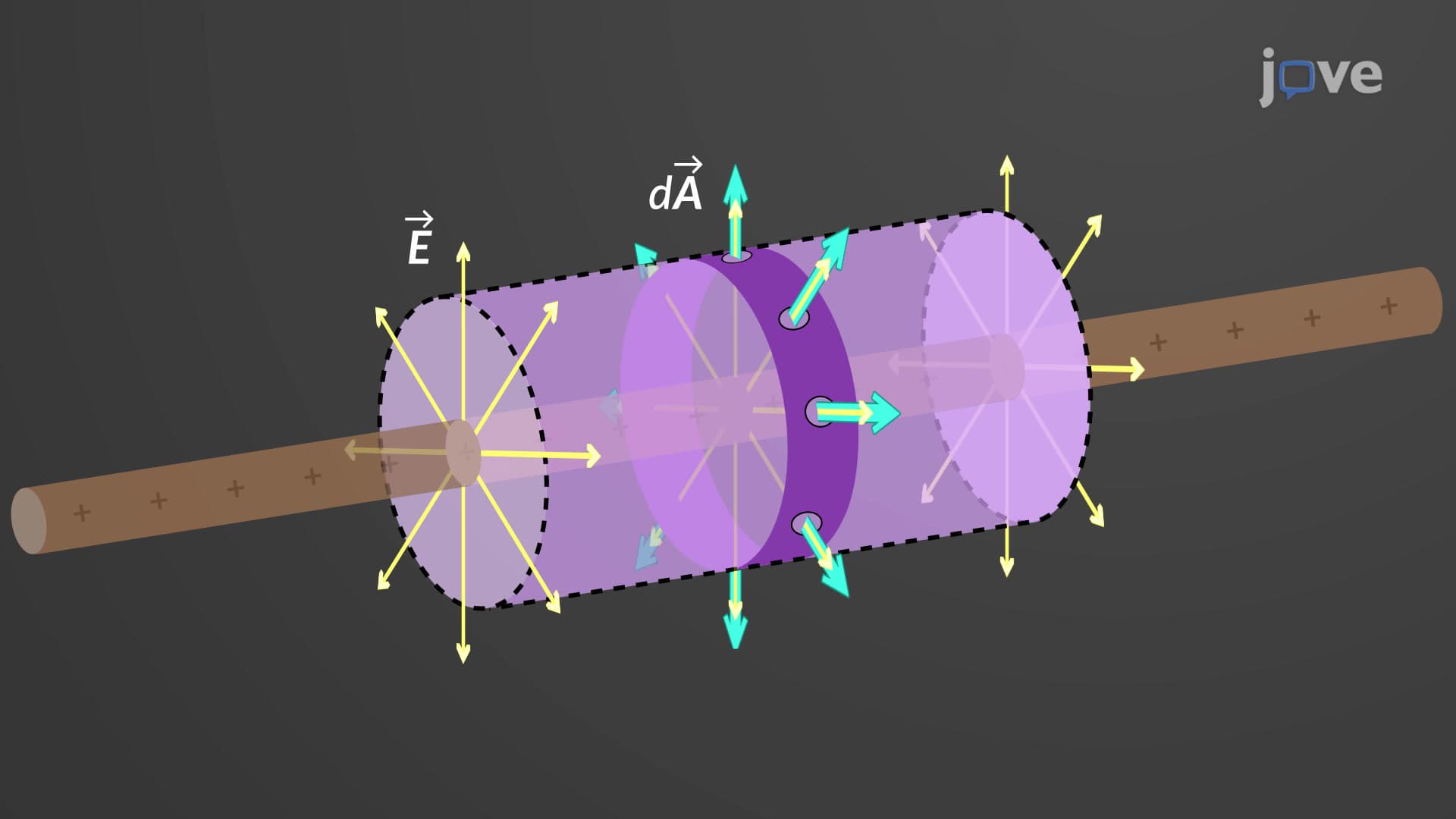
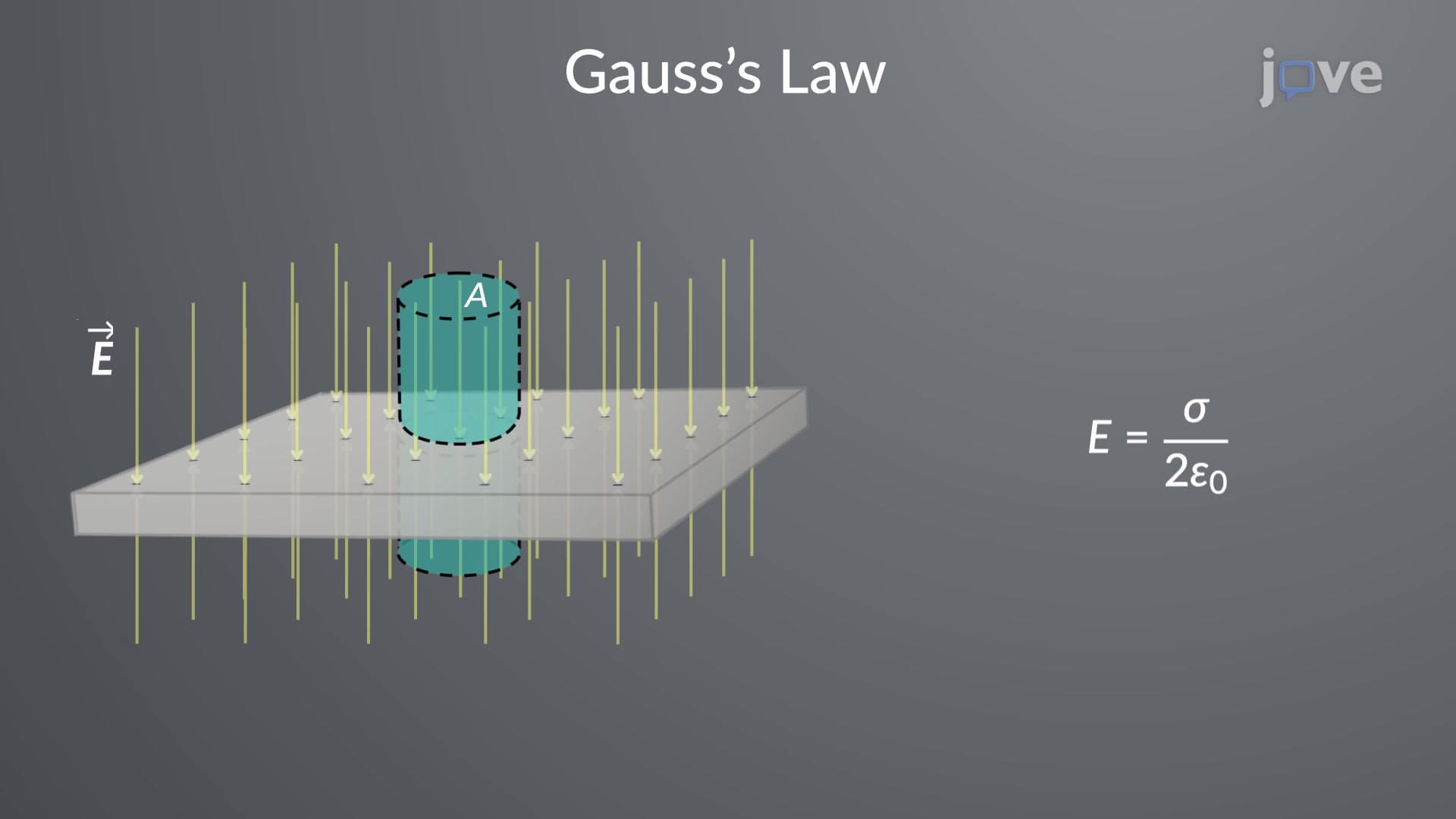
To calculate the electric field magnitude, physicists employ a cylindrical Gaussian surface that straddles the conductor boundary. The mathematical relationship emerges as E = σ/ε₀, where σ represents surface charge density and ε₀ is the permittivity of free space. This formula appears frequently on AP Physics exams and college electromagnetism courses.
The derivation involves recognizing that electric flux exists only through the Gaussian surface's external flat end, while the curved sides contribute zero flux due to the perpendicular field orientation. This mathematical elegance makes the concept both beautiful and practical for engineering applications.
Power transmission systems throughout the United States rely on this principle. High-voltage lines develop significant surface charge densities, creating strong electric fields that engineers must consider for safety distances. The Federal Aviation Administration uses these calculations when determining safe aircraft flight paths near transmission corridors.
For students preparing for standardized tests, this concept frequently appears in AP Physics C mechanics and electricity sections, SAT Subject Test Physics problems, and college-level physics courses. Understanding the perpendicular field behavior and its mathematical description proves essential for success in these assessments.
Related Micro-courses