Loading subject page…


39,014 views

Video Summary: What Is Efficiency Carnot Cycle
Did you know that even the most advanced power plants in the United States can only achieve about 40% efficiency? The efficiency carnot cycle represents the theoretical maximum efficiency any heat engine can achieve, serving as the gold standard for evaluating real-world systems like the steam turbines at Hoover Dam. Understanding What is Efficiency Carnot Cycle reveals why perfect energy conversion remains impossible and helps engineers optimize everything from car engines to geothermal power plants. Watch the full video on JoVE Coach to master this concept with expert-led visuals and step-by-step explanations.
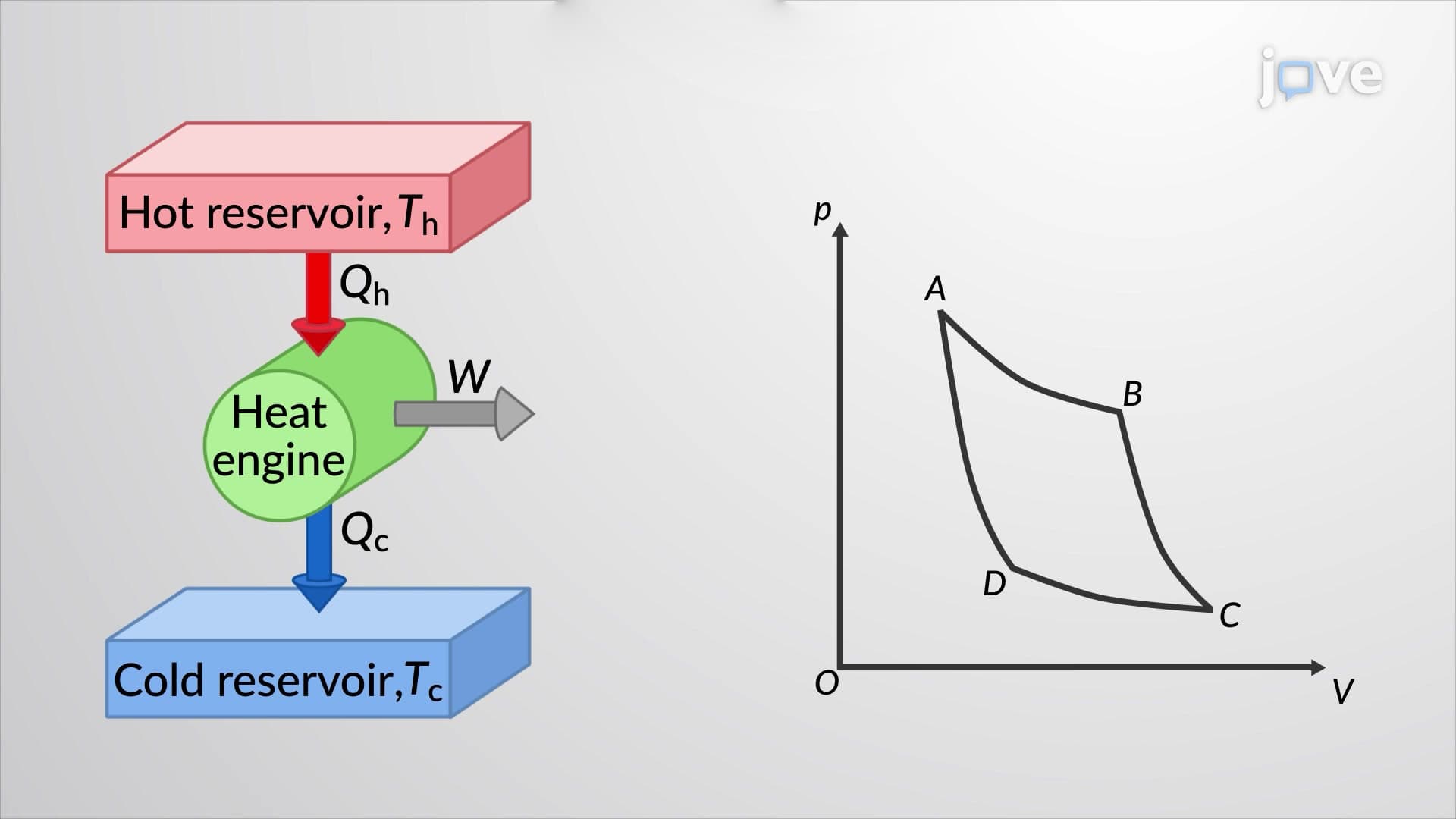
The efficiency carnot cycle represents one of the most important concepts in thermodynamics, establishing the theoretical upper limit for how efficiently any heat engine can convert thermal energy into mechanical work. Named after French physicist Sadi Carnot, this idealized cycle demonstrates that efficiency depends exclusively on the operating temperatures, not on the specific working fluid or engine design.
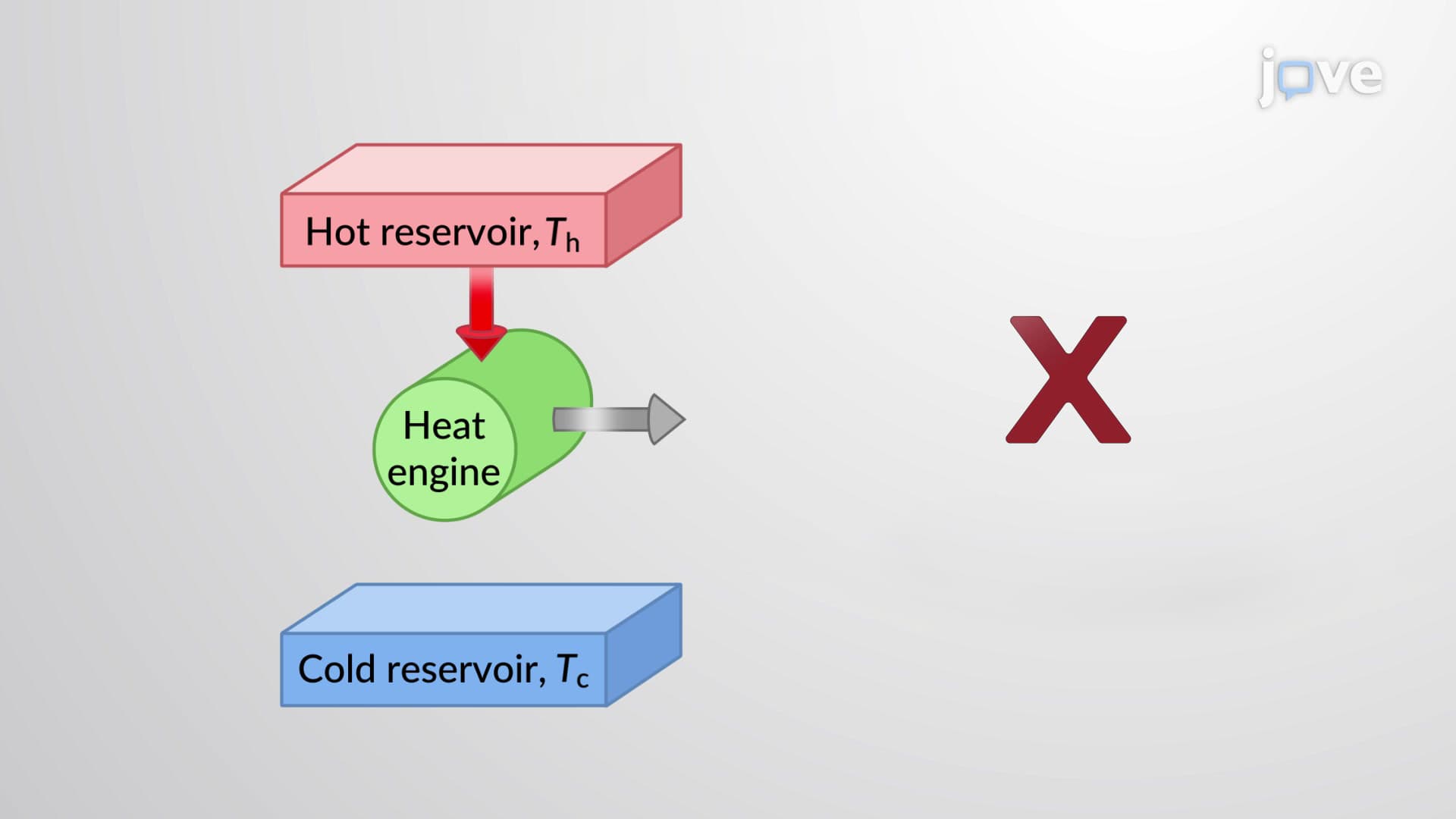
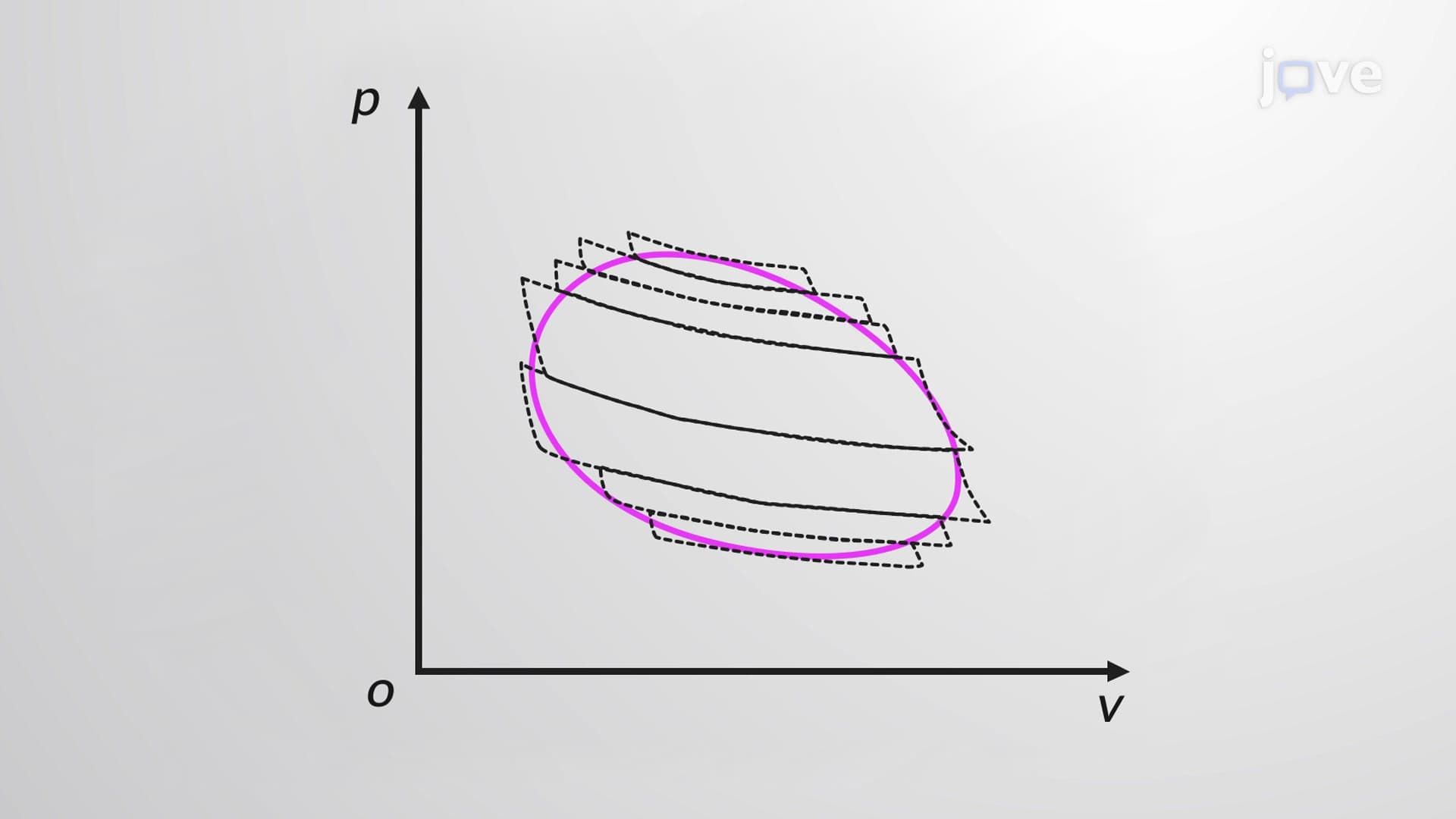
The Carnot cycle consists of four reversible processes: two isothermal (constant temperature) and two adiabatic (no heat transfer). During isothermal expansion at the hot reservoir temperature T_h, the system absorbs heat Q_h. During isothermal compression at the cold reservoir temperature T_c, it rejects heat Q_c. The adiabatic processes connect these isothermal steps without heat exchange.
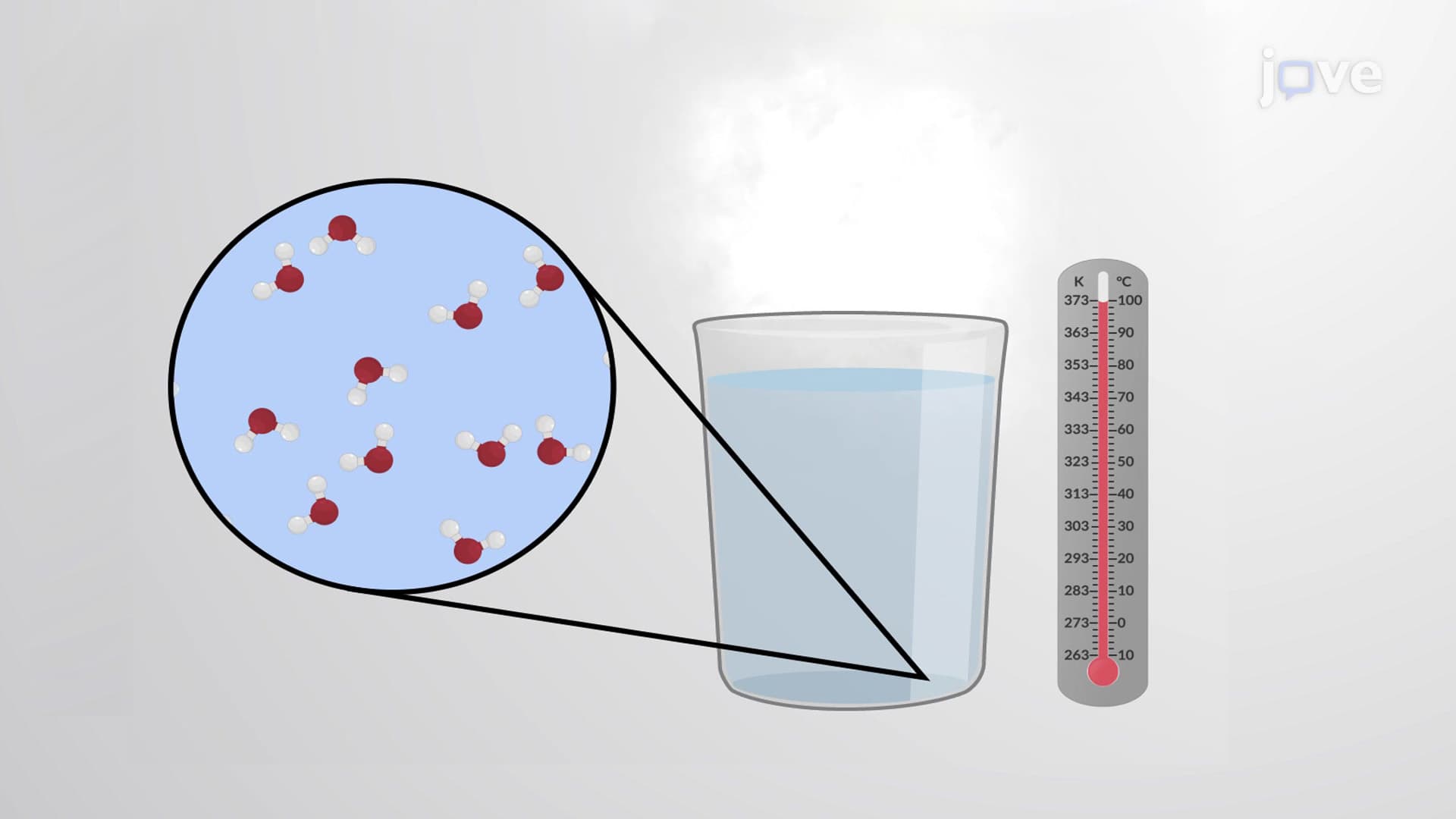
The efficiency of any heat engine equals the work output divided by heat input: η = W/Q_h. For the Carnot cycle, this simplifies to the elegant relationship η = 1 - (T_c/T_h), where temperatures must be in absolute units (Kelvin or Rankine). This formula reveals a fundamental truth: achieving 100% efficiency requires either an infinitely hot source or absolute zero cold reservoir-both physically impossible.
Consider a coal-fired power plant operating with steam at 800K and cooling water at 300K. Its maximum theoretical efficiency would be η = 1 - (300/800) = 62.5%. However, real plants achieve only about 35-40% efficiency due to irreversible processes like friction, turbulence, and finite heat transfer rates.
Understanding Carnot efficiency helps engineers optimize power generation systems across the United States. Nuclear plants like those at Diablo Canyon achieve higher efficiencies by operating at elevated steam temperatures. Combined-cycle natural gas plants approach 60% efficiency by using waste heat from gas turbines to power steam cycles, getting closer to their Carnot limits.
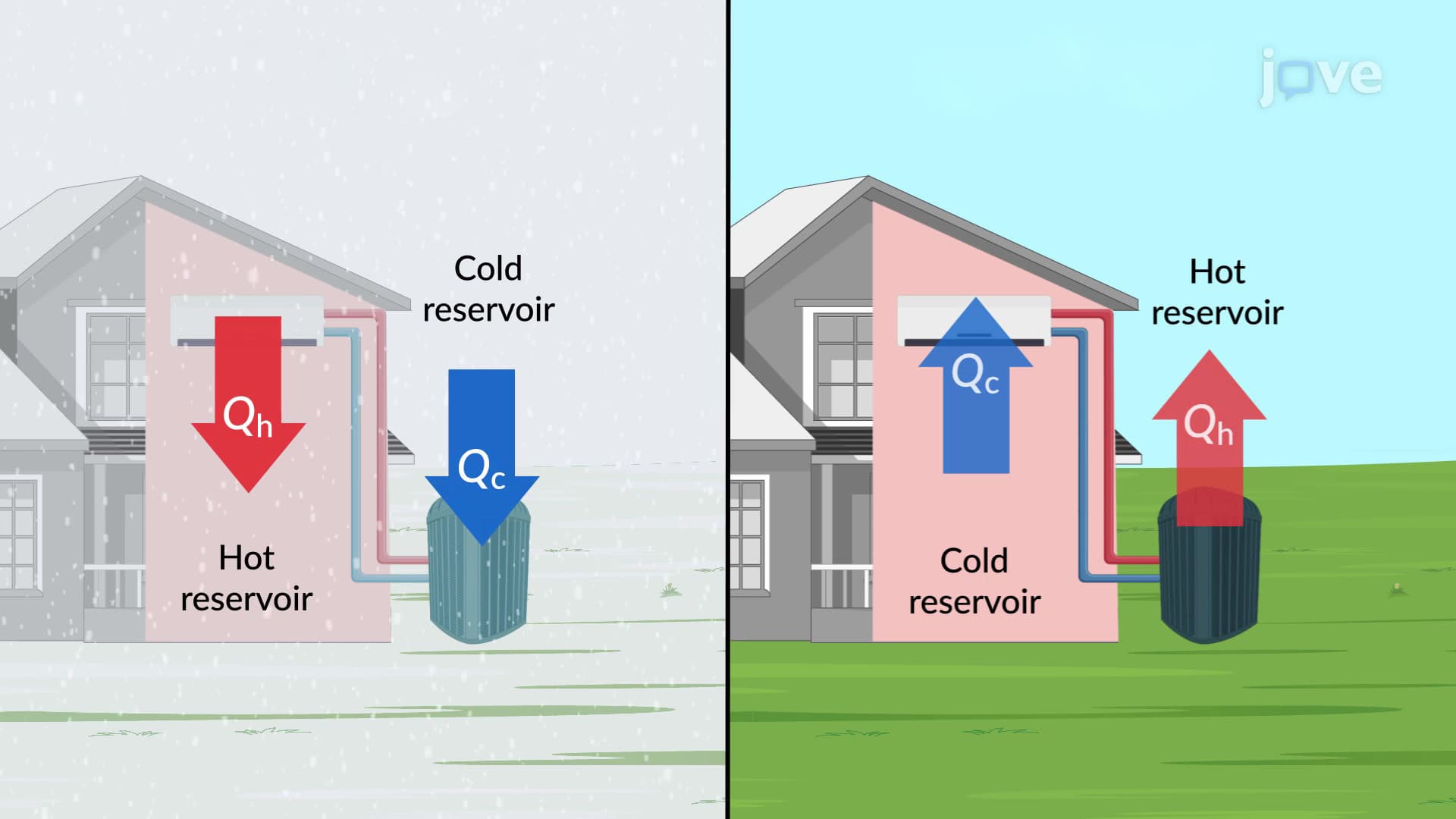
The concept also applies to refrigeration and heat pumps. A heat pump's coefficient of performance has a Carnot limit of T_hot/(T_hot - T_cold), explaining why ground-source heat pumps outperform air-source units in cold climates.
Students encounter Carnot cycle problems throughout their academic journey, from AP Physics courses to undergraduate thermodynamics. The MCAT frequently includes Carnot efficiency calculations in physical sciences sections. College engineering programs use these concepts in mechanical engineering coursework, while pre-med students apply them to understand metabolic efficiency in biological systems.
The key insight for exam success: always convert temperatures to absolute scale before applying the Carnot efficiency formula, and remember that real engines always operate below their Carnot limits due to irreversible losses.
Related Micro-courses