Loading subject page…


39,014 views

Video Summary: What Is Entropy Change
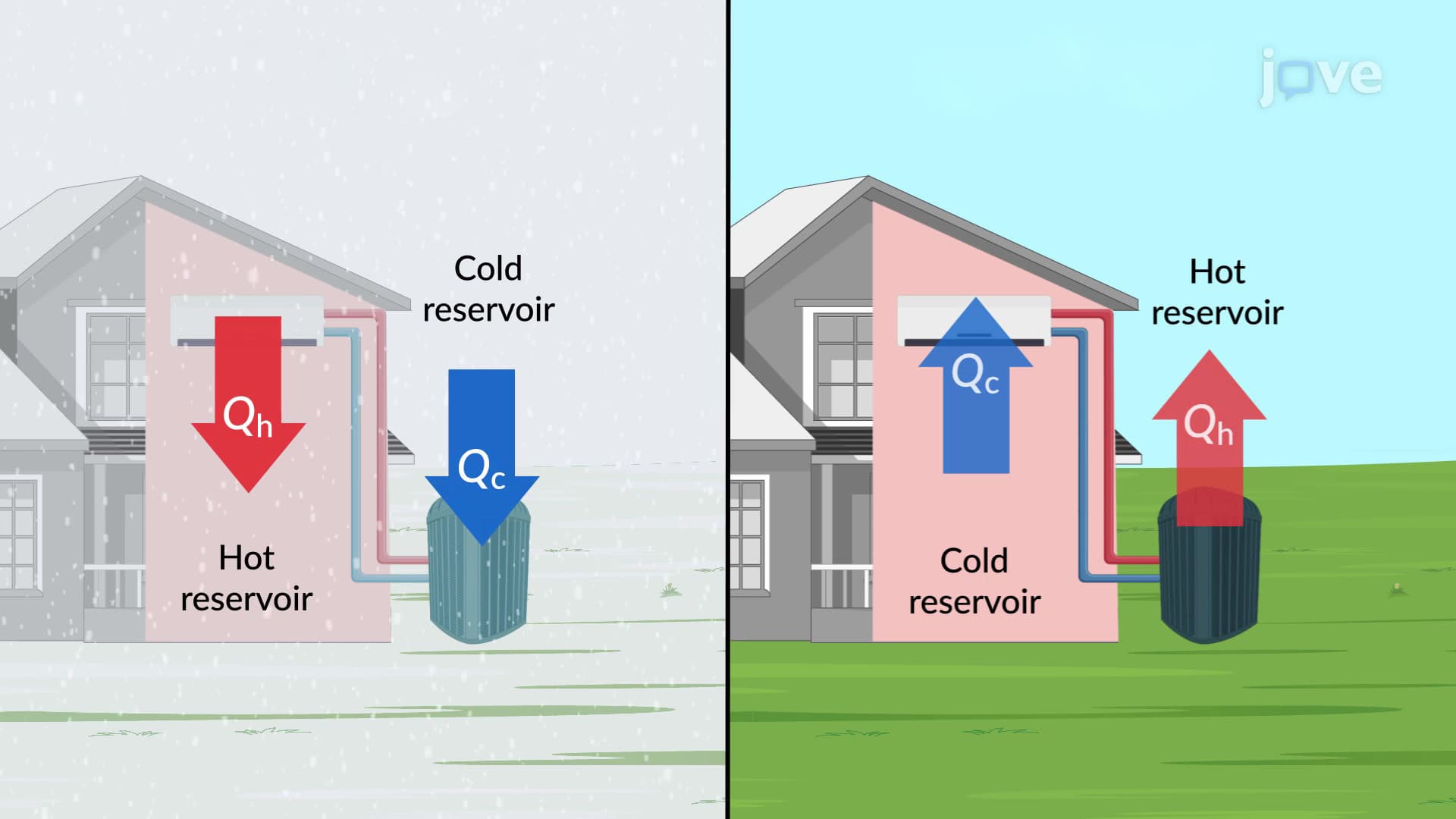
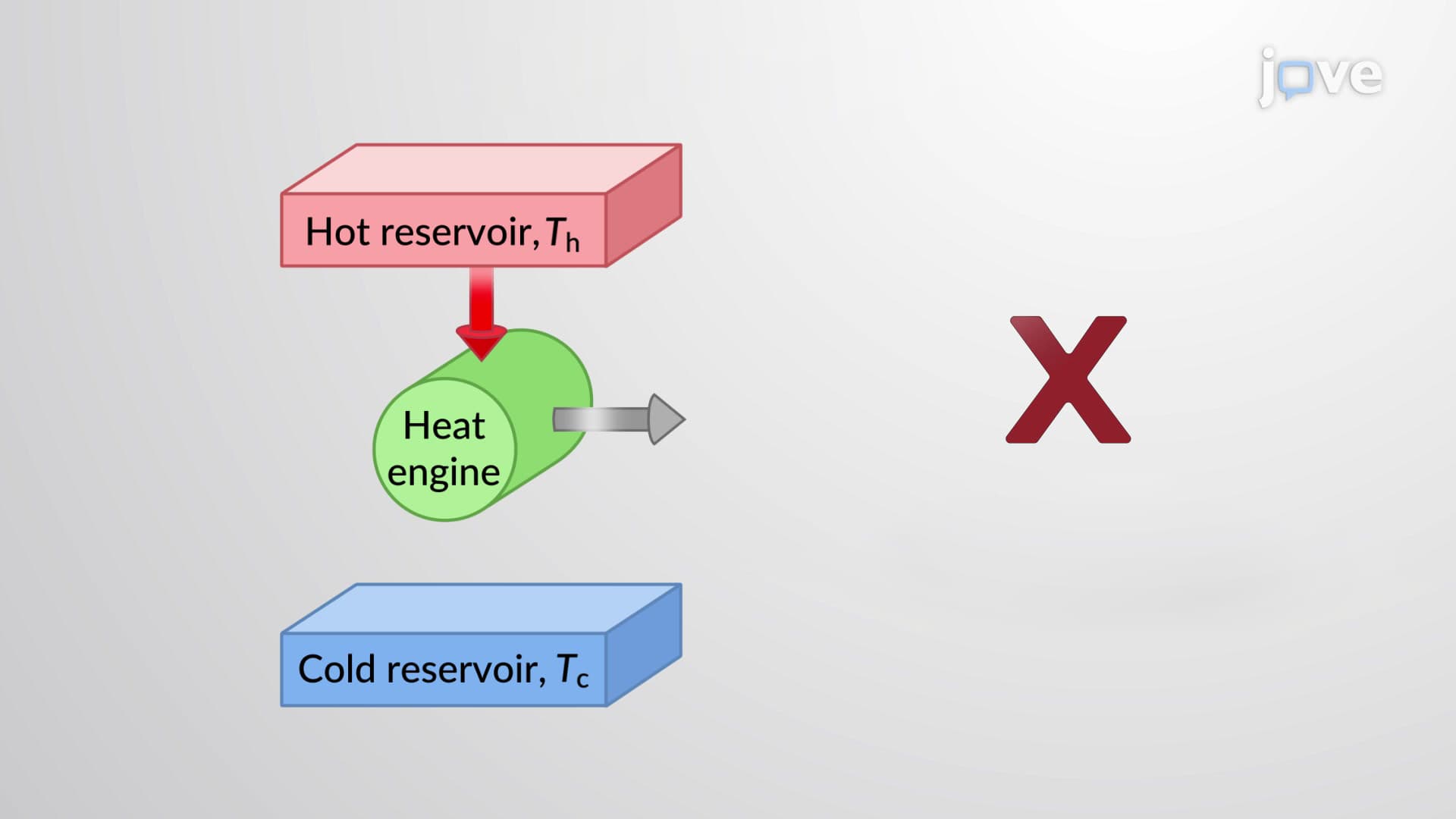
Ever wonder why your refrigerator needs electricity to keep food cold while heat naturally flows from hot to cold? Entropy change governs these energy transformations in everything from power plants to air conditioners across America. The Carnot cycle demonstrates how entropy behaves during reversible processes-when heat engines operate between two temperature reservoirs, the net entropy change equals zero for complete cycles. This fundamental principle explains why perpetual motion machines violate thermodynamic laws. Watch the full video on JoVE Coach to master this concept with expert-led visuals and step-by-step explanations.
Entropy change measures how energy disperses or spreads out during thermodynamic processes. Unlike energy itself, which is conserved, entropy typically increases in natural processes-explaining why hot coffee cools down but never spontaneously heats up. This concept appears extensively in AP Chemistry, AP Physics, and college thermodynamics courses.
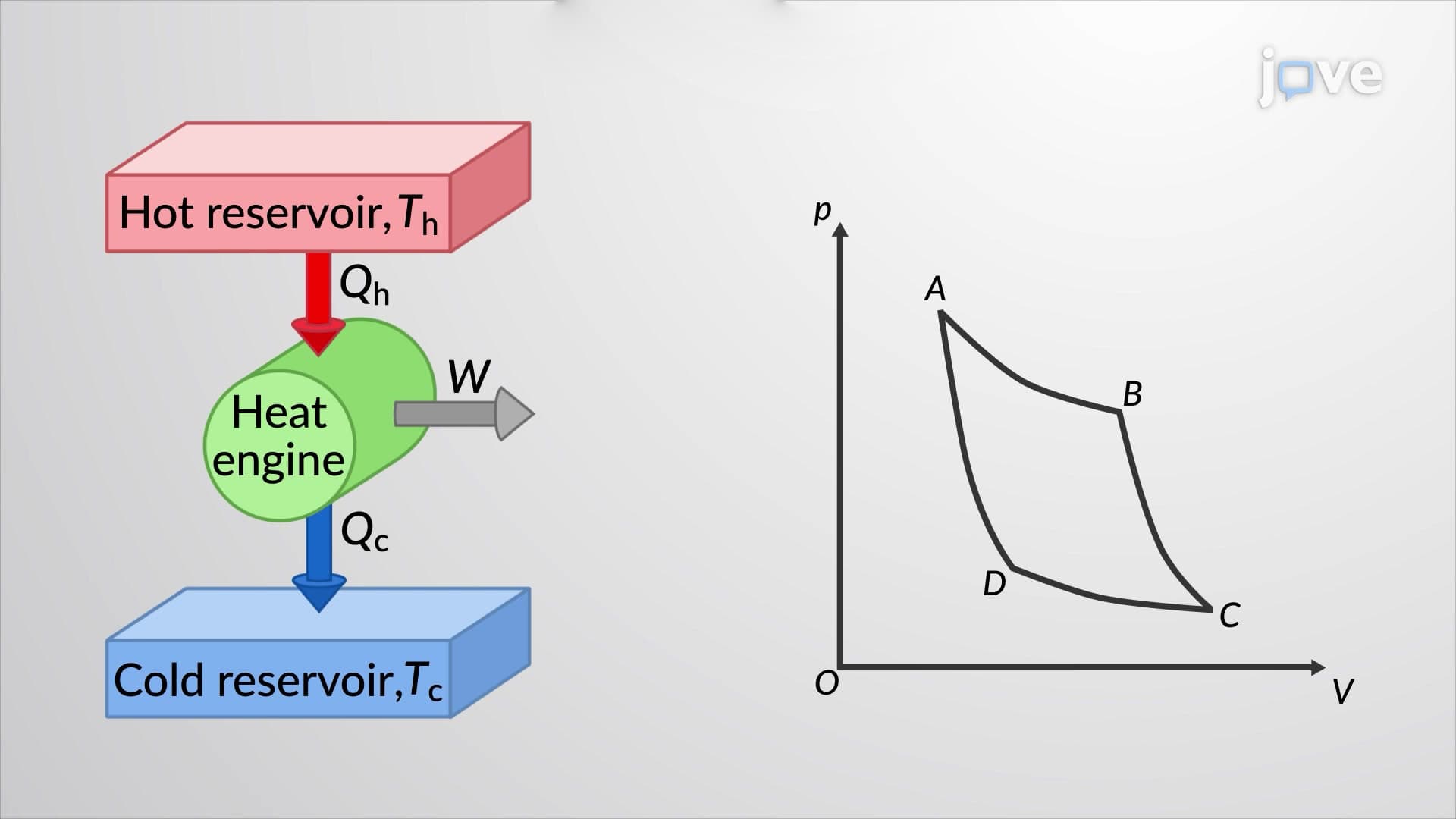
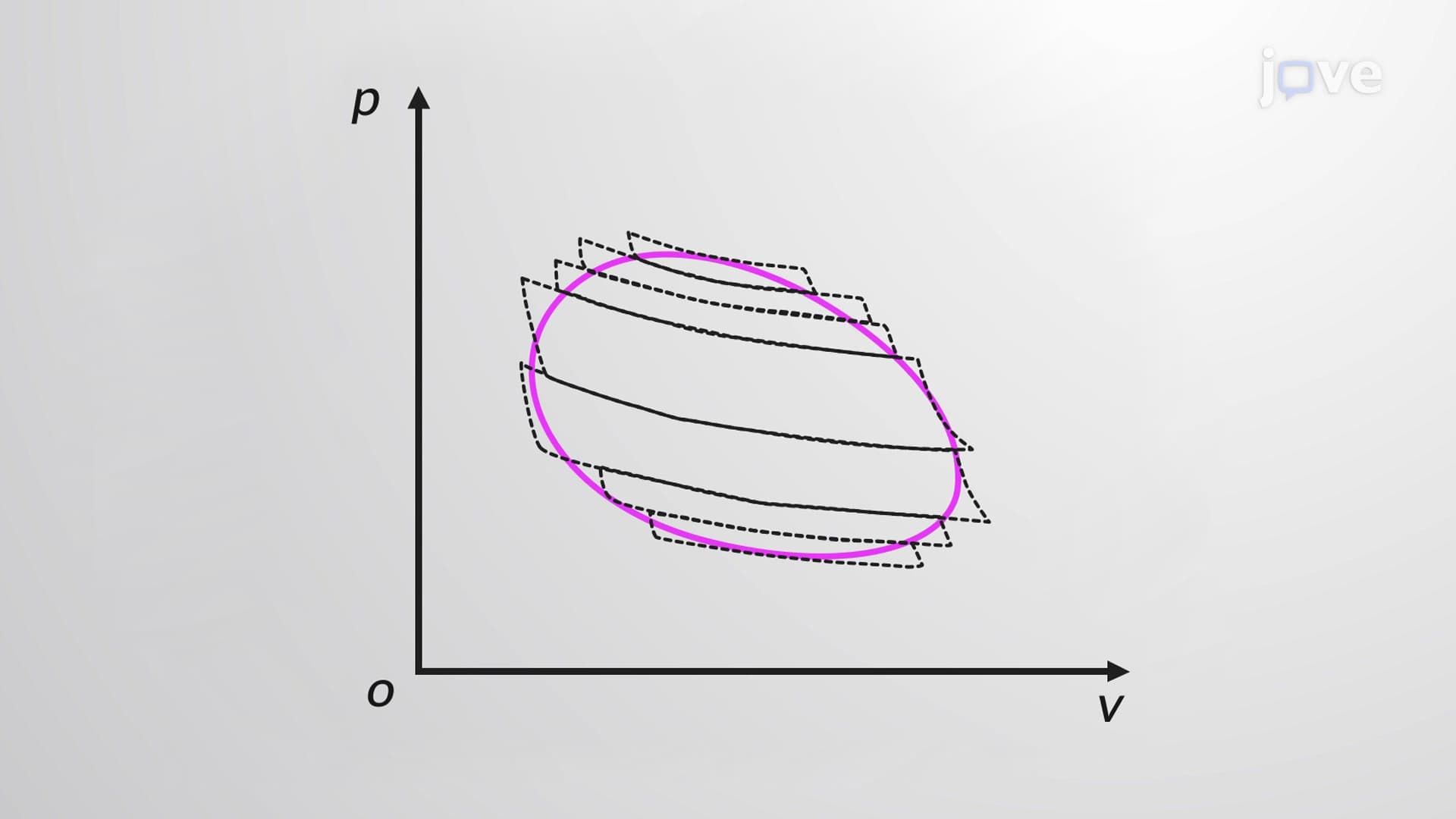
The Carnot cycle provides the perfect framework for understanding entropy behavior. During isothermal expansion, a gas absorbs heat Q(hot) at temperature T(hot), creating entropy change ΔS = Q(hot)/T(hot). During isothermal compression, the gas releases heat Q(cold) at temperature T(cold), producing entropy change ΔS = -Q(cold)/T(cold). For maximum efficiency, Q(hot)/T(hot) = Q(cold)/T(cold), making the net entropy change zero.
Real power plants approximate Carnot cycles. Coal-fired plants in states like Wyoming operate between high-temperature steam (around 800K) and cooling water (around 300K). The theoretical maximum efficiency depends on this temperature ratio, demonstrating entropy's practical importance in energy production.
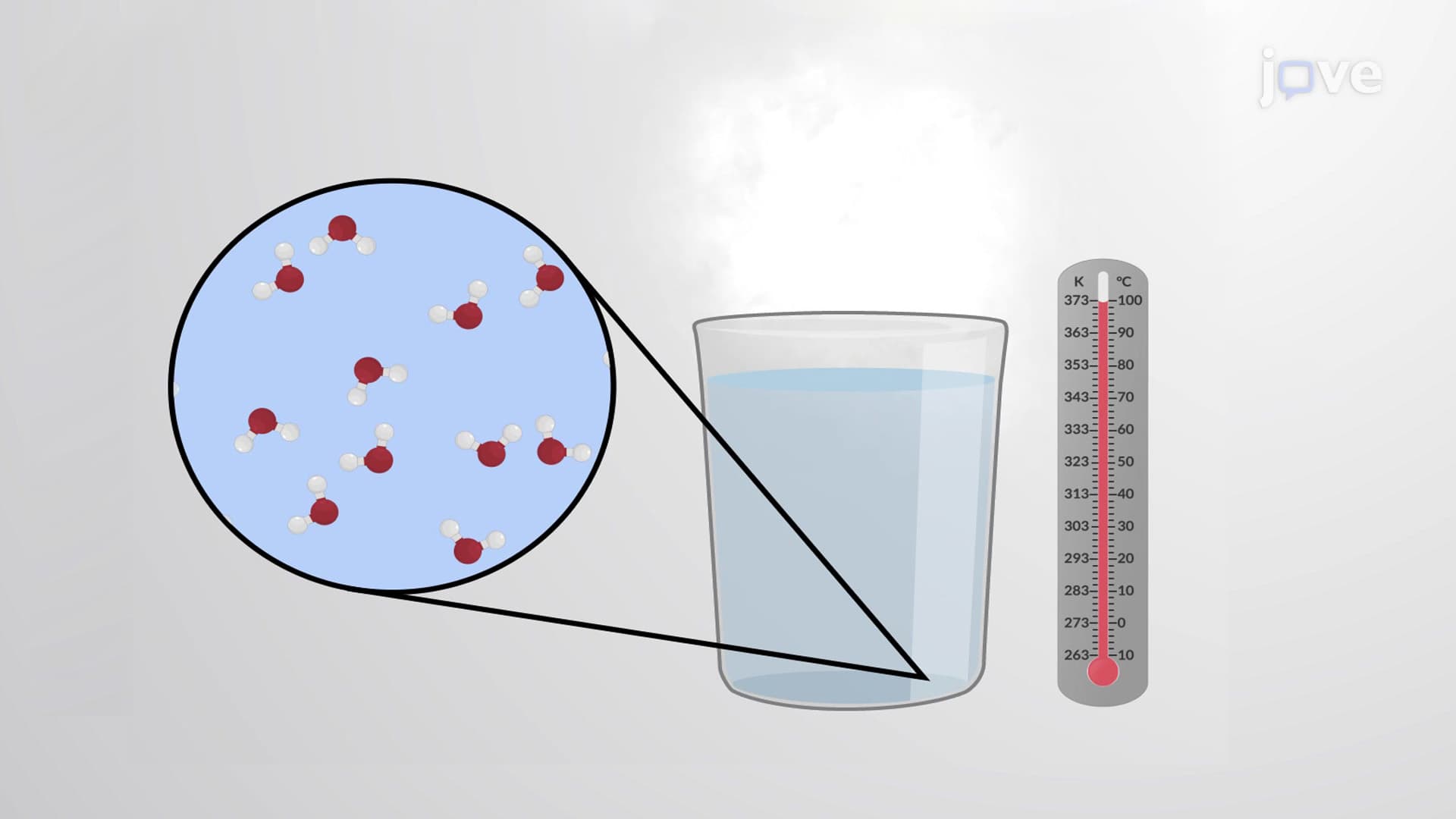
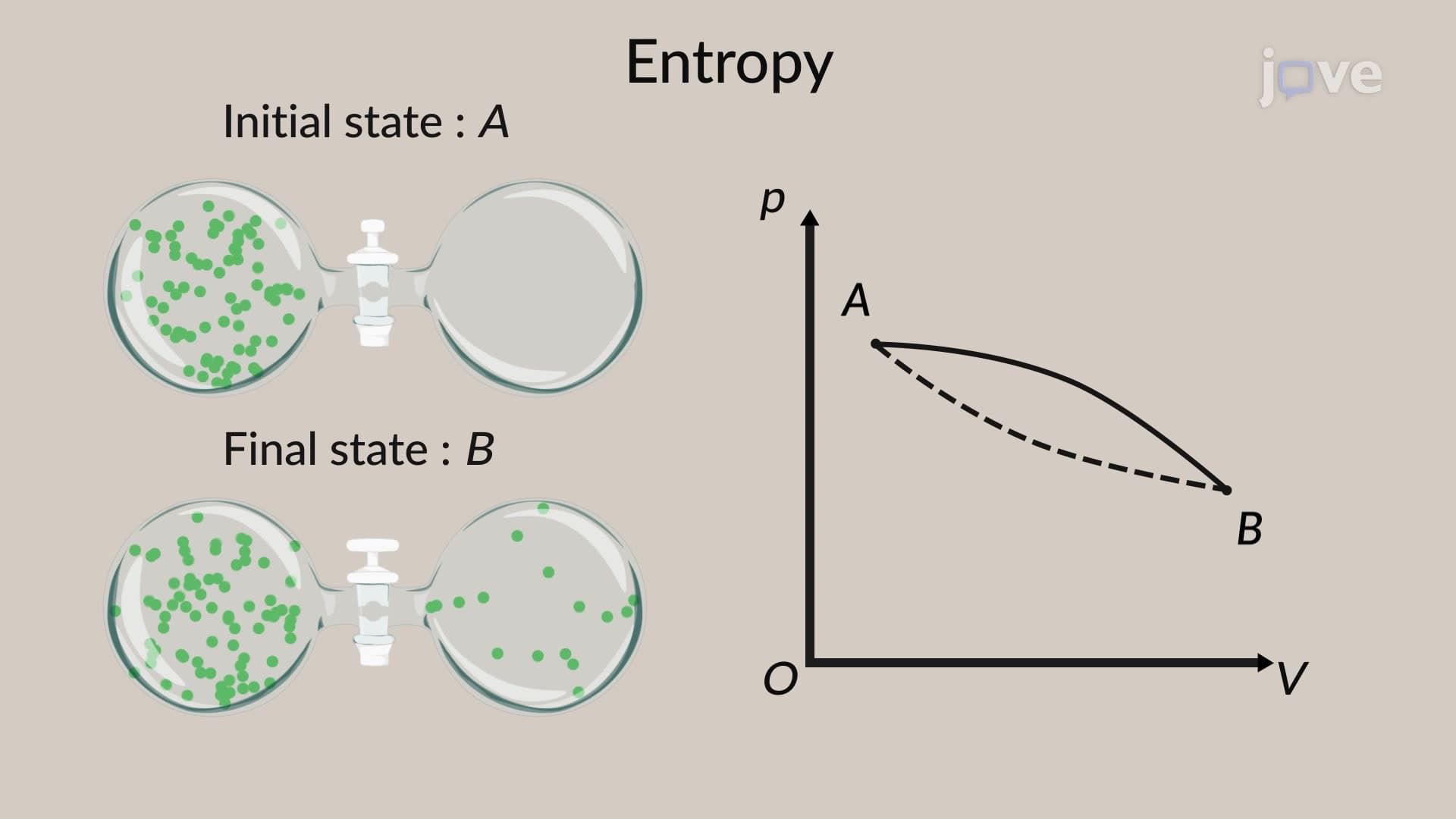
Unlike work or heat, which depend on the specific process pathway, entropy change depends only on initial and final states. Whether you heat water from 20°C to 100°C quickly or slowly, directly or through multiple steps, the entropy change remains identical. This state function property makes entropy calculations manageable in complex systems.
MCAT students encounter entropy in biochemistry contexts-protein folding decreases local entropy while increasing surroundings' entropy. AP Chemistry exams frequently test entropy calculations using ΔS = Q(reversible)/T. College engineering programs apply entropy principles in designing refrigeration systems, jet engines, and industrial processes. Understanding entropy change helps students grasp why certain reactions occur spontaneously while others require energy input.
Related Micro-courses