Loading subject page…


39,014 views

Video Summary: What Is the Carnot Cycle And
The Carnot cycle and its reversible nature reveal why your home's refrigerator can never be 100% efficient-a fundamental limit that governs all real-world cooling systems. Understanding what is the Carnot cycle and its principles explains how power plants across the United States, from nuclear facilities in Georgia to coal plants in Wyoming, face theoretical efficiency barriers that can't be overcome. The Carnot cycle and its associated principles demonstrate that perfect heat engines violate nature's fundamental laws. Watch the full video on JoVE Coach to master this concept with expert-led visuals and step-by-step explanations.
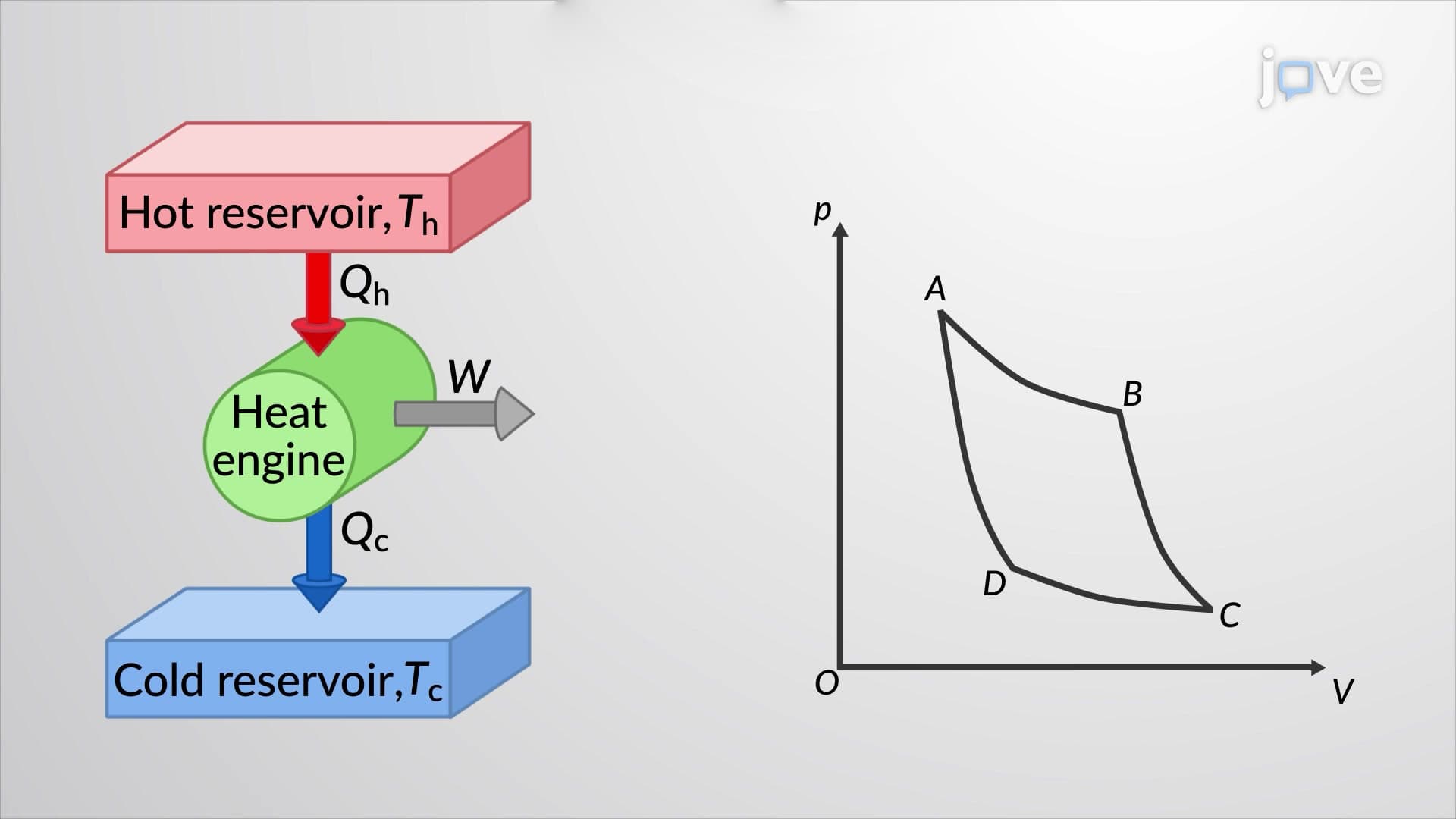
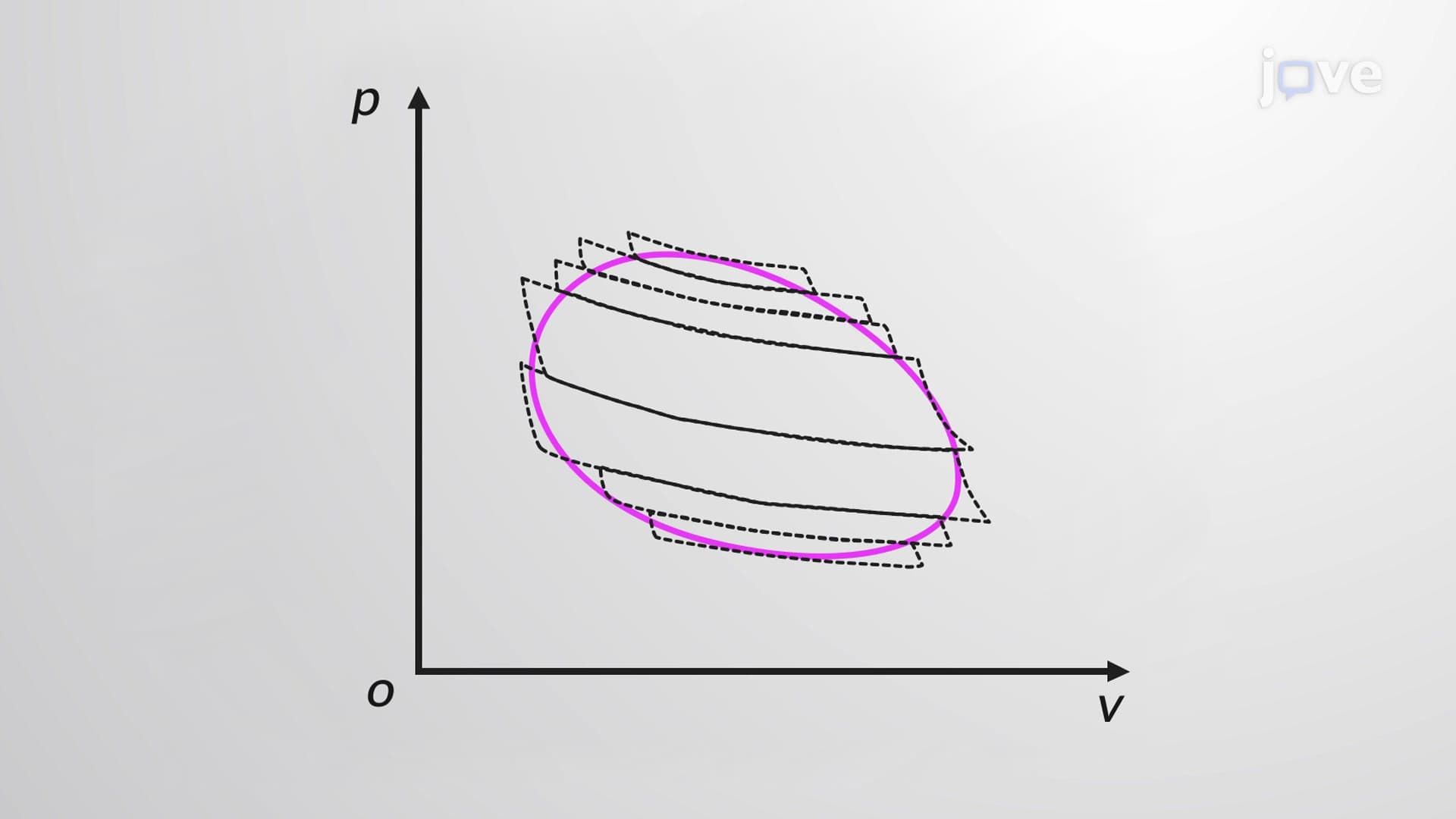
The Carnot cycle and its remarkable properties represent one of thermodynamics' most elegant theoretical frameworks. Named after French physicist Sadi Carnot, this idealized cycle establishes absolute limits on efficiency that no real engine can exceed. The Carnot cycle and its four reversible steps-isothermal expansion, adiabatic expansion, isothermal compression, and adiabatic compression-create a closed loop that maximizes work output for given temperature conditions.
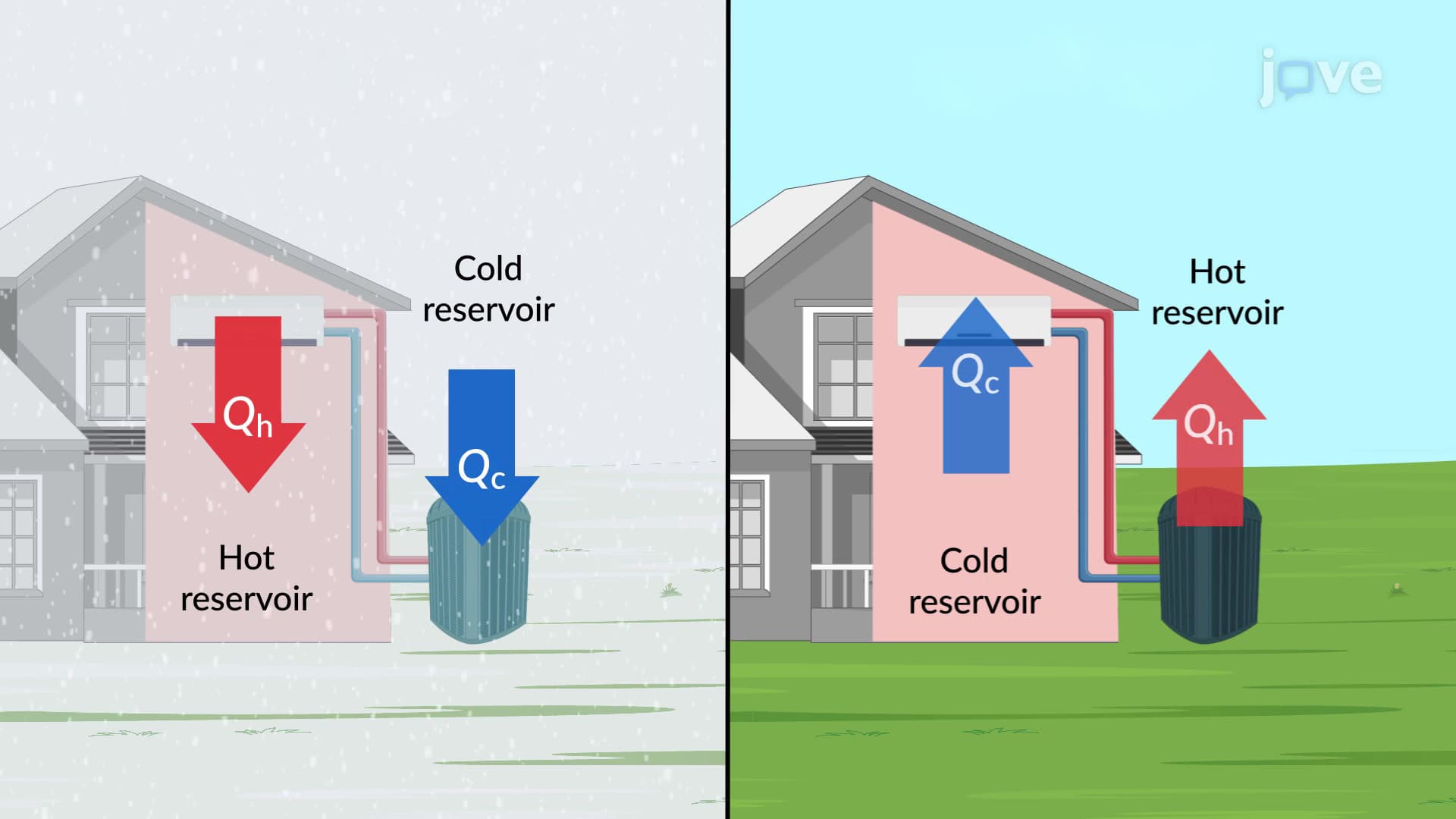
When operating in reverse, the Carnot cycle and its principles govern refrigeration systems. A Carnot refrigerator extracts heat Qc from a cold reservoir (like your refrigerator's interior) and rejects heat Qh to a hot reservoir (your kitchen) by consuming work input. The relationship between these heat quantities follows the same temperature ratios as the forward cycle: Qh/Qc = Th/Tc. This explains why refrigerators in Phoenix, Arizona (where ambient temperatures reach 115°F) work harder and consume more electricity than those in Minneapolis, Minnesota.
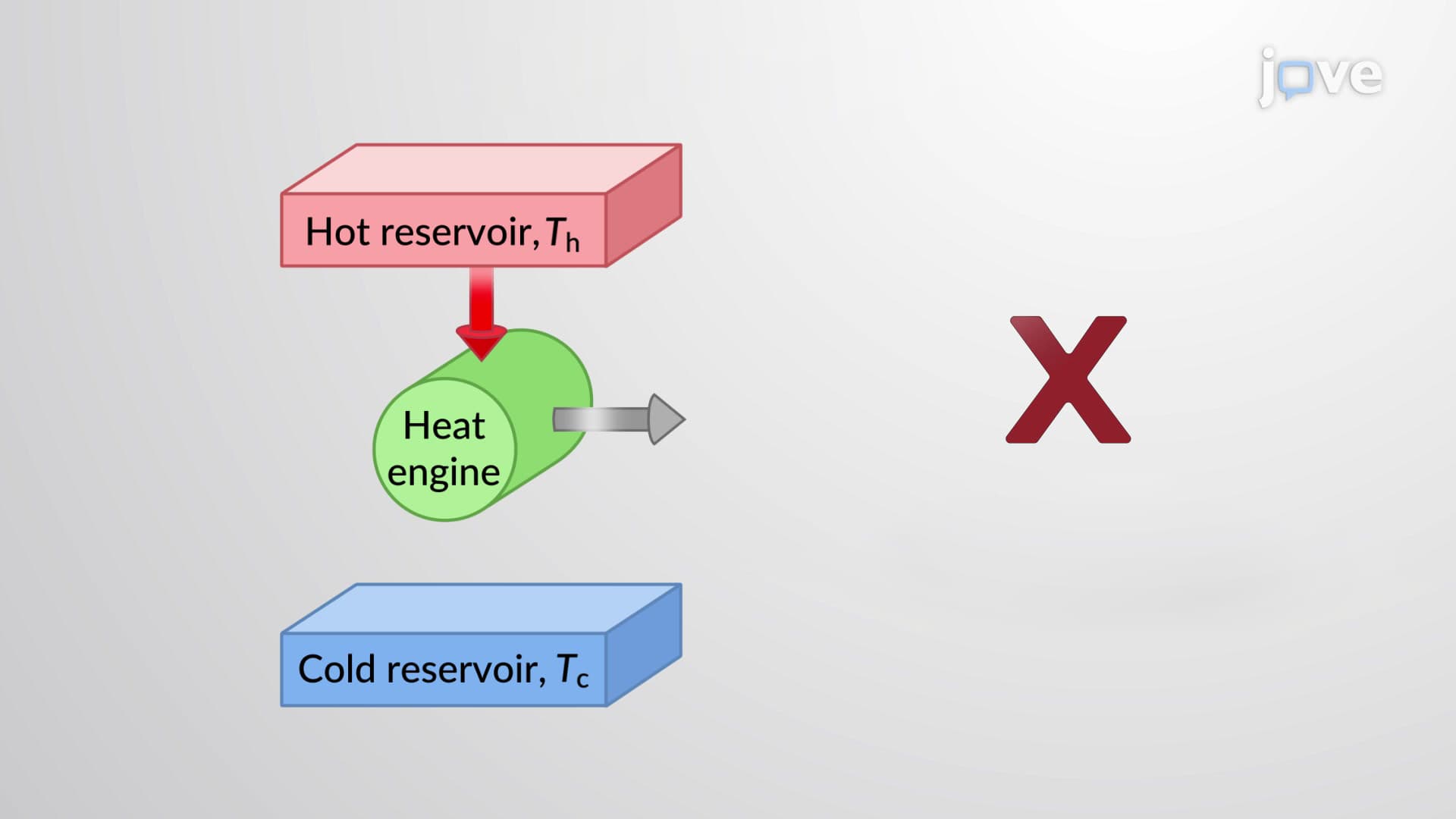
The Carnot cycle and its associated principle establish that no heat engine operating between two reservoirs can exceed Carnot efficiency: η = 1 - Tc/Th. Consider the Palo Verde Nuclear Plant in Arizona: even this sophisticated facility cannot convert more than about 33% of nuclear energy into electricity due to fundamental thermodynamic limits. The remaining energy becomes waste heat, demonstrating how the Carnot cycle and its constraints affect real-world power generation.
Students encounter the Carnot cycle and its principles across multiple academic contexts. AP Physics courses emphasize calculating Carnot efficiency for various temperature combinations. College thermodynamics courses explore how the Carnot cycle and its reversible nature define entropy changes. MCAT preparation includes understanding why biological systems cannot achieve Carnot efficiency. Engineering students learn how the Carnot cycle and its limitations guide design decisions for everything from automotive engines to industrial heat pumps across American manufacturing facilities.
Related Micro-courses