Loading video…

 12 Concepts
 4K views

Video Summary: How to Communicate Across Global Teams Without Confusion
Communicating across global teams means structuring your messages, meetings, and documentation so teammates with different language backgrounds, communication styles, and time zones reach the same understanding. Without this, unclear language or poorly timed requests create gaps that delay work. Using plain language, agreed channels, and shared records closes those gaps and keeps collaboration on track. Explore how working across different communication styles supports this approach.
When you write a message for a global audience, use plain language and state the required action explicitly. Unfamiliar abbreviations or assumed context can leave a teammate unsure what to do next. Effective writing clear team messages removes that ambiguity before it causes a missed step.
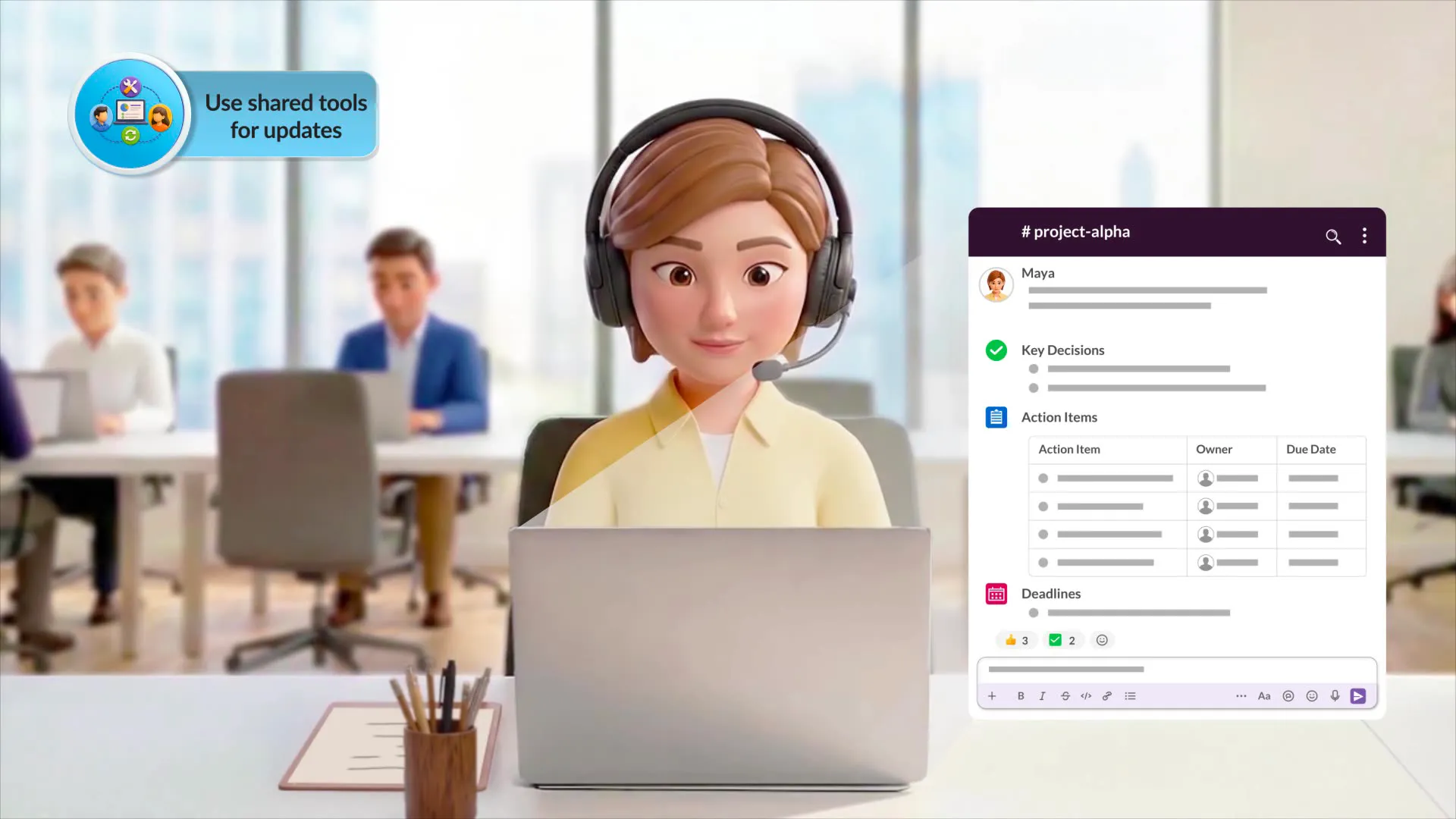
Global teams need one consistent place to receive updates. When your team agrees on a shared channel and you use it reliably, every teammate knows exactly where to look for information. This removes the risk of someone missing an update simply because it arrived through an unexpected route.
Start applying this alongside sharing updates through the right channel to build a habit your team can count on.
Before scheduling a meeting or requesting a response, check your teammates' local hours. Sending a request at the end of someone's workday or outside their working hours puts them in a difficult position and can delay the whole team. A brief check of time zones turns a frustrating wait into a smooth handoff.
During meetings with global teammates, explain each key point in small steps rather than covering everything at once. After each step, invite questions and confirm that everyone is following before moving on. This approach, which connects closely to communicating clearly in meetings, reduces the chance of silent confusion carrying over into the work.
After every discussion, record the agreed actions, who owns each one, and the deadlines in a shared project tool. Written records give teammates in different time zones a reliable reference point. This is especially valuable when a teammate joins after the live discussion and needs to catch up quickly.
Related Micro-courses