Loading video…

 12 Concepts
 4K views

Video Summary: How to Communicate Clearly in Meetings and Discussions
Communicating clearly in meetings and discussions means sharing focused updates, handling questions with confidence, and closing with agreed next steps, all without over-explaining or losing the room. It requires preparation before the meeting starts and the composure to address concerns as they arise. Done well, it keeps your team informed and aligned, and pairs naturally with sharing proactive updates that sustain momentum between meetings.
Before you speak, note your key progress points and think through the questions your team is likely to raise, especially around anything sensitive like a delay. Anticipating concerns lets you form clear, calm responses in advance rather than improvising under pressure when a question catches you off guard.
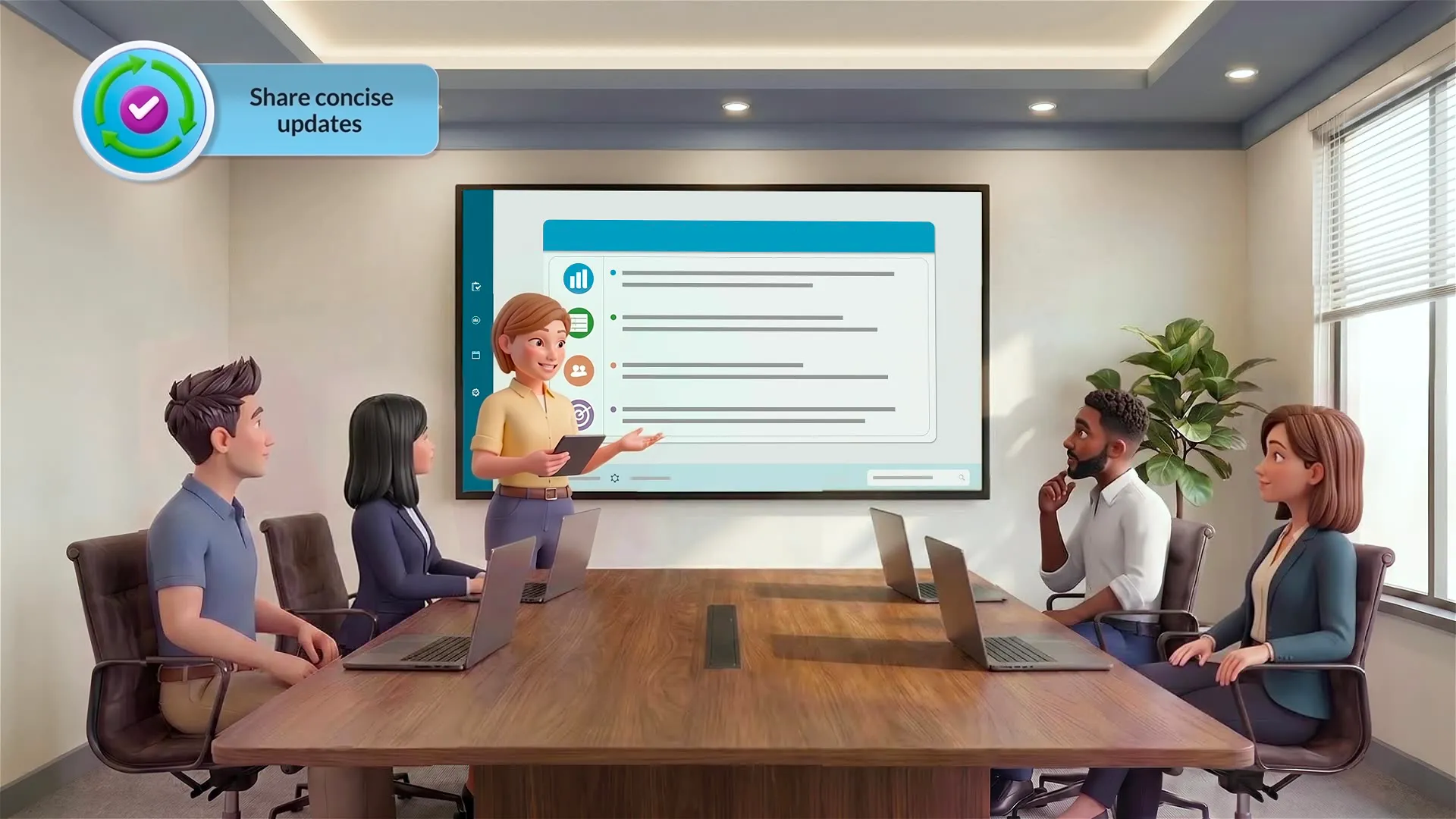
When you give your update, keep it brief and focused. Name the relevant context, such as a change in client requirements, and explain how it connects to the outcome, without adding detail the team does not need. Structuring quick, high-impact statements can help you frame this kind of message efficiently.
When a teammate asks why a delay affects the timeline, answer directly and stop there. Confidence in meetings comes from giving the cause clearly and resisting the urge to over-explain. Good active listening also helps you hear exactly what is being asked before you respond.
If a follow-up question signals that something was misread, restate the cause plainly. For example, explaining that new requirements led the vendor to revise their proposal, extending the timeline, gives the team a complete picture without blame or ambiguity. Asking questions that prevent misunderstandings is a related skill worth building alongside this one.
When you do not have a complete answer, share what you know and commit to clarifying the rest at the next meeting. This approach keeps the discussion moving and signals reliability. It is more effective than guessing or deflecting, and it sets a clear expectation for the team.
End every meeting by stating what happens next and when. Naming a concrete action, such as finalizing the evaluation by a specific date and sharing updates at the next meeting, gives the team a shared reference point. This is one of the core habits covered across workplace communication skills that keeps teams aligned over time.
Related Micro-courses