Loading subject page…

- Anatomy and Physiology
- The Axial Skeleton
- The Hyoid Bone
Micro-course: The Axial Skeleton
57,801 views
Learn key concepts and earn your certificate.



The Hyoid Bone

00:00
01:12
Video Summary: What Is the Hyoid Bone
Did you know that one bone in your body floats completely free, attached to no other bones? Hyoid bone anatomy reveals this remarkable U-shaped structure in your neck that enables every word you speak and every bite you swallow. Medical students at Johns Hopkins University often call it the "floating bone" because it's suspended only by ligaments between your jaw and voice box. What is the hyoid bone? It's your body's unique anchor point for critical muscles controlling speech, breathing, and swallowing. Watch the full video on JoVE Coach to master this concept with expert-led visuals and step-by-step explanations.
- Understand what is the hyoid bone and identify its distinctive U-shaped structure and isolated position in the neck
- Recognize the hyoid bone's unique anatomical feature as the only bone in the human body with no direct skeletal connections
- Identify the three main components: the central body, greater cornua (horns), and lesser cornua
- Analyze the hyoid bone location function in supporting muscles of the tongue, larynx, and pharynx
- Apply knowledge of hyoid muscle attachment points to explain speech, swallowing, and breathing mechanisms
- Compare the hyoid's suspension system via stylohyoid ligaments to other bone attachment methods
- Evaluate the clinical significance of hyoid bone positioning in medical examinations and forensic investigations
- Explore the evolutionary importance of this cervical hyoid location in human speech development
What is The Hyoid Bone: Structure and Position
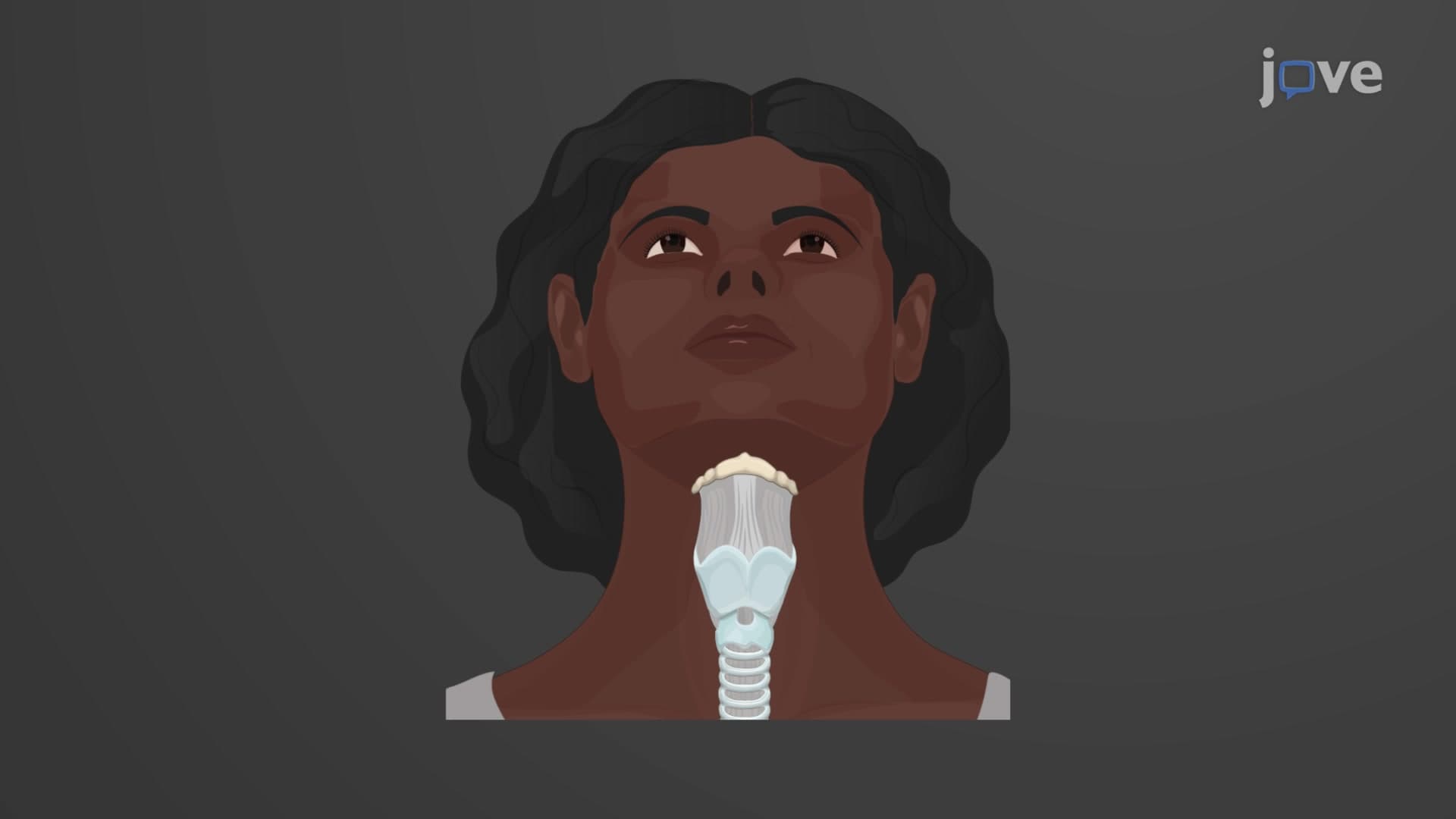
The hyoid bone anatomy represents one of the most fascinating structures in human skeletal biology. This small but mighty bone sits strategically positioned in the anterior neck, nestled between the mandible (lower jaw) above and the larynx (voice box) below. Unlike every other bone in your body, the hyoid exists as a completely isolated structure-imagine a suspension bridge supported only by cables, with no foundation touching the ground.
Unique Anatomical Features of the U-Shaped Hyoid Neck Bone
The hyoid's distinctive architecture consists of three primary components that work in perfect harmony. The central body forms a horizontal, quadrilateral platform with a convex front surface you can actually feel by gently pressing your neck just above your Adam's apple. Extending laterally from this body are the greater cornua (meaning "horns" in Latin)-these larger projections sweep backward and slightly outward, each ending in a small bump called a tubercle. The smaller lesser cornua project upward and outward from where the body meets the greater horns, creating attachment points crucial for muscle function.
Hyoid Bone Location Function in Human Physiology
Understanding hyoid bone location function reveals why this structure is essential for daily activities most people take for granted. The hyoid serves as the primary anchor for over 20 muscles involved in speech production, swallowing coordination, and airway management. When you speak, muscles attached to the hyoid precisely position your tongue and larynx to create specific sounds. During swallowing, the hyoid elevates to help guide food and liquids safely past your airway-a process that fails in conditions like dysphagia, commonly seen in stroke patients at major medical centers like Mayo Clinic and Cleveland Clinic.
Clinical and Educational Significance
For students preparing for the MCAT, USMLE Step 1, or AP Biology exams, hyoid muscle attachment concepts frequently appear in questions about speech pathology, swallowing disorders, and anatomical relationships. The hyoid bone isolated position also makes it significant in forensic medicine-damage to this structure can provide crucial evidence in legal investigations, as demonstrated in cases studied at institutions like the FBI Academy in Quantico, Virginia. Understanding what is the hyoid bone in human anatomy helps pre-med students grasp the intricate connections between structure and function that define human physiology.
Frequently Asked Questions
The hyoid bone is a U-shaped bone in your neck that's completely isolated from other bones, suspended only by ligaments. It serves as the anchor point for muscles controlling speech, swallowing, and breathing. This unique "floating" design allows the flexible movement necessary for complex human communication and safe swallowing mechanisms.
MCAT questions often test hyoid bone location and its role in speech production or swallowing physiology. USMLE Step 1 may include hyoid-related scenarios involving dysphagia, neck trauma, or developmental anomalies. Focus on understanding its muscle attachments and functional relationships rather than just memorizing bone parts.
Most undergraduate anatomy and physiology courses (like those at UCLA, University of Michigan, or UT Austin) cover hyoid bone anatomy in musculoskeletal and respiratory system units. It's also featured prominently in speech pathology programs and pre-med anatomy labs where students practice palpation techniques.
Speech-language pathologists at hospitals like Johns Hopkins assess hyoid movement during swallowing studies to diagnose dysphagia. They design therapy exercises targeting hyoid muscle coordination to help patients recovering from strokes, head injuries, or neurological conditions regain safe swallowing and clear speech production.
Not at all-the hyoid bone is actually one of the easier bones to understand because of its simple U-shape and clear function. If you can feel your own neck and understand basic concepts about muscles and movement, you'll grasp hyoid anatomy quickly.
Use the "body and horns" analogy-visualize a bull's head where the body is the face and the greater/lesser cornua are the horns. Practice palpating your own hyoid bone while reviewing its parts, and create muscle attachment diagrams connecting function to structure.
Explore laryngeal cartilages and their relationship to the hyoid, then advance to studying the complex muscle groups of deglutition (swallowing). This foundation prepares you for understanding speech pathology, respiratory physiology, and head-neck clinical anatomy in advanced coursework.
The hyoid's isolated position and delicate structure make it vulnerable to specific types of trauma, particularly in strangulation cases. Forensic pathologists at institutions like the Armed Forces Institute of Pathology use hyoid bone examination as crucial evidence in legal investigations, making this knowledge valuable for criminal justice students.
Related Micro-courses