Loading video…


 10 Concepts
 76.5K views

Video Summary: Feedback Regulation of Calcium Concentration Explained
Ever wonder how your heart knows when to beat harder during a sprint? The feedback regulation of calcium concentration controls this vital process, with calcium ions acting like cellular messengers that trigger everything from muscle contractions to hormone release. When cardiac muscle cells in your heart receive signals during exercise, calcium channels open and close in precise patterns, creating waves of calcium that coordinate each heartbeat. Watch the full video on JoVE Coach to master this concept with expert-led visuals and step-by-step explanations.
Feedback regulation of calcium concentration represents one of biology's most elegant control systems, governing essential processes from your heartbeat to blood clotting. This intricate mechanism maintains precise calcium levels within different cellular compartments while enabling rapid, coordinated responses when cells receive activation signals.
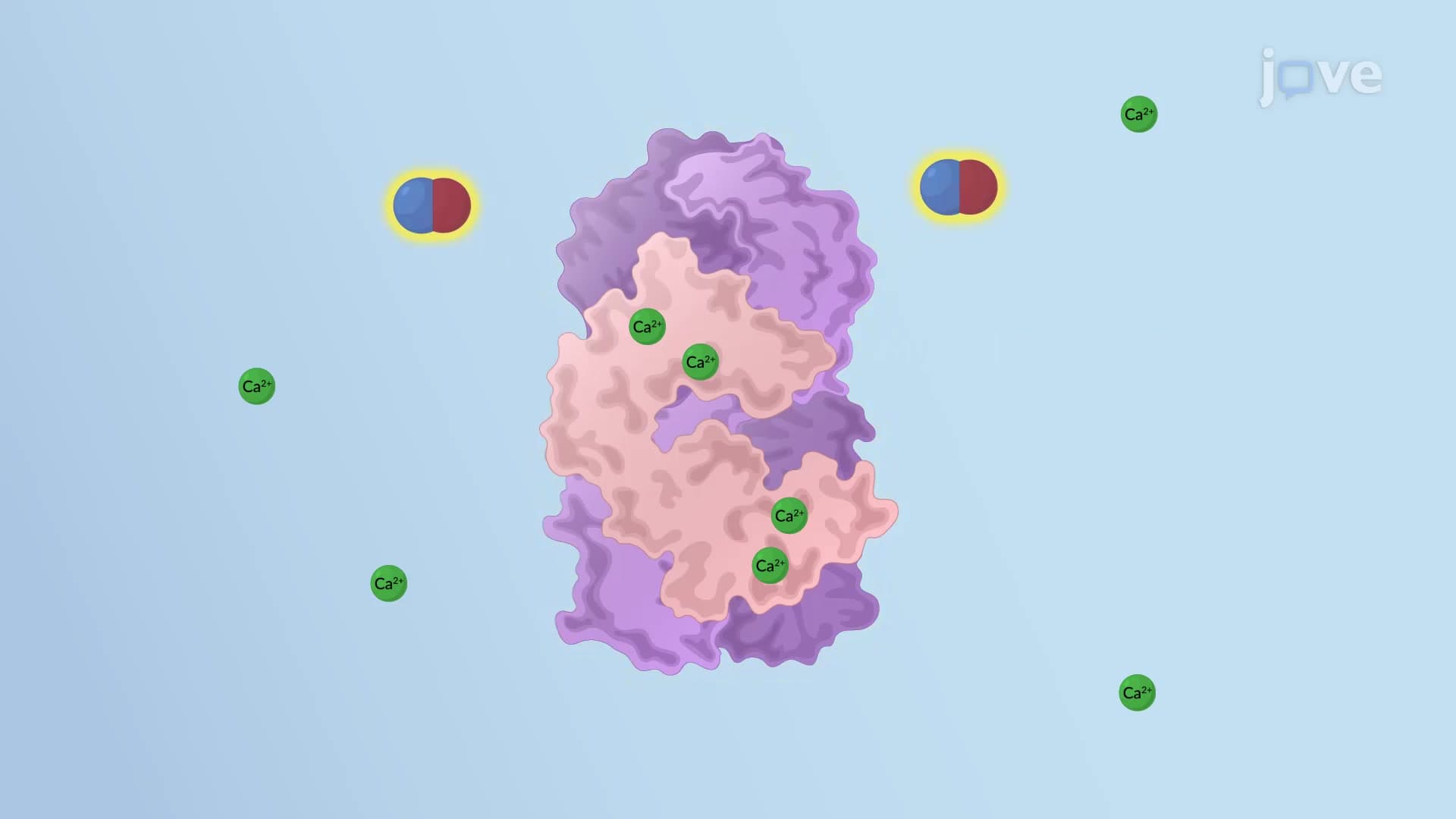
Cells maintain dramatic calcium concentration differences across compartments. The endoplasmic reticulum (ER) stores calcium at concentrations 1,000-10,000 times higher than the cytosol, while extracellular fluid contains calcium levels about 10,000 times greater than cytoplasmic concentrations. This creates a steep electrochemical gradient that drives rapid calcium influx when channels open.
In US medical schools, students studying for the MCAT often encounter questions about these gradients in the context of muscle physiology. Understanding that resting cytosolic calcium sits around 0.1 μM while ER calcium reaches 100-500 μM helps explain why even small channel openings create significant cellular responses.
The system operates through dual feedback loops. Positive feedback occurs when initial calcium release triggers neighboring channels to open, creating a self-amplifying calcium wave that spreads throughout the cell. This mechanism ensures robust, all-or-nothing responses essential for processes like platelet aggregation during blood clotting.
Negative feedback prevents dangerous calcium overload. As cytosolic calcium levels rise beyond optimal ranges, the same channels that released calcium begin closing. Additionally, calcium-activated potassium channels may open, hyperpolarizing the cell and further reducing calcium influx. High school AP Biology students frequently see this concept tested alongside other homeostatic mechanisms.
Perhaps most fascinating is how cells convert sustained stimulation into calcium oscillations-repeated cycles of calcium release and uptake. These oscillations enable sustained responses like the rhythmic contractions seen in cardiac muscle during exercise. Each calcium spike triggers specific cellular responses: enzyme activation, gene transcription changes, or vesicle fusion for hormone release.
College physiology courses emphasize how calcium oscillation frequency and amplitude encode different types of cellular information. For instance, faster oscillations might trigger stronger muscle contractions, while slower patterns could favor gene expression changes over immediate mechanical responses.
Related Micro-courses