Loading video…


 10 Concepts
 76.5K views

Video Summary: What are G Protein Coupled Receptors
When you smell fresh coffee or see a bright light, your body responds within milliseconds-but how? G protein coupled receptors (GPCRs) are the molecular gatekeepers that detect these signals and translate them into cellular responses. These specialized proteins help your body process everything from the adrenaline rush during a football game to detecting glucose levels in diabetic patients. Watch the full video on JoVE Coach to master this concept with expert-led visuals and step-by-step explanations.
G protein coupled receptors represent one of the largest and most important families of membrane proteins in human biology. These sophisticated molecular machines act as cellular antennae, detecting everything from light photons hitting your retina to insulin molecules signaling glucose uptake. Understanding GPCR structure and function is crucial for students pursuing healthcare careers, as approximately 40% of all prescription medications target these receptors.
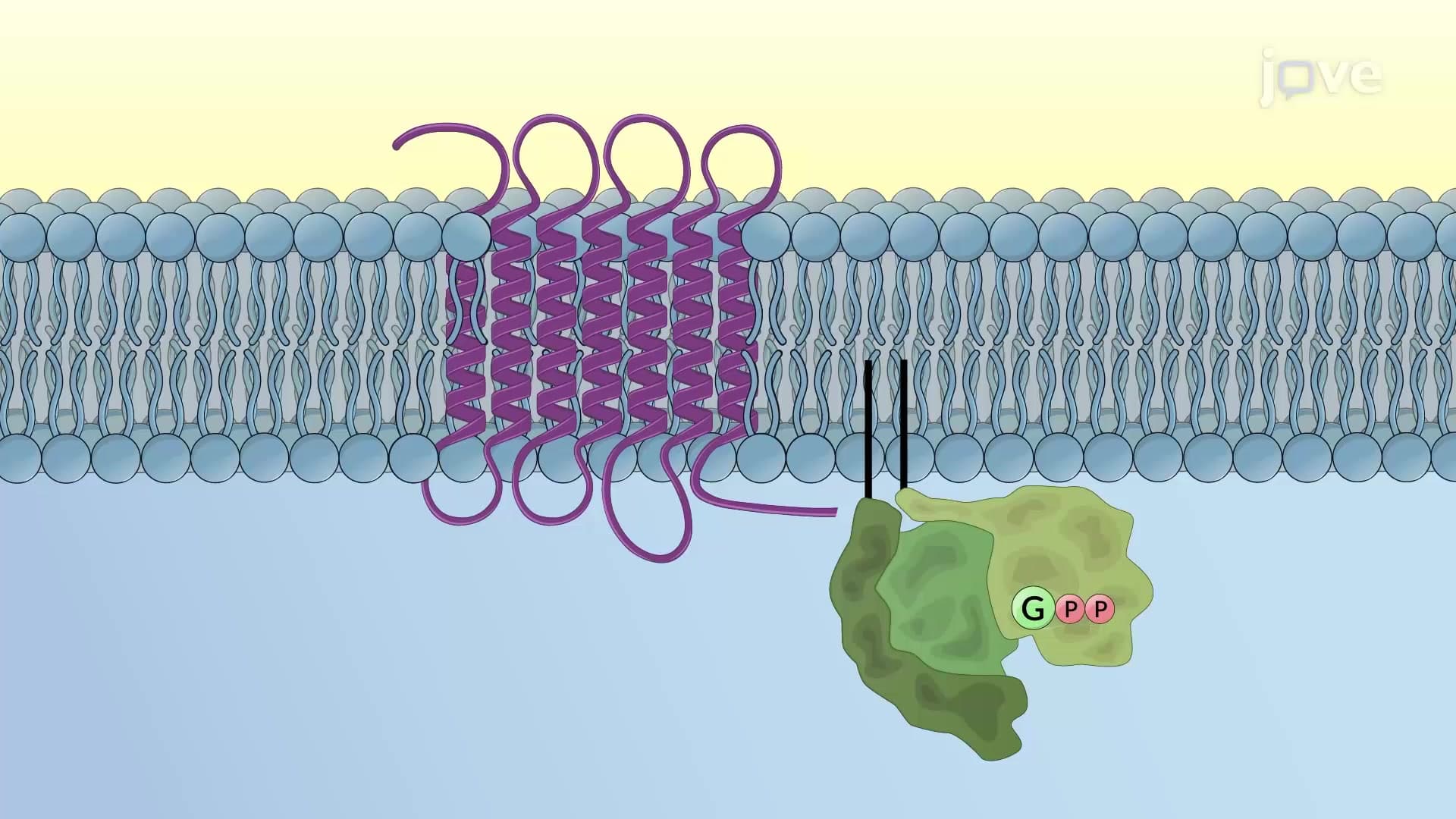
The defining feature of every GPCR is its seven transmembrane alpha-helical domains that snake through the cell membrane. This unique architecture creates distinct regions: extracellular loops that bind signaling molecules (ligands), and intracellular loops that interact with G proteins. Think of this structure like a molecular bridge spanning the cell membrane, with specific docking sites on both sides. The seven transmembrane GPCR design has been evolutionarily conserved because it provides the perfect framework for signal detection and transmission.
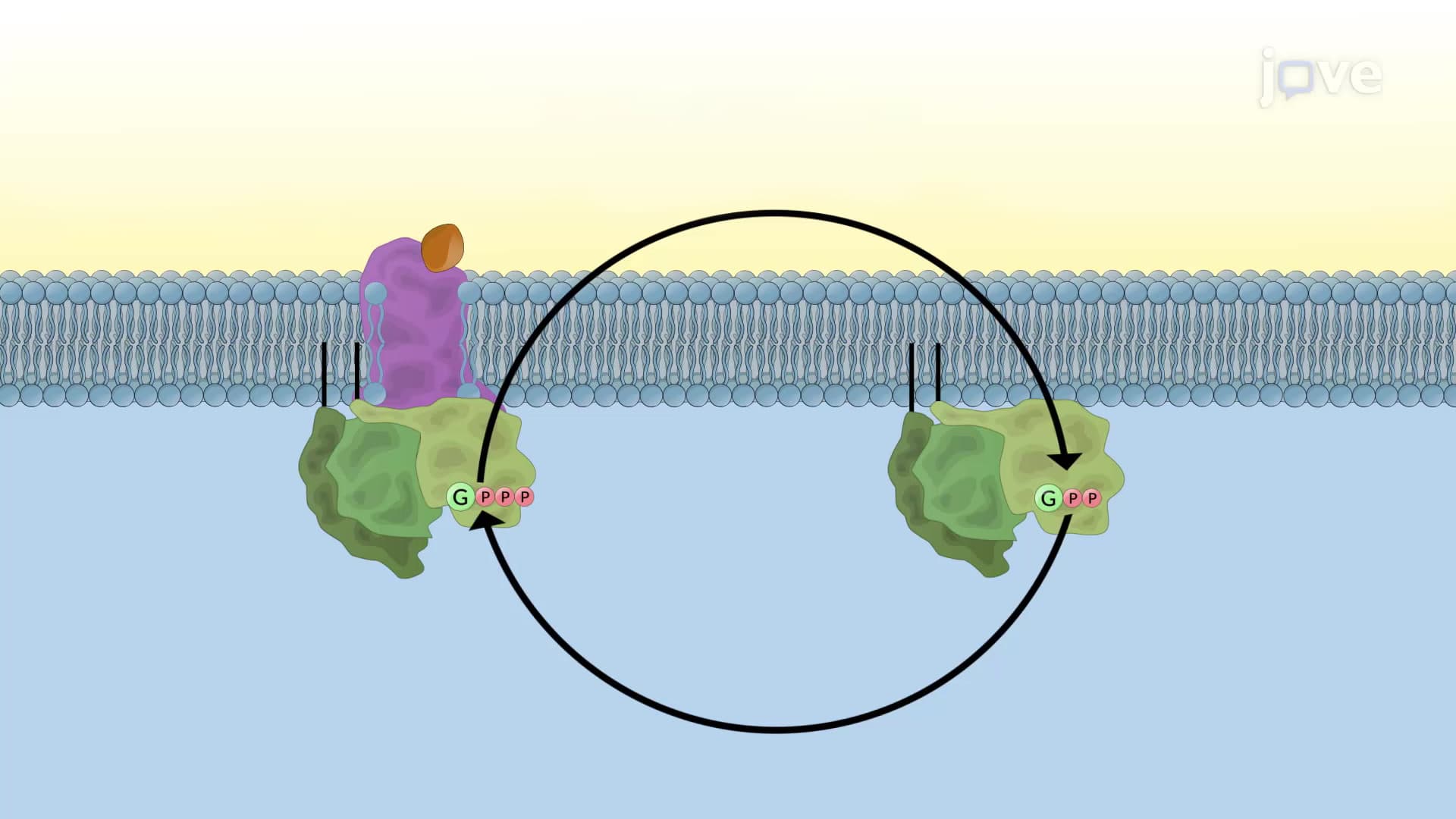
The signaling process begins when a hormone, neurotransmitter, or other ligand binds to the extracellular portion of a GPCR. This binding event triggers a dramatic conformational change that propagates through the transmembrane helices to the intracellular side. The activated GPCR then acts as a catalyst, promoting the exchange of GDP for GTP on the associated G protein alpha subunit. Once GTP-bound, the alpha subunit dissociates and activates downstream effectors like adenylyl cyclase GPCR pathways, generating second messengers such as cAMP.
One of the most remarkable aspects of GPCR signaling is its amplification potential. A single activated GPCR can activate multiple G proteins, each of which can activate numerous effector enzymes. For example, when epinephrine binds to beta-adrenergic receptors during stress, one hormone molecule can ultimately generate thousands of cAMP molecules through adenylyl cyclase activation. This amplification mechanism explains how trace amounts of hormones can produce dramatic physiological responses-essential knowledge for understanding pharmacology and endocrinology concepts tested on the MCAT and AP Biology exams.
Related Micro-courses