Loading subject page…


3,593 views


Video Summary: What Is Drying Shrinkage
Ever wonder why concrete sidewalks develop cracks over time? Drying shrinkage occurs when concrete loses moisture to the surrounding air, causing the material to contract and potentially crack. For instance, the concrete foundations of bridges across the United States must account for this phenomenon during design to prevent structural damage. What is drying shrinkage involves complex water movement within concrete's microscopic structure, leading to volume reduction that engineers must carefully manage. Watch the full video on JoVE Coach to master this concept with expert-led visuals and step-by-step explanations.
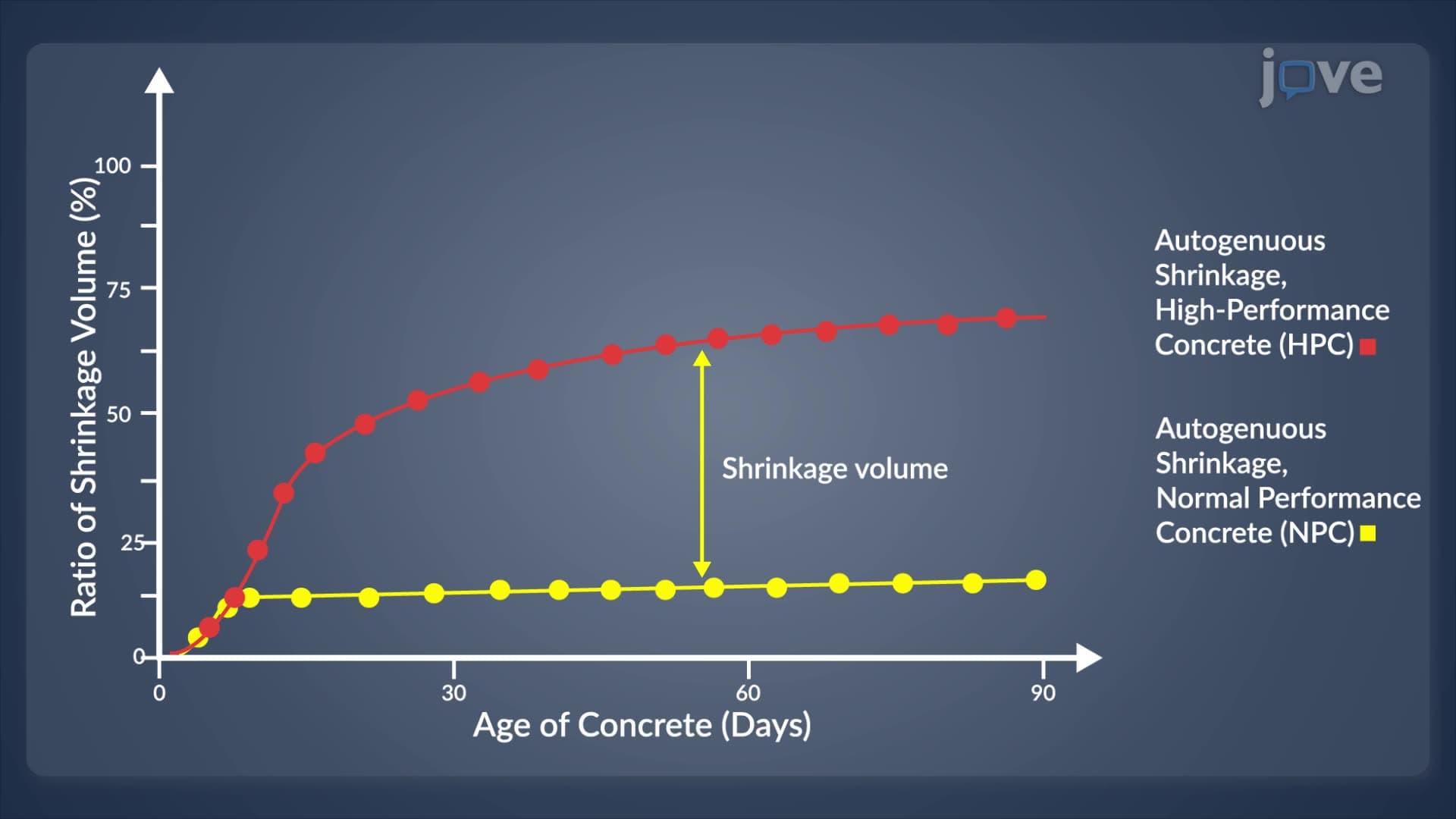
Drying shrinkage represents one of the most significant time-dependent deformations affecting concrete structures throughout the United States. This phenomenon begins when hardened concrete loses moisture to unsaturated ambient air, triggering a complex sequence of physical and chemical changes within the concrete matrix. Unlike immediate elastic deformations, drying shrinkage develops gradually over months or even years, making it a critical consideration for structural engineers designing everything from residential foundations to major infrastructure projects like the Hoover Dam.
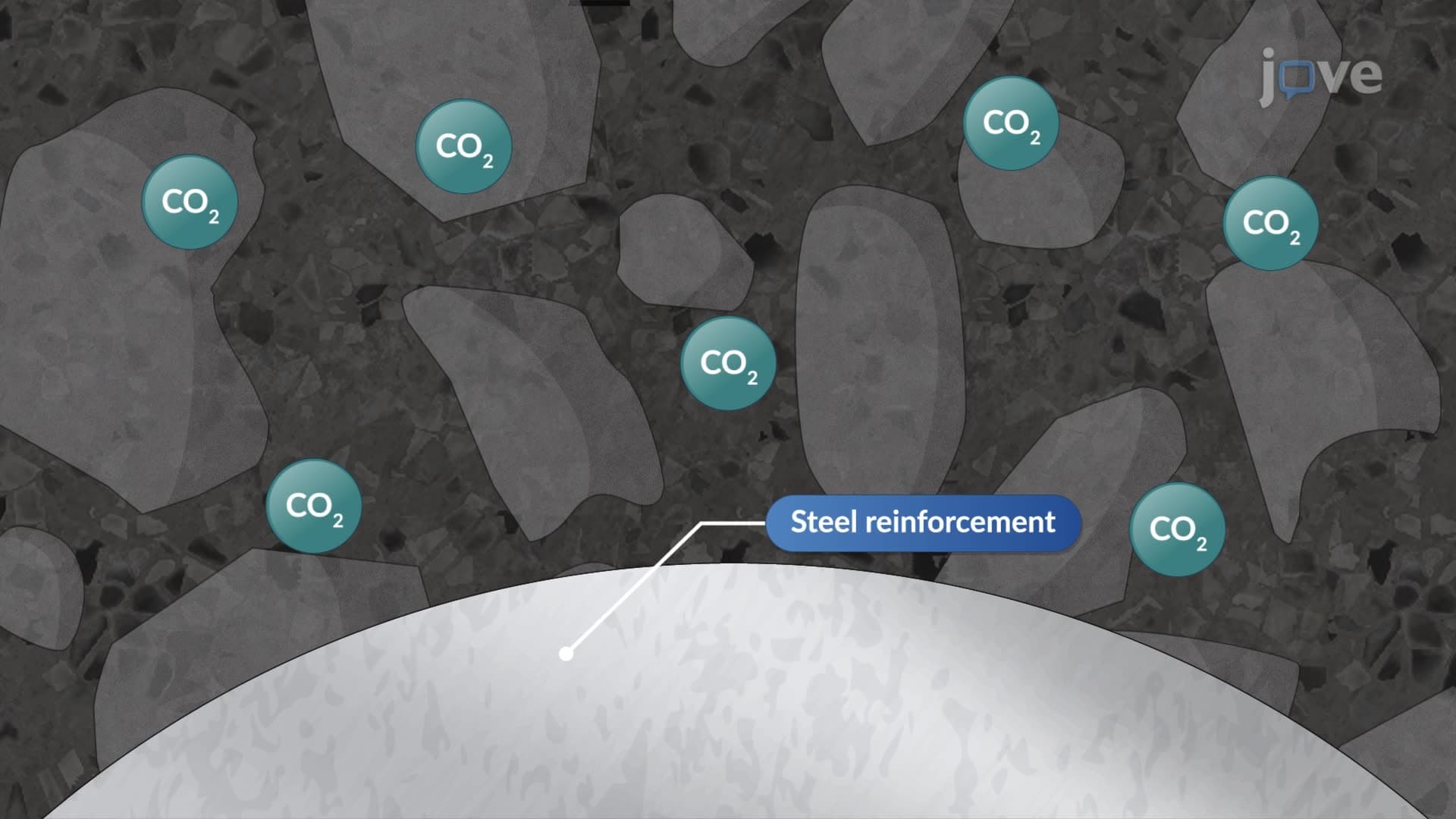
The drying shrinkage process initiates at the microscopic level within concrete's intricate pore structure. When free water evaporates from capillary pores, it creates a moisture gradient that draws adsorbed water from the surface of calcium silicate hydrate (C-S-H) gel particles. This C-S-H gel, formed during cement hydration, possesses an enormous internal surface area where water molecules attach through weak van der Waals forces. As this adsorbed water migrates to replace evaporated capillary water, the gel structure begins to contract, similar to how a wet sponge shrinks when dried.
Drying shrinkage exhibits both reversible and irreversible characteristics, a distinction crucial for structural analysis. The reversible portion occurs when concrete re-absorbs moisture from the environment, causing wetting expansion that partially counteracts previous shrinkage. However, the irreversible component results from permanent microstructural changes, including gel pore collapse and the formation of strong Si-O-Si bonds between silicate chains. These covalent bonds create a more compact gel structure that cannot return to its original volume, even with complete moisture restoration.
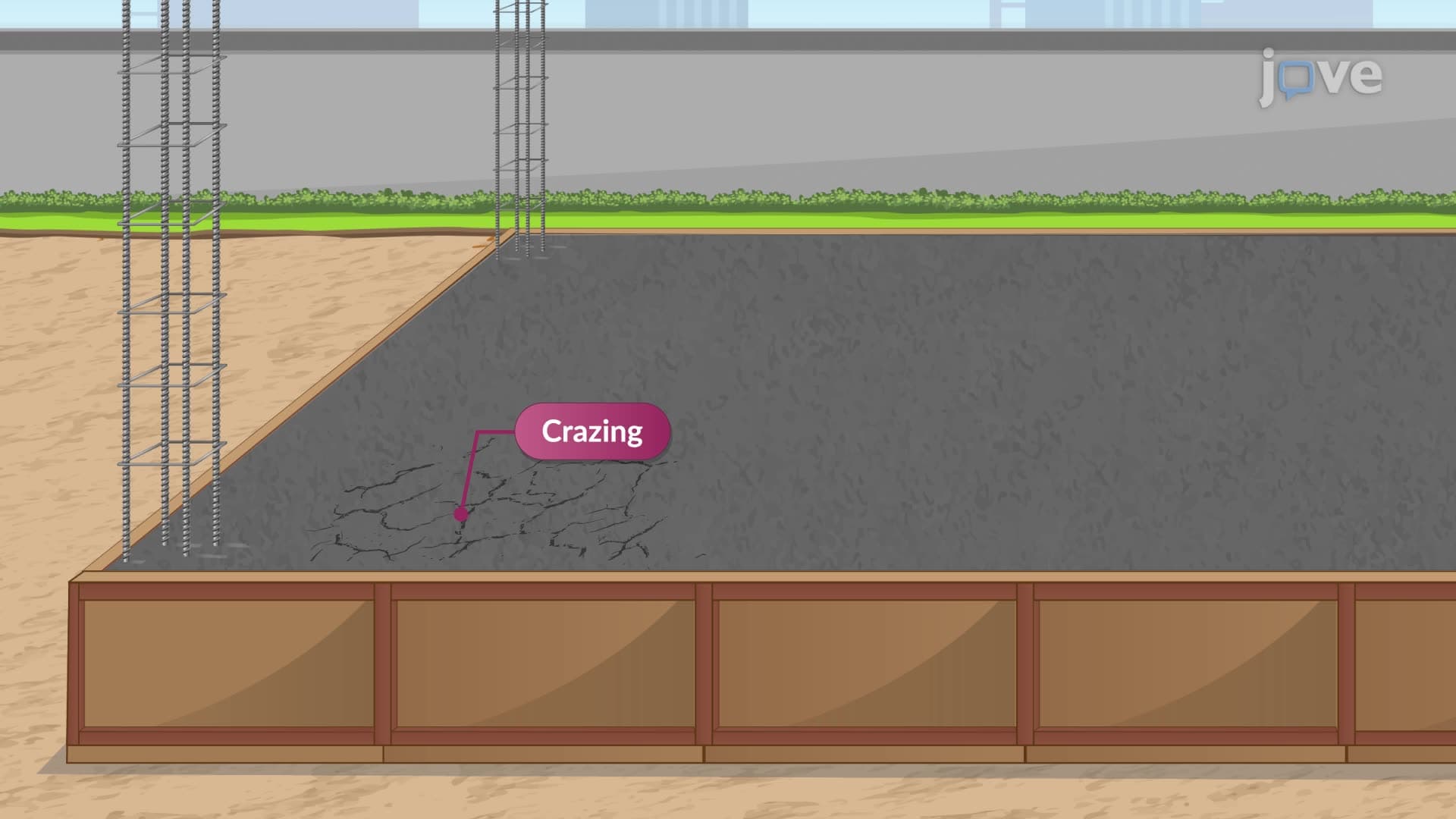
The practical consequences of drying shrinkage depend heavily on structural constraints. In unrestrained members, such as precast concrete panels before installation, shrinkage manifests as free strain without developing internal stress. Conversely, restrained members-like concrete slabs bonded to foundations-experience zero net strain but develop significant tensile stresses that can exceed concrete's tensile strength, leading to cracking. This principle appears frequently on AP Physics and college-level structural engineering exams, where students must analyze stress-strain relationships in time-dependent materials.
Related Micro-courses