Loading subject page…


3,593 views


Video Summary: What Is Elasticity in Concrete
Ever wonder why concrete buildings can withstand earthquakes without crumbling instantly? The answer lies in understanding elasticity in concrete and how this fundamental material property determines structural safety. Unlike rubber bands that snap back perfectly, concrete exhibits complex non-linear behavior under stress, forming characteristic hysteresis loops that engineers at firms like Bechtel Corporation must account for when designing skyscrapers. Watch the full video on JoVE Coach to master this concept with expert-led visuals and step-by-step explanations.
What is elasticity in concrete represents one of the most critical concepts in structural engineering and materials science. Unlike ideal elastic materials that follow Hooke's Law with perfect linear stress-strain relationships, concrete exhibits complex non-linear elastic behavior that challenges traditional engineering assumptions. This elasticity in concrete definition encompasses the material's ability to deform under stress while attempting to return to its original shape upon load removal, though this recovery is never complete.
The elasticity in concrete concept becomes particularly fascinating when examining the material's response to cyclic loading. When concrete specimens undergo loading and subsequent unloading cycles, they trace different paths on stress-strain curves, creating characteristic hysteresis loops. This behavior is crucial for understanding earthquake resistance in structures like California's Transamerica Pyramid, where repeated seismic loads create complex stress patterns. The area within these hysteresis loops represents energy dissipation, explaining why concrete structures can absorb significant dynamic loads without catastrophic failure.
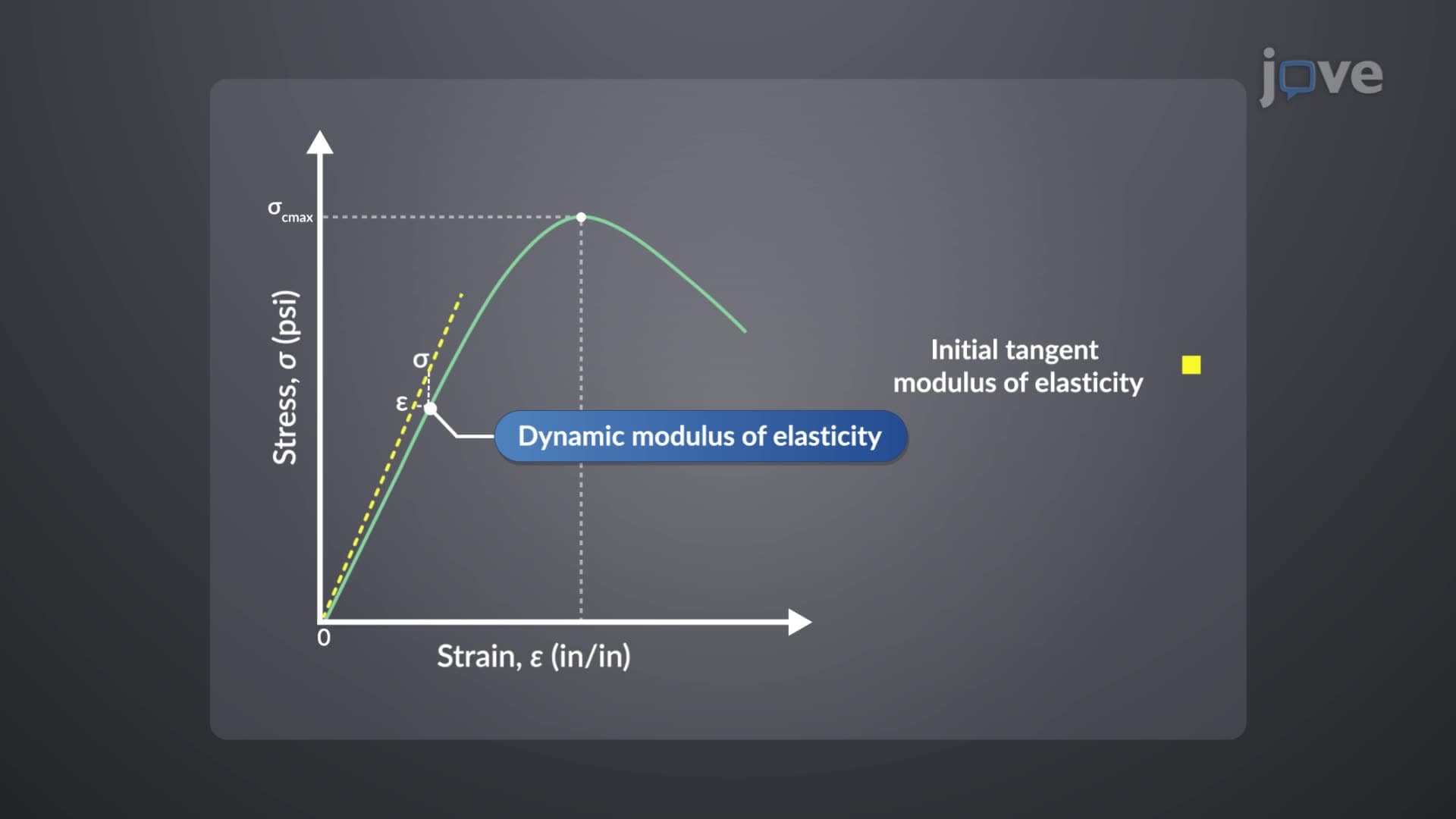
Understanding elasticity in concrete in detail requires mastering three distinct calculation methods. The tangent modulus approach draws a line tangent to any point on the stress-strain curve, providing localized stiffness values essential for analyzing specific loading conditions. The secant modulus method, perhaps most commonly used in practice, draws a straight line from the origin to the point representing 40% of the concrete's ultimate compressive strength. This 40% threshold represents a critical engineering standard used by the American Concrete Institute (ACI) in structural design codes. The chord modulus connects two specific points: one at 50 microinches per inch strain and another at 40% ultimate load, offering insights into material behavior within practical working stress ranges.
This elasticity in concrete study guide material appears frequently in AP Physics courses, college-level Materials Science exams, and professional engineering licensing tests. Students preparing for the MCAT will encounter similar stress-strain concepts in biological systems, while civil engineering undergraduates must master these principles for structural analysis courses. The Federal Highway Administration requires thorough understanding of concrete elasticity for bridge design specifications, making this knowledge essential for infrastructure engineering careers.
Related Micro-courses