Loading video…


 12 Concepts
 3.6K views

Video Summary: What Is Hot Weather Concreting
Did you know that concrete poured on a scorching Phoenix summer day can crack before it even sets? Hot weather concreting addresses the critical challenge of maintaining concrete quality when temperatures soar above 90°F, a common scenario at construction sites across Texas, Arizona, and Nevada. This specialized technique requires careful temperature control, typically keeping concrete below 60°F during mixing and placement. Watch the full video on JoVE Coach to master this concept with expert-led visuals and step-by-step explanations.
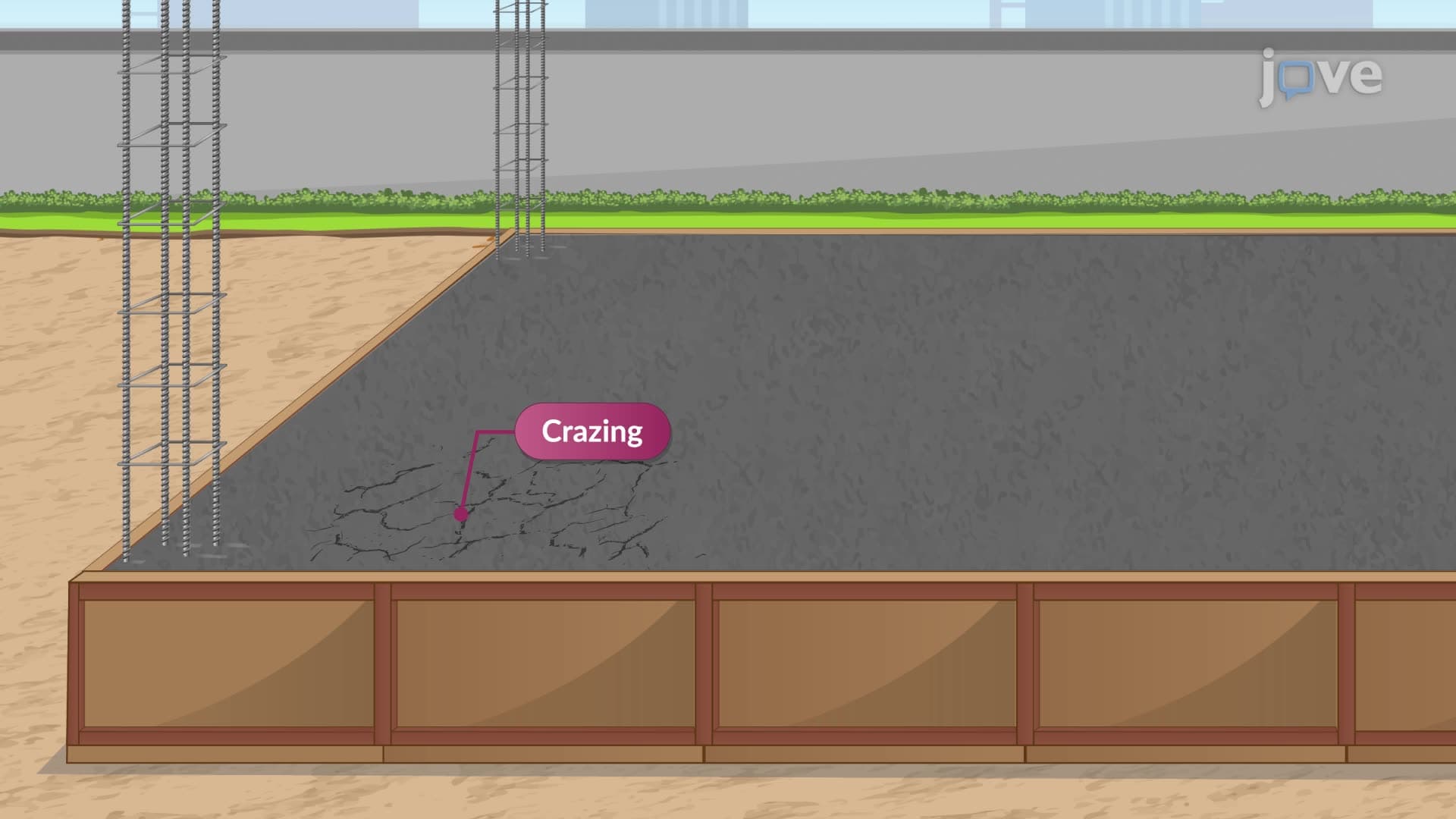
Hot weather concreting represents a specialized branch of concrete technology that addresses the unique challenges of placing and curing concrete in elevated temperature conditions. When ambient temperatures exceed 77°F (25°C) or when concrete temperatures rise above 70°F (21°C), standard placement procedures become inadequate. The accelerated hydration process and rapid moisture evaporation can compromise the concrete's final strength, durability, and appearance.
Successful hot weather concreting begins with maintaining concrete temperatures below 60°F during mixing and placement. This requires strategic modifications to the concrete mix design, including reducing portland cement content while potentially increasing supplementary cementitious materials like fly ash or slag. Engineers specify sulfate-resistant aggregates with minimal moisture absorption characteristics. Set-retarding admixtures become essential, extending the working time and preventing premature stiffening that could trap air voids or create cold joints.
Construction sites in hot climates like those found across the Southwest United States implement comprehensive cooling strategies. Aggregate stockpiles receive continuous water spraying and shade structures to reduce their temperature through evaporation cooling. Water supply lines are buried underground to maintain cooler temperatures, while concrete handling equipment-including trucks, pumps, and tools-are painted white to reflect solar radiation. These preparations are critical for major infrastructure projects like highway construction in Nevada or commercial developments in Florida.
Timing becomes crucial in hot weather concreting, with most placement activities scheduled during cooler evening or early morning hours. Formwork receives pre-wetting to prevent moisture absorption from fresh concrete. Immediately after placement, white-colored plastic sheeting or specialized curing compounds protect the surface from direct sunlight and wind. The evaporation cooling technique-controlled wetting followed by natural evaporation-helps maintain optimal curing temperatures while preventing thermal shock.
This knowledge proves invaluable for students preparing for engineering licensure exams, construction management coursework, or materials science studies. AP Chemistry students encounter these principles when studying reaction kinetics, while college engineering programs emphasize hot weather concreting in concrete technology and construction materials courses.
Related Micro-courses