Loading subject page…


3,593 views


Video Summary: What Is Mass Concreting
Ever wondered why some concrete structures crack before they're even finished? Mass concreting is a specialized construction technique used when placing large volumes of concrete-over 1 cubic yard-where thermal differences between the surface and interior can cause devastating cracks. The Hoover Dam, one of America's greatest engineering achievements, required innovative mass concreting methods to prevent thermal cracking in its massive 3.25 million cubic yards of concrete. Watch the full video on JoVE Coach to master this concept with expert-led visuals and step-by-step explanations.
Mass concreting refers to the placement of concrete in large volumes where the dimensions are substantial enough that temperature rise from cement hydration and subsequent cooling can cause cracking. The American Concrete Institute (ACI) defines mass concrete as any volume where thermal effects may lead to undesirable cracking. This typically occurs in structures with minimum dimensions exceeding 3 feet, though the exact threshold depends on environmental conditions and mix design.
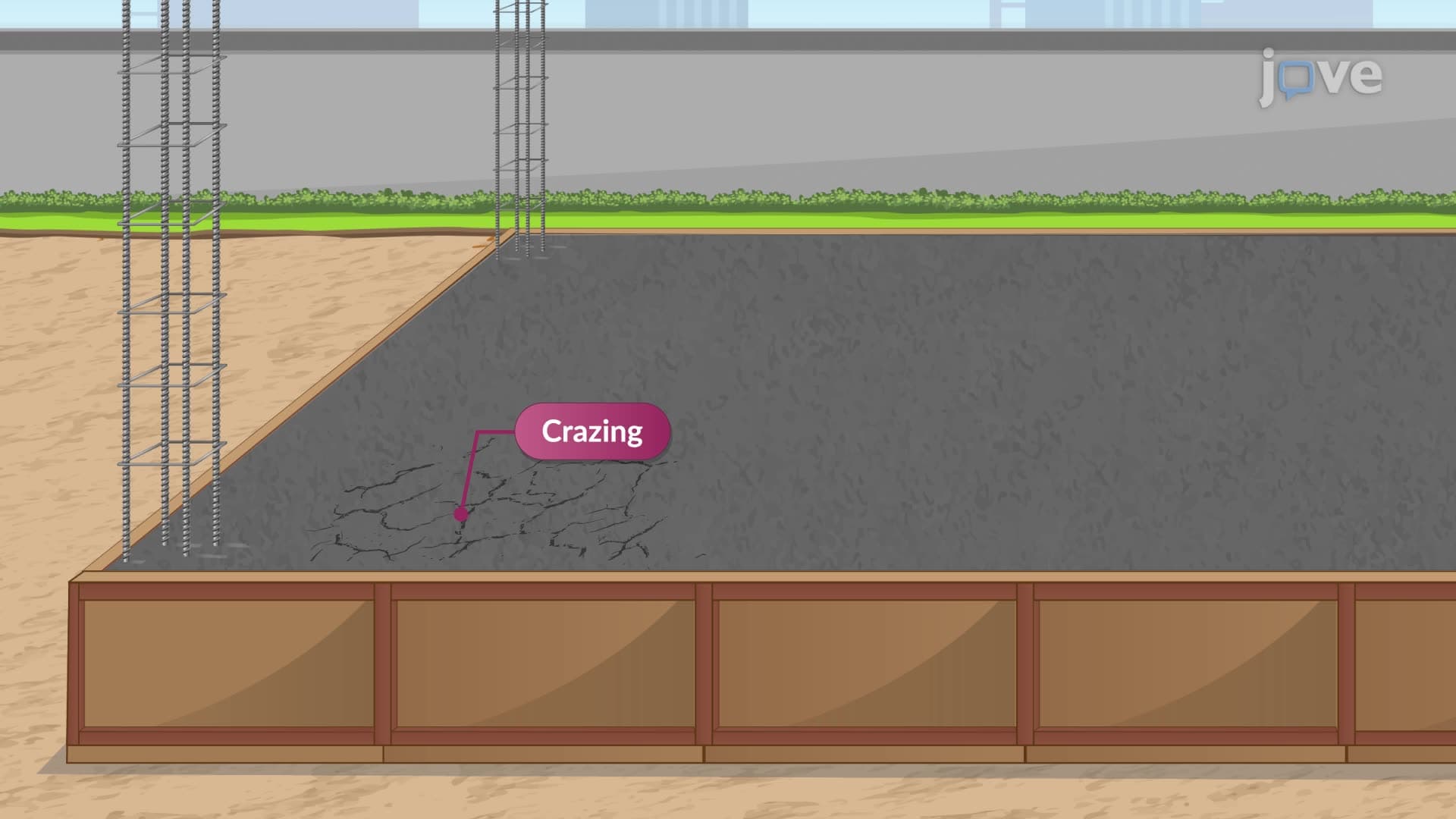
When cement hydrates with water, it generates significant heat-a process called the heat of hydration. In massive concrete sections, this heat cannot dissipate quickly enough through the surfaces, creating a temperature differential between the hot interior and cooler exterior. As the concrete cools and contracts, tensile stresses develop that can exceed the concrete's tensile strength, resulting in cracking. These thermal gradients can reach 35°F or more in large pours, making crack prevention critical for structural integrity.
Mass concreting requires carefully engineered concrete mixes. Low-heat Portland cement (Type IV) or blended cements reduce heat generation during hydration. Pozzolanic materials like fly ash from coal-fired power plants replace up to 25% of cement, further reducing heat while improving long-term strength. Angular aggregates provide better particle interlocking, while water-reducing admixtures allow lower water-cement ratios without sacrificing workability. These materials work together to create concrete that generates less heat while maintaining structural performance.
Successful mass concreting employs multiple temperature control strategies. Fresh concrete is mixed with chilled water to achieve placement temperatures around 45°F, significantly below normal concrete temperatures of 70-90°F. Embedded cooling pipes circulate chilled water through the concrete mass, actively removing heat during the critical early curing period. Thermocouples placed throughout the structure provide real-time temperature monitoring, ensuring thermal gradients stay within acceptable limits. This monitoring is crucial for major infrastructure projects like dam construction or high-rise foundation work.
Understanding mass concreting principles is essential for students pursuing civil engineering degrees and appears frequently on AP Physics exams when discussing thermal expansion and materials science. Professional engineering (PE) exam questions often test knowledge of ACI 207 standards for mass concrete construction.
Related Micro-courses