Loading subject page…


3,374 views


Video Summary: Properties of Fourier Series Ii Explained
Did you know that Parseval's theorem reveals a hidden connection between time-domain signals and their frequency components, proving that energy is conserved across both domains? Understanding Parseval's theorem is crucial for grasping the Properties of Fourier Series II Explained, as it demonstrates how signal power remains constant whether analyzed in time or frequency. This principle powers everything from Netflix's video compression algorithms to acoustic design in concert halls like Carnegie Hall. Watch the full video on JoVE Coach to master this concept with expert-led visuals and step-by-step explanations.
Parseval's theorem stands as one of the most elegant results in signal analysis, establishing that the total energy of a periodic signal equals the sum of energies of its individual frequency components. The Parseval's theorem definition states that for a periodic function f(t) with period T, the average power in the time domain equals the sum of powers of all harmonic components in the frequency domain.
The Parseval's theorem concept can be expressed as: (1/T) ∫[0 to T] |f(t)|² dt = |a₀|² + (1/2) Σ[n=1 to ∞] (|aₙ|² + |bₙ|²), where aₙ and bₙ are Fourier coefficients. This equation demonstrates energy conservation-a fundamental principle that appears frequently on AP Physics exams and college-level electrical engineering courses. Students preparing for the MCAT will encounter similar energy conservation concepts in wave mechanics and molecular vibrations.
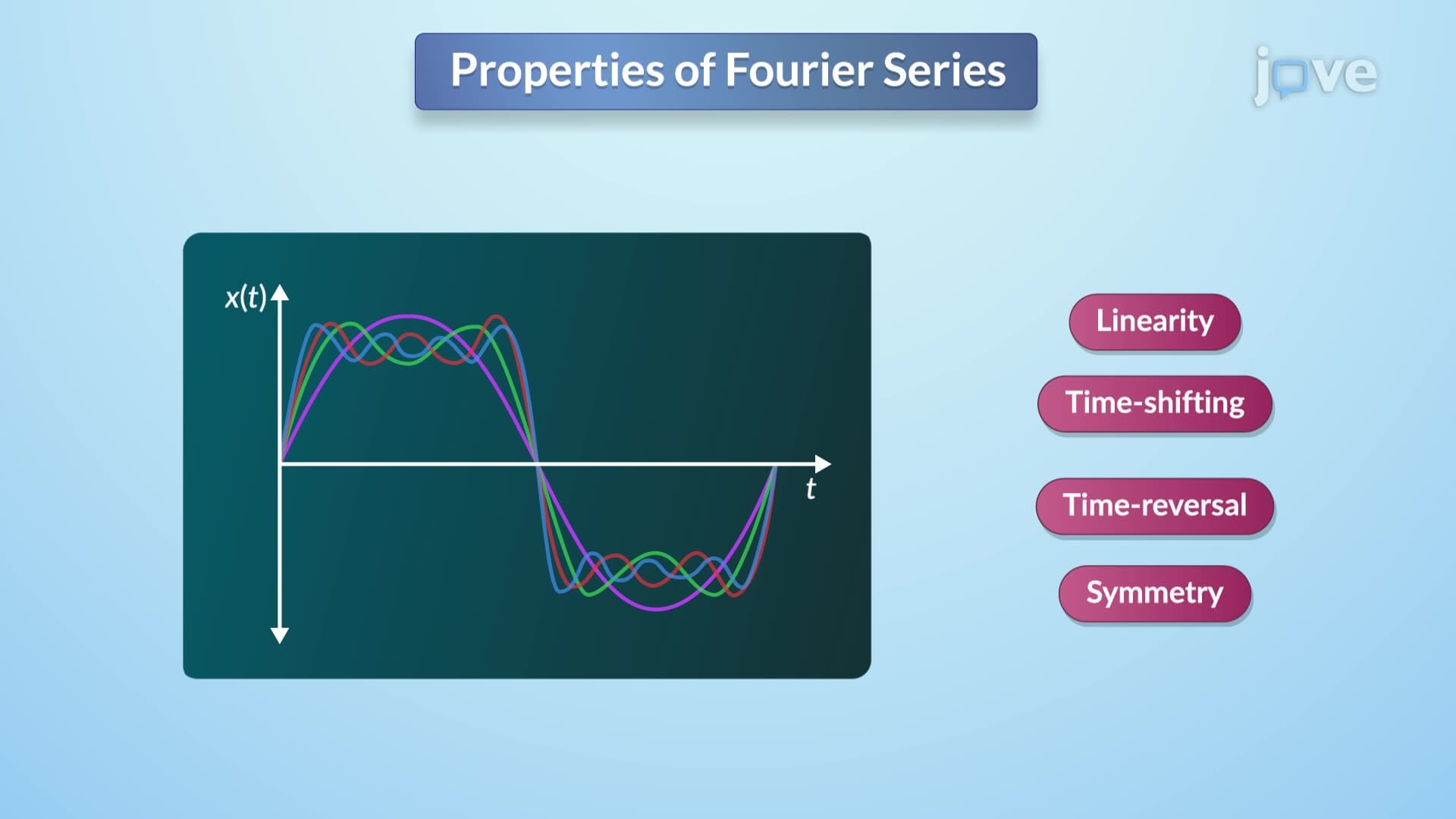
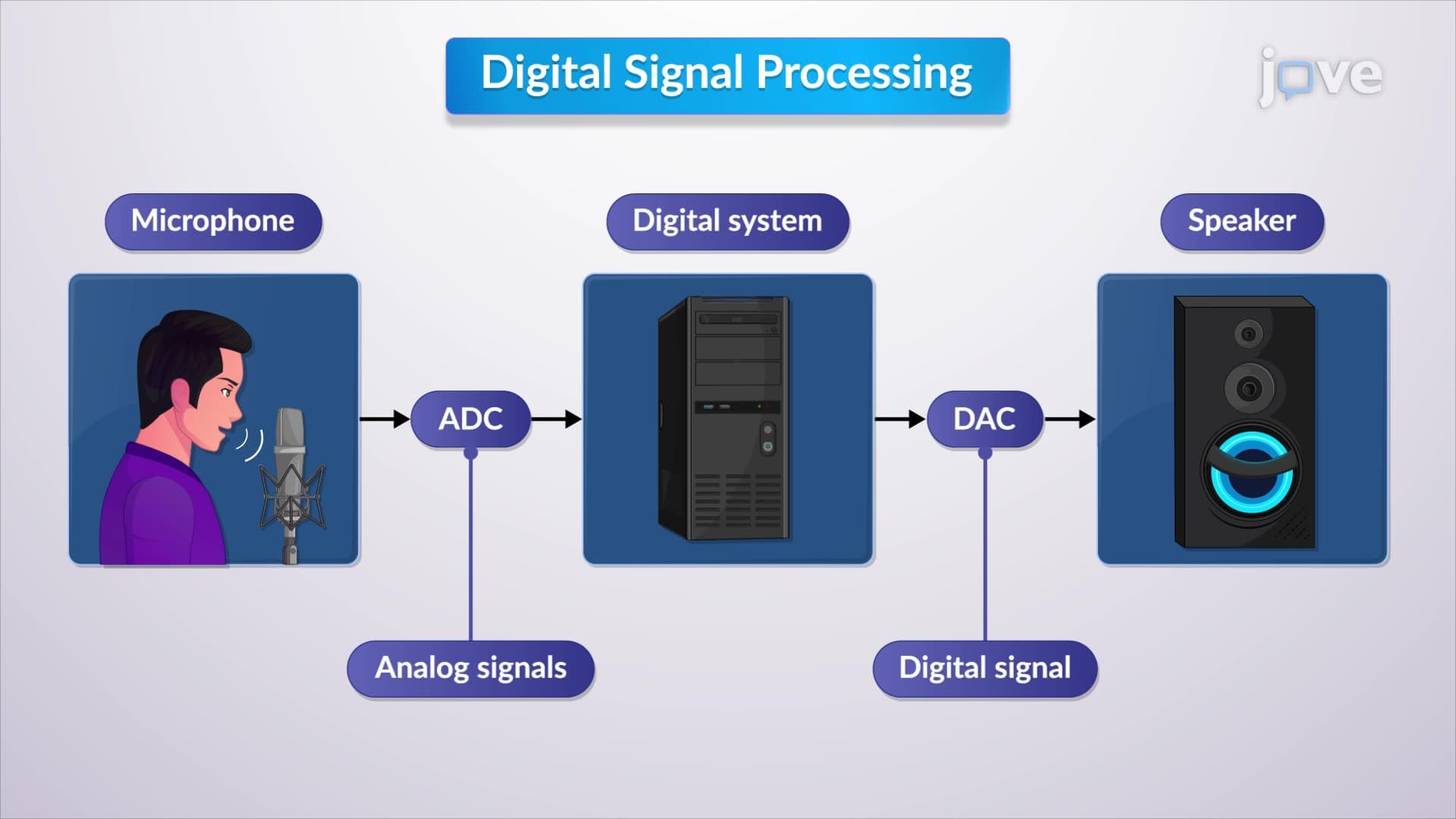
Understanding what is Parseval's theorem in detail requires recognizing how function symmetries dramatically simplify calculations. Even functions (f(-t) = f(t)) contain only cosine terms, making their Fourier series analysis more straightforward. Odd functions (f(-t) = -f(t)) contain only sine terms, while half-wave symmetric functions contain only odd harmonics. These symmetries aren't just mathematical curiosities-they're computational lifesavers. Engineers at companies like Texas Instruments leverage these properties to design efficient digital signal processors that power smartphones and audio equipment.
The Parseval's theorem study guide applications extend far beyond textbooks. Spotify's audio compression algorithms rely on frequency-domain energy calculations to maintain audio quality while reducing file sizes. NASA's Jet Propulsion Laboratory uses these principles for spacecraft communication systems, ensuring signal integrity across millions of miles. Medical imaging systems at institutions like Mayo Clinic employ Parseval's theorem in MRI signal processing, where energy conservation helps reconstruct clear images from frequency-domain data.
Time scaling effects, another crucial aspect covered in Properties of Fourier Series II, demonstrate how changing a signal's playback speed affects its frequency spectrum while preserving mathematical relationships. This principle enables pitch correction software used in recording studios throughout Nashville and Los Angeles, allowing producers to maintain audio quality during tempo adjustments.
Related Micro-courses