Loading subject page…

- Electrical Engineering
- Fourier Series
- Discrete-Time Fourier Series
Micro-course: Fourier Series
3,374 views
Learn key concepts and earn your certificate.




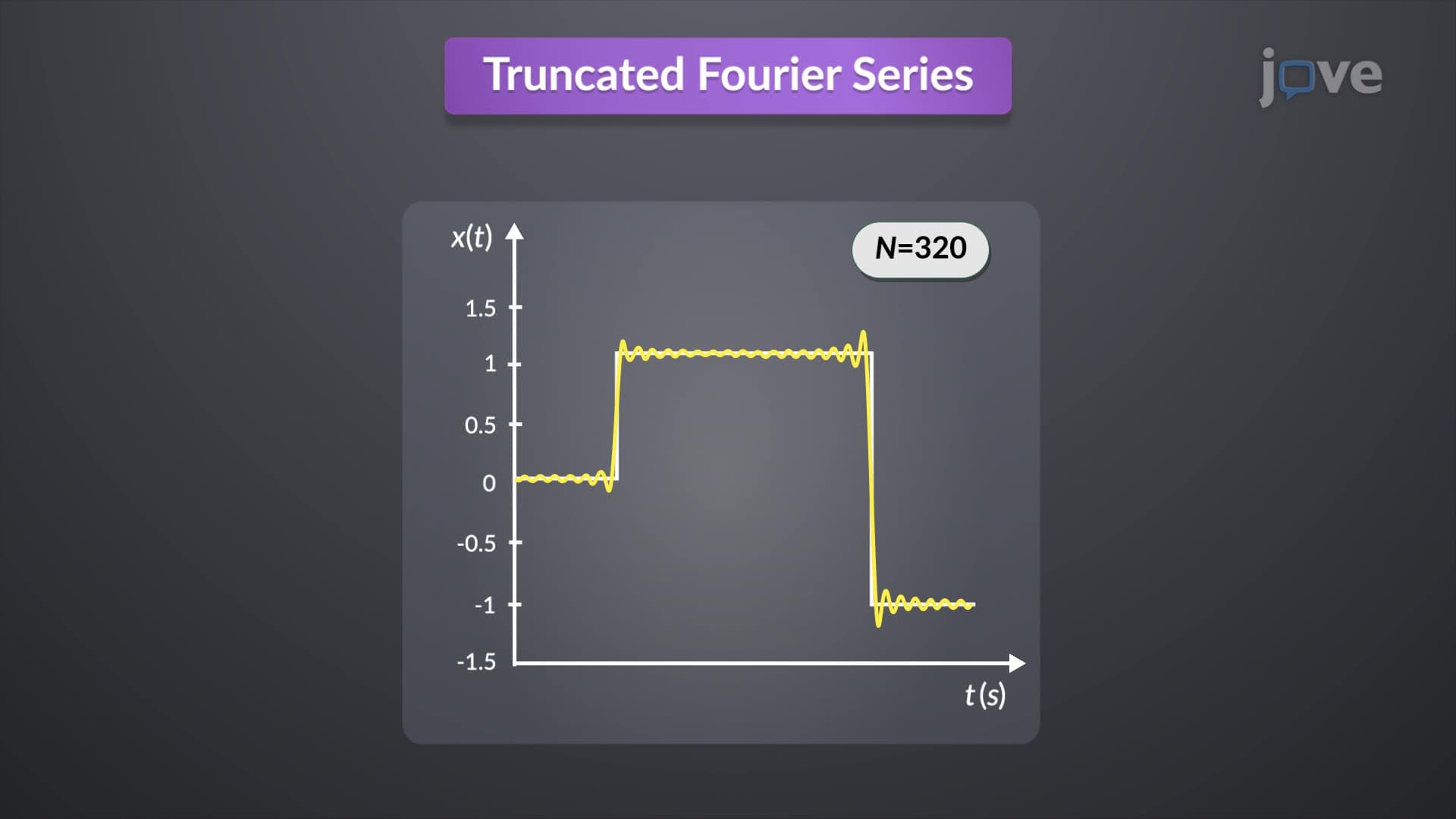
Discrete-Time Fourier Series
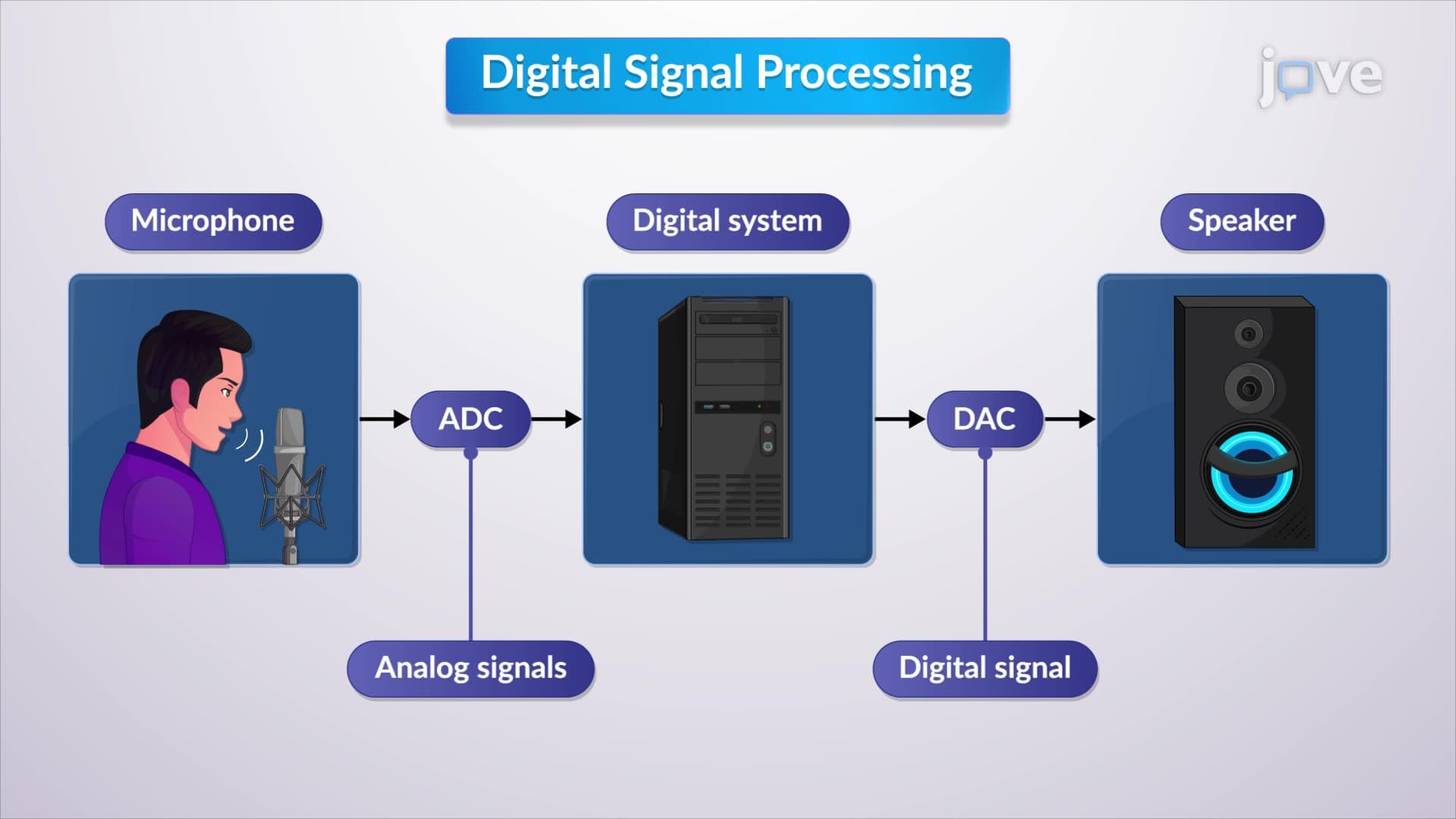

00:00
01:20
Video Summary: What are Discrete Time Fourier Series
Ever wonder how your smartphone's noise-canceling headphones know which sounds to block? The continuous time fourier transform is the mathematical foundation that makes this possible by breaking down complex audio signals into their frequency components. What are Discrete Time Fourier Series builds on this concept for digital systems, where signals exist only at specific time intervals rather than continuously. This discrete approach is essential for processing digital audio in devices like Apple's AirPods Pro. Watch the full video on JoVE Coach to master this concept with expert-led visuals and step-by-step explanations.
- Understand what are Discrete Time Fourier Series and how they differ from continuous-time Fourier series expansions
- Identify the key mathematical differences between summations in DTFS versus integrals in continuous systems
- Analyze how Linear Time-Invariant systems respond to discrete-time periodic signals using step-by-step processes
- Compare the finite number of terms in DTFS expansions to the infinite terms in continuous-time Fourier series
- Evaluate the fundamental angular frequency concept in discrete-time periodic signals
- Apply DTFS calculations to determine system output responses using frequency domain analysis
- Recognize practical applications of DTFS in digital signal processing for filtering and noise reduction
- Explore how DTFS enables examination of periodic samples and identification of specific frequency components
Understanding What are Discrete Time Fourier Series
The continuous time fourier transform definition establishes the foundation for analyzing signals that exist at every point in time. However, in our digital world, most signals are sampled at discrete intervals-like the 44,100 samples per second in CD audio or the pixel data captured by smartphone cameras. This is where Discrete Time Fourier Series (DTFS) becomes essential.
Key Mathematical Differences from Continuous Systems
The continuous time fourier transform concept relies on integration to decompose signals, but DTFS uses summation instead. This fundamental shift reflects the discrete nature of digital systems. When MIT students study signal processing in course 6.003, they learn that DTFS expansions contain only a finite number of terms, unlike their continuous counterparts which theoretically extend to infinity.
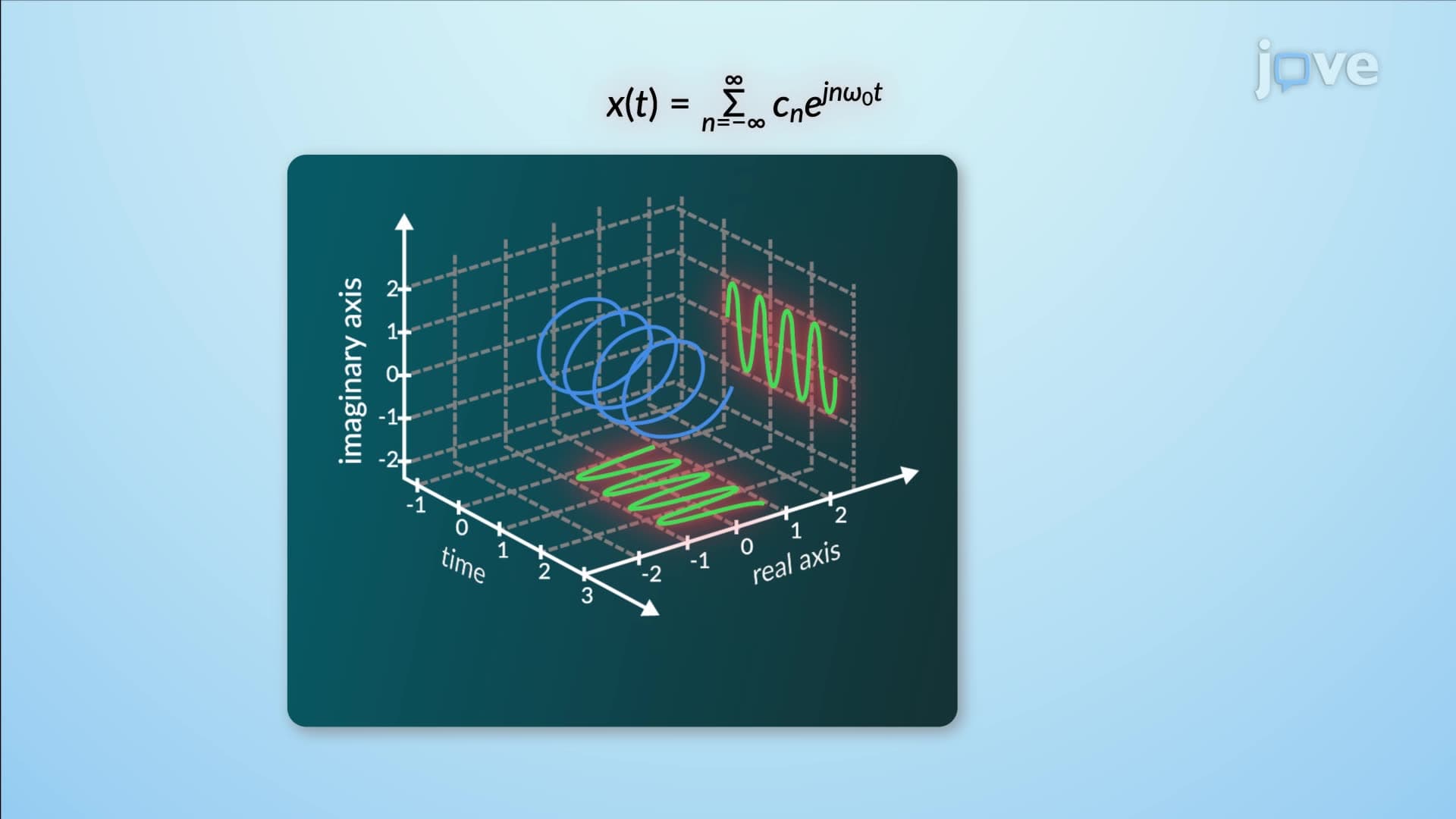
The mathematical elegance of DTFS lies in its periodic nature. Just as a continuous-time periodic signal repeats with a specific period T, discrete-time signals repeat every N samples. This creates a fundamental angular frequency ω₀ = 2π/N that defines the signal's basic repetitive structure.
Practical Applications in Digital Signal Processing
Understanding continuous time fourier transform in detail becomes crucial when designing real-world systems. Consider how Spotify processes audio: the platform uses DTFS principles to analyze music files, identify specific frequencies for equalization, and compress data for streaming. The step-by-step process involves computing the DTFS of input signals, applying the system's frequency response to each component, and summing results to produce the final output.
Academic and Professional Relevance
Students preparing for the AP Physics exam or electrical engineering coursework at universities like Stanford or UC Berkeley encounter DTFS in multiple contexts. The concept appears in digital communications courses, where it helps analyze modulation schemes used in 5G networks. Graduate students studying for qualifying exams often see DTFS problems involving filter design for medical devices like digital stethoscopes or hearing aids manufactured by companies such as Cochlear Americas.
The continuous time fourier transform study guide typically introduces students to frequency domain analysis, but DTFS extends this knowledge to practical digital applications. From noise-canceling algorithms in Tesla vehicles to audio processing in gaming headsets, DTFS provides the mathematical framework for modern signal processing applications.
Frequently Asked Questions
DTFS uses summation instead of integration and works with signals sampled at discrete time intervals. While continuous Fourier series have infinite terms, DTFS expansions contain only a finite number of terms, making them more practical for digital computer processing.
DTFS problems typically involve calculating expansion coefficients, analyzing periodic discrete signals, or designing digital filters. Students often see questions about finding fundamental frequencies, computing system responses, or comparing discrete versus continuous signal processing methods.
While DTFS isn't directly tested on the MCAT, the mathematical reasoning and frequency analysis concepts strengthen problem-solving skills for physics passages. Medical imaging technologies like MRI and ultrasound rely on similar frequency domain principles that DTFS helps students understand.
Audio engineers at companies like Dolby Laboratories use DTFS for sound processing, while biomedical engineers apply it in devices like digital hearing aids and cardiac monitors. Software developers at Apple and Google implement DTFS algorithms for voice recognition and noise reduction features.
Students comfortable with trigonometry and basic calculus can grasp DTFS fundamentals. Starting with simple periodic sequences and building up to more complex applications makes the concept accessible, especially when connected to familiar technologies like music streaming and smartphone apps.
Practice calculating expansion coefficients step-by-step, work through system response problems, and connect mathematical concepts to real applications like digital audio processing. Create visual representations of discrete signals and their frequency components to reinforce understanding.
Students typically advance to Z-transforms for analyzing discrete-time systems, digital filter design principles, or advanced topics like wavelet transforms. These concepts build directly on DTFS foundations and appear in graduate-level signal processing courses.
DTFS forms the mathematical foundation for analyzing and processing digital signals in everything from smartphone cameras to streaming audio services. Understanding DTFS helps explain how devices can isolate specific frequencies, reduce noise, and enhance signal quality in real-time applications.
Related Micro-courses