Loading subject page…

- Electrical Engineering
- Fourier Series
- Exponential Fourier series
Micro-course: Fourier Series
3,374 views
Learn key concepts and earn your certificate.




Exponential Fourier series

00:00
01:24
Video Summary: What are Exponential Fourier Series
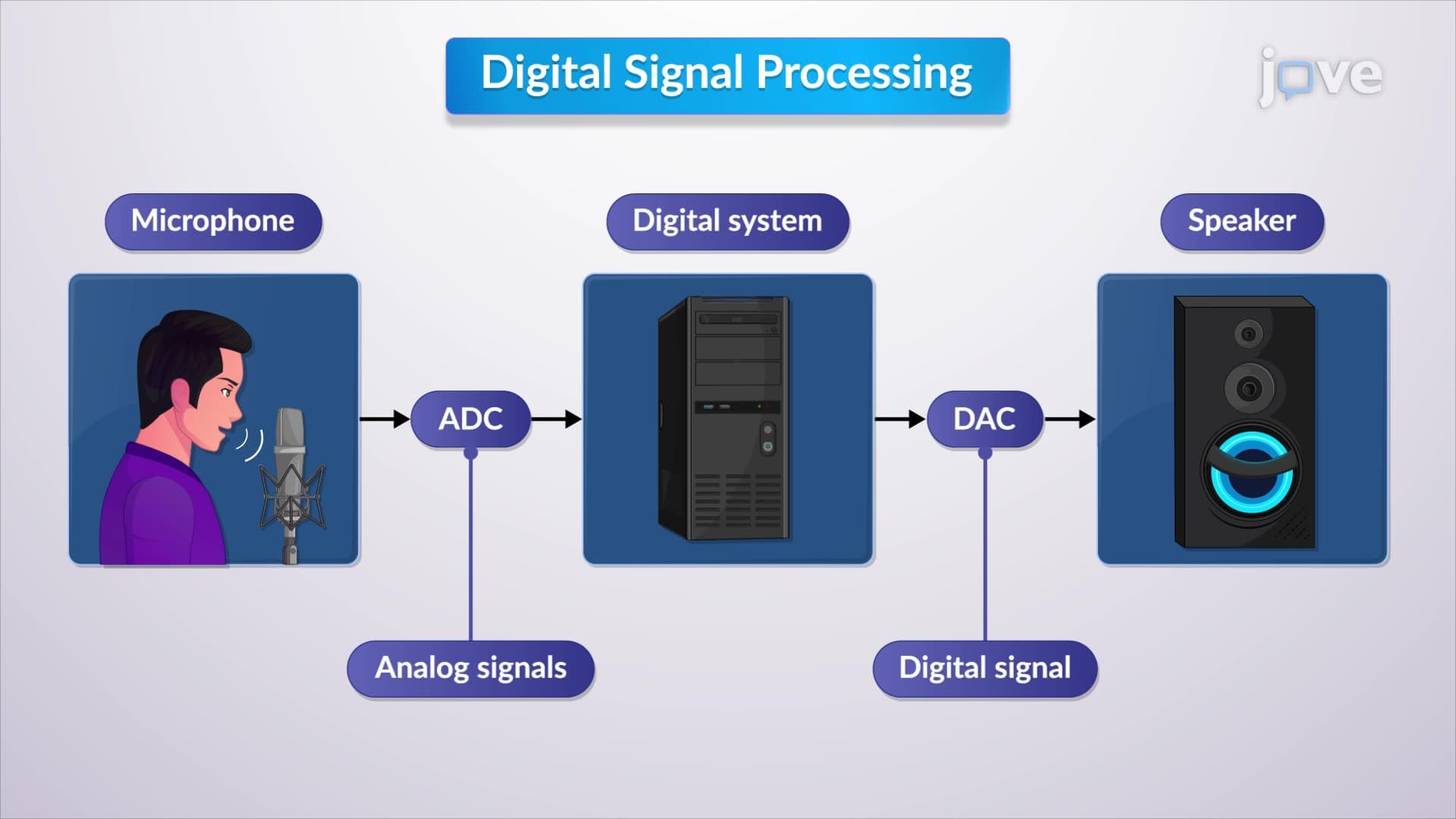
Ever wonder how Spotify's audio compression algorithms can shrink a 40MB song file to just 4MB without losing much quality? The properties of fourier series i make this digital magic possible by breaking down complex audio signals into simpler wave components. When engineers at companies like Apple design noise-canceling headphones, they rely on What are Exponential Fourier Series to isolate and eliminate unwanted frequencies while preserving the music you want to hear. Watch the full video on JoVE Coach to master this concept with expert-led visuals and step-by-step explanations.
- Understand What are Exponential Fourier Series and how they represent periodic signals as sums of complex exponentials at harmonic frequencies
- Identify the three interconnected forms of Fourier series: Sine-Cosine, Amplitude-Phase, and Complex Exponential representations
- Analyze how Euler's identity transforms exponential terms into cosine and sine components for practical calculations
- Apply integration techniques to calculate coefficients for each term in the exponential Fourier series over one function period
- Compare the advantages of complex exponential form over traditional trigonometric representations in signal processing applications
- Evaluate real-world examples like square wave decomposition into odd harmonics with inversely proportional amplitudes
- Recognize the mathematical relationship between frequency domain and time domain representations of periodic functions
- Explore how exponential Fourier series enable audio synthesis and signal reconstruction in modern technology applications
Understanding What are Exponential Fourier Series
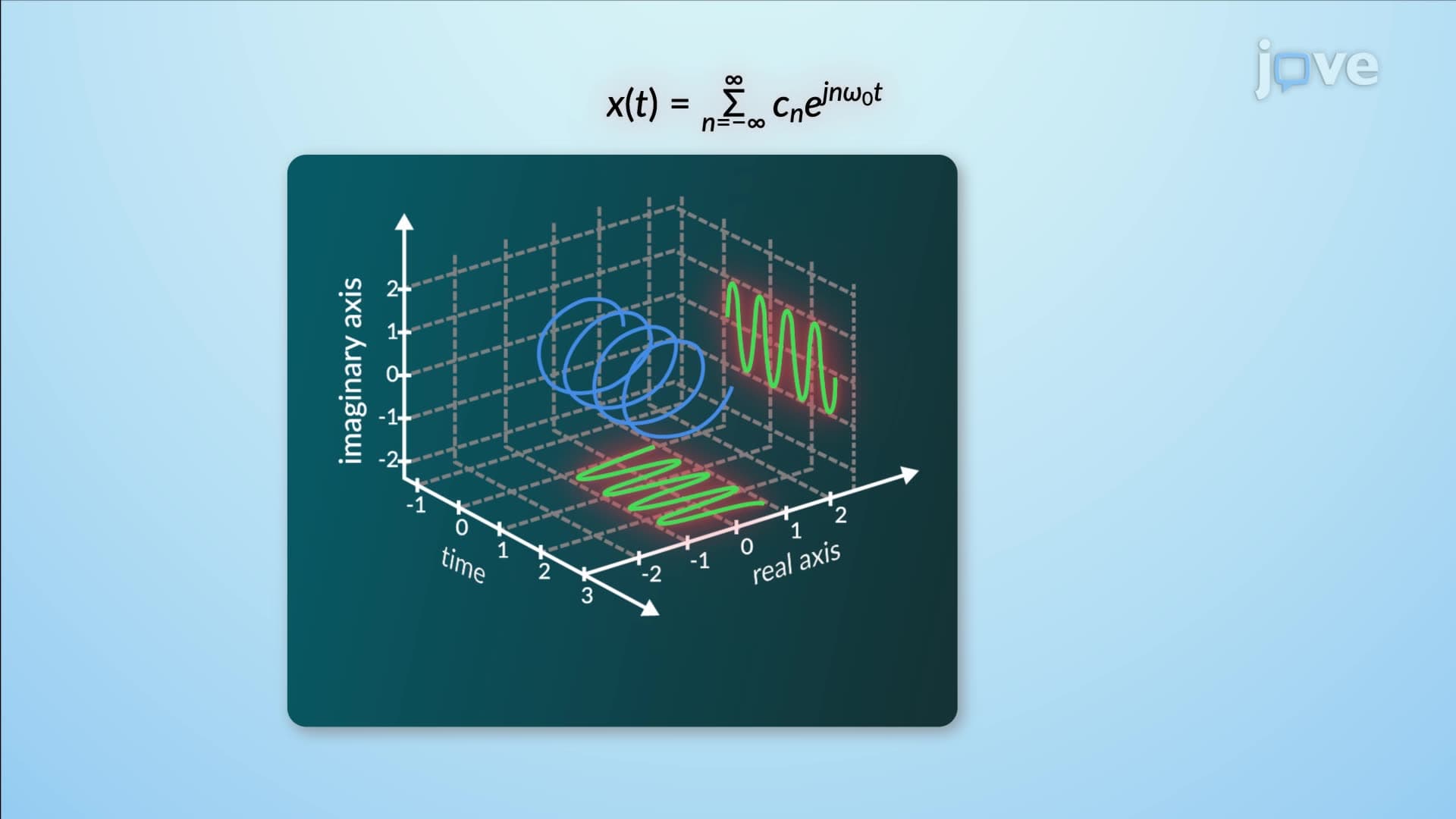
The exponential Fourier series represents one of the most elegant mathematical tools in signal processing and engineering analysis. Unlike traditional trigonometric Fourier series that use separate sine and cosine functions, the exponential form leverages complex exponentials to provide a more compact and mathematically convenient representation of periodic signals. This approach proves invaluable when analyzing everything from electrical circuits in power grids to MRI signal processing in medical imaging.
Properties of Fourier Series i: Mathematical Foundation
The properties of fourier series i tutorial begins with understanding how any periodic function f(t) can be expressed as an infinite sum of complex exponentials: f(t) = sum(c_n * e^(jnw0t)) where c_n represents the complex coefficients and w0 is the fundamental frequency. These coefficients are calculated using the integral c_n = (1/T) * integral[f(t) * e^(-jnw0t)]dt over one period T. This mathematical framework underlies technologies used by companies like Texas Instruments in their digital signal processors and by NASA in satellite communication systems.
How Properties of Fourier Series i Works in Practice
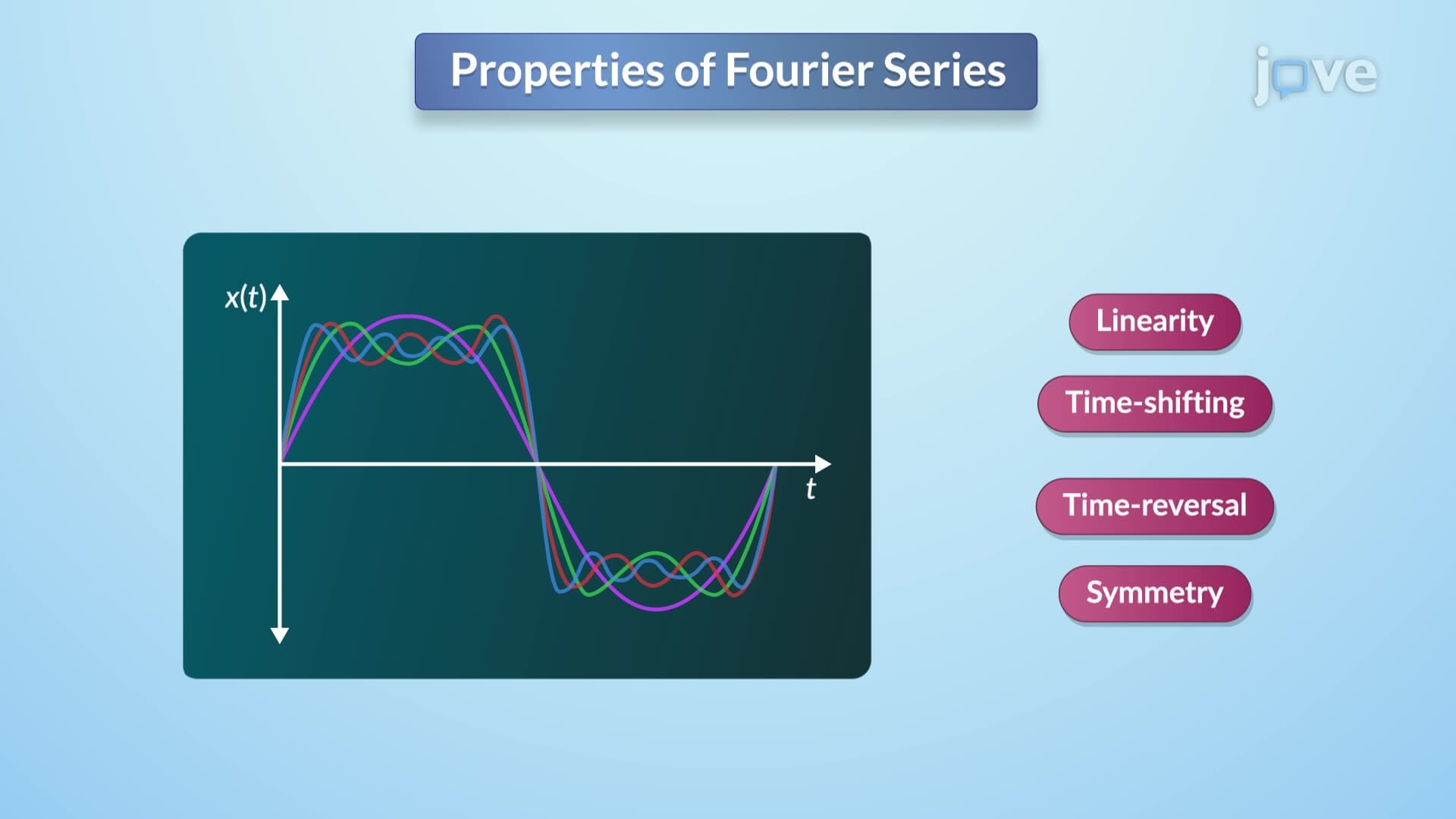
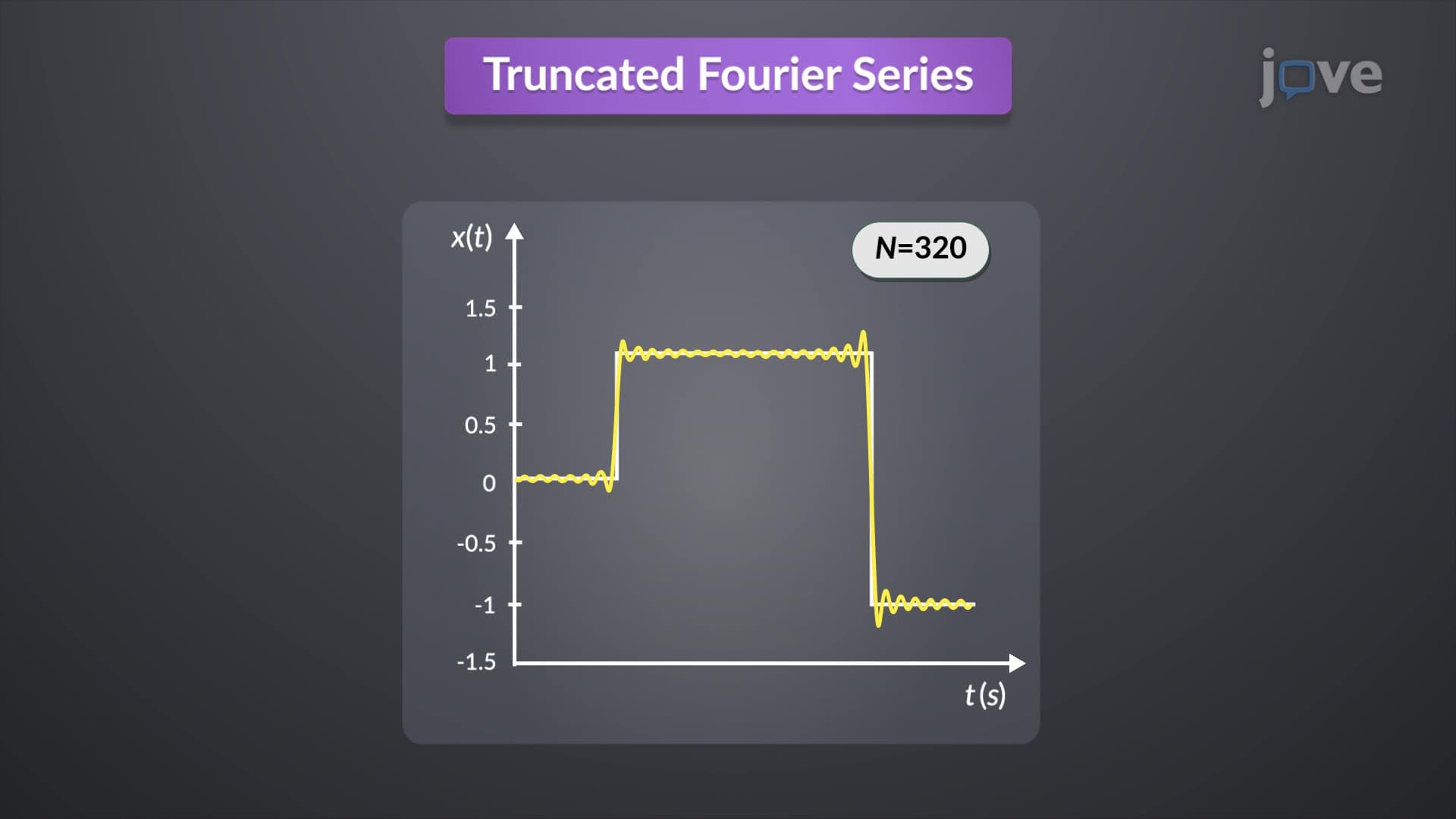
Understanding how properties of fourier series i works becomes clearer through concrete examples. Consider a square wave commonly found in digital electronics - the same type of signal your computer's processor uses for clock timing. Through exponential Fourier analysis, this sharp-edged square wave decomposes into an infinite series of sinusoidal components. The fundamental frequency carries the most energy, while odd harmonics (3f, 5f, 7f, etc.) contribute decreasing amounts of energy proportional to 1/n, where n is the harmonic number. This principle explains why audio engineers at companies like Yamaha can synthesize realistic instrument sounds by carefully controlling these harmonic relationships.
Properties of Fourier Series i Concept in Academic Applications
The properties of fourier series i concept appears frequently in AP Calculus BC exams, college-level differential equations courses, and engineering programs across universities like MIT and Stanford. Students encounter these concepts when studying electrical engineering (analyzing AC circuits), mechanical engineering (vibration analysis), and even economics (cyclical market analysis). The exponential form particularly shines in complex analysis courses where students learn to manipulate expressions involving e^(jθ) = cos(θ) + j*sin(θ), Euler's fundamental relationship that bridges exponential and trigonometric functions. Mastering this properties of fourier series i study guide content provides essential preparation for advanced STEM coursework and professional engineering applications.
Frequently Asked Questions
The exponential Fourier series represents periodic functions using complex exponentials (e^(jnwt)) instead of separate sine and cosine terms. This form is more compact mathematically and easier to manipulate in advanced signal processing applications. It's particularly useful in electrical engineering and physics where complex numbers naturally arise in AC circuit analysis and quantum mechanics.
AP Calculus BC typically tests Fourier concepts through integration problems involving periodic functions and coefficient calculations. Students might encounter questions asking them to find Fourier coefficients using integration by parts or to analyze convergence properties. The College Board often includes these topics in free-response questions worth 10-15% of the total exam score.
Yes, most undergraduate differential equations courses at US universities include Fourier analysis as a major topic, typically covered in weeks 8-12 of the semester. Expect problems involving boundary value problems, heat equations, and wave equations where exponential Fourier series provide the solution method. Universities like UC Berkeley and University of Michigan commonly weight this material as 20-25% of the final grade.
Audio engineers at companies like Dolby and Bose use exponential Fourier analysis to design compression algorithms, noise cancellation systems, and speaker crossovers. For example, when creating MP3 files, engineers identify which frequency components humans can't hear (using Fourier decomposition) and remove them to reduce file size while maintaining audio quality.
You need solid understanding of integration techniques, complex numbers, and basic differential equations - typically covered in Calculus II and III. Most students successfully learn this material in their sophomore year of college. The key prerequisite is comfort with Euler's identity and integration by parts, both accessible to motivated high school students in AP Calculus.
Focus on practicing coefficient calculations using integration, memorizing the three standard forms (trigonometric, exponential, and amplitude-phase), and working through square wave and sawtooth wave examples. Create a formula sheet with key relationships like Euler's identity and the coefficient integral formula. Practice past exam problems from your specific course or standardized test.
Natural next steps include Fourier transforms (extending to non-periodic functions), Laplace transforms for differential equation solving, and discrete Fourier transforms used in digital signal processing. These topics appear in advanced engineering courses and prepare students for careers in fields like aerospace, telecommunications, and biomedical engineering.
This concept bridges pure mathematics, physics, and engineering applications remarkably well. You'll find connections to complex analysis, partial differential equations, quantum mechanics (wave functions), and modern data science (signal analysis and machine learning feature extraction). Understanding Fourier methods opens doors to advanced STEM fields and graduate research opportunities.
Related Micro-courses