Loading subject page…

- Electrical Engineering
- Steady State Transmission Lines and Power Flows
- Fast Decoupled and DC Powerflow
Micro-course: Steady-State Transmission Lines and Power Flows
2,146 views
Learn key concepts and earn your certificate.
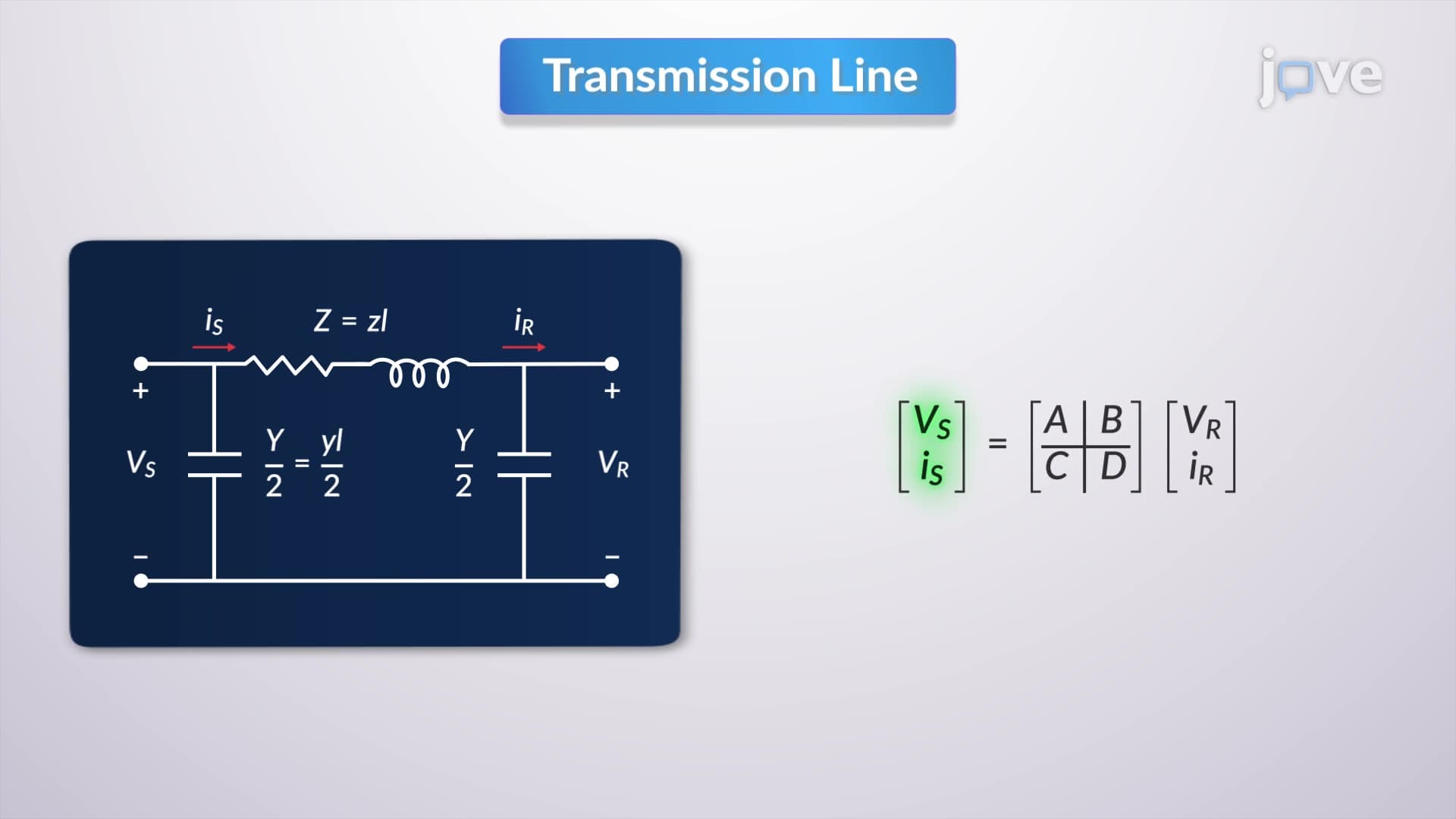

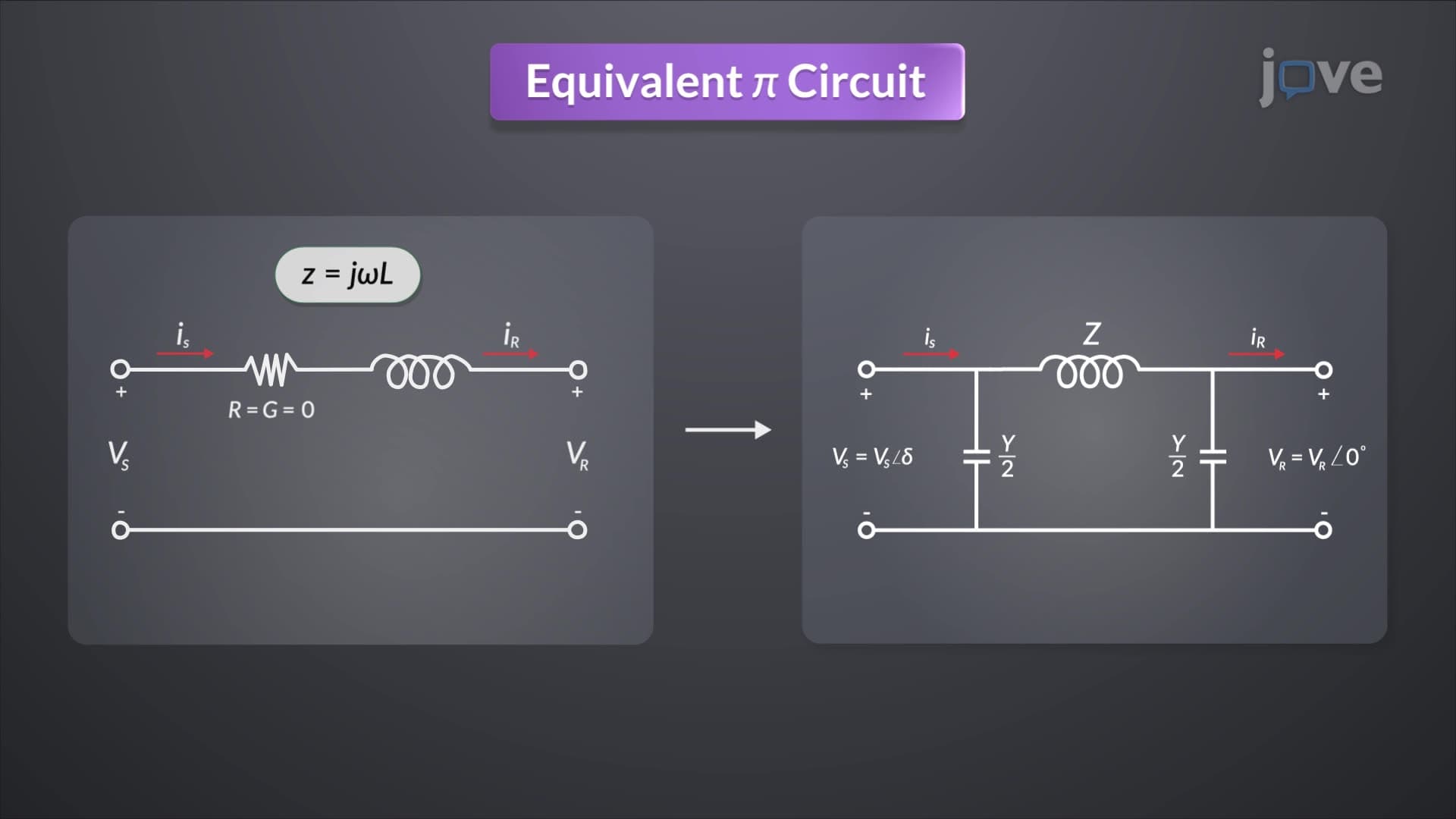

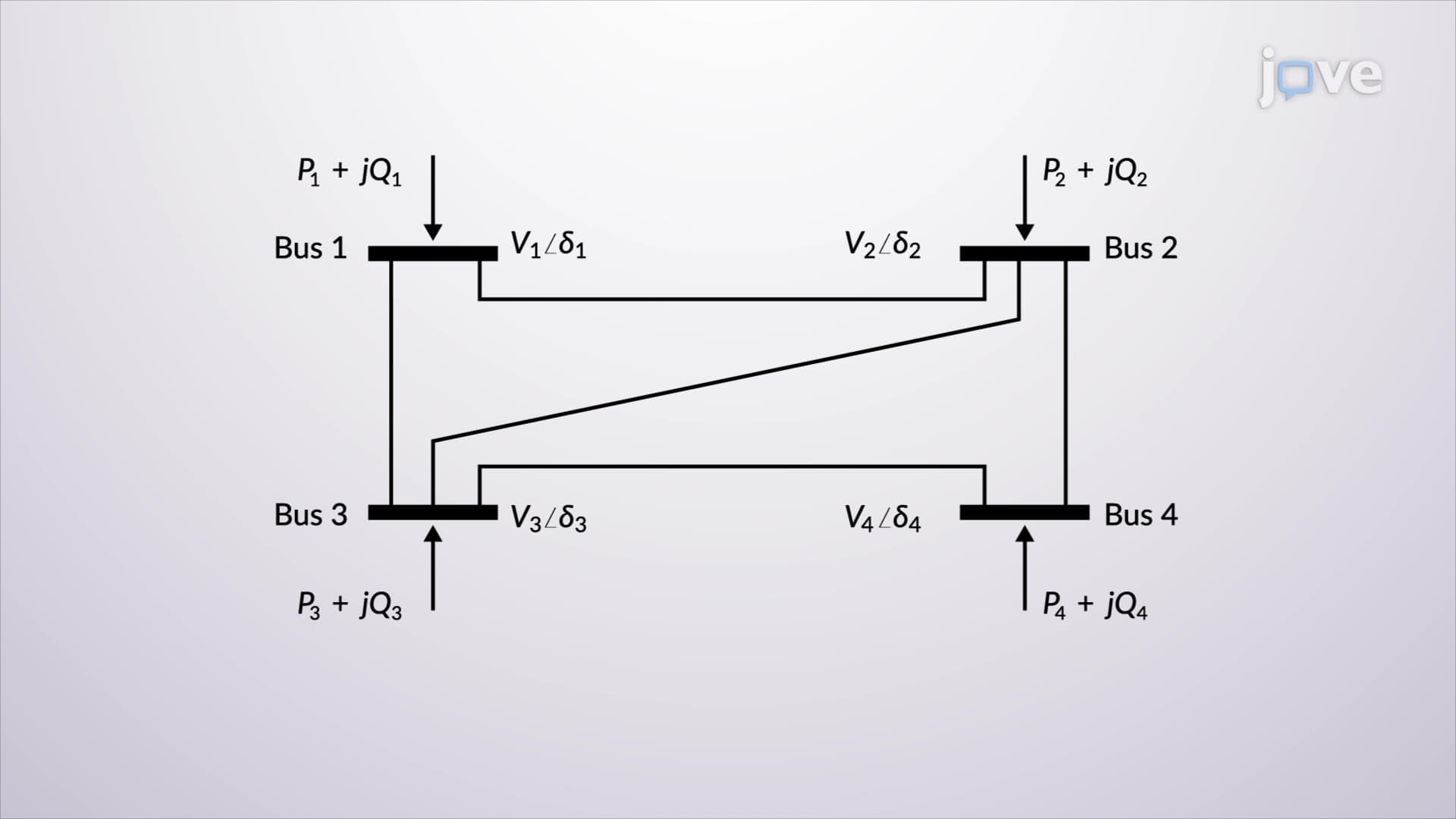
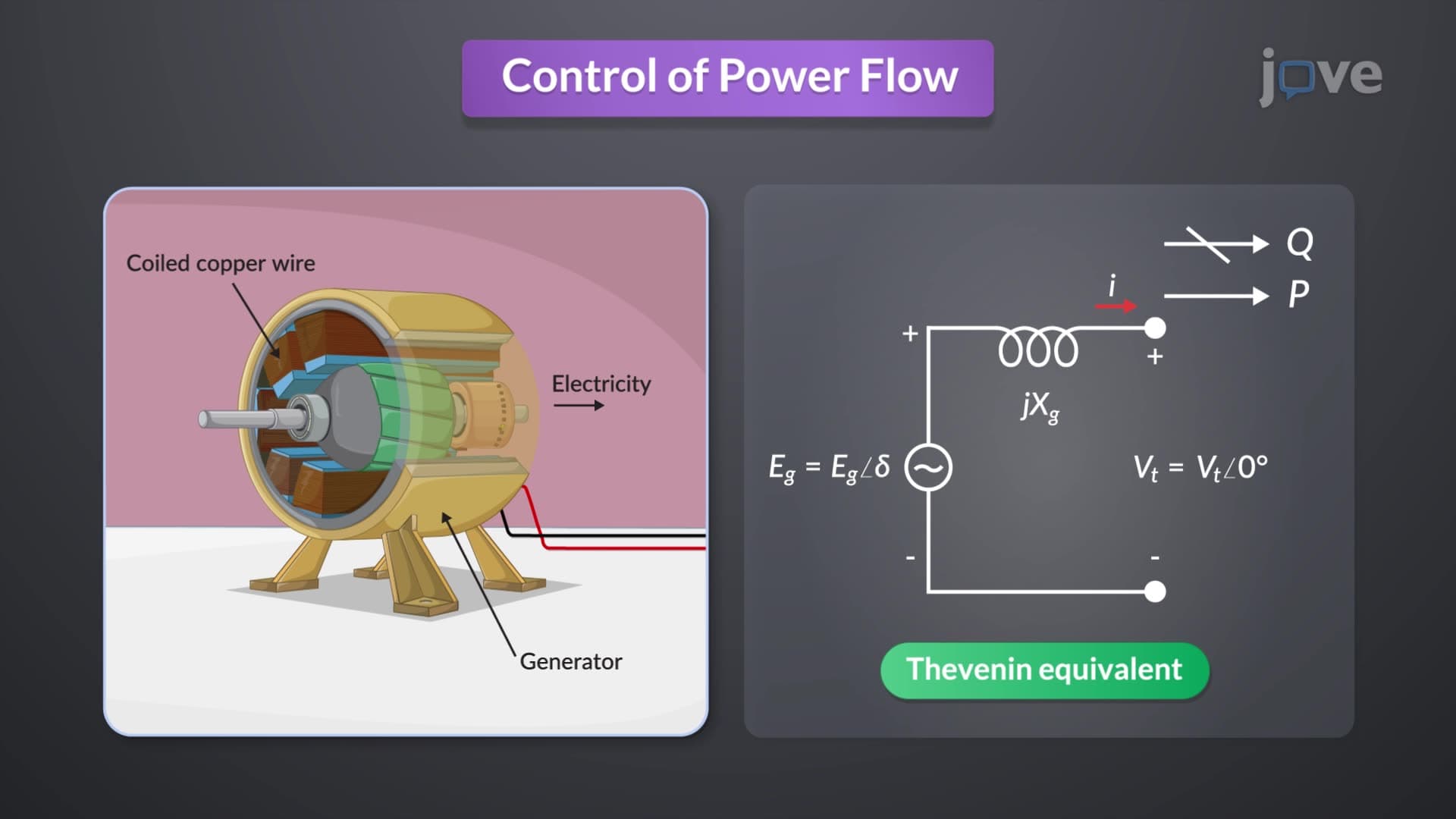
Fast Decoupled and DC Powerflow


00:00
01:24
Video Summary: Fast Decoupled and Dc Powerflow Explained
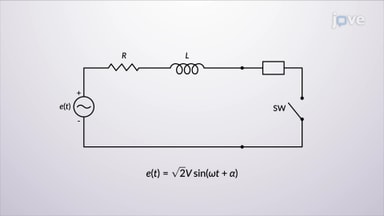
When Texas faced massive power outages in 2021, engineers needed lightning-fast calculations to restore electricity to millions. Series R L circuit transients and power flow algorithms become critical during such grid emergencies, where every second counts in preventing cascading failures. Fast Decoupled And DC Powerflow Explained demonstrates how simplified mathematical techniques help power system operators make rapid decisions during outages and contingencies. Watch the full video on JoVE Coach to master this concept with expert-led visuals and step-by-step explanations.
- Understand how Fast Decoupled And DC Powerflow algorithms simplify complex power system calculations during emergency situations
- Identify the mathematical assumptions that enable rapid power flow solutions in transmission networks
- Analyze how decoupled equations separate real and reactive power calculations for computational efficiency
- Compare the trade-offs between accuracy and speed in Newton-Raphson versus fast decoupled methods
- Evaluate the practical applications of DC power flow approximations in power system planning
- Apply constant voltage magnitude assumptions to linearize power balance equations
- Recognize how these algorithms support real-time grid operations and contingency analysis
- Explore the connection between DC circuit analysis principles and AC power system approximations
Understanding Fast Decoupled And DC Powerflow Fundamentals
Power system engineers face a constant challenge: how to quickly analyze thousands of interconnected components when equipment fails unexpectedly. Fast decoupled power flow algorithms address this need by strategically simplifying the complex mathematical relationships governing electrical networks. Unlike traditional methods that solve all equations simultaneously, these techniques separate real power (watts) and reactive power (volt-amperes reactive) calculations, dramatically reducing computation time.
Mathematical Simplifications in Power Flow Analysis
The key insight behind fast decoupled methods lies in exploiting typical power system characteristics. Most transmission lines have high reactance-to-resistance ratios, and voltage angles between connected buses remain relatively small during normal operations. These physical realities allow engineers to make reasonable approximations: voltage magnitudes stay nearly constant, and the Jacobian matrix elements become predictable patterns rather than variables requiring constant recalculation.
Consider California's grid during peak summer demand. When a major transmission line trips offline, operators need immediate answers about power redistribution. Fast decoupled algorithms provide these answers in seconds rather than minutes, enabling proactive load shedding decisions that prevent widespread blackouts.
DC Power Flow: Maximum Simplification Strategy
DC power flow represents the ultimate simplification, treating the AC power system as if it were a DC resistive network. By assuming all voltage magnitudes equal 1.0 per unit and focusing solely on real power flows, the nonlinear power flow equations become linear algebraic expressions. This transformation allows engineers to use basic circuit analysis techniques-similar to solving series R L circuit transients-but applied to massive interconnected systems.
The mathematical elegance emerges when power flow on a transmission line reduces to: P = (θ1 - θ2)/X, where θ represents voltage angles and X represents reactance. This linear relationship enables matrix solutions using standard computational tools, making DC power flow invaluable for preliminary system studies and market operations.
Practical Applications in Modern Power Systems
These algorithms prove essential in multiple scenarios beyond emergency response. Power market operators use DC power flow for economic dispatch calculations, determining which generators should operate to meet demand at minimum cost. Transmission planners employ these methods for long-term infrastructure studies, evaluating where new lines might relieve congestion.
Students preparing for electrical engineering exams, including the Fundamentals of Engineering (FE) exam, frequently encounter power flow problems requiring quick approximation techniques. Understanding when to apply fast decoupled versus full Newton-Raphson methods demonstrates practical engineering judgment-a skill highly valued in both academic and professional settings.
Frequently Asked Questions
Fast decoupled and DC power flow are simplified computational techniques that enable rapid analysis of electrical power systems during outages and planning studies. Engineers use these methods because they provide acceptably accurate results in seconds rather than minutes, which is crucial for real-time grid operations and emergency response situations.
These algorithms commonly appear as computational problems where students must choose appropriate solution methods based on accuracy requirements and time constraints. Exam questions often test understanding of when approximations are acceptable versus when full nonlinear solutions are necessary. Practice problems typically involve small 3-5 bus systems where hand calculations demonstrate the principles.
You need solid foundations in complex numbers, matrix algebra, and basic circuit analysis including Ohm's law and Kirchhoff's laws. Most high school students with Algebra II and trigonometry can grasp the fundamental concepts, though full mathematical derivations require calculus and differential equations typically covered in college engineering programs.
Grid operators use DC power flow algorithms in energy management systems to quickly assess how power will redistribute when transmission lines or generators trip offline. During the Texas crisis, these calculations helped operators determine which areas to disconnect first to prevent total system collapse, essentially performing rapid "what-if" scenarios under extreme stress conditions.
AP Physics C: Electricity and Magnetism provides the strongest foundation, covering circuit analysis and electromagnetic principles underlying power systems. AP Calculus AB/BC develops necessary mathematical tools for advanced power flow equations. Students taking both courses typically find power system concepts more accessible in college electrical engineering programs.
Focus on understanding the physical meaning behind mathematical approximations rather than memorizing formulas. Practice identifying when different methods apply by working through progressively complex network examples. Create comparison charts showing trade-offs between accuracy and computational speed for different algorithms, which helps during time-pressured exam situations.
Consider studying optimal power flow, which extends basic power flow to include economic optimization, and transient stability analysis, which examines how systems respond to large disturbances. These topics build directly on power flow foundations and are increasingly important as renewable energy sources create new grid management challenges.
Fast decoupled methods make approximations about voltage magnitude variations and coupling between real and reactive power that aren't always perfectly accurate. The differences typically remain small (1-3%) for well-designed transmission systems but can become significant in heavily loaded networks or systems with unusual characteristics like long underground cables.
Related Micro-courses
8 Concepts

9 Concepts

7 Concepts