Loading subject page…

Micro-course: Steady-State Transmission Lines and Power Flows
2,146 views
Learn key concepts and earn your certificate.


Lossless Lines

00:00
01:23
Video Summary: What Is Lossless Lines
Ever wonder why your phone charger cable doesn't lose power even when stretched across the room? Maximum power flow and line loadability principles explain how electrical transmission lines, like those powering the US grid from California to New York, maintain efficient energy transfer. What is lossless lines reveals the physics behind surge impedance loading, where transmission lines operate at optimal efficiency with constant voltage profiles. Understanding maximum power flow and line loadability helps engineers design power systems that deliver electricity reliably to millions of American homes and businesses. Watch the full video on JoVE Coach to master this concept with expert-led visuals and step-by-step explanations.
- Understand what is lossless lines and how they achieve zero power loss through purely imaginary propagation constants and resistive characteristic impedance
- Identify the conditions for surge impedance loading, where voltage remains constant along transmission lines and only real power flows
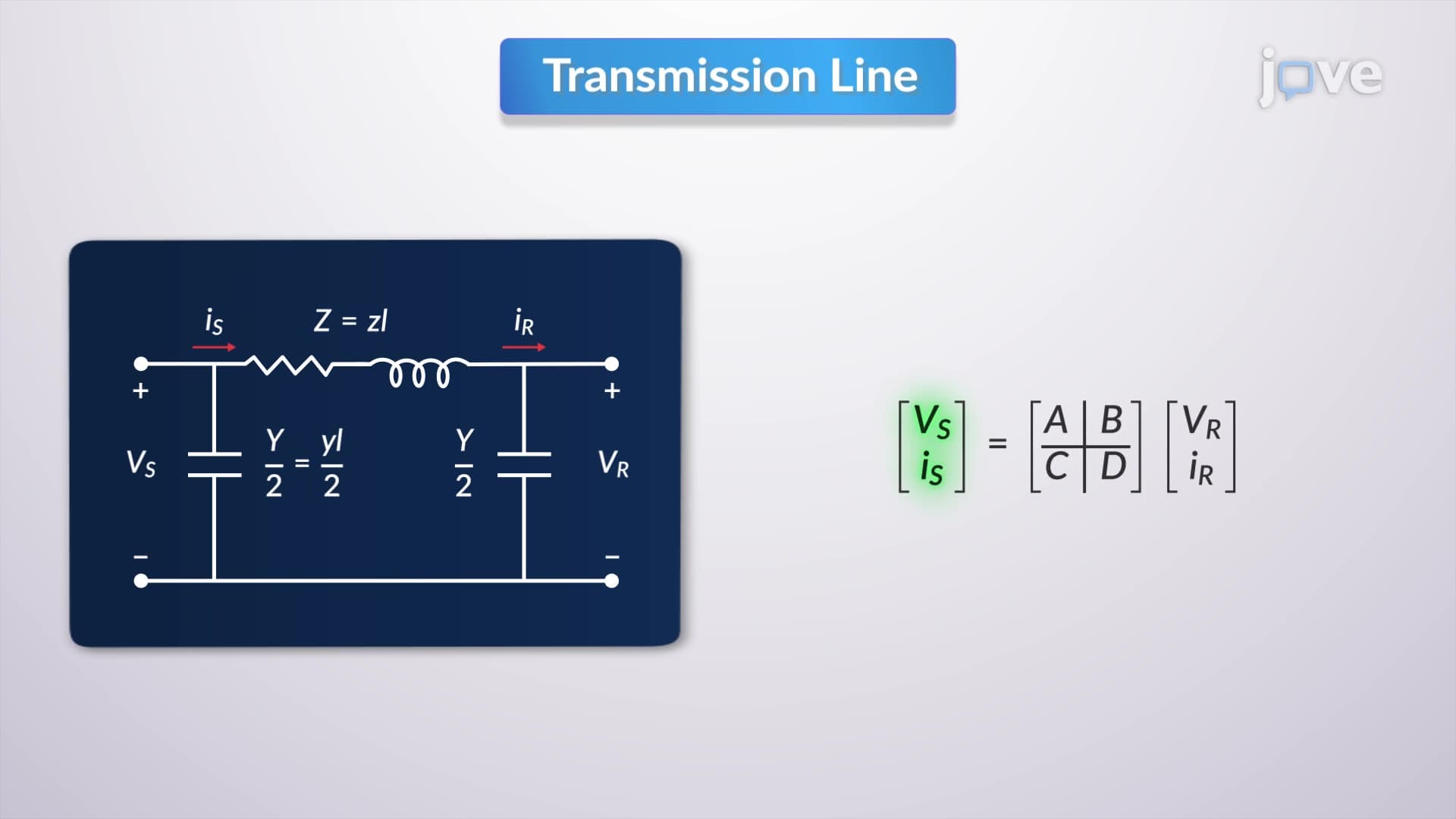
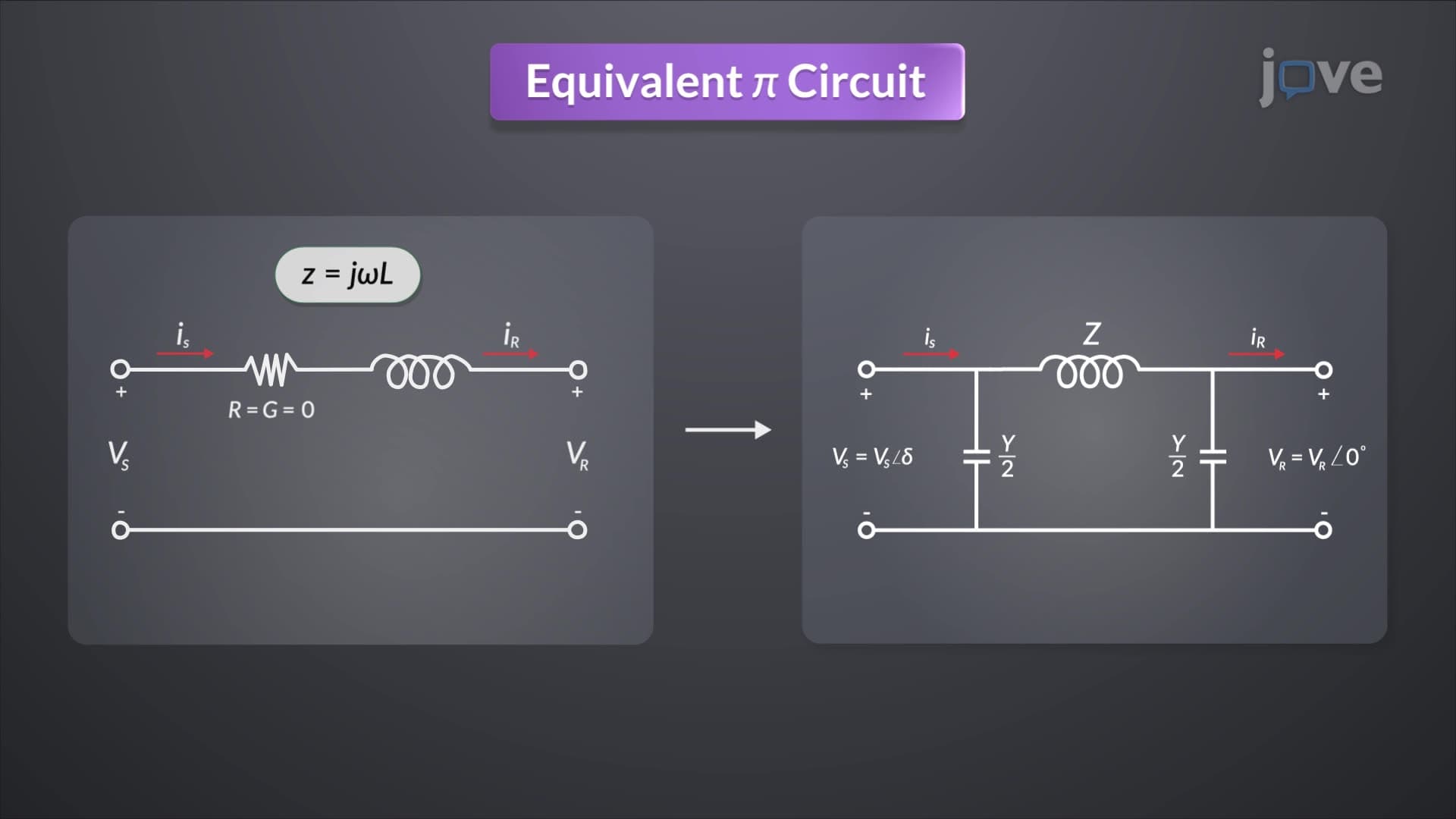
- Analyze how ABCD parameters and equivalent pi circuits represent lossless transmission line behavior mathematically
- Compare voltage profiles under different loading conditions: no-load, short-circuit, and full-load scenarios
- Evaluate the relationship between wavelength, velocity of propagation, and phase changes in electrical transmission
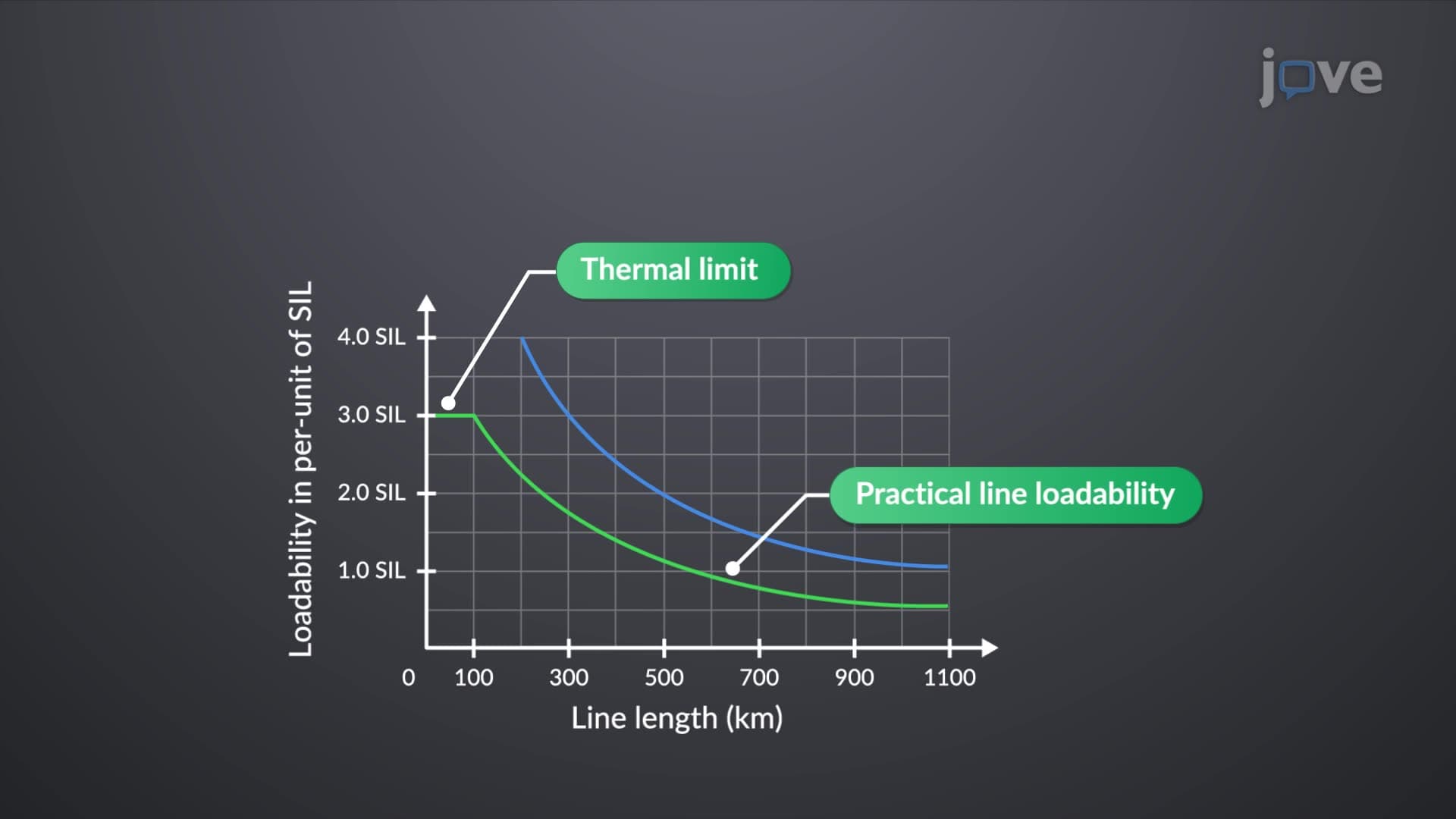
- Apply maximum power flow and line loadability concepts to calculate real power delivery using rated voltage and surge impedance
- Recognize why practical power lines don't operate at surge impedance loading and how this affects voltage distribution
- Explore how inductive series impedance and capacitive shunt admittance contribute to lossless line characteristics
Understanding What is Lossless Lines in Power Systems
Lossless transmission lines represent an idealized model crucial for understanding maximum power flow and line loadability in electrical power systems. Unlike real-world transmission lines that experience resistance losses, lossless lines maintain theoretical perfect efficiency by exhibiting zero resistance and purely reactive components. This fundamental concept helps engineering students grasp how major US utilities like PG&E and ConEd design their transmission networks.
Maximum Power Flow and Line Loadability Fundamentals
The concept of maximum power flow and line loadability centers on surge impedance loading (SIL), a critical operating point where transmission lines achieve optimal performance. At SIL, the load resistance equals the line's characteristic impedance, creating a perfectly matched system. Under these conditions, voltage remains flat along the entire line length, and only real power flows from the sending end to the receiving end, no reactive power circulates. For example, a 500 kV transmission line with 400-ohm characteristic impedance delivers maximum efficiency when loaded at 625 MW (P = V²/Z₀).
Voltage Profile Analysis and Loading Conditions
Real transmission systems rarely operate at surge impedance loading, creating various voltage profiles that electrical engineers must understand for the PE exam and professional practice. Under no-load conditions, transmission lines act like capacitors, causing voltage to rise from sending to receiving end, a phenomenon called the Ferranti effect. Conversely, during short-circuit faults, voltage drops to zero at the fault location. Full-load conditions create voltage profiles between these extremes, with the exact shape depending on the power factor and loading magnitude.
Practical Applications in US Power Grid Operations
Understanding how maximum power flow and line loadability works becomes essential when analyzing real US transmission systems. The Eastern Interconnection, spanning from the Rocky Mountains to the Atlantic coast, relies on these principles to maintain stable power delivery across thousands of miles. Grid operators use surge impedance loading calculations to determine transmission capacity limits and prevent system instability. During peak summer demand in Texas, ERCOT applies these concepts to ensure the 765 kV lines can handle maximum power transfer without voltage collapse.
This knowledge directly applies to college-level courses in power systems engineering and appears frequently on the Fundamentals of Engineering (FE) exam's electrical section, making it essential for aspiring electrical engineers.
Frequently Asked Questions
Lossless lines are theoretical transmission lines with zero resistance that help engineers understand ideal power transfer conditions. They serve as fundamental models for analyzing surge impedance loading, voltage regulation, and maximum power flow in real electrical systems. This concept appears frequently on the FE exam and forms the foundation for advanced power systems coursework.
While AP Physics doesn't cover transmission lines directly, the underlying concepts of impedance matching and power transfer appear in AC circuit analysis. Students encounter related principles when studying maximum power transfer theorem and RLC circuits. Understanding these basics prepares students for advanced electrical engineering courses in college.
Typical exam problems include calculating surge impedance loading for given voltage and impedance values, sketching voltage profiles under different loading conditions, and determining real power flow using the SIL formula. Students often solve numerical problems involving ABCD parameters and equivalent circuit analysis for lossless lines.
Grid operators like CAISO in California use these principles to determine transmission line capacity limits and maintain system stability. For example, when transferring power from hydroelectric plants in the Pacific Northwest to Los Angeles, engineers apply surge impedance loading calculations to prevent voltage instability and ensure reliable power delivery to millions of customers.
Basic algebra and trigonometry suffice for introductory understanding, though complex number operations help with deeper analysis. High school students can grasp fundamental concepts like surge impedance loading using simple formulas like P = V²/Z₀. More advanced applications requiring ABCD parameters and phasor analysis typically appear in college-level courses.
Focus on understanding the physical meaning behind surge impedance loading rather than memorizing formulas. Practice sketching voltage profiles for different loading conditions and work through numerical examples using real transmission line parameters. Create concept maps connecting lossless lines to practical power system applications.
Progress to studying transmission line losses, power flow analysis, and stability studies. Understanding fault analysis, protective relaying, and economic dispatch builds upon these foundational concepts. Advanced topics include FACTS devices and smart grid technologies that optimize power transfer using these fundamental principles.
Related Micro-courses
8 Concepts
9 Concepts

7 Concepts