Loading subject page…

- Finance
- Stock Valuation
- Modern Portfolio Theory
Micro-course: Stock Valuation
1,731 views
Learn key concepts and earn your certificate.








Modern Portfolio Theory

00:00
01:30
Video Summary: What Is Modern Portfolio Theory
Portfolio managers at firms like Fidelity face constant pressure to optimize risk-adjusted returns while meeting client objectives. Modern portfolio theory provides a systematic framework for constructing investment portfolios that maximize returns for a given risk level through strategic diversification. This Nobel Prize-winning concept helps professionals understand how combining assets with varying correlations can reduce overall portfolio volatility while maintaining strong performance potential. Watch the full video on JoVE Coach to master this concept with expert-led visuals and step-by-step explanations.
- Apply diversification principles to reduce portfolio concentration risk and improve risk-adjusted returns across asset classes
- Evaluate asset correlation patterns to identify optimal portfolio combinations that minimize volatility while targeting growth objectives
- Analyze the risk-return tradeoff to make informed investment decisions aligned with organizational or client risk tolerance
- Implement systematic portfolio construction methodologies that balance growth potential with downside protection
- Assess how market conditions impact different asset classes to optimize tactical allocation decisions
- Leverage quantitative frameworks to justify investment recommendations in client presentations and strategy meetings
- Compare portfolio performance metrics against benchmarks using modern portfolio theory principles
- Identify opportunities to enhance existing investment strategies through improved asset allocation and risk management
Modern Portfolio Theory: Strategic Foundation for Investment Excellence
When BlackRock's portfolio managers construct their target-date funds, they're applying principles that revolutionized institutional investing. The challenge: how do you build portfolios that deliver consistent returns while protecting against significant losses? This fundamental question drives investment strategy across pension funds, endowments, and corporate treasury departments.
Diversification as Risk Management Strategy
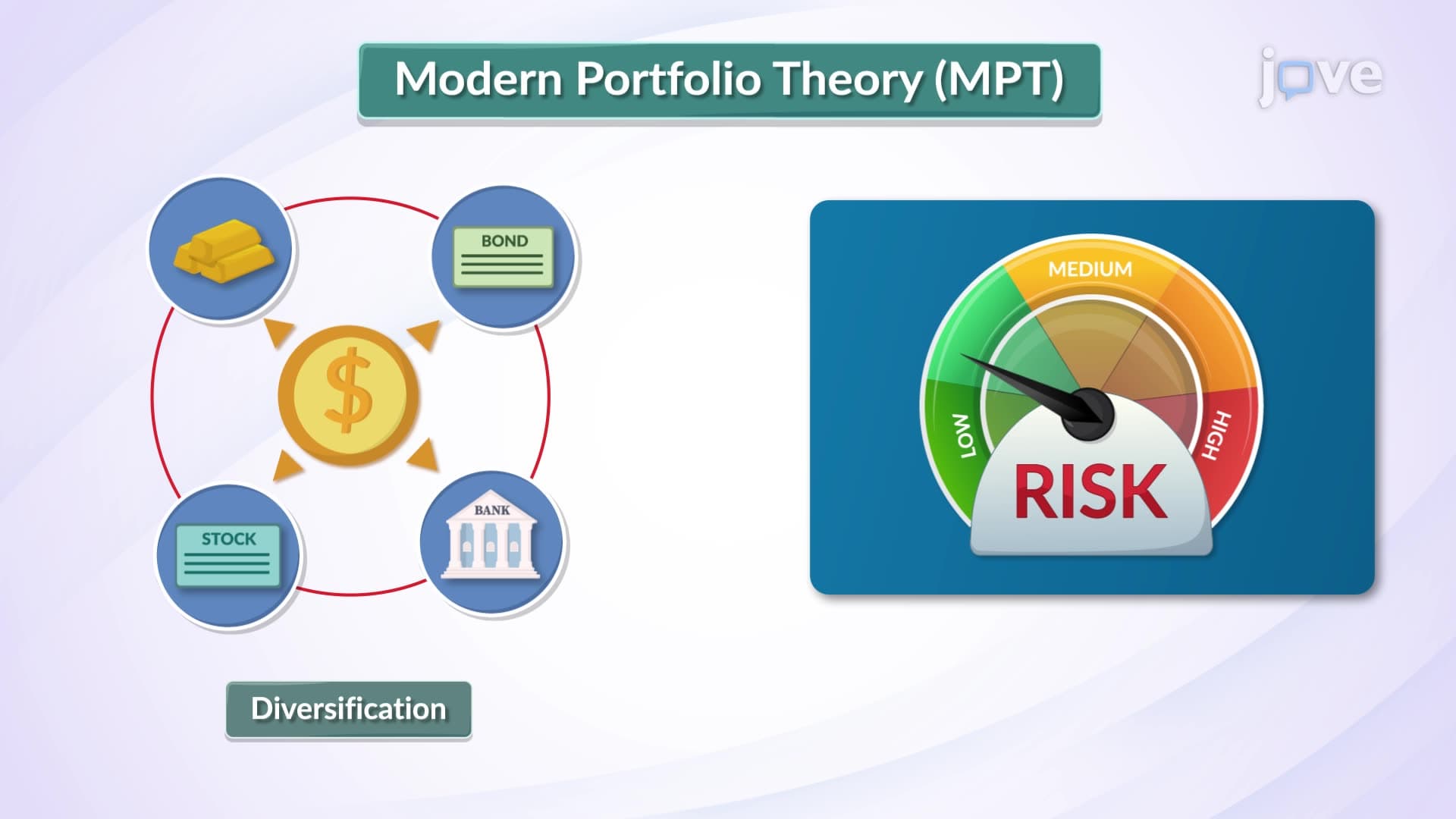
Modern portfolio theory transforms diversification from a simple concept into a quantifiable strategy. Rather than just "not putting all eggs in one basket," MPT provides a mathematical framework for optimal asset allocation. The theory demonstrates that combining assets with low or negative correlations can actually reduce overall portfolio risk below the weighted average of individual asset risks.
Consider how Vanguard structures their balanced funds: a 60/40 stock-bond allocation doesn't just split the difference between growth and stability. During the 2008 financial crisis, while equity markets plummeted, high-quality bonds provided both income and capital appreciation, demonstrating how uncorrelated assets can offset each other's volatility. This principle extends beyond traditional asset classes-real estate investment trusts (REITs), commodities, and international equities each contribute different risk-return characteristics.
Quantifying Risk and Return Relationships
The practical power of modern portfolio theory lies in its ability to quantify relationships between risk, return, and correlation. Portfolio managers use these metrics to construct "efficient frontiers"-combinations that offer the highest expected return for each level of risk. This framework enables data-driven decision-making rather than intuition-based allocation.
Investment committees at major corporations use MPT principles when managing employee 401(k) plan options. By analyzing historical returns, volatility measures, and correlation coefficients, they can offer fund lineups that provide employees with genuinely diversified choices rather than overlapping strategies.
Strategic Implementation in Professional Practice
Modern portfolio theory's influence extends beyond investment management into corporate finance and strategic planning. Treasury departments use MPT concepts when managing cash reserves, balancing liquidity needs with return optimization. Private equity firms apply these principles when constructing fund portfolios across different vintage years, industries, and geographic regions.
The theory also informs risk management decisions across industries. Insurance companies use MPT-based approaches to optimize their investment portfolios while maintaining regulatory capital requirements, while pension fund managers rely on these principles to match long-term liabilities with appropriate asset allocations.
Frequently Asked Questions
Modern portfolio theory is a mathematical framework that helps investors build portfolios to maximize returns while minimizing risk through strategic diversification. It demonstrates how combining different investments with varying performance patterns can reduce overall portfolio volatility. The theory provides quantitative tools for making optimal asset allocation decisions rather than relying on intuition alone.
Use MPT principles to optimize company cash management by diversifying across money market instruments, short-term bonds, and liquid investments based on correlation patterns. Apply the risk-return framework when evaluating capital allocation decisions across business units. Consider correlation effects when assessing merger and acquisition opportunities to understand how new ventures might impact overall business portfolio risk.
MPT provides the analytical foundation for justifying diversified investment strategies to clients by quantifying how asset combinations reduce risk. It helps advisors demonstrate why a mix of stocks, bonds, and alternative investments often outperforms concentrated portfolios on a risk-adjusted basis. The framework also enables advisors to customize allocations based on individual client risk tolerance and return objectives.
Charles Schwab's Intelligent Portfolios uses MPT algorithms to automatically construct and rebalance diversified portfolios across multiple asset classes including domestic stocks, international equities, bonds, REITs, and commodities. The platform continuously monitors correlations and adjusts allocations to maintain optimal risk-return profiles, making sophisticated portfolio management accessible to retail investors while reducing costs through automation.
While the underlying mathematics can be complex, the core concepts are accessible to any business professional. Understanding basic risk-return relationships and correlation concepts is sufficient for most practical applications. Many portfolio management software tools handle the calculations automatically, allowing professionals to focus on strategic decision-making rather than mathematical computations.
MPT knowledge positions you as analytically sophisticated in investment discussions, whether managing corporate cash, evaluating business unit performance, or advising clients. It demonstrates quantitative thinking abilities valued in finance, consulting, and executive roles. Understanding these concepts enables you to contribute meaningfully to strategic asset allocation decisions and risk management discussions across industries.
Consider studying behavioral portfolio theory, which addresses real-world investor psychology limitations of traditional MPT assumptions. Explore tactical asset allocation strategies that adjust portfolio weights based on market conditions while maintaining MPT's diversification principles. Post-modern portfolio theory concepts like downside deviation measures provide additional risk management tools for sophisticated portfolio construction.
Related Micro-courses

11 Concepts

11 Concepts

12 Concepts