Loading subject page…


54,054 views


Video Summary: Wechslers Contribution to Measures Explained
Ever wonder why college admissions officers can't rely on just one test score to evaluate students? The bell curve reveals why intelligence testing requires multiple measures, a principle David Wechsler revolutionized in psychology. When a Stanford student excels at math but struggles with verbal reasoning, Wechsler's Contribution To Measures Explained shows how comprehensive assessment captures this complexity. His groundbreaking approach moved beyond single-score intelligence tests to multi-dimensional evaluations still used in schools nationwide. Watch the full video on JoVE Coach to master this concept with expert-led visuals and step-by-step explanations.
David Wechsler fundamentally transformed psychological assessment by recognizing that the bell curve of intelligence encompasses multiple, distinct cognitive abilities rather than a single general factor. His pioneering work emerged from observing that individuals could demonstrate exceptional ability in one cognitive domain while showing average or below-average performance in others-a phenomenon poorly captured by existing single-score tests of his era.
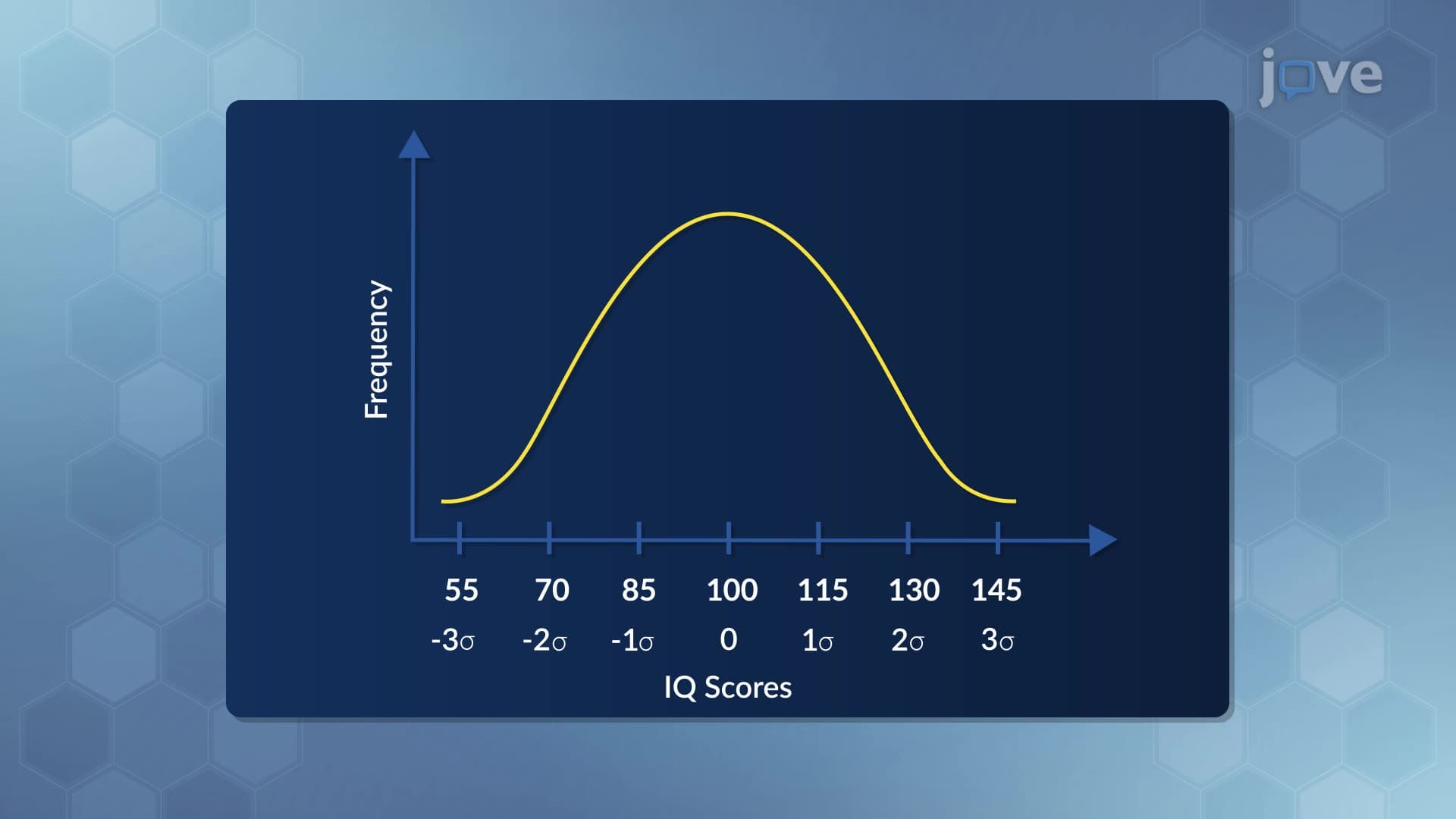
The bell curve definition in Wechsler's context represents how cognitive abilities distribute across populations while acknowledging that intelligence manifests through separate, measurable dimensions. The modern WISC-V exemplifies this approach through its five core indices, each targeting distinct cognitive processes that contribute to academic and life success.
For instance, a high school student preparing for AP Psychology might excel in fluid reasoning (solving novel problems) but struggle with processing speed (completing tasks quickly under time pressure). This profile appears frequently among gifted students who demonstrate deep analytical thinking but require extended time on standardized tests like the SAT or ACT. Understanding what is the bell curve in detail helps educators recognize that both abilities reflect legitimate aspects of intelligence deserving accommodation and support.
Wechsler's comprehensive assessment model proves invaluable in US educational contexts, particularly for identifying learning differences and determining appropriate interventions. School psychologists regularly use WISC-V results to distinguish between students who need additional academic support versus those requiring gifted education services.
Consider a middle school student struggling with reading comprehension despite strong mathematical reasoning abilities. Traditional single-score intelligence tests might classify this student as having "average" intelligence, potentially overlooking a specific learning disability in language processing. Wechsler's multi-dimensional approach reveals the discrepancy between verbal comprehension and visual-spatial abilities, guiding targeted remediation strategies.
The bell curve concept remains central to maintaining test validity across diverse American populations. Regular recalibration ensures that a score of 100 consistently represents average performance relative to same-age peers, accounting for demographic changes and educational advances over time. This standardization process involves administering tests to thousands of participants representing the full spectrum of American diversity-urban and rural, various socioeconomic backgrounds, and different ethnic communities.
Related Micro-courses