Loading subject page…


54,058 views
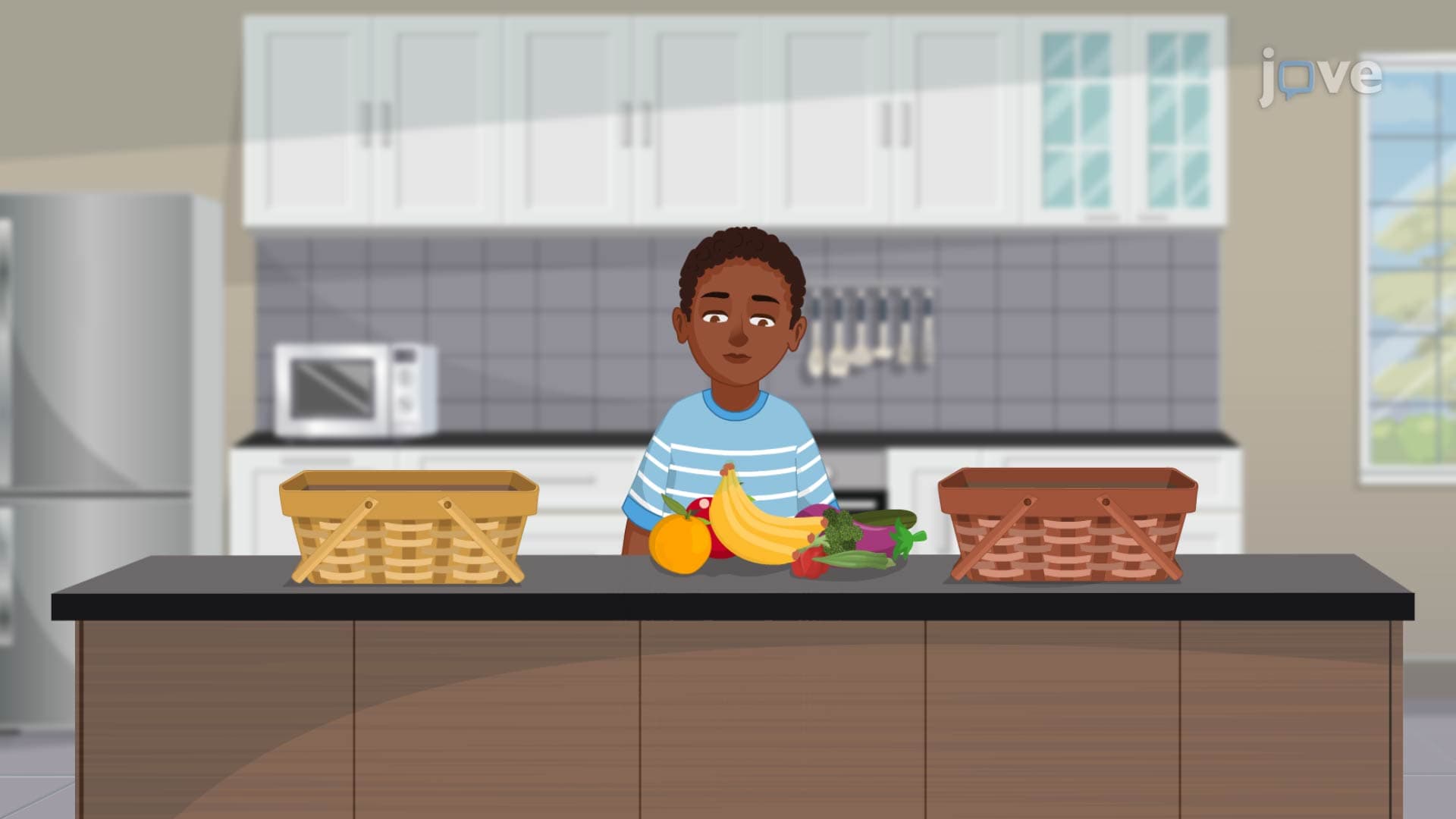

Video Summary: What are Concepts and Prototypes
Have you ever wondered why you instantly recognize a robin as a bird but hesitate when seeing a penguin? Your brain uses natural and artificial concepts to make sense of the world around you. These mental frameworks help organize everything from recognizing animals at the San Diego Zoo to understanding complex ideas in AP Psychology class. What are Concepts And Prototypes explores how your mind creates categories and uses "best examples" to process new information efficiently. Watch the full video on JoVE Coach to master this concept with expert-led visuals and step-by-step explanations.
Concepts and prototypes form the foundation of human thinking, allowing us to navigate complex information efficiently. A concept represents a mental category that groups related objects, ideas, or experiences based on shared characteristics. These cognitive tools enable students to excel in subjects ranging from AP Biology to college-level philosophy by organizing vast amounts of information into manageable mental frameworks.
Natural and artificial concepts represent two distinct methods of category formation. Natural concepts develop organically through personal experience and don't follow strict definitional boundaries. For instance, your concept of "friendship" likely evolved through relationships at school, family interactions, and social experiences unique to American teenage culture. These concepts often have fuzzy boundaries-determining whether an acquaintance qualifies as a "friend" depends on subjective criteria.
Conversely, artificial concepts follow precise, rule-based definitions typically learned in academic settings. Mathematical concepts like "prime numbers" or scientific classifications like "mammals" represent artificial concepts with clear, unchanging criteria. Students encounter these extensively in standardized tests where MCAT biology sections require precise understanding of taxonomic classifications, or SAT math problems demand exact geometric definitions.
Prototypes function as cognitive shortcuts-the "best examples" your brain uses to rapidly categorize new information. If your prototype for "college professor" stems from your high school AP History teacher, you'll likely expect future professors to share similar characteristics. This mental efficiency proves crucial during timed exams like the AP Psychology test, where quick concept recognition saves valuable minutes.
Research conducted at major American universities demonstrates that prototypes vary significantly across cultural and regional backgrounds. A student from rural Montana might have different prototypes for "community" compared to someone from downtown Chicago, affecting how they interpret literature in English classes or analyze social structures in AP Government courses.
Understanding natural and artificial concepts in detail enhances academic performance across disciplines. In college admissions essays, students who effectively use concept formation demonstrate sophisticated thinking. Medical school prerequisites like organic chemistry require mastering artificial concepts (molecular structures) while developing natural concepts about patient care during clinical rotations.
Successful MCAT preparation involves recognizing when questions test artificial concept knowledge (precise biological pathways) versus natural concept application (interpreting patient scenarios). This distinction helps students allocate study time effectively and approach different question types with appropriate strategies.
Related Micro-courses