Loading subject page…

Micro-course: Thinking, Language And Intelligence
54,049 views
Learn key concepts and earn your certificate.
























Intelligence


00:00
01:27
Video Summary: What Is Intelligence
Ever wonder why some students excel across multiple subjects while others struggle despite being brilliant in specific areas? Cattell's theory of intelligence offers a groundbreaking framework that explains how our cognitive abilities work together and separately. Unlike traditional single-factor models, this theory distinguishes between fluid intelligence (raw processing power) and crystallized intelligence (accumulated knowledge), helping explain why a Harvard freshman might struggle with logic puzzles despite acing the SAT verbal section. Watch the full video on JoVE Coach to master this concept with expert-led visuals and step-by-step explanations.
- Understand what intelligence encompasses through Cattell's comprehensive theoretical framework and its distinction from earlier single-factor models
- Identify the two primary components of Cattell's theory: fluid intelligence and crystallized intelligence, including their unique characteristics
- Analyze how fluid and crystallized intelligence interact and develop differently across the human lifespan
- Compare Cattell's dual-factor approach with Spearman's g-factor theory and contemporary multiple intelligence models
- Evaluate real-world applications of intelligence theory in educational assessment, career counseling, and cognitive development
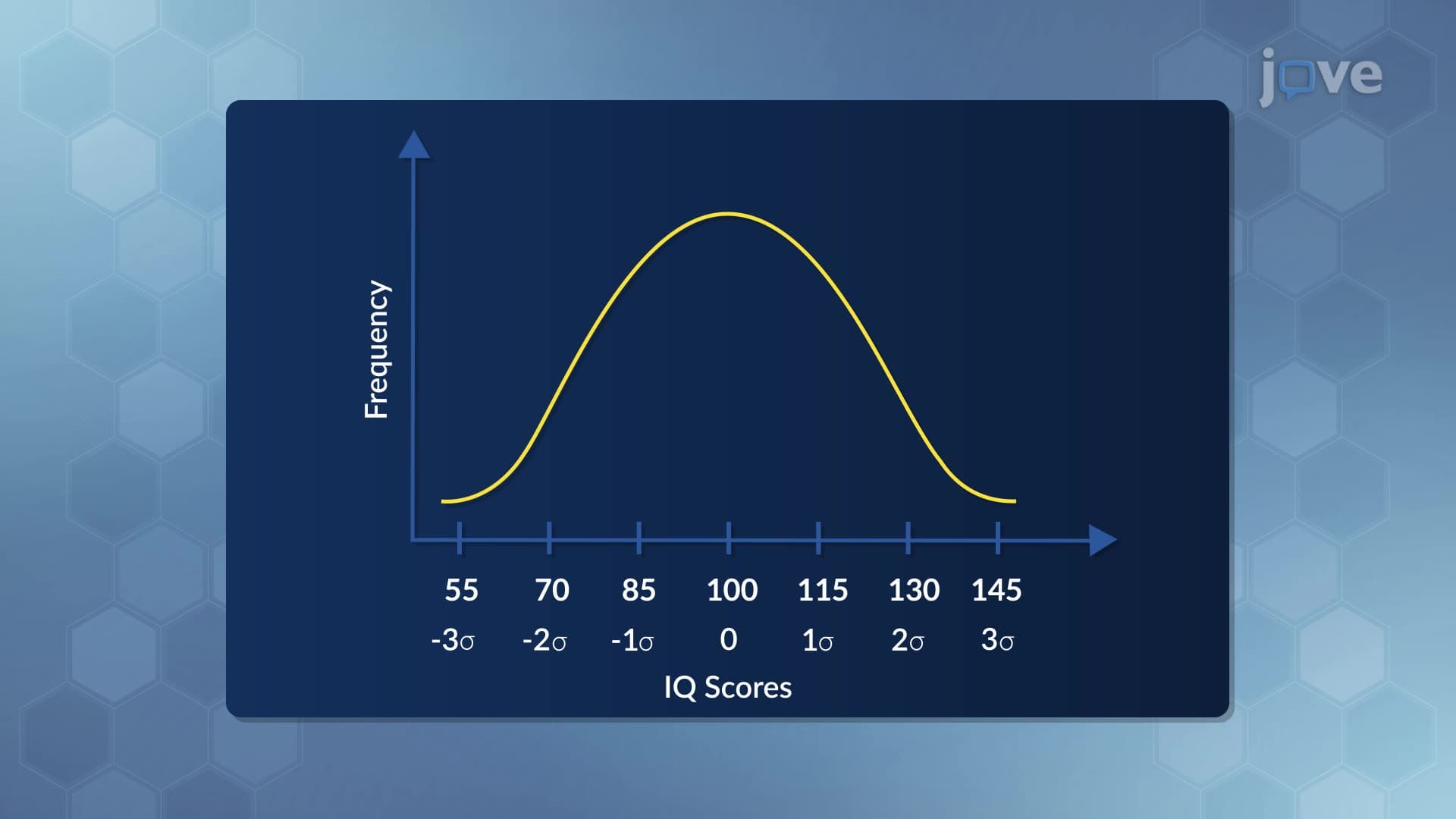
- Apply intelligence theory concepts to interpret standardized test scores, academic performance patterns, and learning differences
- Recognize cultural influences on intelligence definitions and how they impact assessment and educational practices
- Explore connections between intelligence research and modern cognitive psychology, neuroscience, and educational policy
Understanding Intelligence Through Cattell's Revolutionary Framework
Intelligence research took a pivotal turn when Raymond Cattell introduced his groundbreaking theory that challenged the traditional single-factor approach. While Spearman's g-factor suggested one overarching cognitive ability, Cattell's theory of intelligence proposed a more nuanced understanding that better explains the complexity of human cognitive performance.
Fluid Intelligence: Your Cognitive Processing Power
Fluid intelligence represents your brain's raw processing capacity-the ability to think logically, solve novel problems, and identify patterns without relying on previously acquired knowledge. Think of it as your mental horsepower. A student encountering matrix reasoning problems on the SAT demonstrates fluid intelligence when they recognize visual patterns they've never seen before. This type of intelligence typically peaks in early adulthood and gradually declines with age, explaining why younger students often excel at learning new programming languages or mastering complex mathematical concepts quickly.
Crystallized Intelligence: Your Knowledge Warehouse
Crystallized intelligence encompasses the accumulated knowledge, skills, and abilities you've gained through education and experience. Unlike fluid intelligence, crystallized intelligence continues growing throughout life as you learn new facts, develop vocabulary, and master specialized skills. A high school AP History student draws on crystallized intelligence when analyzing primary source documents, using accumulated knowledge about historical contexts, political systems, and analytical frameworks learned over years of study.
The Dynamic Interaction and Practical Applications
These two intelligence types work together dynamically. Strong fluid intelligence helps you acquire crystallized intelligence more efficiently, while extensive crystallized intelligence can compensate for declining fluid intelligence in familiar domains. This explains why experienced teachers can quickly solve educational problems that stump brilliant graduate students-their crystallized intelligence in pedagogy compensates for any fluid intelligence limitations.
In educational assessment, understanding Cattell's theory helps explain why students might perform differently across various test sections. The MCAT's Critical Analysis and Reasoning section primarily tests fluid intelligence, while the Biological and Biochemical Foundations section heavily draws on crystallized intelligence from years of science coursework. College admissions officers increasingly recognize these distinctions when evaluating diverse academic profiles.
Frequently Asked Questions
Cattell's theory defines intelligence as comprising two distinct but related factors: fluid intelligence (reasoning ability and problem-solving with novel information) and crystallized intelligence (accumulated knowledge and skills). This differs from Spearman's single g-factor by recognizing that cognitive abilities operate through multiple, measurable components that develop and change differently over time.
Cattell's theory frequently appears on AP Psychology exams in questions about cognitive abilities, intelligence testing, and developmental psychology. Students should be able to distinguish between fluid and crystallized intelligence, explain their relationship to aging, and apply these concepts to real-world scenarios. Practice identifying which type of intelligence different test questions or life situations primarily require.
SAT Math Problem Solving and Abstract Reasoning sections primarily test fluid intelligence through novel logical problems, while Reading Comprehension and vocabulary questions draw more on crystallized intelligence. MCAT sections vary-Physical Sciences relies heavily on crystallized knowledge, while Critical Analysis and Reasoning emphasizes fluid intelligence through unfamiliar passage analysis.
Teachers at schools like those in the New York City Department of Education use this framework to understand why students might excel in subjects requiring memorization (crystallized intelligence) but struggle with novel problem-solving tasks (fluid intelligence). This insight helps develop targeted interventions and more accurate assessments of student capabilities across different cognitive domains.
Not at all-Cattell's theory builds on basic concepts most high school students already understand. If you can distinguish between "book smarts" and "quick thinking," you already grasp the fundamental distinction. The theory simply provides scientific terminology and research backing for intuitive observations about different types of mental abilities.
Create comparison charts contrasting different theorists' approaches-Spearman's g-factor, Cattell's two-factor model, and Gardner's multiple intelligences. Use real examples for each theory, practice applying concepts to case studies, and memorize key researchers and their specific contributions. Focus on understanding practical applications rather than just memorizing definitions.
Contemporary brain imaging studies support Cattell's distinctions by showing different neural networks activate for fluid versus crystallized intelligence tasks. Research at institutions like Stanford and MIT demonstrates that fluid intelligence correlates with working memory capacity and processing speed, while crystallized intelligence relates to long-term memory storage and retrieval networks.
Related Micro-courses