Loading video…


 26 Concepts
 1.4K views


Video Summary: What Is Gdp Deflator
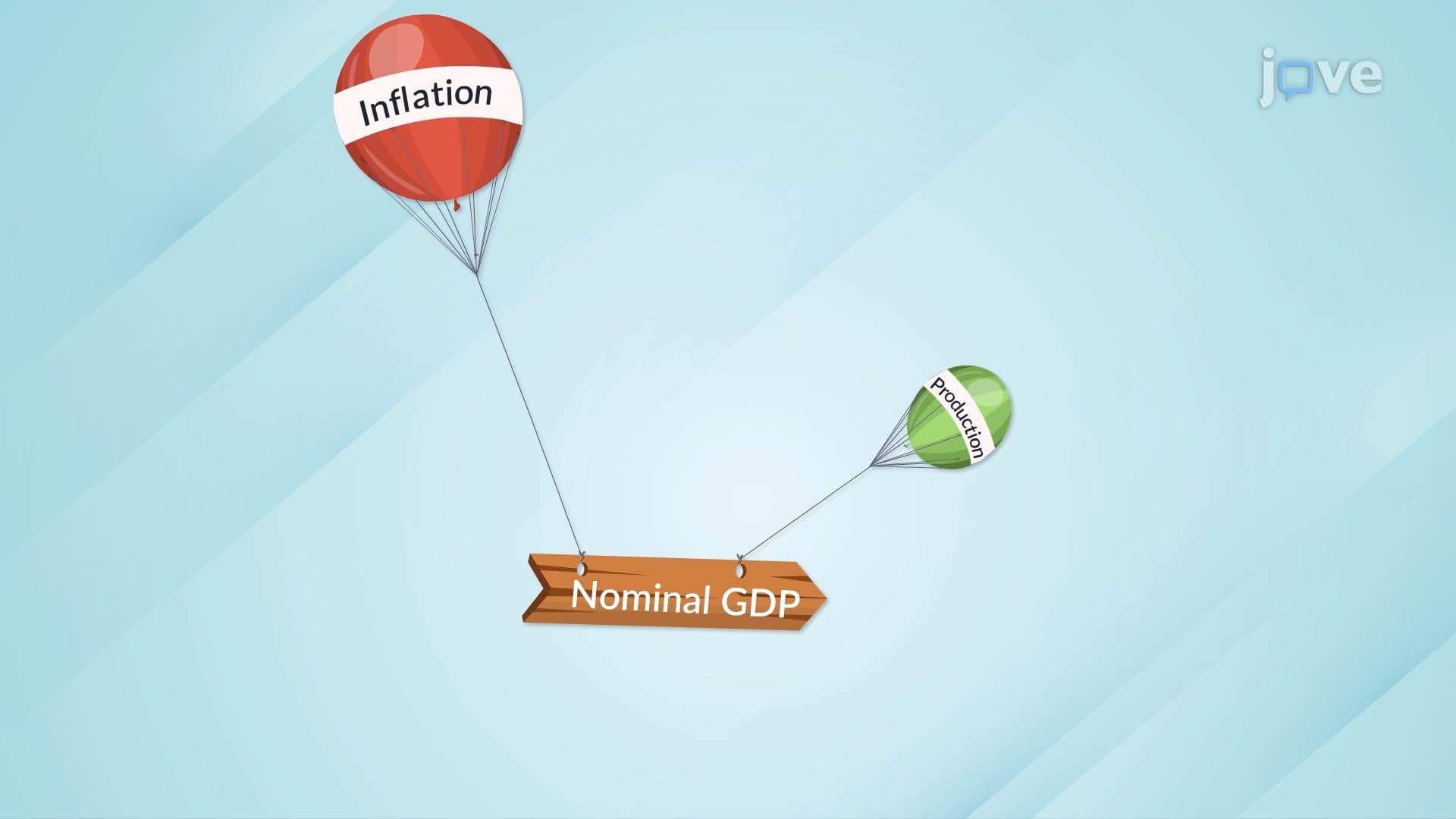
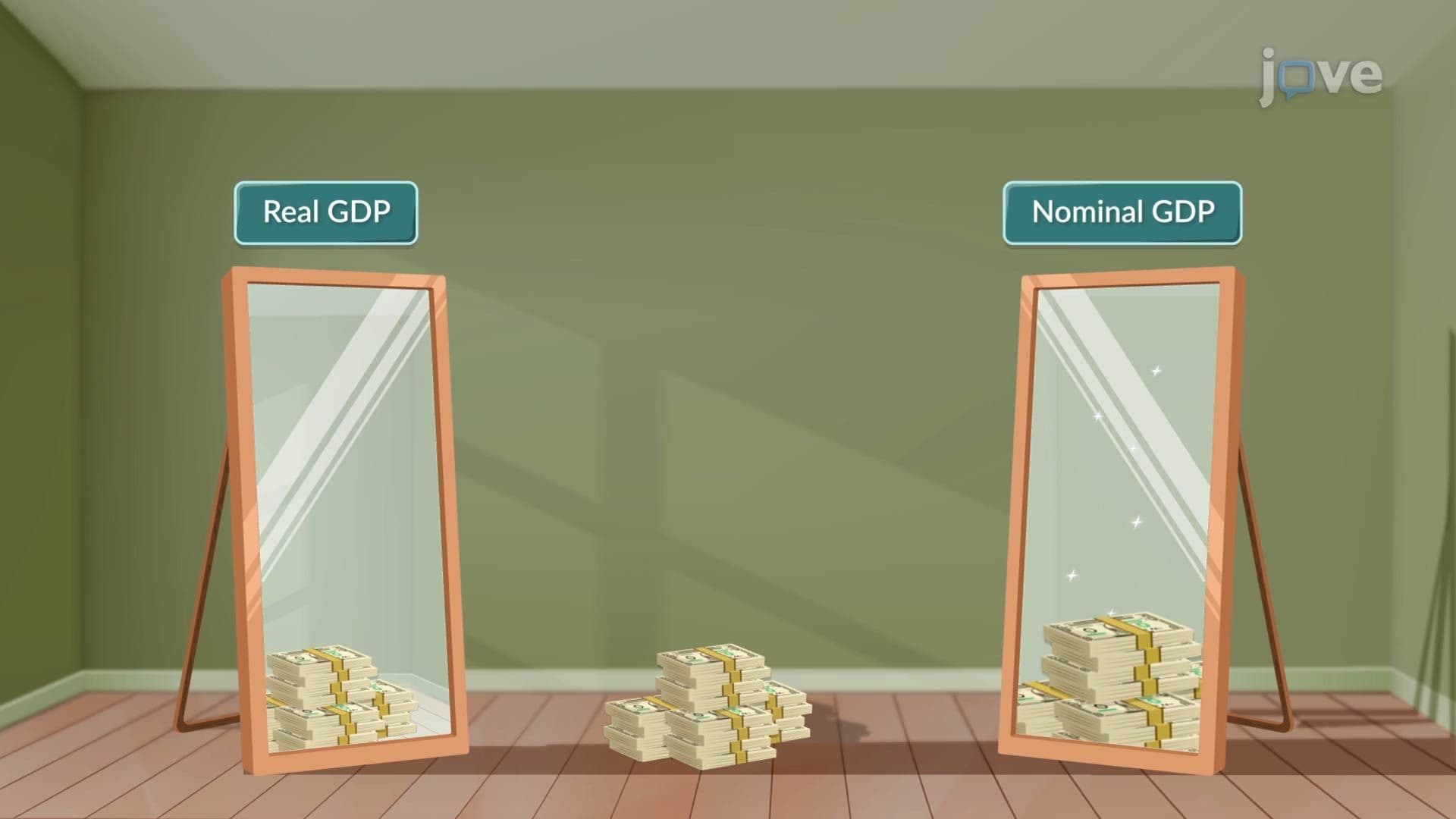
Ever wonder why a $100 million GDP increase might not mean the economy actually grew? The GDP deflator reveals the hidden truth behind economic growth numbers by separating real production increases from price inflation. For instance, when the U.S. economy's nominal GDP rose from $20 trillion to $21 trillion in one year, but real GDP only increased to $20.5 trillion, the GDP deflator showed that half the "growth" was just higher prices. This crucial economic indicator helps distinguish genuine economic expansion from inflationary illusions. Watch the full video on JoVE Coach to master this concept with expert-led visuals and step-by-step explanations.
The GDP deflator serves as a comprehensive price index that captures the average change in prices for all goods and services produced domestically within a country. Unlike other inflation measures that focus on consumer purchases, the GDP deflator encompasses everything from business investments to government spending on domestically produced items. This broad scope makes it particularly valuable for understanding economy-wide price movements.
The calculation follows a straightforward formula: GDP Deflator = (Nominal GDP ÷ Real GDP) × 100. This simple relationship reveals profound economic insights about whether GDP growth represents genuine increases in production or merely reflects rising prices.
Consider the U.S. economy during 2021-2022, when nominal GDP growth appeared robust, but the GDP deflator revealed significant inflationary pressures. The Bureau of Economic Analysis uses GDP deflator data to help the Federal Reserve make interest rate decisions and guide fiscal policy. When the deflator rises rapidly, it signals that much of the apparent economic growth stems from inflation rather than increased productivity or output.
Major corporations like Boeing and General Electric incorporate GDP deflator projections into their long-term contracts, especially for government projects spanning multiple years. These companies adjust payment schedules based on GDP deflator forecasts to maintain profitability despite changing price levels.
Students preparing for Advanced Placement (AP) Economics exams frequently encounter GDP deflator problems that test their understanding of nominal versus real economic measures. College macroeconomics courses at institutions like Harvard, Stanford, and the University of Chicago emphasize the GDP deflator as essential for analyzing economic policy effectiveness.
The concept appears regularly on SAT Subject Tests and college midterm examinations, where students must demonstrate their ability to calculate deflator values and interpret their economic significance. Graduate programs in economics and business administration consider mastery of GDP deflator concepts fundamental for advanced coursework in monetary policy and economic forecasting.
When working with GDP deflator problems, focus on the relationship between the three key variables. If nominal GDP equals $500 billion and real GDP equals $450 billion, the GDP deflator becomes approximately 111.1, indicating an 11.1% price increase since the base year. This type of calculation frequently appears in homework assignments and standardized tests, making computational fluency essential for academic success.
Related Micro-courses