Loading subject page…

- Marketing
- Communicating Customer Value: Promotion to Evangelism
- Communication Objectives
Micro-course: Communicating Customer Value: Promotion to Evangelism
11,404 views
Learn key concepts and earn your certificate.

















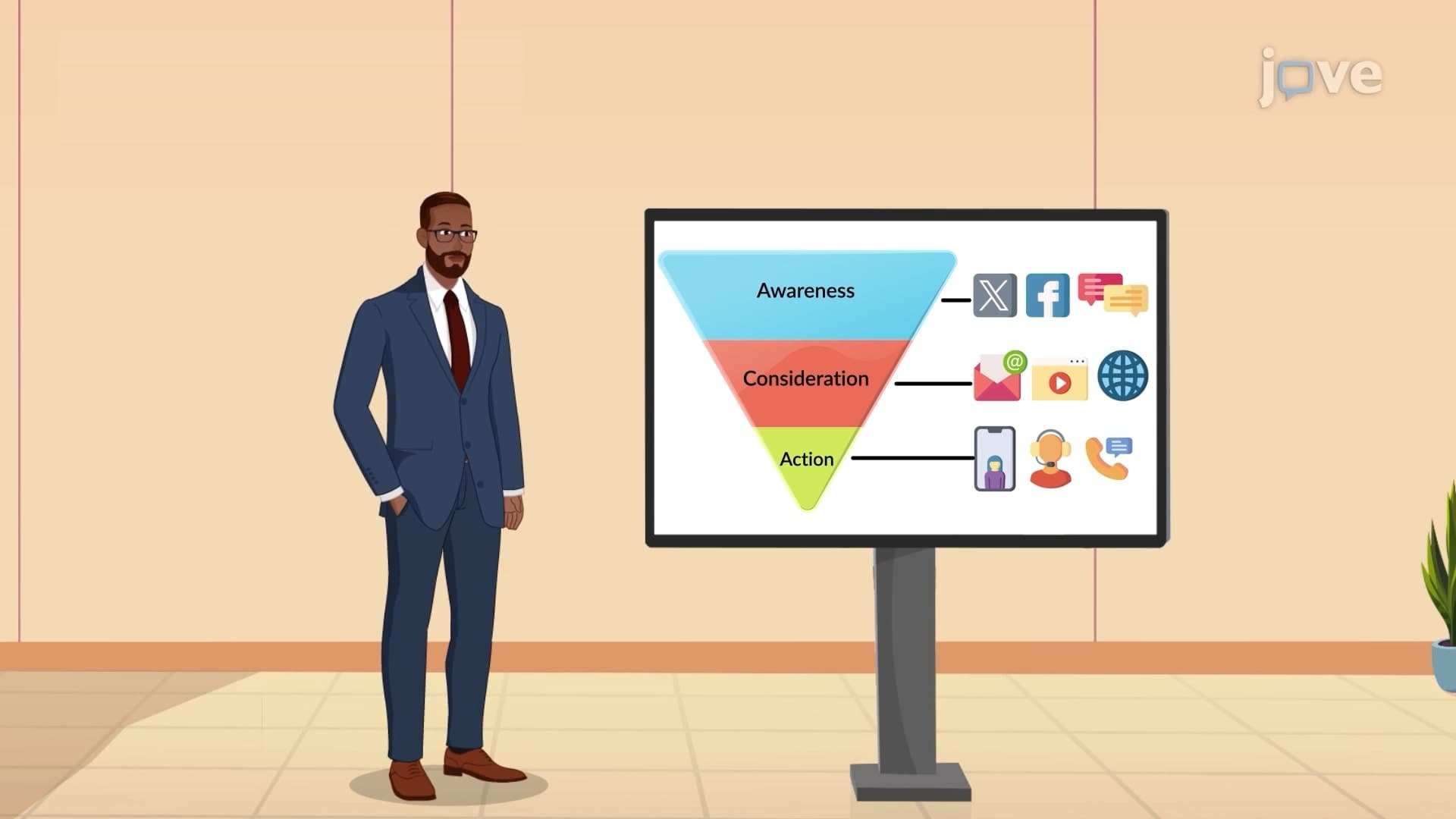



Communication Objectives


00:00
01:24
Video Summary: What Is Communication Objectives
Ineffective communication objectives cost US businesses billions annually in wasted marketing spend and missed revenue targets. Communication objectives serve as the strategic foundation for all promotional activities, defining specific, measurable goals that drive messaging strategy and resource allocation. Consider how Apple's iPhone launches consistently achieve precise market penetration targets through meticulously crafted communication objectives that align product positioning with consumer behavior insights. What is communication objectives becomes critical when executives must justify marketing ROI and demonstrate campaign effectiveness to stakeholders. Watch the full video on JoVE Coach to master this concept with expert-led visuals and step-by-step explanations.
- Apply the SMART framework to transform vague marketing directives into actionable business objectives that drive measurable results and accountability across teams
- Evaluate the distinction between sales-focused objectives (revenue growth, market share expansion) and non-sales objectives (brand awareness, consumer sentiment shifts) for strategic portfolio decisions
- Analyze how properly defined communication objectives enable precise budget allocation and prevent costly campaign pivots during execution phases
- Implement objective-setting protocols that align cross-functional teams from creative development through media planning and performance measurement
- Assess communication objective effectiveness using quantifiable metrics that demonstrate direct correlation to business outcomes and competitive positioning
- Leverage time-bound objective frameworks to create urgency, establish clear accountability windows, and facilitate rapid strategic adjustments in dynamic markets
- Identify audience-specific objective parameters that maximize campaign relevance while supporting broader organizational growth initiatives and market expansion goals
Understanding Communication Objectives in Strategic Context
When Coca-Cola's marketing team prepares for a major product launch, they don't start with creative concepts or media buying-they begin with precisely defined communication objectives. These strategic goals form the backbone of every successful marketing initiative, determining resource allocation, message development, and success metrics that ultimately impact quarterly earnings and market position.
The Strategic Framework: Sales vs. Non-Sales Objectives
Communication objectives definition encompasses two primary categories that serve different business functions. Sales-oriented objectives focus on quantifiable revenue outcomes: increasing unit sales by 15%, capturing 3% additional market share, or generating $50 million in new customer acquisitions within 18 months. These objectives directly correlate with P&L performance and shareholder value creation.
Non-sales objectives target foundational market conditions that enable future revenue growth. When Nike invests in brand awareness campaigns targeting Gen Z consumers, they're building long-term equity that supports premium pricing strategies and customer lifetime value optimization. These objectives might include increasing unaided brand recall by 25% or shifting consumer perception metrics around sustainability practices.
SMART Framework Application for Business Impact
The SMART methodology transforms abstract marketing goals into executable business strategies. Consider Amazon's Prime membership growth objectives: "Increase Prime subscriptions by 12% among households earning $75,000+ in suburban markets within 12 months through targeted digital campaigns emphasizing delivery value propositions." This objective demonstrates specificity (12% growth, defined demographic), measurability (subscription tracking), achievability (based on market research), relevance (aligns with retention strategy), and time-bound execution (12-month window).
Implementation and Performance Measurement
Effective communication objectives enable real-time campaign optimization and strategic pivoting. Microsoft's Azure cloud services marketing team uses weekly objective tracking to adjust messaging emphasis between cost savings and innovation benefits, responding to competitive pressures from AWS and Google Cloud. This agility prevents budget waste while maintaining market momentum during critical adoption phases.
Frequently Asked Questions
Communication objectives are strategic goals that guide all marketing and promotional activities, defining what you want to achieve through your messaging efforts. They serve as the foundation for budget decisions, creative direction, and performance measurement. Think of them as the business case that justifies every marketing dollar spent and provides clear success criteria for campaign evaluation.
Well-defined objectives provide concrete metrics for demonstrating marketing ROI and justifying budget allocations during quarterly planning cycles. They enable marketing teams to present clear before-and-after comparisons that link campaign activities to revenue outcomes. This transparency builds stakeholder confidence and supports increased marketing investment requests.
Sales objectives work best for mature products with established market presence, while non-sales objectives support new product launches or brand repositioning efforts. If you're facing immediate revenue pressure, focus on conversion-driven objectives; for long-term market position building, emphasize awareness and perception goals. Consider your product lifecycle stage and competitive landscape when making this decision.
Starbucks set specific objectives to increase rewards program membership by 40% within two years while boosting average transaction frequency among existing members. Their campaigns emphasized convenience and personalization benefits, resulting in over 19 million active rewards members and measurable increases in customer lifetime value across all participating locations.
No marketing degree required-effective objectives stem from clear business thinking and market understanding rather than technical expertise. Focus on defining what success looks like for your specific business situation, use simple metrics you can actually measure, and ensure alignment with broader company goals. Many successful objectives come from operational leaders who understand customer needs and competitive dynamics.
This skill demonstrates strategic thinking ability and results-oriented mindset that senior leadership values across all business functions. You'll be better positioned for marketing management roles, brand strategy positions, and general management opportunities that require translating business goals into actionable plans with measurable outcomes.
Communication objectives serve as the tactical bridge between high-level corporate strategy and day-to-day execution activities. They translate vision statements into specific market actions while providing feedback mechanisms that inform strategic pivots. Mastering this connection positions you as someone who can think strategically while executing tactically-a valuable combination for leadership advancement.
Related Micro-courses


19 Concepts

15 Concepts